With Love….

Excuse the title… I meant to post this on Valentine’s Day.

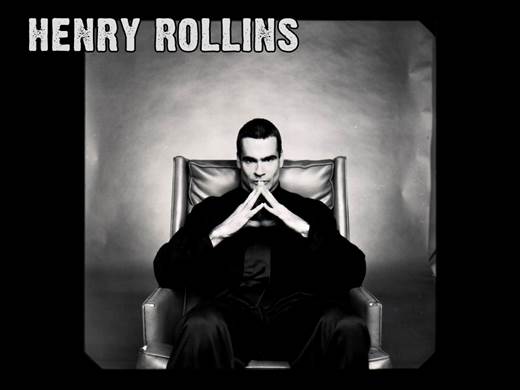
Not many of you know this but I am…well…was and still pretend to be occasionally, a musician. I used to have delusions of grandeur that I would be up in front of thousands of screaming fans as I ripped their faces off with my shredding guitar work. Alas, it was not to be. To this day I am a huge metal head. Of course, I am open to all genres but I stay pretty rooted when it comes to what is in my CD player: rock, hardcore, alternative and metal. Sabbath, Maiden, Priest, Purple… you get the idea. So, I was reading some work by Henry Rollins recently. If you aren’t familiar with Mr. Rollins, he began his career as the lead singer for the hardcore/punk band Black Flag. Once that band folded, he started his own record label and saw success as a solo artist when he created The Rollins Band. He happens to be a very intelligent person as well as a successful comedian/writer/actor. Anyway, as I stated, I was reading some of his work and one of his statements stuck out: “Youths write me and tell me that their band will go nowhere because of all the bad bands in the world. I tell them there has always been awful music and that no great band ever wasted any time complaining, they just got it done. Their ropey ranting is just a way to get out of the hard work of making music that will do some lasting damage.”

It was as if Henry was speaking right to paintball teams in general. Why? Take that quote and where he says “bands” put “paintball teams” and where he says “music” put “teams” and reread it. Go ahead, I’ll wait…

8

We have a standing rule among the Prime Program. No internet thuggery. No one is allowed to post anything of a critical nature ever. We are only to promote/support our sponsors in the best light possible. That includes leaving the juvenile, mundane, ill-informed and opinionated back slapping/name calling, excuse making to others. Not our fight. We let our game talk since that is what we are here to do, play paintball and hopefully, God willing, play it well.

That doesn’t mean we don’t stay up to speed on current events or happenings within the local, regional and national paintball scenes. We often have internal discussions about these topics. What kind of program would we be if we didn’t have a strategy for change? We would be foolish not to be at least informed.

You may ask, what does this have to do with your opening comments? Well, it’s this. I often stumble across posts or comments in forums or on social media where a team or a player will blame the outcome of a tournament on variables outside of their control. We’ve all heard and seen them at the event or afterwards, the keyboard cowboys, the conspiracy theorists. Some of the more common posts I read are, “The refs screwed us!” or “The refs were horrible and missed so many calls!” or “The refs know the team we were playing!” or my personal favorite, “We received a penalty by this one ref for rub my guy had on his face!” Whether these comments are indeed true or not should be irrelevant. We have all seen or participated in a game where a ref’s call, accurate or inaccurate, missed or caught, had a definitive impact on the outcome of a game, right? Right. But maybe we shouldn’t be looking at those variables. Maybe we should be focusing on what we can control and what, more than likely, is the real reason we lost that match or event. Maybe we should be looking at…yee-gads!… us/ourselves. Maybe it wasn’t the ref. Maybe… just maybe… you got outworked?

9
Drill baby drill

Let’s talk work ethic. How often does your team practice? HOW do you practice and how WELL do you practice? How STRUCTURED is your practice? Do you set GOALS for each practice? What elements keep you from practicing? How SUCCESSFUL do you want to be and on what level (local, regional, national)? What infrastructure do you have in place to help facilitate the team’s progress?

Ask yourself those questions and be honest with yourself. Here is how Prime would answer those questions:

  1. Every weekend unless otherwise stated. It is understood that after an event, the teams have the following weekend off. This too falls under, “unless otherwise stated”. Family and school come before Prime but with notification. Every member knows to contact a captain and explain if they have something pressing that will keep them from the schedule. You have a major test coming up? You better be studying because Prime doesn’t want dummies. We want thinkers, motivators, innovators who are self-aware and analytical, who understand process. Education helps with that. We want people who understand the importance of family because we are a family. If you don’t genuinely care about the guy next to you I can’t make you a true Prime teammate.
  2. Our practice is structured to build from the ground up. We start the day with everyone running and stretching together. Then we move into a little aggressiveness to get the blood pumping and create a little wake up call. We then drill fundamentals: Laning, run and gunning, snapping and communication. Next we will roll into situational drills, down body drills, closing drills. All questions and concerns are addressed during all drills. If the team is struggling as a whole, we will stay with the drill until we see marked improvement. A Prime practice lasts anywhere between 6-8 hours.
  3. We usually set a goal during a particular drill or we will set a goal for the day e.g. improved communication with data getting across the field or consistently shooting a particular bunker dorito side of the field on the break by each player on the team.
  4. We want to win on all levels and recognize that it will require a lot of sacrifice in order to do so. We don’t walk into rooms we don’t know how to walk out of.
  5. We have a private communication board where a schedule is posted. We have a two page set of rules that outline expectations and behaviors for each individual player.
  6. We practice in the rain, the heat and the cold. Practice is on unless there is danger to the team (lighting, tornado warnings, etc.). Why? Because most teams don’t.
10
Situational drills can expose weaknesses that need to be addressed.

With all that said, do you know your history? Do you know your finishes? Can you name your top finishes and why you finished where you did?

Did you scope the teams you will play at an event? Did you see how they breakout, how strong their guns were, where their guns were, what bunkers they frequent, what part of the field they push, what particular player(s) like to do and when? What’s their pit like, their demeanor? How do they handle being up or down points? Are they aggressive, defensive? How so?

The point of all of this is simple. What are YOU doing to put the odds in your favor? Will it be business as usual until the next time you have to blame a ref? “It’s supposed to rain this weekend guys so practice is cancelled.” “Most of the guys can only afford half a case, so we will only practice for an hour this weekend.” Or will it be, “Supposed to rain this weekend guys. Might as well learn how to play in it since I am sure we will enter an event where it’s raining at least once this year!” “Several of the guys can only afford half a case this weekend. Let’s come up with some drills to get the most out of that or maybe we can pool paint to make it go further.” You get the picture. You better. You’re drawing it.

Food for thought. Peace to all the teams who work hard and try their best every day. We salute you.


-Mike Bianca


Team Pr1me

Previously Posted

Where is the blasted sacrificial knife?

I want to expand upon something that I mentioned last August regarding the blog “Culture in Paintball”. Several things have happened in this off season in particular that have made me want to touch back on this subject. And no, it has nothing to do with the PSP’s new rules, etc. Everybody and their mother has weighed in on that… no need for me to enter that arena as I seriously doubt, based on the lines drawn, there is any true winner in that debate.

Here is what I had mentioned about “rituals” in that previous blog:

“Rituals/Traditions. This is your paintball team’s identity or soul. These are what the team has in common. It’s the glue that binds teammates together. Rituals and traditions can be the setting up and taking down of the field EVERY weekend, the meeting up at a favorite local restaurant after practice, the workouts, the drills, rites of passage for new members…(those can be interesting). You get the picture.”

5
Enter a caption

Mixing margaritas with the Ironmen’s Mike Paxson in 2008. This became a “ritual” albeit a dangerous one…

Let’s face it. We live in a world of modernism (is that a word?) where we are constantly bombarded with consumerism, the drive (or lack thereof) to challenge ourselves, the increasing divide among us due to different norms or the void of having shared values.   The question then becomes, with all these differences, how do we turn 8-10 guys into a team that won’t eventually self-implode? How do we confront these vacancies among us and bring us back together? How can we build a meaningful bond with our teammate that translates on and off the field? How do we create that elusive true sense of the term, “Team”?

Why, rituals, of course.

Every culture throughout existence has engaged in rituals. It would then hold that they are, in face, a fundamental part of the human condition. Rituals can change things, solve problems and accomplish things. Through history we have used rituals to identify our “tribes”, to orient ourselves and differentiate between others. A paintball team without rituals will, overtime, collapse upon itself because there is no means by which to identify it, nothing to be proud of, to achieve. The team will be bored and will eventually cease to exist.  If it somehow manages to survive, you have a team of guideless zombies who have no life or pride anyway. You know… democrats.

Okay, so what exactly is “ritual”?

Ritual can be defined as “Prescribed, established or ceremonial acts or features of a collective.” Quite simply, a ritual is something a group of likeminded people do regularly for a specific purpose or reason. Here is a good example: Waving to someone or shaking someone’s hand. There is no real reason why waving your hand at someone or gripping another’s hand and shaking it equates to a greeting or establishment of acquaintance. It is culturally relative (there’s that word “culture” again… hang in there). However, washing your hands in order to clean them is not a ritual as there is a direct correlation between your action and a desired result. To use my Catholic faith as an example, when the priest splashes water on his hands at Mass during the Liturgy of the Eucharist, this is a ritual since the water is not necessarily intended to remove bacteria.

6

Team Owner/Captain Mikey McGowan participating in the ritual of the “high five” with Coach Shane Pestana of the Los Angeles Ironmen. Co- Captain yours truly participating in the ritual of paintball gun safety in the background.

Okay… enough with establishing what it is and my silly attempt at explaining Catholic Mass. To the point:

A ritual in paintball should be developed as something that carries value to the team. It should instill in the team a behavior. And most successful teams establish these aspects (culture) from the get go. The ritual of drilling a skill set. The ritual of donning the same jersey. The ritual of always being polite to the referees and playing honestly (or dishonestly in some cases). All in all, paintball rituals should involve discipline. By enforcing the ritual, it should create a desired set of effects. Precise repetition leads to better physical control or what we constantly harp about at Prime as “muscle memory”.

But there have to be rules. Rules regulate the ritual. If you “cheat” the ritual i.e. break the rules of the drill, the desired effect cannot be accomplished. Let’s remember the purpose of a ritual, “to have a specific purpose”. The point of ritualistic paintball is to lead to an increase in performance. Put another way, it is essentially thought plus action. A ritual consists of doing something in your mind while simultaneously connecting it to doing something with your body.

A ritual does not have to be some grand thing. It can be something as small as sharing an energy drink each morning before practice. But it should involve these key takeways:

  1. It should bring the team together
  1. It should have a purpose/goal
  1. It should be shared among all members of the team
  1. It should help establish a team’s identity.
7
This ritual sucked…

Hopefully this post has helped you understand something… I honestly don’t know what I was trying to say when I started it. There was a point. I guess, if you are a lousy human being and you lead a paintball team, you will probably create more lousy human beings with your ritualistic behavior. I prefer to create good people who are good at paintball. Your team can define you as an individual. Hopefully, your rituals are  positive in nature. If not, should my team and yours meet on the field, I promise our ritualistic approach will outdo yours… unless your ritual involves bribing refs or the ritual of cheating, etc. Even then, I believe the ritual of winning will come into play. And we play to win. Ritualistically speaking…


Previously Posted

A Prime Thanksgiving

They say that being thankful is, in itself, a reward. I, like many Americans do this time of year, find myself reflecting on what I should be thankful for. Notice how I say, “Should be” rather than “am”. That’s because I am human and we don’t always recognize things for what they are. So, with that said, instead of recapping World Cup as I was hoping to do, I am thankful that I don’t have to relive the 2nd place finish on Paintball’s biggest stage. Instead, I want to talk about something completely different and, for the most part, totally off topic from what you have come to expect in this blog.


index
Second place feels like second place…

Let’s face it, with all of the animosity and dreariness in this world, it is a welcome reprieve to think about the good in one’s life. I personally have several things to be thankful for. I am alive and well and live in, despite all recent attempts to change it, the greatest country known to man. I have, for the most part, enjoyed good health, am fascinated by the advancement of technology and am really digging a lot of the musical artists these days.

I like to do that. I like to think about what I am and should be thankful for in categories: Family, faith, job… that sort of thing. For example, in regards to Family, I am thankful for my wife because of the person she is, for the example she shows me, for the home she has made for us, for the devout Christian/Catholic she is, for the children she has given me and the support and belief she has in me. You get the picture.

I am also thankful for my “other” families. My paintball family and my Prime family. See, my paintball family is separate from my Prime family. My paintball family is all of you who help and try to make this sport great. Those of you who get up every day and think of ways to better this sport. Some of you do it by getting involved with reffing or event promotion. Some of you even run a paintball field or paintball companies. And some of you just make it great by being you and bringing your personality to the sport. You are the ambassadors and I am thankful you are out there doing what you do. To those of you who approach it with the attitude that paintball is, indeed, a fantastic sport, I salute you and wish you all the best during this Thanksgiving season.

Now, my Prime family…they are a motley crew. I am going to try and use an analogy here that some of you will get, some won’t… and that’s okay.

4
Totally Motley

See… Prime is America.

That’s right, I said America. (Cue patriotic music) My Prime family is a melting pot of diversity. We have different religions and beliefs represented and all respected amongst each other. We have southerners, northerners, westerners and easterners. We have tall, short, fast, slow, smart, not so smart, ignorant, informed, pretty and ugly. And each and every one of us, when we are at practice, an event or just out on the town together, are a country. We will pass laws and those laws are enforced. We will declare war as a nation and yes, we will bring nukes if we feel it is necessary. Now, we can disagree and have different views on several matters but we always come together as a team, as one. If you have a problem with a member of one of the states of Prime, you have a problem with the United States of Prime. And like America, we will lay a whoopin’ on your @$$ faster than a hornet with ‘roid rage.

So, I want every member of Prime to know, past or present, that I am thankful for you.

5

Find what you are thankful for. Why? In the book titled THE PSYCHOLOGY OF GRATITUDE, the authors found that being thankful led to positive psychological, physical, and social outcomes; That it automatically lifts your mood and helps release stress and anxiety; it generates optimism and hope, helps you focus on the good things in your life, rather than what’s not going well; makes you feel good about yourself and your life and promotes living in the moment and increases feelings of peace and contentment. Huh…doesn’t sound like a paintball team to me… but I guess it could be.


Happy Thanksgiving everyone.


Michael Bianca

Team Pr1me

Previously Posted

Success is not final…

I am often asked, “What is the key to the Prime Programs’ success?” Before I answer this question, I usually find myself asking a question of my own: “What is your definition of success?”

Success is simply achieving a desired goal. Success itself is defined as “the desired outcome of an attempt”. The original Pr1me team was first started as a competitive D3 team with very specific goals in mind. We wanted to create a competitive team regionally and work our way up to become a competitive national team. But we also had very specific ideals attached to these goals. We wanted to create a team that wasn’t built on superstars but on the theory that a grassroots southeastern team could compete and do so through rigorous training, commitment, a private facility and, most importantly honor. Finding that mix of team players with the right attitudes, talent, learning potential and the same goals/views wasn’t easy.

It’s almost like Clint Eastwood’s character in the film, “Unforgiven”. At the end of the film where he has dispatched the main antagonist (played by Gene Hackman), Clint’s character, William Munny, is asked by a writer who did Munny shoot first. He responds by saying, “I was lucky in the draw but then I’ve always been lucky when it comes to killing people.”

It was kinda like that… kinda…except without the killing part. . Ok… not really.

index

Keeping your team together actually depends on each individual’s success. No, that was not an oxymoron. Think about it for a sec and bear with me.
Of course, having talented people on your team is essential but that “talent” could be for learning quickly or motivating or leading. We believe that a team that learns together and drives each other is more productive that one or two superstars. As long as the team is focused on the same goal and understands the parameters created by the environment in which they operate, there should be no issues. If everyone is motivated to be the best they can be and bring that to the team… selflessness…. Well, that is the key. Good leadership can do that, too. I would submit that good leadership, being an example, showing selflessness, is absolutely necessary for a team to survive. A lack of this will create ill-will. So right there, we have touched on three different aspects… attitudes, environment and leadership. Seems obvious that they would all be necessary, right?

Here’s what I suggest. Recruit like minded people. It doesn’t matter if they are the next Marcello Margott or Disney’s Goofy (well, maybe if they were Goofy… but imagine the resources!). What matters is that they have the same goals, drives, dreams and similar attitude you do. It can be very tempting to lower your standards in order to get that superstar player… but if you do that, you have already compromised your team. If the guy plays out of his mind but has a toxic personality, you may not have a team very long. Recruit people who understand what it means to be a team and want to be a part of that team, who don’t have to have the spotlight, who want what is best for the team and who want to learn as a team.

Personality types can be a difficult variable in creating and maintaining a team much less a successful one. But it should be a priority.

2

Next, I would establish a very specific set of goals for the team to work towards as well as each individual. Our first year as a team, our goals were to win the CFOA Xball series and become a competitive team by World Cup. We won the series and made Sunday at World Cup that year. We did this because everyone had likeminded goals and were moving in the same direction, as a unit, together. We recognized what we needed to work on in order to reach those goals. That combination of things is hard to beat. Challenge each other but do so with encouragement and leave the negativity out. Always remember the goals. We eventually began setting individual goals. We haven’t been too fervent on this but it is becoming more apparent that it helps. I would show up at the field during week days and doing nothing but laning and run and gun drills. Yes, I would have preferred to be doing something else than driving to the field after a long day of work but that’s what it takes.

And above all things: Communicate man! Communicate every chance you get. If people are afraid or concerned about expressing their opinions, they will internalize it and/or share with those that they do trust (everyone but who they have the problem with) and then next thing you know, BAM!… things start falling apart. You have to be honest. If you have an issue, voice it. Create an environment where it is not only allowed to voice an opinion or thought or concern but encouraged. If you hold this stuff back, it doesn’t go away and it festers until no solution will fix it.

3

Finally, and we have talked about this before, create a “culture” that shows appreciation for the team and the individual. Encouragement and rewards can work wonders. I read somewhere that a leader who understands and appreciates his team as a whole, as an entity, creates an environment where every member of that team wins. Sounds cool.

Remember, talent does not always mean success. I would argue that, more often than not, collaboration among like minded people with a common goal leads to success more often. The dynamics of a team are incredibly important to its success.

There is no magic formula that makes a Dynasty or Ironmen. But I guarantee that they have all used aspects printed above. Have the right vision and goals, don’t compromise, and you will see more success than not.

Good Luck!

Michael Bianca

Team Pr1me

Thanks to Paintballphotography.com’s Ian Whitaker and “Stretch” from 1904Photography for the photos!

Previously Posted

Open letter to Pr1me

“People need to be reminded more often than they need to be instructed.” – Samuel Johnson

This is a quote used by an Executive I work with as he addressed his direct reports earlier this morning. It stuck with me, not because Samuel Johnson essentially wrote one of the most widely used English dictionaries in existence but because of two questions I was asked at practice earlier that weekend.  First, I was asked how I felt about being a coach. Then I was asked by one of my players, “What do you see that we aren’t seeing?” in reference to how his line was playing. I tried to answer both questions as best I could while trying to stay focused on a number of other tasks. Admittedly, I was not fully engaged and I believe I answered them from a literal sense and to the best of my ability at the moment. But hindsight is always 20/20 and if you give me enough time, I will study (translation: over analyze) something until I have an answer that satisfies me. So I started looking at this from a communication perspective. Here is what I have come up with:

As a leader, you can ensure that your message becomes a part of the culture of the team through repetition. (We have built a culture here. I can explain that further if you wish – let me know if you need clarification). The key factor is to make sure you don’t become frustrated when you have to say something more than once. This can be applied to leader, coach, captain, player…you get the picture. Repetition can change people by reinforcing the message (or at least, it should it depends on certain variables which I will address later in this letter). Solid leadership communication is about repetition, whether we like it or not. A good example of this would be close order drill performed in the United States Marine Corps. Now, repetition might sound boring to a lot of people but it has been my experience that it is one of the most effective communication tools in a corporate environment. So why can’t it work with our program? Well, I think it does. I believe our program is a good example of that actually.

If we really want our team to experience an organizational alignment, collaboration so to speak, with high performance results than repetition is indispensable. If we say it again, and again, and again or practice it again and again and again, a person who is diligent will see the results. They will begin to internalize it as they hear the same message over and over and over again. They will see the results of their lanes, their snap shooting, their communication improving as they drill, drill and drill. They will hear that “voice”. The concept is quite simple really.

Another factor and probably the most important aspect of this communication is to pick the right message. You want to make sure that the message isn’t something that you are afraid to repeat everywhere/anywhere all the time. Integrity is paramount. And we should say it every time with the utmost conviction and sincerity.

This, by no means, lets the listener off the hook. Communication is a two way street. There is the messenger, there is the medium used to communicate said message and then there is the receiver/target of the message. The receiver must play a role as well, they must be vested. They must understand the message then recognize that message for what it is and how it pertains to them. Then they must acknowledge it and provide quality feedback.

I want to be a good leader (who doesn’t?). And I want to be a good player. That means I need to repeat the key takeaways I want you as a team to have. It means I must listen and understand the feedback. But you also came to Prime to be a better player, a better person, a winner… right? You have invested time and energy to meet these goals, correct? We need to make sure we are all getting what we want out of this symbiotic relationship because that is what this is. We use the term family to define us. We are the Prime Family… Families fight and disagree but in the end, blood is thicker than water. So let’s agree that we all want the same thing: to be successful in our endeavor of becoming better paintball players and winning.

I didn’t realize this would be a book so let me try and sum this up. Simply, you will get out of Prime what you put into Prime. I, Mikey and the McGowan family have put a lot into this program as have many of you. Through clear communication and repetition between and among the team members, we can create an environment of consistency. That consistent environment will breed winning. And winning makes us all happy.

So let’s make ourselves happy. Let’s practice hard. Let’s create a consistent winning environment. And let’s listen to what’s being said, taught, and shown, etc. You want to be better? Well, you get what you put in.

Be water my friends…

Bianca

Previously Posted

Paintball as a culture…? Sure.

Paintball teams can learn a lot from how businesses operate. If you pay close enough attention, you will hear the term “culture” used significantly throughout media. There is the culture of a country or a people or, as I have already alluded to, a business. A successful business culture is an amazing thing to behold and you can easily recognize one if you are among it.

“Culture” is defined as the behaviors and beliefs of a particular social, ethnic or age group. But how can that translate into useful data in relation to a paintball team? First, we have to understand what exactly a “business culture” is and from there, we can identify the key take aways. I recently read an article in which MIT professor Edgar Schein described business culture as:

“… a way of working together toward common goals that have been followed so frequently and so successfully that people don’t even think about trying to do things another way. If a culture has formed, people will autonomously do what they need to do to be successful.”

Hmmm… I think there are aspects of that statement we can build upon and work with, don’t you?

Mike Myatt, a writer for Forbes Magazine, says that business culture is created either by design or by default. This concept intrigued me. Here is how he laid it out: A culture created by default will more than likely produce lackluster performance. Why is that? Simply put because most people look for the easiest way to accomplish or achieve something (i.e. Path of least resistance). That being said, the opposite of this approach is a culture that is created with intent or design. In order to create success (excellence), one must intentionally set out to do so and they must continually work to maintain it. (See where this is going in relation to a paintball team?) The next obvious question would be how to do this.

In order to develop a winning paintball culture based on successful business culture, let’s first use an example. How about something that is very important to me (and should be to you too): Family. Family sets the ground work for our ethics, dynamics and socialization. This is the first instruction we receive in regards to how we should behave/act. Pr1me has always said we are a family and there are certainly aspects of family in how we approach the team. There is the patriarch/leader, the “older siblings” and the younger children. Some get “scolded” and others help guide or advise. It can be very family-like when it needs to be.

Here are what many social experts perceive as the building blocks of a culture that most organizational experts agree must be present:

Values. Values are the main foundation of a culture. Values are the goal setting, the purpose and guide as to how each family member acts and behaves in different situations. We should strive for positive values such as trust, a hard work ethic, respect, honor, etc. Understand that each set of values are shaped by an individual’s education, religion, social status and experience. Now, some values amongst team members will clash. You must determine early on what you want those base values to be. For me and Pr1me, I wanted it to be honor and respect. Know that you want to avoid negative values such as resentment (why does he get to play more?), laziness (why should I help set up/take down?), entitlement (I’m the best here so I shouldn’t have to drill). Those are usually derived when a culture is developed through “default”. See how that all comes around?
A team that has positive base values like the ones I listed above has, in my opinion, set itself on the road to success. If you don’t trust the guy in front of you, behind you or beside you, you can’t be expected to play to your fullest potential. Make sense?

So how can we develop positive values for the team? Positive values require constant reinforcement and that reinforcement must include consequences when they are not adhered to. You must look for and stamp out the negative values from the team. If you don’t, that toxin will spread and before you know it, the family you have is named Manson…

Norms. These are what I like to call the rules of engagement. They represent your team’s values in action. Norms guide how your team members interact with one another and with the others (refs, other teams, sponsors). How does each of your team handle each other at practice or an event? Does one yell and point fingers? Is one never wrong about what should have happened and makes sure everyone knows it? Or do they assist each other and look for more insight or perhaps provide valued input based off recognized knowledge? If you are the leader of the team, whether you realize it or not, you are teaching the Norms through your own behavior, in words and actions.

For example, Pr1me is a private field and we do not require a field fee for a team member. However, all members are required to help set up and/or take down the field after practice. If you fail to perform one of these duties, you are not only ridiculed by the pack (see ritual/traditions) but are charged a $20 field fee.
Rituals/Traditions. This is your paintball team’s identity or soul. These are what the team has in common. It’s the glue that binds teammates together. Rituals and traditions can be the setting up and taking down of the field EVERY weekend, the meeting up at a favorite local restaurant after practice, the workouts, the drills, rites of passage for new members…(those can be interesting). You get the picture.
As with the other two pillars, rituals and traditions can either be created by design or default. When left to default, you end up with subpar rituals that are boring and meaningless and don’t bring the team together. With no identity there will be no loyalty. With no loyalty there will eventually be no team.

Look at teams like Dynasty and Vicious. I guarantee they have all of these aspects (and probably more) in play hence their longevity and success.

Creating a successful program is not easy. It should be approached with what I like to refer to as a comedic seriousness. Take it seriously but don’t be afraid to laugh at your mistakes because you WILL make them.

Not really sure how to wrap this one up so I will conclude with this –

Congratualtions to Pr1me for their podium finish at PSP’s 2014 West Coast Open as well as Pr1me 2’s podium finish at the same event. Photos to come!


Mike Bianca

Team Pr1me

Previously Posted

If we only had a wheelbarrow…That would be something!

“Leadership is solving problems. The day soldiers stop bringing you their problems is the day you have stopped leading them. They have either lost confidence that you can help or concluded you do not care. Either case is a failure of leadership.” – Colin Powell

Since Mike McGowan and I began the Prime program almost 5 years ago, a common topic of discussion has been leadership. Neither of us are perfect and we will be the first to tell you. No one is. However, we are striving to build qualities in ourselves to better our abilities to lead. The Prime Program currently consists of four divisional teams. There is PR1ME (the division 2 PSP team), PR1ME 2 (the division 4 PSP team), PR1ME Mayhem (the regional division 4 MiLP team) and finally PR1ME 5 (our division 5 MiLP team). In order for the program to run successfully and not fall into chaos, we assigned each team a “team lead”. As you can imagine, running this many teams between myself and McGowan is, for lack of a better term, a pooch. With around 40 individuals, all with their own personalities and skill sets, this was paramount to the Prime Program’s survival. Team leaders have a certain level of autonomy but ultimately team decisions filter up the chain of command. Order and structure is a must and should be followed/enforced with rewards and consequences.

Every paintball team, whether new or seasoned, has experienced a need for a leader to step up, get the ball rolling, move the team in the right direction, or whatever else may be necessary to get the team on track. Almost every team has experienced a moment of crisis or a “rough patch”. There is usually never a greater opportunity/need for a good leader than when a team is facing adversity. Now, adversity can be any number of things for a paintball team ranging from weakness at a position, weakness in a fundamental aspect of the game, depth of the team, finances, morale or even leadership itself. Here are a few of the qualities that I have seen/learned in regards to leadership as a coach, player and friend in the ranks of Prime:

“The Engine” – I read a fantastic sci-fi book when I was younger called “Armor” by John Steakley. The protagonist was a character named Felix, a scout in the futuristic military. He is burned out but absolutely refuses to die even when the odds are so far against him, any other person would have zero chance of living. His “engine” takes control and he becomes what he must to survive. A good leader must have that same engine (in this case however, not necessarily for killing nasty alien bugs). It is an inner drive that pushes you to see difficulties and find solutions. You become tenacious when looking for data and understanding what the issues are and how you will address them. It should be noted though that this same tenacity can cause you to stick with an idea that isn’t working. This is… Bad. You have to be able to recognize when to put the engine on a different course.
“Facts are Facts” – Reality can be tough to face at times but a good leader is grounded in realism. Someone once told me that realism is the mid-point between optimism and pessimism. How genius is that? Balance is key. You want to take the data provided through the “engine” and weigh it in a realistic manner. Don’t sugarcoat it! Look at it for what it is and base reactions and solutions on that. Everyone loves the guy who is always positive “We will practice harder and come back and win the next one”… three events later and your finishes have done nothing but fall… time for a dose of realism. Something is wrong. There are those who will refuse to face reality about their ability or place on the team. They must be culled for the simple fact they will slow the progress of others. Hopefully they will realize that this isn’t a personal attack. If they don’t, they were never team material in the first place. A good leader can see this and explain it.

“Everybody calm down!” –Staying calm actually has two effects: First, it shows your team that you are in control of your emotions which can be contagious. A calm team is a team that is listening. And second, it lets you think. Panic leads to rushed, ill-gotten decisions which more so than not, lead to disaster. Remember to breathe… all is not lost… unless someone screams “WE”RE ALL GOING TO DIE!!!” and lights themself on fire. When the proverbial **** hits the fan, chill and focus on facts not unknowns.

“Friendly fire! Friendly fire!” – When things get downright ugly at practice or in the pit, even the most loyal of players can start to point fingers. They will put verbal rounds down range at the nearest and easiest target which is usually not them. Instead of focusing on the catalysts or even themselves, they start looking for a scapegoat. A good leader will never do this. If a leader sees his players doing this to one another, he will shut that down immediately and point out the real culprit in a calm manner. Keep everyone focused on the task at hand which is recognizing what is going wrong and how to fix it. Leadership is building up those around you and bringing the team together, not tearing it down.

“My bad” – I feel confident that if you were to ask any member of PR1ME who my biggest critic is, they would be quick to tell you I am. Accountability is a major factor that a good leader must possess. You will not always make the right decision and you will fail at times. And when you do, admit it and learn from it. Be sure to recognize your short comings because the sooner you do that, the sooner you can delegate to someone who has that quality or address it by consciously working on it. Be open to criticism and use it constructively. Honesty is a quality every leader should have in dealing with themself and others.

“Did you see that?!!” – I like to motivate my guys using baby steps or what I would call a “small win”. This is a great process to use in practice. If a player or team is struggling, I like to take them back to the basics and remind them that they are good at things. If you can create opportunities for members of the team to succeed, they in turn will set their own goals which usually will mirror your own. You must find the different ways to motivate your team. Every player is different. Learn how to talk to each one and as a group. Goal setting is vitally important, especially for a team just starting out. Keep them realistic though.

“All I wanted was friggin sharks with laser beams…” – Don’t get drowned with problems. It is incredibly easy to see a problem and then focus solely on it while everything else continues to move. Count on more arriving while you’re at it. Recognize the distance to your goals and keep everyone moving in that direction. Sure, you have to address problems but a good leader will see the big picture and not get bogged down. Address and keep moving forward.

“A sense of humor is good for you. Ever heard of a Hyena with heartburn?” – BTW, that was a Bob Hope reference… which brings me to my last leadership quality (for now… this is not all of them of course) – Humor! You have to laugh at things. It shows you are approachable and genuine. Especially if you can laugh at yourself or a situation. Humor relieves stress and less stress is good.
And that sums up my first attempt at leadership qualities. I cannot claim credit for all of this. I have read several books by great men and been blessed to be related to others. Recently, I had the distinct honor to help two personal friends of mine. If you want to see these qualities in action, get access to the LA Ironmen’s pit during an event. Watch my boys Mike Paxson and Shane Pestana lead. I guarantee you will see each of those qualities and more if you spend just a smidgen of time around them.


Thanks for reading!


The Three Legged Cat aka the Old Man aka Captain America aka Coach aka Mike Bianca


-Team PR1ME

Previously Posted