Gun FU #11

Here’s a truth bomb for you; to get better, you need to be honest and you have to recognize what it will take to make improvements.  In other words, be honest with yourself, be honest with your teammates, be honest with your coach and then put in the work.  In being honest, by operating in an environment of accountability and where truth and fact are the main drivers for improvement, you have created the ultimate atmosphere for growth.  But you have to follow that up with action!  You have to put in the work but not just any work.  You have to be willing to work harder and harder each time you practice.  You have to want it more than the other guy.

“You said you wanted the truth. Now what are you willing to do with it?” – Zen

Sometimes the truth is obvious but then there are those times it is a tough pill to swallow.  As a player, as a coach, the first step to improvement is recognizing the weakness in order to defeat it.  That isn’t always easy.  Egos and pride can get in the way.  There are those who flourish in this type of environment and then there are those who wilt like Kentucky bluegrass in southern Alabama.  You have to be willing to have these conversations.

I have played and coached for, with, and against all manner of player and coach.  There are two personalities that jump to the forefront and who I thought ideal for this edition of Gun FU.  I know this because I have played for them, with them, and against them.  Our relationship goes back to 2008 where we were all three part of the Red NRG program.

69058940_884860261882556_1598403402402889728_n

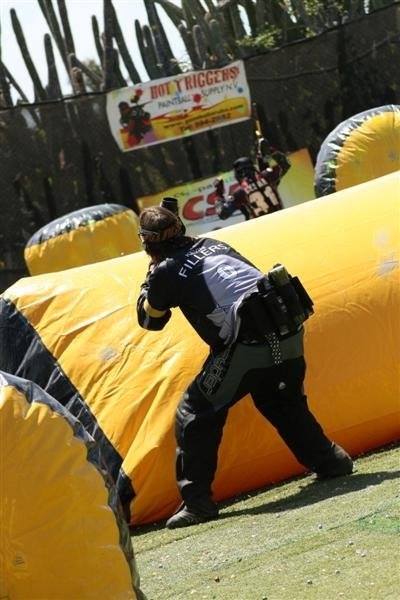
Kevin Fillers and Adam Smith have been around.  They rose through the ranks and earned their spots on several prominent rosters in the mid-2000s.  Knowing that their work ethic is similar to mine as well as their dauntless approach to drilling, I decided to ask them about their successes, their attitudes, and their drive.

But first, a little context.  Kevin and Adam’s paintball careers began back in Maryville, TN at a place called Foothills Paintball in the late 90’s.  This is where Kevin and Adam met and joined their first team together.  Kevin explains, “As our friends started to lose interest during high school, Adam and I decided that it was our dream to go pro and we made a pact to stick together as teammates for the entire journey.”

They learned how to win under the tutelage of Shawn Terry in 2001.  Shawn was the captain of the Saints at the time.  The Saints were comprised of mostly former motocross racers.

“They understood a lot about preparation and infrastructure so that was the first time we had access to a private practice field and really started basing our practices on drills rather than scrimmages. The team broke up in mid-2003 (real life caught up with the older guys) and Adam and I went to Precision in 2004 (a team out of the Chattanooga area they had known for years).”

67869153_656890598148176_1985612296323334144_n

During that Precision season, they met Todd Adamson of Aftershock.  Through Todd, Kevin and  Adam got a tryout for the ’05 Ironmen.

“We made it through the tryouts and got brought out for a few more practices leading up to the 05 LA Open, but we didn’t make the final roster. Todd and Billy (Ceranski) were planning on playing 7 man with Bad Company, but the Ironmen weren’t having it. So Todd invited us down to a Bad Company practice at his field leading up to the HB 05’ event and Tom Cole signed us. We played 7 man with BC and guested with random X-ball teams throughout ‘05”

They loved playing with BC but they wanted to play X-Ball.  So they ended up leaving Bad Company and joined Team Ultimate for the 2006 season.  Both Kevin and Adam, along with their good friend and former protege Zack Wake, left Ultimate after the Chicago event in 06.  All three ended up on the Naughty Dogs professional team.  In 2008, Kevin and Adam left the Naughty Dogs and returned to BC.  Zack Wake would stay with the Dogs for a few more events before leaving for San Diego Aftermath.

And here’s where our paths would meet (we actually met on the playing field in 04 when they were with Precision and again on the practice field in 2006 when they were with Ultimate but this is really where we met and started our friendship).  They played with Red NRG’s D1 team and coached the other Red NRG divisional team (I was on that roster).  And here is another Kevin Bacon moment…

68865625_2356345544444719_2322355483429568512_n

“After balancing our coaching time between CEP and Red NRG in 2008, we received what would turn out to be a ‘too good to be true’ offer to switch to coaching Red NRG full-time and build a Birmingham Alabama based pro team. After the funding fell through on that team Craig Williams from CEP made us an offer to coach all of the CEP squads and play on the D1 team in 2009. We had a very successful year as a program in 2009.”

Kevin would hang up the cleats and move to coaching while Adam would continue to play.  They both went to San Diego Aftermath in 2010.  This would be the first time since 99’ they weren’t on the field together. They dabbled about a little after that (including a stint playing with Birmingham Prime and coaching PC Katana).  They now play in the mechanical movement that is gaining, or rather regaining, popularity.

I have worked hard at Zen to create formula’s for continuous improvement.  I have based these formulas off talks and practices with several different pro players and coaches over the years but mostly off my own experiences.  Kevin and Adam did the same:

“It wasn’t unusual for the two of us to spend an entire Saturday with a scuba tank and 1 case of paint just grinding it out on an uneven patch of grass by Adam’s house. That’s where we developed so many of our ‘low-paint’ drills. We’d run the length of the field doing 1-ball running and shooting drills until we couldn’t pick our legs up. We’d practice reloading and shooting 10 balls at a time, then refill the pod out of our hopper paint and do it again. Sliding drills, snake crawling drills, anything that we considered a critical movement in paintball.”

68252126_2395489980721111_6139270551195090944_n
Kevin Fillers with Bad Company

This sort of drilling really prepared them for X-Ball.  X-ball required more athleticism, more emphasis on fundamental skills, just more of everything really.  Their approach appeared, for the most part, specifically geared for that new type of skill set.  They had a notebook full of drills, some of which are in my notebook.  It was this mindset that helped them prepare others since they had lived it.

So if you ask them what they think a young player needs today, they are quick to respond.

“There are three big things a player has to have in order to advance quickly in paintball. Those three things are athleticism, mental toughness, and resources.” Adam says.  Kevin just smiles and shakes his head in agreement.

As a coach, you have to be able to recognize the strengths and shortcomings of your players.  That equation isn’t easy. But there are certain factors you can find in players that make it easier.  I asked Kevin and Adam what they thought are the skill sets a successful paintball coach should possess.

“An acquaintance merely enjoys your company, a fair-weather companion flatters when all is well, a true friend has your best interests at heart and the pluck to tell you what you need to hear.”

68427749_2338987416420021_721849041700257792_n
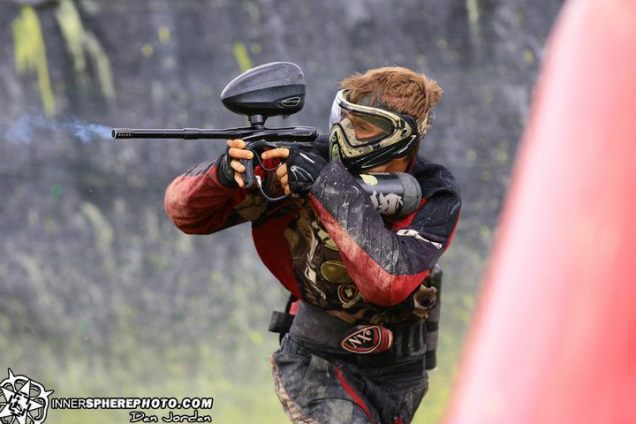
Adam in the NXL 2v2

Kevin leads off, “I think a successful paintball coach needs 2 traits beyond anything else. One, an in depth understanding of the game and two, the ability to articulate the information to wide range of personalities. Paintball is such a strange game in the fact that there aren’t clear measurables for what makes a ‘great’ paintball player like there are in traditional sports. If you are a football coach, the best running back is probably the fastest, the best lineman is probably the strongest. In paintball, it’s a blend between paintball IQ and athleticism.” Adam quickly adds, “Sometimes a slower guy that is a great communicator and survivor is a better fit situationally than putting the 5 fastest guys on the field. I think being able to figure out how to push the right buttons on each player to get the most out of them was a big part of our success as coaches. Some players need to hear ‘Get me that kill on the break or plan on riding the bench for the rest of the event’ while others need to hear ‘Shake that point off, you’re my guy and I want you on the field.’

“I know some of the people we coached are probably thinking, I don’t recall ever getting the gentle version from Kevin & Adam in practice, and in a lot of ways, that is true.” Kevin says with a grin. “No one got the carrot at practice; we preferred the stick. And that was by design. With the mental toughness required to be competitive at high level paintball, we always wanted practices to be a pressure cooker. I’d much rather have someone melt down at practice so we could create a teaching point than make practice all rainbows and butterflies then have our weaknesses come to the surface at a tournament.  It was always our intention to push people to that edge because the great players shift into 6th gear and the weak players blame the coach and quit. And if anyone doesn’t believe that, let me know when someone new starts winning pro because last time I checked, it’s primarily the same ice in the veins, take no prisoner, ruthless play that has been on top since the mid-2000s.”

I’m inclined to agree with that last assessment.  I am often quoted as saying “I will take the team that shot 100 cases at practice over the team that shot 20” or “The other team is grinding still, why are you thinking about leaving this field?”  It requires time, determination, and a bank account.  But besides that, what else do they think are skill sets most players these days are overlooking?

68622397_462055677683760_7815458448438460416_n

“Communication is a bit of a cliché response, but it couldn’t be more true,” says Adam.

“Going a step further though, I think it is being a complete student of the game. It still blows my mind to watch pro players make decisions with seemingly no regard to the score, body count, and time remaining in the match. If you are in an X-ball match, and you don’t look at the clock and score before every point you play, you are a moron. Just taking that moment to understand all of the related variables, you can cut your decision making down to a fraction of choices,” adds Kevin.

Authors note**Now THAT I can get behind since that is part of my equation in the pit as well.  Glad these guys are bringing their A game to this talk…

But that is only a finite part of the calculation.  And they know this so I asked what they thought  an individual player’s biggest hurdle in competitive paintball was.  They cut to the quick on this one.

“For youngsters, it has to be resources. Lets be real, paintball is an expensive sport like racing, and if you don’t have the financial support to be out there most weekends, it will be very difficult to climb the ranks young. Same reason why most NASCAR drivers come from money. It’s a lot easier to get your 10,000 hours if you can start early and someone else is footing the bill.  Despite the economic hurdles that will always create an uneven playing field in luxury sports, there has never been an easier path to advancing through the divisional ranks than today. When we were coming up, there weren’t BKi, Youtube channels, and GoSports streams of the events (or Zen bloggers for that matter). We had to piece it all together in a time when the sport was rapidly evolving. Now, since paintball strategy and format has somewhat plateaued, any player has access to relatively the same amount of knowledge. It’s just up to the player to put in the sweat equity and hold themselves personally accountable for improving their game.”

69239866_460616828121994_5093066017387577344_n
Adam showing how drills for run and gunning pay off

Recently, I had asked Kevin and Adam to come say “hi” at a recent CEP off weekend practice.  I thought it would be a good idea to just bang on a non-layout weekend in a fun environment, do some team building, eat some good food and remember why we do what we do.  The Kevin and Adam part of the cocktail was to make sure they were grounded in reality!  And it didn’t disappoint.  I asked them to say a few words to the current iteration of CEP and they did great.  So, for this Gun Fu article I thought I would ask them what they believe is the one thing most divisional teams are missing today.  There was no hesitation in the answer from Kevin.

“Personal accountability – we hate to be the guys piling on this generation about being ‘soft millennials’, but we just don’t see the same level of intensity and accountability when we’re around lower divisional teams. We don’t think it is possible to advance in this sport without being able to accept harsh criticism. So my advice to any up-and-comers is the next time you receive criticism in practice, don’t make an excuse or try to explain away what happened just say ‘That’s on me’ and don’t make the same mistake again. Own your mistake, learn from it, and evolve as a player.”

This!  This times 1000!

68391740_475290343301144_7653210750252482560_n
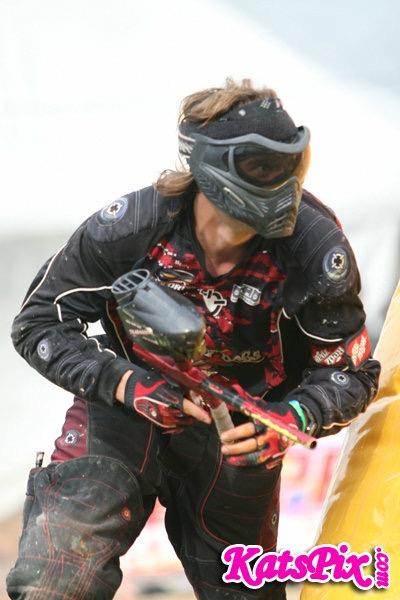
Kevin in the ole CEP days

Okay – I went into a quick lighting round but if you have ever been around Kevin and Adam for any amount of time, drinking a beer and shooting the stuff – that can turn into an all-day affair.  So here we go!

Tell us more about the Mechanical league you guys are competing in now? How did all that come about?

Kevin – “Oh man, we love some mechanical paintball. We definitely prefer mounds over hyperball and woods, but I’ve found the format as a whole to be extremely refreshing. When Tim Montressor re-packaged this classic format in 2017 with the Iron City Classic, we didn’t have any idea it would create this amount of momentum, but I decided to play it with Bad Company just as an excuse to get a break from the 2v2 training and visit with my old teammates. Needless to say, I could have done without tearing my hamstring in the finals, but I still really enjoyed the weekend as a whole. We’ve played all 3 ICC’s with Bad Company and we competed in the inaugural ICPL with the Saints (a reboot of Shawn Terry’s old early 2000s squad).”

“We are curious to see how this goes over the next few years though because this classic movement is like watching the evolution of paintball happen again at 10x the speed. At the 2017 ICC, every team was a throw together team and everyone was playing with either electros at 5.5 or antique auto-cockers. By 2018, you were already seeing the teams traveling to practice on the field, playing with their own private-label modern mechanical guns, and by 2019 I don’t think you can deny that it is considerably harder to field a competitive throw together squad. What I hope is that the level of play doesn’t increase to a point where it starts to scare away the weekend warriors.”

As players who played prior to and during the advent of X-ball and now playing mechanical, what is something that has remained consistent?

Adam – “For me personally, it’s the love of just putting it on someone. I don’t care if it is on the NXL center court or at a local scenario game, I just don’t think I can ever get tired of unloading on someone and watching them have a meltdown.  The bigger the meltdown, the better!”

68600290_505373033544907_3399621495599661056_n
Adam playing mechanical ball recently

What is something you think paintball helps teach?  In other words, what’s something a player/individual can learn from the sport?

Kevin – “One of my biggest takeaways from paintball was just learning team dynamics. Little things like understanding what the good vibe feels like when you have the right team built and conversely understanding what toxic attitudes look like and how they can be cancerous to a team. When I got into business consulting was when I really realized how much my paintball coaching was going to apply to “adult life”. It’s funny that the same *^$%y attitudes that got people cut from teams are the same attitudes that get people fired. It makes me think of those memes you see ‘un-coachable kids become unemployable adults.’ 100% true.”

What were your thoughts on the whole Damian Ryan/NXL feud?  He is returning to the NXL and the Ironmen for Chicago.

“Man that’s a tough one. As a player, I consider Damian to be one of the most talented and dynamic people to ever play up the middle in the Xball era so I hated to see him step away from the field, but I think he made one hell of a miscalculation with how he voiced his displeasure with the current state of the industry. There are only a few ‘power players’ left in the industry and throwing a digital middle finger up to their joint venture (the NXL) pretty much ended how I thought it would.

Believe me, as two people who committed a lot of years to this sport, we would have loved nothing more than to have seen it end up as an X-Games sport with the financing power to make a lot of people full-time athletes, but that just wasn’t the hand we were dealt. Between some bad financial choices by the big companies pre-2008, a global recession, the end of paintball gun innovation years, the creation of airsoft, and a hard to watch sport for the casual spectator, the industry was destined for a significant setback after that many years of exponential growth. Personally, I would have preferred this happening a few years later (not at the peak of my playing career), but it was coming none the less.

I’m sure a lot of people will consider me a ‘homer’ since I played with Bad Company, but I think Tom Cole is doing a lot of things right for the current state of the industry. Would I like to see $50,000 first prizes for pro again? 100% yes. Tournaments held on Huntington Beach, 1000% yes, but that was just a different era and unfortunately, I don’t think we will see those days again. For people that don’t know Tom, they need to understand that you will not find someone who has invested more years into the growth and improvement of paintball. I think that’s what rubbed me the wrong way about the internet kids going after Tom/NXL. People want to complain about cities and venues, the NXL is in Vegas and back in Kissimmee. People want to complain about prizes, the NXL offered $50,000 for a 2-man event and hardly anyone had the balls to play it.

My suggestion for anyone who wants to create change in the industry is to start a dialogue not a flame thread. Compile a list of questions and lobby Matty to do another interview with Tom. Tom has never been afraid to stand at the podium and face the hard questions and I’m sure he’d be willing to do it again.”

68454382_2647245761961280_939405928564785152_n
Kevin making moves

What was the best piece of advice you received related to paintball and who gave it to you?

“It’s funny because probably the most influential words of wisdom that stuck with me were given to a teammate after he got bunkered at the Memphis Indoor in 2001 or 2002. Someone from OBR or Farside had just dropped the hammer on him and gave him a few extra right in the back of the head. He of course was pissed off and wanted to fight the guy when he was told ‘You know why I shot you so many times?, so you’d be thinking about wanting to fight me rather than spinning on me and arguing to stay in the game’. My friend shut up and walked off the field. I never forgot that and called it a good policy.”

What is your favorite drill(s)?  Why?

“Run-Dive-Slides: Start on the baseline of a field, run 3 steps, dive like you are diving into the snake, crawl about 10 ft, jump up as fast as you can, repeat for the length of the field. At the end, you stand up. You never lay on the field.

Without a doubt the worst drill to end practice on and that’s how we ended every practice. It did 2 things. 1 – it was a message to all of our teammates that we don’t consider practice over until the tank is on empty 2 – it was a reminder to ourselves that we want it more.”

And there you have it people.  Take it from guys who have been there and made it happen.  Have the right attitude, have the right drive, put in the work, and make it happen.

Thanks to Kevin and Adam… who knows, maybe I’ll get out there with the Ole Auto-Whopper and play some mechanical with them…

Be water my friends

Coaching is easy. Winning is hard.

coach

[kōCH]

VERB

coaching (present participle

train or instruct (a team or player)

“He has coached the Edmeston Panthers for six years”

give (someone) extra or private teaching.

synonyms:

instruct · teach · tutor · school · educate · upskill · guide · drill · prime · cram · put someone through their paces · train

This month’s blog is, again, based off conversations I have had with a few team owners and captains as of late.  The topic is centered around coaching, or rather more specifically, how to be a good, better, or just simply a coach.  It’s often an overlooked position and one that, in the sport of paintball, doesn’t get as much attention from teams as it should.  I truly believe that several teams or programs could benefit from having a dedicated individual who can help the players grow as well as allow them to focus on playing. But first, I think there needs to be a little context or background on where I am coming from.

There was a time I believed coaching in paintball was just an empty title.  More than likely, the “coach” was the guy who called a line or maybe he managed logistical issues. Or he was the guy who was yelling from the sidelines when in game “coaching” was legal in paintball.  He was anything but a coach by the very definition of the word or what most of us think of when we hear the term.  There was no Vince Lombardi, Bear Bryant, or John Wooden of paintball.  And I never really thought there would be.  Sure, there have been several great leaders in paintball, Shane Pestana (LA Ironmen), Alex Martinez ( San Antonio X-Factor), Bart Yachimec  (Edmonton Impact), Mike Hinman (San Diego Aftermath/Dynasty), and Rusty Glaze (Dynasty) to name just a few.  Please do not get me wrong, they all are incredibly talented leaders and a coach must be a good leader.  But I guess I never really looked at them as “coaches” per say back then (I would now).  Maybe I was hanging onto images or memories of my grade school and high school wrestling, boxing, baseball, and football coaches?  Possibly.  But “paintball coach” never really seemed practical.  Sure, there were talented individuals who knew how to up a players skill set, or motivate a team, or suggest approaches but no definitive coaching role.

319e8a48d095e328146c3b36120fec41 (2)
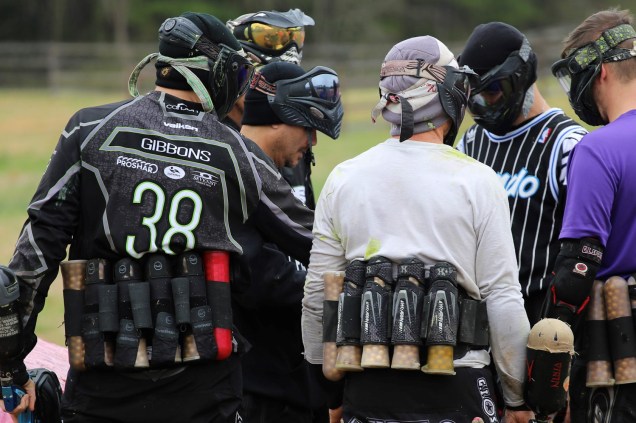
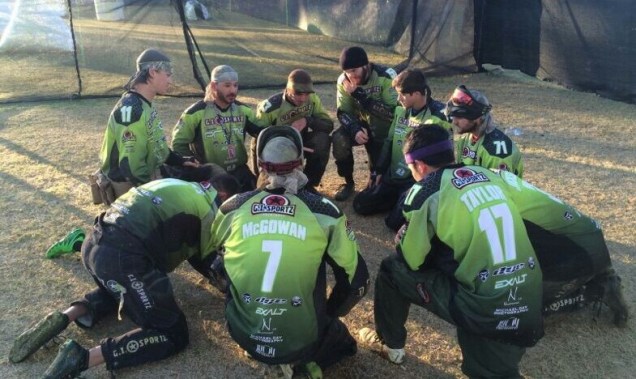
“Huddle up!”  Data sharing time


That all changed when I met Paul Richards.

Baca, or Top as I affectionately called him during our time together, was my introduction to what a paintball coach could and should be.  He was the whole package of what one would think of when using the term coach.  He was a leader but also the offensive and defensive coordinator with managerial capabilities who had an eye for talent.  He not only recognized who the potential talented players were but also specific talents in each player.  Sure, he knew the Xs and Os.  But his greatest superpower, in my opinion, was his recognition of a player’s abilities and how those abilities could be leveraged to win matches.  He was truly talented in that way.  He could take the weakest link on a roster and make them an asset simply by using the one or two things they were good at and mixing that in with the other tools on the team to meet the needs of the point.  He made it look and seem so easy.

It isn’t.

162693_496093427120_94437_n
Baca Loco or Top – The man himself – Coach Paul Richards

If you read any books on coaching, sports psychology, or biographies about famous coaches in professional sports, you will see that almost all of them have similar themes.  We covered the psychological approach to them here – https://zenandtheartofpaintball.com/2016/08/21/dodge-duck-dip-dive-and-dodge/

(Or look to your right on the page and click the link for past blogs on the topic of coaching – might I suggest the following:

Who’s with me?!

What’s in a name?

Lightning In a Bottle?

Touche’ Cliche’

(trigger warning on “touche’ cliche”)

Most successful coaches recognize that, besides the importance of the Xs and Os, there is another element that is just as significant.  A solid relationship between the player and coach is paramount to a successful process.  It must be symbiotic (mutually beneficial).  At its core, its very foundation, there must be, there has to be, the element of trust.  The player has to trust the coach to identify what will make them better.  The coach must trust that the player has the capability of meeting that level of improvement.

It is worth noting however that the relationship must be in the best interest of the team while still fulfilling the needs of the player.  This includes, but should not be limited to, benching/cutting that player or replacing that coach. 

87f3aa19af8f5fae91622ee0459b8d4a (2)
Positive reinforcement and constructive criticism must be measured/coupled with trust


Here are some things I have learned over the years, whether from those great leaders I mentioned earlier or from other walks of life and sports.

  • Failure is not always bad. We can all learn from our mistakes.  They can make us better.  Failure is “fertilizer”. It creates the healthy environment in which a player and coach can grow.  If you can eliminate future mistakes by learning from them, you are on the right path to growing into a great player or coach.
  • Knowledge and discipline are indispensable. But without truly caring for a player, genuinely wanting what is best for them, those two traits won’t matter.  See, if the player knows I am real, I can let them have it and then we can share a beer and joke about it later.
    • If you don’t see yourself becoming or utilizing this method, it doesn’t mean you can’t be a successful coach.  It just means you will have to use something else to gain that trust and confidence.
  • Piggy backing on the bullet point above, I have seen my most success when I treat the players like family. As Rocky Cagnoni said in PUSH, “It’s like a big family… I mean, people see us fightin’ and everything but that’s what a real family does. I think anyways. I mean, fightin’ one second and the next second it’s all cool. It’s the heat of the moment.  I think that that’s what gets the passion.  I’m Italian, I like the passion…”
  • Coach Paul taught me that the key to coaching is taking players and truly analyzing their ability. Then putting them in a position where they can improve not only the effectiveness of the TEAM but gain individual improvement for the benefit of the team. Getting players to play better than they think they can is a superpower.
  • Coaching can be complex or it can be simple. It depends on the assets in front of you.  It’s like a tool box.  You need the right tool for the job (simple) or it can be like a puzzle and you have to find the right pieces then put them together to make things work (complex).


33060919_630461653963736_4188779868898459648_o
There are several elements to coaching.  Fundamentals should never be overlooked.


I can’t remember where I read it, but the comment stuck with me. “All coaching is, is taking a player where he can’t take himself.”  (I just looked it up – Bill McCartney – head football coach at the University of Boulder Colorado from 82’ to 94’).  How profound… and yet how astoundingly true.  A coach is a guide.  He can show you the way, but the player has to commit and follow the path laid out before him.  It is ultimately the player’s choice.  Coaches can’t execute for you on the field.  You have to do that as a player.  But what if the coach has chosen the wrong path or doesn’t really know or recognize what a player needs?

As a coach you have to recognize the power you wield when the player trusts you.  In other words, as a coach, you have to know the WHY behind each instruction.  I have seen it a hundred times.  A “coach” shows a player something but doesn’t explain the why.  “Just do it this way.”  Or worse, makes players run a drill that is teaching them the wrong thing or maybe emphasizing the wrong thing.  This can cause regression, delay growth, or just plain teach a bad habit.  Understand the why before implementing the how. You better know how to implement said how. (That was a fun sentence to write.)  Ultimately the key to gaining and building trust is simple.  Be honest.  An honest coach is a successful coach.  If you don’t know, so say.  But if you do, explain why…


41412345_2004428422933380_5369280208916447232_n
Great message


Another key factor I have learned from the great paintball leaders I mentioned earlier (some I call friends and others I just know from meeting in pits and short conversations) also happens to be one of the 4 C’s mentioned in that blog post from 2016.  It is confidence. But not confidence from a player’s perspective or a champion’s perspective, from a coaching perspective.  I think one of the key elements about being a successful coach is that you have to have a sense of confidence about what you are doing. You are essentially selling a process, a concept, a vision of the future.  Anyone who comes in trying to show me something that seems unsure of what they are doing, I may not have checked out the moment you opened your mouth, but I was most certainly skeptical.  So be confident.  Now I didn’t say smug. There is a difference.  I often tell my players, “Let your game speak for you… no need to make anything personal through words.  Your game will speak much louder than anything your mouth says.”   This should apply to coaching as well.  They either see the results from what you have implemented or they don’t.  Your actions and the results should speak for you.


65881700_10219245407103087_503090985627025408_n
The “it just might work” face…


A good coach has to be able to fill multiple roles.  They must be a good communicator, motivator, teacher, goal identifier, confidence builder, organizer, manager, politician, physicist, wizard, cat herder, and mentor.  (okay, some of those I made up)  They must recognize the strengths, the weaknesses, the opportunities, and the threats to the team and plan accordingly.  A coach takes action anticipating the outcome based off data he sees and knows.  He creates a culture that will benefit all the players, not just a few.  But he can’t do it alone.  He has to have buy in from the players.

I guess, in the end, coaching is all about “the process”.  One of my favorite moments as a coach is when I see that light bulb go off in a player’s head when they “get it”.  I love when players begin to recognize their potential and see it come to fruition in a match.  I love when teams see the hard work pay off by making Sunday or winning those tough matches.  I love the practices where you see players dig deep and really give you 150%, the ones who want to be there, the ones who believe… that’s good stuff man.  At least, I think so… that’s why I do it.

Be water my friends.

Division Decision

“DON’T WORK FOR RECOGNITION, BUT DO WORK WORTHY OF RECOGNITION.”

One of the most important aspects of being a good paintball player or coach is preparation.  Come tournament time, you will face some teams that are not much of a challenge and your game alone will suffice in being victorious.  But then there are those teams who will be the real test, the real challenge.  The ones that will make you dig deep. The knife fight where someone is coming away bloody, maimed, or dead.  THOSE are the games you prepare for.  THOSE are the games where data, feedback, perception/recognition, execution, paint, etc. all must be on point to win.  As a coach, it is your job to make sure the team is prepared to address THOSE teams.  As a player, it is your job to be able to address the needs of the coach and help him find solutions to the issues at hand.

With all that being said, an interesting phenomenon has occurred the last 3 months.  I field it at least once a year but for some reason this season, I have had several conversations with different players regarding what division to play.  Or rather, what division they WANT to play.

Prepare-2_0

It’s a topic that is always out there in some shape or form.  And there is certainly nothing wrong with the topic or having that conversation. But I want to be clear about something; this is not in reference to those players out there who care more about a rank next to their name on APPA or who think they are better than others because they have a higher rank.  I don’t have time for people like that.

No, this is for those who genuinely wish to know where they need to be.  For the record, those I have spoken with recently about this topic are in the latter end… genuine.  They are not the “I’m cool cause I’m this D-rank” crowd.  Yep, you’re a “D” alright… just not the way you think.

Here’s the conversation in a nutshell I have had recently with a few different players:

“We are looking to play (insert next higher division rank here) at the national level.”

Really?  Curious as to why you would do that?     

“I think we are ready.  I think we could be competitive.  What better way to learn faster?”

Have you won in (insert the division right beneath the division they wish to play) nationally?

“No.”

54520441_1998947293740539_6759130006699376640_n

And there’s the rub… you haven’t won nationally at the division you are ranked.  Why would you then decide to compete above that level?  And how do you know you are ready for the next division?

Let me get something out of the way… do I believe teams in lower divisions can be competitive in a higher division?  Absolutely, yes I do.  Do I believe they should compete? Sure, in some instances.  However…

Let’s break the argument down into its components.

I THINK WE ARE READY

Many players are in a hurry to see improvement in their game.  Some players have natural ability and things come to them quickly, some have to work at it, and still others may not be suited for the game (doesn’t and shouldn’t keep them from enjoying the sport we all love though).  But paintball is a team sport…

Here is my question to the statement “I think we are ready.” –

Based off what?

It’s a simple enough question and one that a truly prepared team would have the answer for almost immediately.  “We won our division at the Las Vegas NXL, placed in the top 5 the last two events, and have been holding our own when we scrimmage this top higher divisional team.”  Or perhaps “We have placed in the top 4 the last 3 events in our division at NXL” or something to that extent.  I would even consider “We won the series title in our division at this Regional event landing in the top 4 every event, have the financial backing, practice every weekend and are really gelling as a team.  We made Sunday and took top six in our division at our debut at NXL.  There are a few more things we need to hone, but we are well on our way.”  Hmmm… not a bad response.  Still, why not try to improve that 6th place first?

Winning an 8-10 team regional event or a 4-5 team local event is not indicative of how well you will do at a national event.  There are lots of factors to consider before making the jump and lots more than just a few wins at small venues here and there.

55526774_280628499523828_5423511137465401344_n

I THINK WE COULD BE COMPETITIVE

What is your team’s definition of competitive?  Do you consider it competitive if you were to go 2-2 in prelims and just miss the cut?  Is that acceptable?  Maybe tying a team in the division above you denotes being competitive?  What does it mean to be “competitive”?  Not losing every match?

There is a word in there that should catch everyone’s attention – “could”.  Don’t you mean “would”?

Here is my question to the statement “I think we could be competitive” –

Based off what?

When I travel to a national event, I’m not going to see if I can be competitive, I’m going because I know we are.  I’m going to win… not compete.  If you are confident that you play above your divisional ranking, then you need to prove it.  Put your money where your mouth is and go show everyone that you can play above your pay grade by winning your division.  I believe that in most cases the top teams in any division at the end of a season should be competitive in the next division the following year.  Sure, there are some anomalies but not many.  Look at just the examples from 2018 to 2019.  Semi Pro to Pro: Aftermath; D2 to Semi Pro: TBD Jits, Gulf Coast Hurricanes; D3 to D2: Grit, Padres, Royal City, Blastcamp, Vintage; D4 to D3: Paintballfit.com.

IMG_20170218_114921

WHAT BETTER WAY TO LEARN FASTER

I have always been a proponent of playing better teams in order to advance the learning curve.  Taking the time to bang with a better team will show you holes in your game pretty quick, especially if you are practicing with a team that believes in sharing knowledge.  There are always those teams that feel it is a privilege for you to share the field with them and therefore don’t share anything but the ass whoopin’.  Not cool but hey, that’s going to happen.  Take what you can from it.

Here is my question to the question “What better way to learn faster?” –

You’re basing this off what?

Here’s my thought on this – If you wish to compete at a higher division to “learn” faster, then you obviously have money to burn.  I would suggest scrimmaging not just a higher division team, but a winning higher divisional team to better know where you stand.  Otherwise, you are about to have a rather expensive practice called a tournament.  Enjoy spending all that money on plane tickets/rental cars/entry fees/hotels/paint/food, etc. to play 4 matches.  Instead, how about taking that money you have burning a hole in your pocket and spend it on more paint for practice?  Spend more time at the field shooting it in useful ways, learning, and getting better. Put in the work to EARN the bump up as opposed to just declaring it.

Now, remember at the beginning of this blog we talked about being prepared.  As a firm believer in preparation, it simply makes sense to understand the level at which you SHOULD BE prepared no matter the arena.  We have talked about it before.  Working harder now saves you even harder work later.  Preparation is a continuous improvement process.

Remember, there are two things to prep for: the expected and the unexpected.  Obviously, the expected is the easier to prepare for.  There are countless examples of how to do this in paintball.  As you can imagine, if we don’t spend the time prepping for the most basic of things (laning, practicing a layout, etc.), this will more than likely lead to disaster at an event.   That being said, not prepping for what we can’t perceive can be disastrous too.

If you aren’t prepared for the unexpected, then you didn’t really prepare now did you?  That goes to the nth degree when you bump divisions.

IMG_20180811_165056
Coaches get shot too… oh and we will have new merchandise coming soon

Here’s how I look at it overall.  If you haven’t really proven you are prepared for the higher division, don’t return from a failed event attempt with excuses.  If you didn’t take the time to prepare appropriately – e.g. KNOWING you have the capability to win because of your preparation and experience – then don’t do it.  You’re just hurting yourself in the long run.

In my opinion (and that’s all it is), if you haven’t earned it, if you haven’t prepared for it, then it really didn’t matter to you anyway.  Ultimately, you have a duty to come prepared for anything that matters to you. There are no excuses.  When things matter, you should want to be prepared. It shouldn’t be a choice.  It just is what it is.  Do the hard work of preparing for the expected and the unexpected. There aren’t any shortcuts.  Put in the time and do it right.  In the long run, you will be happy you did.

Be water my friends.


Smells like rain…

The 2019 Dallas Open NXL is in the books.  And once again, the Dallas event had its share of adverse conditions although not on the level that most had anticipated (perceptions ranging from inconvenient to apocalyptic).  I personally felt the event turned out much better than expected and could have been a lot worse (Think Galveston Hurricane or Chicago Tornadoes).  I will go on record as saying that I like the Texas Motor Speedway venue (both Whataburger and In&Out were packed plus you have a Buc-ee’s right there).  However, it may make sense to move the event to later in the year.  I say this only because, a simple google search will show that Texas’s wettest month is, in fact, May.  To those of you who will then say, “But then it will be too hot!”

20190502_162232~2_resized
Pit row day before event start (Thursday)

Shut up.  Hydrate correctly and play ball.

Dadnabbit… did it again.  Let’s get back to this month’s blog topic…  The conditions of the venue got me thinking about how teams respond and address this very thing.  As a whole, we prepare for events by studying the layout and developing ways to play it effectively.  But what happens when plans become compromised by “adverse conditions”?  How do we conquer things we did not anticipate?

I decided for this month’s blog, I would start by just looking up the term itself – “Adverse Conditions”.

Adverse, according to the Merriam Webster dictionary, is:

  • acting against or in a contrary direction
  • opposed to one’s interests
  • causing harm

Condition(s), according to several definitions of the word, in this case, the most appropriate to our topic:

  • a state of being

What I came away with is this – “Conditions that make it difficult for something to be or happen”.

There we go… a baseline…let’s start there.

20190503_180835_resized
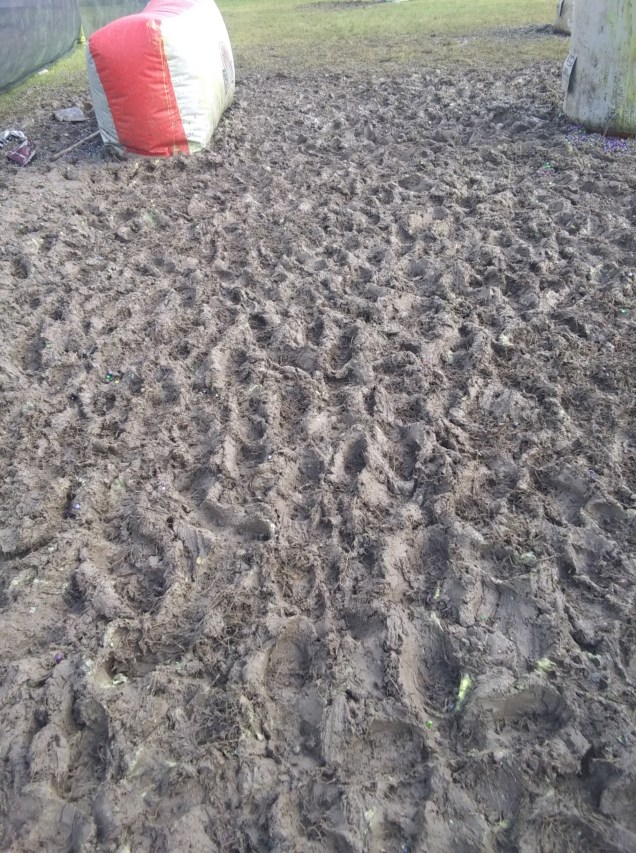
Not just mud… sticky mud

“Prepare for the unknown by studying how others in the past have coped with the unforeseeable and the unpredictable.” – George S. Patton

How should a team address “adverse conditions” when they arrive at an event?  Most people would say with preparation, of course.  If you know it is going to rain, you bring your visor, a clear lens, extra towels/microfibers, plastic bags, etc. We’ve all played in the rain before.  At least, I hope most of you have and understand there are certain necessities to this.  If not, make a comment and we will make it a topic of a future blog.

But what about issues you couldn’t possibly prepare for?

During the Dallas event, certain players or positions may have found themselves hindered by mud. You may have even found your plans disrupted by the solution to the mud… mulch, which anyone knows that if you dive into it, you have a real good chance of stopping quite abruptly.  So, dashed plans and potential injuries have now become a constant concern.  There is a good chance your team was used to running far or using a pocket play or what have you.  But you get to the start box and realize the mud will most certainly be an issue with getting a good jump start.  Or maybe the start box was fine but the center or tapes were mud pits that would cause over-sliding?  Or maybe they put mulch right where you want to dive to enter the snake or dorito? You suddenly realize you may not be able to play the field the way you prepared for it.  How do you prepare for that?

home mud
This could get messy…

Preparing to play the field

The most practical approach to any field is developing plays based off specific scenarios.  I almost always develop a “bread and butter” play.  This is the base play that my team will use most often.  It usually provides a higher statistical success rate by putting us in good position with primaries (our first bunker of choice off the break) and allowing specific goals to be met early.

Then I like to play the “what if” game.

Expect the best, plan for the worst, and prepare to be surprised.” – Dennis Waitley

Let me give you an example.  Not too long ago, the south saw a rather horrendous snowstorm (for the south).  I was at work and lived about 10 miles from there.  Everyone was being told stay in place, don’t travel.  Being the stubborn man I am, I chanced it and made it home safely.  It took two hours but I ended up with my family as the south dug out of a 3 day freeze.  Here’s the thing… what if I hadn’t made it and got stuck or wrecked?

Now, I’m no boy scout (is there such a thing anymore or is it the he/she/we have no identity politically correct hand out trophies to everyone snowflake brigade these days? I don’t recall… oh well), but I believe in preparing for the unforeseen.  I had placed in my car the night before non-perishable food items (granola bars, beef jerky, water), a thermal blanket, flashlight, a lighter, matches, some laundry lint in zip lock bags, a change of clothes including extra socks, a pair of boots, and extra layers.  And before anyone asks, yes, I had a firearm with extra magazines and ammo.  I had no idea the storm would be as bad as it was.  I had no idea I would get stuck.  I had no idea of any of it.  But I thought ahead… I played the “what if” game.


11054356_10206225597064167_570992716500375430_n
Doesn’t matter. Get it done.

What if our opponent plays the layout in a way we didn’t think of?  What if they have great guns off the break and they are chopping us up consistently on the break?  Or perhaps they are taking more ground than us on the break and getting into position earlier or faster?  So on and so forth.  What do you do?

Hopefully, you played the “what if game” before you got to the event.

I realize I have oversimplified this concept. But you get the basic principle.  And that same principle applies to adverse conditions.

The field my team was competing on in the prelims during Dallas had its share of these conditions.  One side of the field had different issues than the other.  So we made note of it and developed our plays and breakouts around those conditions.  I was able to do this based off prepping for a completely different condition (good guns on the break, teams taking ground, etc.)  Does that make sense?

60027891_2380696718915173_6266007330928721920_n
Photo Courtesy of Dane Hawkins Photography

We played the West side of the field (the one in front of our pits) differently from the East side of the pits.  I also relied on data from my players who were actually IN it to let me know what they felt their capabilities were.  Notice how I also mentioned east and west… this meant we were actually dealing with the sun (yes, the sun was in Dallas/Ft Worth) so I also took this into account.

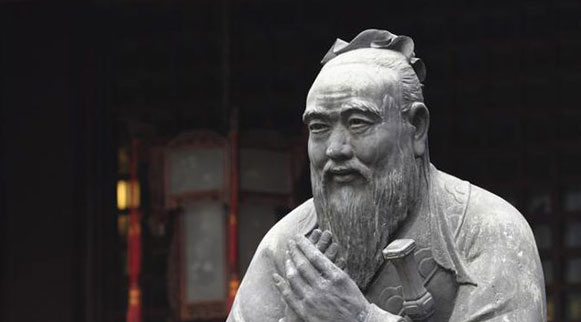
“Success depends upon previous preparation, and without such preparation there is sure to be failure.” – Confucius

The whole point of this particular blog post is this.  You CAN prepare for the unknown.  Adaptation – the action or process of change to better suite an environment or condition – is the basis and lifeblood of any good paintball team.  Adapt or die.  Understand that adaptation is incredibly important to paintball teams.

59863142_439757860123763_8217599805480763392_n
Dane Hawkins Photography

Now, to shift gears just a bit… I was reading some more sports psychology this past week (at home sick … I had time).  And I decided to look up anything that dealt with performing in the rain.  I didn’t find anything… but I did find an interesting article that I want to share the basis of with you all.

One thing we have talked about at length here at Zen is the mind… having the appropriate attitude and better understanding of one’s capabilities through truth.  It has often been joked that I am “toxic masculinity” with certain thoughts and perceptions I have.  I am “outdated”.  Without getting too political, which I admit, I may have already done… I will say that I neither prescribe to nor acknowledge what I believe to be the weak willed and irrational perspectives being taught to our young men and women in today’s society regarding what is “normal” or “socially acceptable”.

That being said, I do want to point something out that came to my attention recently regarding a young man I know.  Dealing with certain issues mentally can be challenging and is becoming more and more common in many of the paintball players I meet. Besides the obvious topic we discussed above in relation to a player’s perception to the conditions (How are we gonna deal with this coach?), there can be heavier or greater issues being faced by players. Here is the basis of what I read:

R.A.I.N.  (Bob Stahl, Ph.D. -February, 2010).

“R” – Recognize.

“A” – Allow or Acknowledge that it is indeed there.

“I” – investigate and bring self-inquiry to the body, feelings, and mind.

“N” – is to non-identify with what’s there.

Besides this one particular young man, it got me thinking about some of the other young men I have coached over the years.  How do I recognize or hope to reach young men who may be struggling with depression or similar issues?  If I can’t recognize what they are dealing with or maybe I do but can’t at least point them in the appropriate direction, what good am I?  My instinct is to toughen them up.  But that isn’t a one size fits all solution.  I can’t beat it into them.  I find this R.A.I.N approach a useful tool for the toolbox.

20190503_181118~2_resized
He always keeps his promises.

The concept is that if we use R.A.I. N. as a practice (make it a standard approach), we develop a better understanding of what fuels or drives our fears, anger, or sadness.

I personally believe that acknowledging stress, anxiety or pain rather than suppressing it is advantageous.   I feel that we need to learn how to cope with and view all challenges as a rite of passage instead of running away from them or hoping someone will fix them for us. Adversity builds character.  Steel is forged in fire… not with long walks in the park and hot showers with lavender…gross.  Face the issue, embrace it, recognize it… and ask for help.

I apologize for detouring there… I always try to keep this light and fun.  Just felt it might need to be said or read by someone.  If you or someone you know is battling depression or going through a tough time, reach out.  Let them know they are not alone, just like you are not alone.

Anyway, like I said, I am under the weather so I am cutting this one short.

Godspeed and remember…

Be water my friends.

Gun Fu #10 – Heart

“The secret to getting ahead is getting started.”

– Mark Twain.

Wading into something like the unknown can be daunting, scary… most are hesitant.  Some are warriors and welcome the challenge.  There is no right or wrong approach, as long as you begin.

I’m a firm believer in heart.  I love watching those players who get on the grind, get smashed, get up and do it again, get smashed… and do it again and again.  They don’t lose, they learn! That takes heart and if the player has the right amount of it, you’ll never beat them.  You may win… but you won’t beat them.  Heart is unbreakable.

I am drawn to people of that nature and this Gun Fu article is certainly one of those people.

His real name is Jerardo…

“I go by Jerry but my mom started calling me that so it stuck and was easier for people to pronounce.”

28576054_1884039311637273_3796867057439441816_n
The author and Jerry at the range

Jerry Caro is entering his 5th season of professional paintball.  He started his pro paintball career with the Los Angeles Ironmen, jumped over to PC Katana last year, and is currently rostered with Los Angeles Infamous.”  And he just turned 25 years old.

“My Birthday was a few weeks ago on March 17th, not a bad day for a birthday since it falls on St. Patrick’s Day. “

Said with an Irish grin no doubt.

“I first got into playing paintball with one of my childhood best friends Eli. We did everything together from Pokémon cards to riding bikes just to name a few. But what sparked the idea of paintball was BB guns. We got tired of just shooting cans, so we both thought it would be awesome to be able to shoot at each other with Paintball guns instead! That was just the beginning… not knowing what would happen next. We went to the nearest Walmart and each bought a Spyder Imagine, went back to his house where he had acres of land to run around on, and shoot at each other; it was perfect.”

He became instantly hooked.  Jerry and his friend Eli would then go on to look up the closest paintball field. The very next weekend they ended up at USPN (United States Paintball Nation) in Hollister, CA (About 50 miles south of San Jose).

56396045_786814061698657_3235460303583969280_n

“There was a team called Inflict that was there getting ready for a tournament they called the World Cup we knew nothing about…” he says with a laugh.  That’s where he met future Royalty/Ironmen teammates Al Fernandez (currently on the Ironmen), Danny Ibarra, Toke Hamil, and Jason Vitalich.

“They were all guys I looked up to and wanted to play like.  They all were kind enough to teach me how to play the game.”

Jerry is a lot like many of us.  His love of the game is obvious and he happily explains it.

“I love so many things about paintball; one being that it’s constantly challenging. It drives me to become a better person/player/friend/teammate.  Paintball gives me life; it’s an escape for me. Nothing beats the people I’ve met, the places I’ve been, and the lessons I’ve learned from this sport I’m so passionate about.”

Hey but it isn’t all fun and games.

IMG_20181110_134819
Fun and games – Left to right: Sean, Zen, Timmy (Katana), Jerry, and Jason

“Sometimes politics get in the way and can cause it to lose some of the fun at times but I try to ignore that whenever that kind of stuff happens.”

But it wasn’t always about paintball.  No, our hero was quite the football player for a time, even playing in college!

“I’ve played Football from the age of 7 all the way up until college. I was able to somewhat balance the two and make it work between Football and Paintball most of the time. I took a few years off from Paintball to focus on school and football. Being in shape for football and then transitioning back into paintball wasn’t what I remembered. I felt stronger/faster but I just had to get used to the agility movements again.

Okay, so we know how it started and why.  But what about becoming a professional in the sport?  How did that happen?  Was that the plan all along or did it just kind of happen?

“My paintball journey to the professional ranks was something I never had in my head and it wasn’t really a goal of mine. I just love to compete and be the best I can possibly be. Every time I went out to play, I wanted to get better and learn something new. I would work on my weaknesses from snap shooting left handed to running and shooting left handed until my left side felt just as comfortable as my right. It didn’t matter if I went to the field without paint or even a gun…”

56280039_1278589072317675_1649517876912062464_n

*Author’s note – pay close attention to this next part – remember we were talking about Heart?

“… I would literally play pretend with a paintball squeegee. I would ask the Ref if I could play (without a gun) and I didn’t care if I got shot.  The goal was to get as close to the opponents and make them surrender.  I had to figure out ways to be sneaky and communicate since I couldn’t shoot back.”

WHAAAT?!!!  Awesome…

And the motivation?  Where did it come from?

“I would work at my local paintball field and Ref all day Saturday to be able to play on Sundays. I remember playing a 7-man tournament and I only got to play a few points.  I was sat a lot and not being able to help lit a fire in my heart and since that day I played as much paintball as I possibly could so that wouldn’t happen to me again. After that, my game started to improve.  I had always heard from my teammates or friends “Dude you’re going to go pro someday.” I wouldn’t even think anything of it.  I’d just continue to play the game I love.”

So how did it eventually happen?

“That day of becoming pro was starting to pop up in my head when the Ironmen and Royalty merged into one team. The Men would practice at Santa Clara paintball, my local field in San Jose, California. I was on Royalty division 3 at the time and we got to play the Ironmen a couple times and I knew we had to bring it to them.  We weren’t just going to let them smack us around because they’re Pros. Shane Pestana was the coach of the Ironmen at the time.  I honestly didn’t really know much about him because I was so in tune with focusing on my game.  I guess he started to notice and saw something in me that he liked…”

What do you think he noticed?

“I don’t know what it was, you’d have to ask him yourself!” he says laughing.

56372152_410664609746775_1343747945245179904_n

Jerry mentions a moment from the 2014 World Cup that he recalls vividly.  The Ironmen had just lost to Tampa Bay Damage in the semi-finals.  Jerry had been in the pits during the match.

“I remember the looks in all the guys faces after the loss. So many emotions from tears, frustration, and their heads down. I could tell how disappointed they were. I went up to Shane gave him a hug and he told me “Be ready next year kid”.  Words I wasn’t expecting!

And that started the fire.

“I’ll tell you what, I was ready that moment! Little did I really know what he meant but I felt like I was ready.”

That next year during the off season, Jerry got an invite to come out to Camp Pendleton in order to practice with the Ironmen. He was anxious the entire car ride down to San Diego (9 hour drive) and didn’t know what to expect.

“That all went away once we were on the field playing paintball. I thought I had a decent weekend of practice. They ended up losing a guy by the name of Steven Pits. I think he injured himself going into the Dallas event.  Shane calls me two nights before the event, “Hey kid, so here’s the deal.  We need a guy but I need to know now if your able to go”.

And with that, Jerry donned the shield.  Shane put it in perspective for Jerry that very night on the phone when he told Jerry, “Don’t thank me… it only gets tougher from here on out!”

“It was a blessing and something I will cherish till the day I die.”

56201057_2342450209139518_6514343533984350208_n
Jerry and his lovely sister… and some guy.

Jerry is one of the most humble guys I know and incredibly self aware.  He pushes himself all the time.  He wants to do well in ALL things, not just paintball.  Interestingly enough, he encourages everyone else too.  He genuinely wants everyone to do well, be happy, and live a good life.  He’s accountable, almost to a fault.  He’s powerful that way, at least in my mind.

I asked him, like I do all the Gun Fu professors, what is the best advice you have received for your paintball life?

“The best advice I’ve received was – have fun, enjoy it and play the way you know how to play. It wasn’t so simple for me, Paintball is a mental game and I would put too much pressure on myself and that wouldn’t help me to a certain extent. I notice when I just play the game the way I know how to play and have fun, my mind felt clearer. I clear my head of anything negative,  any doubts I have I will think as if I am back home at my local field playing and having fun.  No pressure. That mindset helps me focus on the task at hand. That doesn’t mean don’t work hard… it means work smarter. So don’t put too much pressure on yourself to the point where you’re just beating yourself up. For the longest time, in my professional career, I would put too much pressure on myself. I would worry about getting shot, making a mistake, being overly aggressive or not aggressive enough. I would hesitate and start second guessing myself… That hurt me and my play time. Recently, I started to take a different approach. I now think back to why I started and everything I have done to be in the position I’m in today, realizing I’m doing what I love at the highest level.  Now I just need to apply everything I’ve worked for and learned along the way and play the game the way I know how to play.”

Honesty and humility… awesome.  This is why I love this guy.

So what drill does Jerry love to do?

“There isn’t a drill I don’t like doing if it’s going to benefit me and my game.  If it does, then it’s going to benefit my team. It’s important to have a goal going into any practice and life in general for that matter.”

See what I’m talking about?  But I digress… come on, give us one.

“My favorite drill would probably be 2v2.”

Really?  Why?

“It’s a great drill because you pick a buddy and it’s you and him against two other guys and you have to communicate. Once you shoot one, you immediately have the advantage. You let your teammate know ‘hey he’s on me’ so he can make a move and close it out. I also like the fact that, if you end up being the 1, you have to keep your head on a swivel.  It’s challenging but rewarding if you figure out a way to beat them.”

Let’s give them what they want.  Let’s talk about the Skeleton crew… You’re new team Infamous.  How is that going?

56721492_2143485439065129_6881514464143736832_n

“Joining Infamous I didn’t know what to expect honestly.  But change is usually good for the most part. I knew some of those guys have been playing for a while and I felt like I could learn something from them and them from me. I’m really confident that this team has what it takes to win and be a top level team. I love how many people doubt us.  I’m really looking forward to how the season goes and I know we will progress every time we play together.”

Let’s get the ‘infamous’ Thomas Taylor head shot moment out of the way (see what I did there?)  What was going through your head at that moment (besides a couple of .68 caliber Tylenol gel caps)?

Laughing “Man… let me tell you, my lights went out for a second or two!  I took a jump shot over the fifty snake.  I knew I was able to shoot the snake side can from that side of the field since it was higher. Everyone on the team knew we had to score big so everyone knew we needed to put points up on the board. There was one guy left.  It was Scott Coleson, my former teammate and great friend of mine at this point.  We all smelled blood in the water and wanted to get the last guy but I was the one who got the worst of it getting shot by Thomas! We have practice coming up so who knows maybe I’ll get some payback… just kidding” he chuckled.

56281489_429668834508178_3848769646199046144_n
Jerry getting the best of his new teammate Thomas Taylor last year…

Any final comments?

“Shout out to all the people who have helped me get to where I am. I couldn’t have done it alone that’s for sure. And to my mom and family for always supporting me. Much love!”

Into the Pit!

“A fighter, a real strong fighter, should always look dignified and calm, and I believe that any expression of aggression is an expression of weakness. A strong person will not be nervous and will not express aggression towards his opponent. He will be confident in his abilities and his training; then he will face the fight calm and balanced.” – Fedor Emelianenko

fedor_emelianenko_cuts
Fedor Emelianenko

We all know paintball is a high energy sport.  There is physicality to it unlike any other.  However, with that physicality comes a mental aspect that is totally in lock step with any other competitive high impact sport.  With the intensity that is tournament paintball, coaches and players have a tendency to face an emotional rollercoaster.  With little time between points to determine what went right, what went wrong, and how to adjust, the importance of “pit control” is often overlooked.   How a coach or team responds when in the pit to growing pressure can tell you a lot about how prepared they are, how mature, and for the most part, their overall paintball IQ.

Pit control is nothing more than maintaining composure as a team.  Keeping a calm pit where players and coach are in sync is just as important as having good practices prior to a tournament.  There should be a cadence, a rhythm if you will, to what happens before and after each point.  There should be an understanding of what needs to happen, a process.  The coach pays attention to the opponent as well as aspects of his players.  The players come in and provide data.  The coach takes that data, combines with his own, and proceeds to develop a response (notice how I don’t say “plan”… we aren’t there yet.).

b59586d0a9cbff29177528f5022680ae
What controlling the pit looks like!

From a coaching perspective, the composure of a coach is almost always reflected in their attitude, body language and what we will call “presence”.  Remember, coaching is not just about getting the best performance from and developing your players… it is every bit as much about building a confidence in them.  Helping them recognize capability and pushing them past it. Especially in the pit!

Coaching or playing with players who lack a level of composure or are quick to panic is difficult. A player who has a tremendous amount of talent but lacks the ability to remain calm in a high pressure situation can create a wave of doubt among his/her teammates. It also has a tendency to be a telltale sign that the player is selfish.  Players or coaches who make the smallest issue into a nuclear threat are toxic. If you go thermonuclear war over a small issue that was controllable to begin with, your attitude will not only be a distraction to an easy solution, but create a “vibe” that won’t be appreciated among others.  There is no need, as my mother says, to make a mountain out of a mole hill.  In other words, stop overreacting.  It distracts from the real issues.   If a simple issue causes frustration or panic, imagine what effect a real issue would have on that person?  You must be able to adapt.  Solve the problem. Don’t point fingers and take it out on those around you.  Just get it done and check it off the list of things we need to be aware of next time.

“Anyone can hold the helm when the sea is calm.” – Publilius Syrus

This brings me to my first point.  Don’t be ashamed or afraid to admit when a role is too big for you.  If you have a role for your team and you don’t WANT the job, feel you aren’t up for the task, need help or worse, don’t feel you are appreciated for whatever the reason, say something.  If you don’t want the job, say you don’t want the job and be honest about it.  If you feel you don’t have the assets to perform the job, say something or ask for help.  No one can fix something they don’t know is broke.  If you are doing something so others take notice, you’re doing it for the wrong reason and should almost certainly remove yourself from the equation.  If the only motivational reason you are doing a job for your team is so others will look at you, bow down and show appreciation for it, then step off because you’re selfish and not team oriented.  You’re self-oriented and most teams don’t have time for that kind of drama.  Go step in the ring where it’s just you and an opponent.  Then see how much appreciation you get.

52792952_2057535654332615_6836595527203684352_n
Composure and focus

I got off topic… where was I? Oh yeah…

Frustration and panic is a horrible combination and a recipe for disaster.  Coaches and players with composure have the ability to connect the dots of opportunity in the face of pressure.  Good coaches/players quickly recognize causes of adversity and solve for them immediately.  They head them off at the pass.

When leading – especially during times of adversity, crisis and change – you must avoid showing any sign of lack of preparedness that will make your team feel unsure.  Let’s break it down into some steps, shall we?  Here are some ways to maintain a positive pit environment when the team’s tournament future is on the line:

Take emotion out of it – A good coach shouldn’t have to yell (unless it has reached that point and he has to gain some attention – that is another topic).  Showing self-control is imperative in times of stress. When we get emotional about a scenario, players will see this in a variety of ways and none of them good.   A composed coach can maintain his cool and still express urgency just not to where it becomes distracting from the goal at hand.  Logic, cool heads, data and facts will win the day.

Be nice; until its time not to be nice – Don’t get personal.  And don’t take things personal either.  Decisions and scenarios don’t always play out the way we want them to.  And when they don’t, we have to recognize that, hey, it happens.  We have to take what we can from it and move on.  We can’t afford to get defensive because when we do, it’s no longer about the moment and has become about us.  And that’s selfish.  Selfish players and coaches don’t win long term.  During a match is not the time to justify anything.  Afterwards…maybe.  Do not distract from the task at hand.  Think about it for one moment; the second you take something personal, you have removed sensibility in addressing the problem.  Your decision making has taken a hit and isn’t that what you are there for?   Why hinder it?

Stay positive – Duh.  “We suck again!” helps no one.  Be the example.  How many of you have heard the saying, “You catch more bees with honey than vinegar.”  Same principle here.  If I need a player to believe, I don’t tell him, “Hey man, I need you to do this but… honestly I think you suck but if for some amazing reason you are actually able to pull this off… great.”  Being an example here is imperative.  No matter how bad it gets, if we maintain composure, we can focus more clearly and address what needs to happen or be done.  We have to maintain a positive attitude and manage the goals effectively in order to keep everyone on task and switched on.  This is where a team, player, or coach can really show their capability of controlling a pit.  You have to set a tone before the event, before the match, during, and again following it.  If you have ingrained that positive mental attitude in your players, it is contagious.  That contagiousness will alleviate a lot of issues that may try to rear their ugly heads in the pit.  They are defeated before they arise.  A true team feeds off each during times of stress.   Build upon positivity leading up to things and you can carry that positive momentum into it.  When that first adversity strikes, that momentum blows through it like a locomotive hitting a smart car.  Or perhaps a better more descriptive analogy would be America handin’ it to the Japanese at the Battle of Luzon in 1945? (Okay… that was me just trying to get you guys to read up on some history.  Read a book…and this blog)

Be lions! – If you are able to project your positivity and zeal, you can create a tenacity in your team/teammates that will rival the Roman Centurions!  Make them believe!  If you exude the traits of bravery, strength, confidence, and belief, that can be addictive.  You are communicating these things through body language, attitude, how we carry ourselves and in our words.  Every team experiences slumps and highs.  It goes with the territory.  If you fear the slumps and only expect highs, you make yourself vulnerable to self-destruction.  On top of this, it makes it difficult to maintain composure when you are finally faced with adversity.  Panic leads to mental breakdown which leads to bad decisions or worse, no decision at all.  We have to stay focused.  We have to anticipate.  We have to read the landscape so to speak.  When I am faced with difficulty, I go through a rather simple checklist:  What’s the worst case scenario?  What is the best possible way to affect that outcome?  Do it.  If we can maintain composure and objectivity, we can recognize that things are manageable and we need to resolve them efficiently.  If it doesn’t work out, we MUST learn from it so that the next time that same scenario arises, we are even more prepared.  This leads us to our next component…

Be decisive! –  Don’t show doubt.  Doubt is that evil little villain that creeps in when you least expect it and poison’s the towns’ water well.  Game over man.  Speak with authority, like you already know the outcome!  Confidence is a must; even if you have no idea what you have proposed will work.  Believe!  If you can inspire, you can win.

Be Accountable!  – How many times have we talked about this one?  It goes without saying by now, yes?  Understand something… the buck stops here.  Take responsibility for each and every decision.  Do not fear outcome for if you focus on outcome, you aren’t focusing on the solution.  Does that make sense?  Take action and accept the outcome of your decision.  It’s actually a really simple yet powerful act.  See, when you as a coach or player take responsibility/accountability, you have essentially neutralized the problem from the get go.  You have hit the pause button on the crisis.  Until we meet again crisis!  In other words, ok, the situation won out this time but now I recognize it and I will take steps to keep it from either happening again or defeating it when it does happen again.

Act Like You Have Been There Before – I’ve been saying this a lot lately.  This may seem redundant with some of the things mentioned earlier but that’s because it is true.  Solid coaches and players know that the key to keeping a cool calm pit is to act like you have been in the situation before and that it is nothing new.

53361193_2155753757823314_84860805647958016_n
Share data and adjust fluidly

Listen, it’s easy to lose composure during a paintball match.  It’s easy to get rattled.  How many times have you been walked off the field, got in the pit, and angrily voiced your thoughts on the matter?
But then, how many of you have experienced a coach or teammate who is cool under pressure, shows those quiet reserves, digs deep, focuses and rights the ship only to rally you to go out and win the next point?

Uh-huh… I thought so.


Be water my friends.

Ontogenesis

Make no mistake about it… I had to look that word up too.  But I find reading a new word a day helps in the development of my vocabulary (duh).  You will see what I did there in a moment…

In last month’s blog, we did a quick dive into depth charts of rosters and the difference between recognizing potential talent and simply picking obvious talent.
This month, I wanted to continue along those lines and discuss something that happens whether you chose door number one or door number two (recognizing potential or picking obvious). No matter which you chose, you now have another duty… will you manage the player or develop the player?  This is usually based off the first decision you made.  Although, I believe all players still have room to develop.

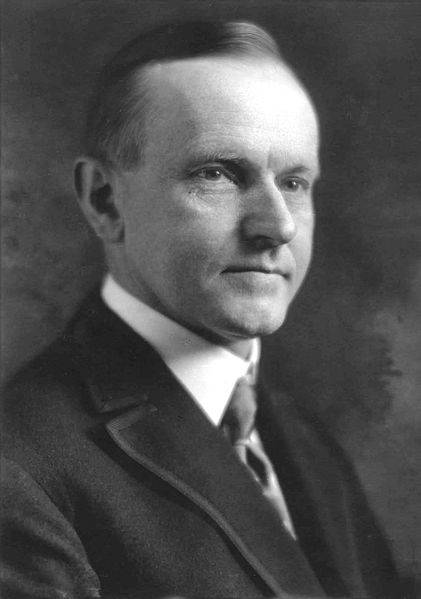
“All growth depends upon activity. There is no development physically or intellectually without effort, and effort means work.” – Calvin Coolidge

Calvin-Coolidge
Calvin Coolidge was the 30th president of the United States.  Read about him and get your learn on.

As with many of my blogs, this topic developed out of a conversation. I was speaking with a semi pro player I have come to know over the past year. We were discussing our opinions on what a “paintball coach” really is or should be. I, personally, believe it is the role of the coach to create an environment where the players can be just that… a player. The coach needs to remove all external factors to make sure the player’s focus is on getting better and performing well. In other words, create an environment where they can be their best. If I keep bringing issues to the players, if I bring drama, I am putting roadblocks in their progress. Why? Because I am distracting from the number one goal of being a coach… helping and guiding the players so they perform at their peak. The coach needs to recognize the strengths and weaknesses of each player, and leverage them against the layout. Then, during a match, leverage those same strengths and weaknesses against the opponent within the parameters of the layout.

If you can recognize how a player responds or rather how they learn, then you can “coach” them more effectively. One size fits all works with some teams but most teams are pretty diverse. You have to know how to approach each player individually and know what motivates them. So let’s focus on DEVELOPING a player.

In my experience, there are three things that cause teams to fall short or adversely affect their performance:

1. Not clearly communicating expectations
2. Ineffective/infrequent/inappropriate feedback
3. Lack of accountability

So if the above is bad it makes sense that the following would be better:

1. Clearly established expectations
2. Continually coaching (environment of always learning)
3. Creating accountability

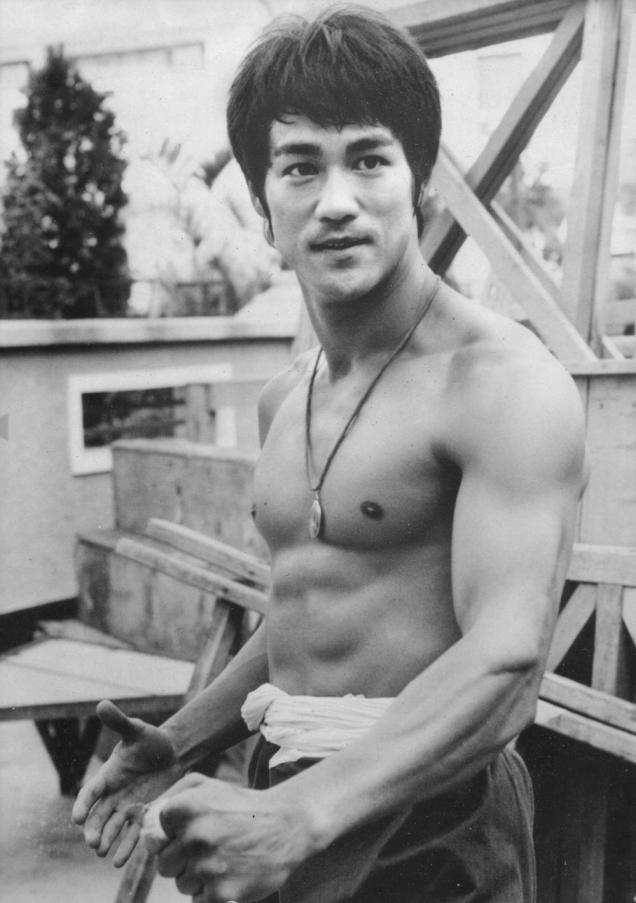
Bruce-Lee-
You better know who this man is.

“Ever since I was a child I have had this instinctive urge for expansion and growth. To me, the function and duty of a quality human being is the sincere and honest development of one’s potential.” – Bruce Lee

These are the 3 most important steps in developing a player, as well. From this base line, all goodness will spring… which means you need to establish a good base line. Without a good base line, all badness will spring and now you’re in a pickle.

EXPECTATIONS

How do we effectively manage expectations? I believe when you establish an expectation and/or a goal with a player (and the team for that matter) there needs to be the understanding that they currently have the capability of achieving it but that it is challenging enough to push them.
As a coach, you and the player or team, should understand that these expectations should have a “cadence”, and recognize which are priorities. Develop a consensus on that and you should be off to the races.
I have found that teams perform better and learn quicker when the players are responsible for both individual AND team goals. In other words, the focus of the individual player should be to improve something about themselves that leads to the overall strength of the team. If the betterment of the individual doesn’t increase team capability, we’re wasting time.

COACHING

Another 3 pack for you to consider. Coaching should have a minimum of 3 components. And this shouldn’t just apply to paintball but all aspects of life. The three “F’s”:

1. Frequency
2. Focus
3. Fairness

IMG_20160320_182132
Everyone should get something out of it…

Always engage. Always look for ways to improve. Now this doesn’t mean rag a player over and over every point and every drill. You have to find the balance. When you see an opportunity to create an improvement, say something. If they ASK you, respond. You should WANT the engagement. Most players WANT to get better. And this doesn’t have to just be the coach. Players can make players better. Steel sharpens steel.

No matter how frequently you engage, if there isn’t a purpose behind the engagement, if there isn’t a focus on what is or was the issue, then you are simply creating static. This can lead to a nagging relationship or a stressed player who is afraid to be engaged.  They will usually shut down. Make sure there is a point.

Finally, be fair with criticism and praise. If you compliment a player on an accomplishment make sure others are receiving similar positive reinforcement. Same with criticism. If someone’s doing something wrong, call it out but not just when THAT person does it. When ANYONE does it.

lao-tzu
Lao Tzu was a Chinese philosopher and the created Taoism

“The key to growth is the introduction of higher dimensions of consciousness into our awareness.” – Lao Tzu

ACCOUNTABILITY

This one is easy. Recognize success, celebrate it, but do NOT ever ignore failure. Identify it and embrace it with the understanding it must be fixed or improved. Or over strengthen a strength. If you create a positive environment, the players will usually hold THEMSELVES accountable recognizing things they need to work on. THAT is a great thing unless that’s all they are doing and they become Eeyore from Winnie the Pooh (okay, some of you just went… “What??”. Google him.)

Be careful though. Measuring performance can be subjective, especially in paintball players. Set individual goals, develop some metrics, and observe. Base it on the data you have and can read/see.

100_1250
One on one time is important in development

All three of those components can be summed up in the following analogy – The report card!

Remember when you used to bring your report card home to your parents? (Do they still do that or does the new generation not get held accountable? Perhaps grades are a micro-aggression… I don’t know these days…I digress) Let’s say you bring home 3 A’s, 2 B’s, and a C. Where does the conversation with your parents start? Usually around that C, yes? If not, maybe it starts with the A’s and then the C? Either way, they both should be discussed.

I will leave you with this. Ask yourself these three (there’s that number again) questions in conjunction with everything stated above:

1. What’s the goal?
2. What does success in reaching that goal look like?
3. Always align a player’s goals with those of the team’s needs.

Count-Dracula-3-Sesame-Street
This blog post was brought to you by the number 3 ah, ah, ah….

Remember, you can create your own truth when you don’t hear the truth…

Be water my friends

I Spy

Happy New Year!  The season is soon to begin and in some instances, has already begun.  Coaches, captains, and players alike are all getting in on the “grind”, preparing for what could be their most challenging season yet.  Preparation, as we have discussed several times in the past, is multi faceted.  There are several elements that go into preparing, training, creating, in order to roster a winning team.  Just like in other sports, it is critical to have the right mix of talent on your paintball team.  I thought, since it is the beginning of the year, we should look at a specific aspect of team building.

A team/coach needs to understand not just the fundamental level of talent but how that talent is spread out and in what areas.  In other words, what is the depth of your roster?  This is the topic of this months blog – roster depth and recognizing talent.

49522503_2301682633385368_9149162092970901504_n
Try outs are a great way to scout and recognize or select talent

In all team sports, every serious team looks at their “depth chart”.  This is usually a list identifying the starter in each position.  So, a starting player would be listed first or at the top of said list, while back up or second string is listed after or lower on the list.  The list is developed and based off capabilities or who is better at what when.

Now, before I go any further I want to explain my stance on paintball players and their positions.  I’ve had this conversation several times lately but I feel it bears mentioning due to our topic.

Yes, I believe in developing a paintball player versus a snake player or a dorito player.  If you identify as a snake player, dorito player, or as a cat, you have already limited your abilities on the field and my ability to utilize you in a game setting.  I prefer to use the terms 1’s, 2’s, and 3’s.  In its most simple form, it would go like this; if you are a “snake player” – you’re usually fast and a good gun fighter (hopefully).  These basic precepts apply to dorito players too (I would hope).  So if I have a fast gun fighter, why shouldn’t he train for both environments?  Playing from your feet, knees, stomach, should all have the same basic principles, yes?  Take into account the field layout and how a player does based off its shown opportunities…well…

I believe that it’s solid for players to cross train anyway, to try different positions on field, especially given layout changes.  This is in hopes to better understand what the opponent can and cannot see.  It also gives the player a better perspective and understanding of how their opponent may act in certain circumstances.  I also am a firm believer that layouts will dictate player’s capabilities by highlighting strengths and exposing weaknesses.

Couple this with the fact 2’s (mid players) should be able to play both front and back and that 3’s have to be able to take the 2’s spot and clean games up, that means they should be familiar with the 1’s and 2’s capabilities/knowledge set too.  Translation?  Everyone needs to know how to play everywhere.  Does that mean you don’t have “specialists”?  Not at all.  Can you have specialists?  Certainly.  Especially at higher levels.  So it’s not an outright disregard or disposal of the thought process.  Simply a different look or approach to training and improving ones skill.

when-everything-seems-to-be-going-against-you-remember-that-the-airplane-takes-off-against-the-wind-not-with-it
This.


Okay… moving on.

When we look at roster depth, at least in paintball, we should be looking at several factors.

  • Experience – How have they learned/grown from their experience? Are they knowledgeable. Can they articulate it?  Just because someone has played a long time doesn’t instantly make them “experienced” by the way.
  • Physicality – Are they physically fit?  Are they durable, have good cardio, think clearly when tired? Injury prone?  Are they fast, slow?
  • Skill set(s) – What are the players strengths over all from a fundamental perspective?  Good laner, snap shooter, gunfighter, communicator, head for the game?
  • Character – Are they coachable, do they listen, are the respectful, are they loyal, are they a team player, do they get along, fit in the culture?

How do you measure these things and how do you develop your own depth chart?  This all begins by understanding the difference between “recognizing talent” and “picking talent”.

Now, most paintball teams happen organically.  What I mean by this is most teams are a group of friends or acquaintances who attend the same field or know each other in some common manner.  It isn’t so much about the “draft” so to speak but working with what you got.  Honesty is a big part here.  But that doesn’t mean you can’t utilize what you have, take a serious look at your roster depth, and plan accordingly.

img_20190106_114332
Watching.

Where was I?  Oh yes…

Picking talent is easy.  “That guy is a good player.  I just watched him get two consecutive 3 packs and no one has stopped him.  And he seems like a cool guy.  We should pick him up.”  Easy.

Recognizing talent is a little more nuanced.   I would go as far as to say an “art”.  This is the evaluation of how good a player can be based off their existing capabilities.  In other words, you are predicting whether or not a player will grow in the future based off their current physical, technical, and psychological qualities shown.

The major difference between the two is that one will probably get you better results starting day one.  The other will more than likely (if done correctly) build you an elite player for the future of the program/team and get you results down the road.

Several teams I have encountered over the years have the “win at all cost” mentality.  This is usually what leads teams to actively searching out better existing players (picking talent).  Not many have the patience, desire, or even capability to farm talent.  And that is understandable.  When you focus on building a team based off picking existing talent throughout the area (or even more so, outside your area), you are basically picking team members to start the winning process right away.  This, of course, includes  cutting those team members/try outs who do not help with the winning process. This will certainly lead to short-term successes.

1393190_10151975922663010_1900971888_n
I spy talent…

However, teams that do this have a tendency to be short-lived or see sporadic success.  They didn’t invest in the culture, they didn’t invest within the team name, all topics we have discussed in past blogs.

Now teams that choose to identify talent and farm it have a tendency towards a little more longevity.  They certainly have a healthier culture (in my opinion) and are usually the greater “team”.  Paintball is, in fact, a team sport so I don’t see why that wouldn’t be an advantage.  Is this always the case?  No.  Same with the paragraph above.  From my experience, it is true more than not.

I will say that I believe this is where solid coaching comes into play.  Not just in recognizing talent but ensuring the creation of an environment in which players can thrive and learn.  The coach must be able to know what that player needs to work on, how they need to work on it, how they learn, and recognizing what motivates them (and not necessarily in that order).  A coach must target the physical, psychological, and technical components of a player then identify if a player does indeed have what it takes to become a great or elite player.

Talent recognition is obviously a long-term approach to player selection and development since it mainly emphasizes training players instead of cutting all but the best ones and finding better players to fill the gaps. Of course, identifying a player who you think has what it takes , investing the time, and then learning you were wrong can be a bummer.  It happens.  But that almost always lies with a misidentification of that players attitude and willingness to learn or the culture that exists around them (environment).

26168502_2027954253886934_2137868186803752161_n
Not a bad guy to have on your squad.  But he is old and ornery…


Some teams have farm teams, usually lower divisional teams, that they try to build.  Of course, some programs use these teams to fund the higher level team (I can’t stand this  if it isn’t mutually beneficial.)  One advantage of having farm teams that is often overlooked is, you can transfer players up and down (barring APPA rankings).  A player doesn’t have to be cut if they are just learning at a slower pace.  Its like having  majors and minors in baseball.  We’re not cutting you, we are putting you on this roster until we get you up to the speed we need you to be.  Of course, you have to be careful as sometimes other teams will scoop them up.  You also have the issue of your top players, if the culture isn’t sound, feeling they are not growing, or you surround them with sub par players, you run the risk of them leaving for another team.

The key is balance.  If you help the less skilled ones catch up technically to the proficient ones, you are in a win/win environment.  Your talent book just doubled in size as did your roster depth.

We need better coaches in our sport too.  But that is a blog for another day.  Better and more educated coaches in our sport will lead a better understanding of the difference between picking and growing talent.  Hopefully more decide to teach and encourage players to develop rather than try to win at all costs.  Again, not that there is anything necessarily wrong with the latter…

Be Water My Friends…

Say Cheese~

“Everything has beauty, but not everyone sees it.”
– Confucius

Admit it, you like to look good. Who doesn’t? Taking pride in one’s appearance should not be disparaged. However, there has never been a vainer creature to walk the earth than perhaps a paintball player.

And why not? We play a high adrenaline sport where we shoot at each other, donning our “helmets”, our “uniforms”, “warring” with each other in “combat”, out thinking, out maneuvering, and out gunning our opponents like we are John Wick performing the Mozambique technique (at least that’s how we see ourselves yes?) Which brings us to the ones who captured it… the forgotten ones……the people who make us look good. The people who tell the story for those who were and weren’t there. Those who capture our most personal moments on the field and in some instances, off.

In triumph and defeat, I am, of course, speaking about paintball photographers.

“Love of beauty is taste. The creation of beauty is art.”
– Ralph Waldo Emerson

I have had the privilege to meet and make friends with several photographers over my years in the sport, all with unique personalities. Each with a talent that is often misunderstood in a profession that is often misunderstood as well.

I thought, after all the times that they have helped us tell our story, we should hear theirs. I reached out to some who have not only made me look good but many of you as well. I have known some for years and others I have recently become acquainted with through teams I coach or other friends. All of them have something in common beside their paintball photography and that is that I find their work awesome.

When I first thought about doing this blog, I really didn’t know where or how I was going to write it. I thought, keep it simple. So I just shot off a couple of questions to see what I would get. What I got was some further insight into what I already knew were some pretty cool human beings. I am honored to know them so, without further ado, ladies and gentlemen, boys and girls (there are only two genders…) I give you my friends the paintball photographers!

BAUMS AWAY!

You can’t have a blog or whatever about paintball photographers without mentioning the guy who pretty much paved the way. Those cool action photos of the NXL professional division? Those cool NXL Europe photos you see of their pro division? Yeah, you can’t say paintball photos without mentioning Paintballphotography.com, run by none other than the man, the myth, the legend…Gary Baum.

12321271_1170805719636953_7212649439843797768_n
A sighting of the Gary Baum creature in his natural habitat

How many of you know he is a orthodontist with a post doctoral degree, teaches at Universities, does leading research and writes journals for jaw surgery as well as a legal consultant and commercial drone pilot? Or that he wrote the NXL waivers? Did you know that 9 weekends out of the year he’ll walk 10 miles carrying around 50 lbs. of equipment?

Gary and I go back to 2011 (I was certainly familiar with his work prior – who wasn’t?). He came up to me after our finals match at World Cup and said, “Hey, that was a good match.” (It wasn’t…but thank you Gary). From then on, he and I would always stop and chat when we could. I spent about an hour and half on the phone with him recently and I have to tell you, I could probably write the entire blog on Gary alone. But he wouldn’t want that.

“Here’s my personal philosophy – I want to be that wedding photographer – he walks around, no one notices him, he does his job and goes home. Some people think I am anti social. I’m not. I’m there to work , I’m there to do a job. I don’t care what people think of me. I don’t need a persona. In my opinion, media should be invisible. I’m judged by my content not what I look or act like.”

“I started taking pics at NPPL at the first Huntington beach. Camille let me on the field. (That’s a funny story too – Zen). Afterwards, I got a call from Jungle magazine – they asked for me to give them 5 pictures – When they got them, I got hired on spot. Then things just took off.”

How many of you know that Jungle Magazine owns Facefull?

“I hated watching the paintball magazines all fold.”

Me too.

Did you know he has written the media regulations for all the leagues? NPPL/PSP/NXL – He’s known Tom Cole forever – And works for GI and Valken.

“I don’t make good pictures I take good pictures. I’m a witness…like a press photographer.”

So how does he get the shots?

“Pros are easy… they move easily. They are predictable. I’ve been shooting some of these guys for a long time so I have learned their nuances. I know what looks good. It’s the brute force approach. I take a lot of photos so I’m going to get some that look good. Spray and pray really. I’ve probably watched more paintball matches than anyone alive. I’m ambidextrous in my eyes and hands and I have great peripheral eyesight.”

“Speedball is repetitive. Scenario is more challenging. I want eyes as it gives a level of intensity. Now, you get shot to shit but I don’t notice it anymore.”

Like I said, we could probably write an entire disertation on Gary… but I like how he closed out our converation.

“So many great photographers coming up. I don’t have competitors. I have colleagues and I want to see them all do well.”

Word.  Thank you for your amazing contributions to our sport sir.

BIGGER’N DALLAS?

This next photographer started taking photographs of paintball because he wanted to show his friends what they looked like when they played. It morphed from there.

“My friend got me into it back in 2006. I did take regular photos, but really enjoyed paintball photos. Video was just a natural progression, cameras nowadays have both abilities. We’d go to my house after practice and we’d make little edits just to share between us. ”

I remember Hunter Laughlin of Tufshot Media handing out his Tufshot stickers at an event (CFOA maybe?) back around 2010? I also remember every member of my team grabbing some and putting them on our hoppers. Mine stayed on my hopper for almost 3 years! What I like about Hunter is how passionate he is about … well… everything.

46899430_630057564085079_4988612082036375552_n
Hunter “Dallas” Laughlin and his famous smirk.  Photo cred to Marcos Barradas

“Paintball is the most epic thing to shoot in my opinion because it’s so exciting. To me, nothing compares to seeing someone shoot someone else. Race cars, real guns…. nothing compares to seeing someone get someone else.”

He’s quick to tell you about the investment. And understandably so. I, personally, could not do it.

“One thing I wish people understood is how much money we spend on equipment, and how much our equipment takes. I’ve taken 100K+ setups on field before.”

Do you think paintball photographers and refs get the respect they deserve?

“Refs have it pretty bad but they have zero responsibility when they leave that field. Videographers and photographers have to worry about putting thousands of dollars of their own equipment in front of 300 mph objects… Once the event is over…. then the real work begins…. editing. For the next three weeks you edit and edit and edit. No one goes through what we go through…I filmed 40 teams last event. We don’t get to see games, just record parts, and rarely know who wins. So when people say they do it for the sport and say “grow paintball,” I snicker …. because none of them do what we do for our sport.”

Thank you Hunter!  Please keep up the great work!  And thank you for that video edit too!

STRETCHING IT TO THE LIMIT

I know one photographer who towers above the others… literally. And his Cooper has logged more miles in one season than most people put on their vehicle in a lifetime. Not to mention looks better than most paintball players. I also believe he was the first photographer that Prime hired when we finally felt like we were worth documenting. And yes, he did an excellent job.

“I got into photography shooting photos of my car. I was still playing paintball at the time. Once I figured out you could make money instead of spending it, I sold my guns and started taking photos. I haven’t shot a paintball gun in probably 6 years.”

Nice. Dude’s totally pragmatic. And I certainly appreciate that. So why does Phillip “Stretch” Baker of 1904Photography take photos of paintball players?

26238891_10156259191448622_3799505910009459401_n
Only trees are taller than Phil.  He has an elevated skill set.  (See what I did there Stretch?)


“I like shooting paintball because it has a lot going for it in terms of photos… the action and emotion of the sport, plus cool stuff like snagging a photo that is clearly a fraction of a second, the splat.”

I asked Stretch to pick one specific thing that he wished people knew about him. He wasn’t having it. Instead, he gave me another sensible answer which I appreciated because of his candor.

“I’m terrible with questions requiring me to pick one thing… ha-ha, it always varies depending how I feel that day. Today’s answer is…. I’m not as much of an asshole as people think… I’m just quiet.”

Awesome.  I think that’s what I love about Stretch… a man of few words but all are thought out.  Thank you Mr. Baker sir for your continued work!

BUT WAIT! THERE’S MOHR!

This next photographer works with Gary and Hunter at NXL events.  He also thinks I’m an angry guy… I’m not.  But that is a story over beer… and with both of us at the table to defend our view points. (I’m kidding… He doens’t think I am an angry guy… much)

Michael Mohr of MMPhotography played his first paintball event at a 3 man tournament at Pevs Cousins Indoor on Long Island.

46937773_339612039950923_4421999505059086336_n
I had to use this one Mike.  Don’t look so happy! Photo cred also to Marcos Barradas

“We went 1-7 the whole day. We were excited though because the only team we beat was the first place team of the tournament. Long story short, I had a good time with my friends and got an opportunity to meet Billy Wing and shoot his dm6. A photographer was there and got a picture of me shooting Billy’s new gun. I was beyond excited to get that one awesome clear picture. So even though we were terrible I got a memory of a good time I had with my friends on my first tournament.”

The rest, as they say, is history.

“I was taking photos for other stuff at the time but I wanted to be that photographer that got photos of the “new guys” of our sport. So, even though you could have gone 5-3,4-4 and just didn’t quite make it on to finals. You had a photo to look back on when you were playing with your bros. Next thing you know, I’m traveling around the states shooting multiple events meeting great people new friends and capturing great memories for people.”

Prime was lucky enough to be one of those teams a few times… But his story started like a lot of other photogrpahers that end up in Paintball.

“I was a normal photographer doing couples’ shoots and basic non action stuff. I was introduced into paintball at an early stage of my photography career as well though. As the years go by you learn and grow and find what’s your style for the sport.”

I like that line. Style for the sport. And it make sense to me.  So what is it about Paintball he loves to shoot and why?

“No sport will compare to the speed of paintball. To be able to freeze a paintball in midair or a splat off someone’s mask. Any player in any position can make a great play and you have to be ready at all times or you’ll miss the shot. I almost get an adrenaline rush taking photos sometimes because the action gets so intense. I love having the ability to capture those action shots.

But again I love the friendships this sport creates. Memories between father and son, brothers, friends both good and bad. These moments in paintball are worth everything too.”

Outstanding view point my friend!  Thank you again for all your amazing work sir!  And remember, it’s not anger if it motivates them… lol

A ROSE BY ANY OTHER NAME

What I find fascinating about Nichola Hayden in particular is that she hasn’t had any formal training or spent a single day in any photography classes. Everything to do with photography and editing she learned from trial and error. In other words, she practiced every chance she got.

43270230_724454331229582_4115991649383874560_n
No, not a crazy cat lady, she is an inked rose.

“I first got into paintball photography as a hobby. I’d snap a few pics here and there at the field I worked at. This ended with me shooting some at a tournament that happened and well, it took off from there. No photography experience and I just learned as I went along. It took me just 1 year to get my name and work out there.”

She worked at Westworld Paintball for 6 years. This was after she played paintball and got hooked so she decided to apply for a part-time cashier job there. But, Nichola being Nichola, she worked her way to Field Manager within a few months. After a couple of years doing that, she worked her way into the Marketing Management position, (again no experience in Marketing).

“Give me a few and I will learn my way around the job.”

Shortly after, Tim Montressor asked her while at a local event to cover some Luxe Pro teams.

“Tim Montressor noticed my work and we got to talking at the local events that he teched at and he offered me the opportunity to cover the Pro teams and I of course accepted. I had already built up a good following and in my first year I used to fill all my spots and then some. I got a chance to go to my first World Cup that year thanks to QT aka Aardvark who worked with the Planet Eclipse tech team. He Introduced me to cup teams as I was only covering the local West Coast teams for WCPPL and UPL. He also helped me out to Fulda Gap to cover the official Planet Eclipse team Capital Offense. ”

But why? Why paintball?

“I enjoy shooting it (paintball) because I enjoyed playing it. Unfortunately, I had to step away from playing as it wasn’t financially viable to do as a single parent on a single parent income. So I still got to be in the fray and environment of paintball and able to make extra money doing so. ”

Make no mistake, Nichola is a strong, independent, hard-working woman and is not afraid to speak her mind. Something that I appreciate… and some don’t.

“A lot of people would nay-say and “hate” that I only got the work due to wearing booty shorts and having an overtly sexual presence online. But when NXL banned my short shorts and Fuzzy ears I was still continuously booked. A lot of people who booked me were the parents for their kids. I started taking more time out last year to focus on my personal life and being home more often. But the NXL World Cup 2017 I ended up with 27 total teams booked in. As you can imagine that was hard work and I recruited Jeff Zapfe to assist me. So I believe 100% it was my hard work and having the ability to network and be able to Market myself to anyone that got me so booked.”

Rock on with your bad self girl.  May you continue to find great success in 2019 and beyond!

SNAILED IT!

This last photographer is one I just met this past World Cup.  We actually run in similar circles but it was the event that led to the meeting.  Fun, jovial, opinionated, and driven, this guy is what we call in the south, “a hoot”.  He is also quite modest.  You can ask him, “Hey, if there was some advice you would give to teams looking to book a photographer, what would you tell them?” and he would say…

“Honestly not really sure here. If you do not know a photographer personally and you are needing pictures at an event ask around other teams and see who they suggest.”

Sean Snell of PFunky Snail photography is a genuine dude.  Easy to talk to.

48370526_333895150547321_5998961958273941504_n
Sean Snell ladies and gentlemen.  Would give gredit to APOLLO but don’t know any APOLLOs

“I began playing the sport in 2004 and took a break in 2008 till 2015 where I came back into the sport playing D3. I fell back in love with the sport immediately and found friends that I had honestly forgotten about. The amount of money and time that it took to play competitively throughout the 2015 and 2016 seasons was starting to show and I just could not sustain it any longer. I had always been decent with a camera so I decided to give it a try. The knowledge that I have of the sport mixed with the passion I have for it and photography made a perfect match! I have been able to spend those event weekends with people who I consider family while still being on the field with them, just without a marker.”

So why was it a natural progression to trade the marker for a camera?

“I started doing photography back in 2012 when I was working with a production company shooting for beauty pageants. While with this company I was able to learn the basics of a camera and also learn basics with video as well.”

Beauty pageant photos to paintball photos?  I get it…

“My love for the sport and the friends that I have made along the way is 100% why I love photographing this sport. One aspect in photography that I have always hated is posing people. With paintball you take the pictures that are presented to you. Watching down the lens zoomed in as you witness and capture someone just getting destroyed is quite exhilarating!”

Okay, but….

“I do this for the love of the sport. As cliché’ as that sounds it is true. The sport has brought me many friends some of which I consider family and it is all attributed directly to paintball.”

Cheers to that sentiment Sean!  Thank you for taking the time to respond to me for this blog.  I look forward to getting to know you more and wish you and yours the very best!

I would like to thank all the photographers that took the time for this.  There are a million more I wanted to talk to because I think they all have a fascinating story to tell and I truly enjoy hearing them.  To those of you who I reached out to but were unable to get back to me in time, no worries!  I understand and I am sure we will have another opportunity to tell your stories. In the meantime, if you are interested in the photographers who were in this blog, here are links to their work!  And of course, you can find them all on Facebook, as well.

www.paintballphotography.com

http://tufshot.com/

https://mmphoto30.smugmug.com

https://www.1904photography.com

https://www.englishrosephotography.com

https://www.pfunkysnail.com


With that, MERRY CHRISTMAS everyone!  I would like to leave you with this quote and prayer…

“I have always thought of Christmas time, when it has come round, as a good time; a kind, forgiving, charitable time; the only time I know of, in the long calendar of the year, when men and women seem by one consent to open their shut-up hearts freely, and to think of people below them as if they really were fellow passengers to the grave, and not another race of creatures bound on other journeys” – Charles Dickens

The light of the Christmas star to you,

The warmth of home and hearth to you,

The cheer and good will of friends to you,

The hope of a childlike heart to you,

The joy of a thousand angels to you

The love of the Son,

And God’s peace to you.


Be water my friends!


Gun Fu #8

If I have said it once, I have said it one hundred thousand times…Commitment, belief, and a positive mental attitude are all aspects one must possess in order to become a success, whether you’re in sports, in business or, what have you.  Now, I have a tendency to begin a lot of my blogs with a quote.  Here’s one; I believe it was Muhammad Ali who said, ” It’s the repetition of affirmations that leads to belief. And once that belief becomes a deep conviction, things begin to happen.”

Not many of us can say we have won a National paintball event, much less two or more, or even more impressive, the World Cup.  But that’s exactly what the subject of this Gun Fu blog did.  And after reading this, I think the quote will make more sense.

Born in the small town of Madisonville, Louisiana and raised just outside of New Orleans, Stuart Ridgel will celebrate his 28th birthday later this month.  And just like a good many of us ballers, it all started at a birthday party…

46430835_10215664855868904_8975192870688391168_n
World Cup Champion Stuart Ridgel of the Gulf Coast Hurricanes

“I was around 10 years old when I first played paintball. I was invited to a childhood friends birthday party. I remember one game we played capture the flag and I grabbed the flag from the center 50 area and ran it back to our starting area without getting touched. I thought I was invincible at that moment in time, I was praised for doing that by my friends and the parents. That was my first experience with paintball.  It was a positive experience.”

When talking to Stuart (Stu as his friends call him), its obvious he has a love for learning as well as sharing.  It’s pretty contagious actually.  But there is no doubt he is competitive.  And you can tell almost immediately that he is a truly honest and humble guy.

31959919_2043904945827939_8708552620823805952_n
Belief

“I played rec sports throughout my childhood so I enjoyed competing and I was always very competitive. When I made my way to high school, I played a season of football and didn’t play much probably because of my size mainly. Then I tried out for baseball and didn’t make the team. I was already playing woodsball quite a bit and dabbling in speedball playing a couple local tournaments. After my experience with high school sports, I wanted to do something where I could actually contribute to a team and compete. That’s when I really started to play speedball a lot more. I was playing with guys around the field older than me and actually shooting them. I thought this is awesome! I can beat grown men and hold my own! It didn’t matter how big or how strong I was. Then at the end of 2004, at my home field 10 minutes down the road from my house, the New Orleans Rock-It-Kids hosted a tryout because they were moving into X-ball from 10-man. For the Rock-It-Kids to be that close to my house I think I was just destined to play paintball. I was 14, tried out and they picked me up because they saw potential and could mold me. At our first D2 PSP event, the LA SoCal Open 2005, we won first place.  I only played maybe 4-5 points, but I was hooked. First time flying in an airplane, traveling halfway across the U.S. with older guys to play paintball. I was in love.”

In case you missed it, Stu and his team the Gulf Coast Hurricanes won the Division 2 World Cup back in November.  And they did it in an impressive manner.  After their first match which they tied, they found their rhythm.  They finished the prelims with a 3-0-1 record landing the 3rd place seed headed into Sunday (right in front of another team who had a pretty decent coach… but I digress).  They would dispatch their first opponent 6-2 in the Ochos followed by a mercy rule win (6-1) over the 2018 NXL Atlantic City Champions Carolina Crisis.  They would follow that win up in the semis with another mercy rule win of 5-0 setting up their greatest challenge of the event. *Side note – Yours truly was coaching the team in the pit right next to them most of Sunday morning. The composure these guys showed was awesome to behold.  A back and forth match, the ‘Canes were triumphant in the end winning 4-3.

35824610_2092824830788326_5188788481794506752_n
Big show

“I always wanted to start my own team and have control of a team or organization. After experiences with other organizations that had policies and practices I didn’t agree with, I knew I wanted to call the shots one day and have more control. Being one of the youngest on these other teams, I didn’t really have a voice yet but I knew I didn’t agree with the way things were. I eventually stopped playing with them and looked for something else.

Then a couple years later after Aftershock and way too many 13 hour drives to Chicago, I decided I was going to start a team of my own. I hosted tryouts in 2015 and we had probably 30 something players (including almost all of the core D2 players) that formed the NO NAMED TEAM. I was just looking for like-minded players at the time to see what we were going to do and where we could compete. You know how paintball players come and go, we lost half of them from lack of commitment before the first season. A couple months after the initial tryouts, Matt Hamilton came to me (He was already on the no named team at this time) and told me he was opening a field, Gulf Coast Paintball and wanted to help fund a team. He gave me an offer I couldn’t refuse and we agreed to name the team Gulf Coast Hurricanes and that’s how the Hurricanes were born.”

And now you know.  Stu had seen a lot and learned a lot from teams like the Rock-It-Kids, Warped Army, and Aftershock among others (for the record, he doesn’t consider himself ever having really played professionally.)

“I only played 3 events with them (Aftershock) at the professional level. I can say I’ve been shot by a lot of pro players though”

So he took what he had learned and, partnering with Matt Hamilton of Gulf Coast Paintball in Slidell, LA, the Hurricanes were born.

21463111_10212165344667938_2781120618804914143_n
2017 NXL Chicago Champions

To understand Stu and the ‘Canes, all you have to do is ask them about their mindset coming into the 2018 season.  I think it speaks volumes about the team and their positive and confident approach.

“The team’s mindset was to compete and win at the D2 level one last year before all of us got ranked up. We felt the 2017 season had a few unfortunate things happen to us at the events (like most teams I’m sure) even with winning Chicago in 2017. We knew our group of guys had the experience and talent to compete with the best D2 teams in the league and we were ready to win.

We just needed to figure out the financial portion of the team and what we could realistically afford. Unfortunately, we could only afford 3 events during 2018 Vegas – 2nd Place, Dallas, 5th Place, and World Cup 1st Place. When you only have 7-8 players in your organization that are ready for this level and 1 is a college student with no money national paintball can get expensive.”

31963974_2043905159161251_3409248707743318016_n

Ah yes, don’t we all know it.  But the story of their win at World Cup doesn’t end there.  There is one other aspect that I think makes this a great story about a team that not only overcame adversity financially, but one other thing as well: they won the event with only 5 guys!

“This was our last opportunity to play at the D2 level together and we were playing no matter what. We have played events in the past where 90-95% of points were played by 5 players with only 7 on the roster. I knew we had the stamina to run the race, we just couldn’t get hurt and luckily no one got hurt. This is a group of veterans that have put in years and have made their sacrifices to compete and win. I wasn’t really worried about only having 5, I believed that whatever was meant to happen was going to happen and it happened for us. The guys on this roster have a lot of heart and I knew you would have to drag their lifeless body’s off the field for them not to play.”

46153892_10157864648864128_5287125503247908864_n
Andrew Rodriguez, far left, played with the team on Thursday.  Not pictured is Jacob Searight who showed up Friday and played the rest of the event

Motivating, yes?

But what’s next?  The team is planning on stepping up to the Semi Pro\Division 1 next season.  What adjustments will they make and what do they feel they need to fix in order to be competitive in a division that has teams like Indianapolis Mutiny, NRG Elite, and Montreal Image?

“We need to be better at working together and communicating. We all have good gun skills, but where a team separates themselves from the pack is their level of communication and how well they can accomplish points together. Communication is the key to success in this sports.

We’re still trying to figure out our player situation and who is looking to commit possibly new players, but our core group is still around and I know they can compete at the semipro level.

This organization needs a dedicated coach and scouting/assistant coach. The top teams have that coach they can count on. This is something that we really don’t have at practices leading to the event. We do have Jamie helping at events, I’d love to have a coach with us running practices and giving us feedback. It’s extremely difficult to do that as a player.”

47323917_1198202983677219_8139722543641657344_n

Okay, so they won the World Cup with five guys and are headed to the semi-pro division for 2019… but how does Stu plan to approach the next season? What keeps him and his crew motivated?

“My own progression and watching the people around me work hard and want to progress and get better motivates me. The effort motivates me. It’s a gratifying experience to watch someone dedicate and sacrifice so much of their time and life just to try to accomplish a goal. It motivates me to want to continue to work hard for the team and people around me and contribute to winning. Wins are few and far between, but when you do get one, you’re on a roll for that indescribable moment. Paintball has taught me to be disciplined, and if you work hard, eventually you will be rewarded. It took me almost 10 years to get my third national tournament win, from 1st place at the Boston NPPL in 2007 to the Chicago Open in 2017. It took until 2018 for me to win my first World Cup; it takes time.”

47484336_190771888540215_3948389312390758400_n

Stu is always one to give credit where credit is due.  What I love about the guy is how he is quick to rattle of the people he credits with his success.  He will tell you he didn’t do it alone.

“I look up to Matty Hotard old captain of Rock-It-kids for teaching me how to lead a team and play with heart. Drew Bell for always putting in the work week in and week out throughout the years and just leading by setting the example.  Then just almost all of the guys in my organization, in the league and around me that I’ve come in contact with. I try to look for, look up and be influenced by any and everyone that I can take something good away from. I like to search for little gold nuggets in everyone. I’m a strong believer that any and everyone has the potential to influence and teach you something positive, you just have to observe and listen.”

Any favorite Pros or team?  I love this answer by the way.

“No favorite pro team. I just enjoy the grind and watching great play.”

17264447_10154333766290496_5696077853176723612_n

Some other things you may not about ole Stuart Ridgel.  He has been published – that’s right.  You could say he wrote the book on paintball communication (literally).  You can order it here!
https://www.amazon.com/Paintball-Communication-101-Guide-Tournament/dp/1542682398

And he has a youtube channel!  Check it out here:

https://www.youtube.com/channel/UC6msmaaRbQog521LKw1Lp_g

When you ask him about what is the one piece of advice he wish he had been given when starting out, the response is almost predictable.  Same goes for what he tells other teams just starting out.

“Communication is the most important aspect of tournament paintball. I wish this would have been stressed to me from the beginning.

I’d tell them that an okay team that can work together and has an open dialogue during the game can beat a group of good players that can’t work together any day. Investigate the various aspects of communication and learn how to collaborate to achieve goals. “When a player not only has the capacity to have complete field awareness for himself and know the accurate kill count, opponent’s positions, and his team count, but he can make every single teammate on the field completely field aware and understand the game situation, that’s when you start to become a truly great player.”

32087430_2043905362494564_6358428000572145664_n

Here’s another thing I like about Stu.  All of you know how I emphasize the basic fundamentals of paintball.  I believe no matter how experienced you are, you need to find time to do certain drills.  After all, they are perishable skills since muscle memory can fade.  So I asked him, what is your favorite drill?

“Fundamentals – Breakout shooting and snap shooting. Win the break and your probability to win the point is exponentially higher. Win a gun fight and you possibly win a tournament. I feel like if I would have won this one gunfight in Vegas this year during the very first point, we would have won that event.

There is a communication circuit drill and a communication situational drill we do that is a lot of fun and helpful, but it’d take me quite a bit to write.”

Love it.

So, in case you were wondering what it feels like to be a World Cup Champion, Stu sums it up for us.

“It feels like all the blood, sweat, tears, and sacrifices I’ve made to play this sport have finally paid off. I’ll cherish that moment for the rest of my life. Being on the field with my brothers and sharing this moment with them will be etched in my brain until I leave this form. We all worked hard together, and on that day, we all became Champions! It’s something special.”

Be water my friends