Pontification on Permanent Persistence

“Ambition is the path to success. Persistence is the vehicle you arrive in.”

Alex Trebeck: Answer, “Obstinate continuance in a course of action in spite of difficulty or opposition.”

Me, you, us: “What is persistence, Alex.”

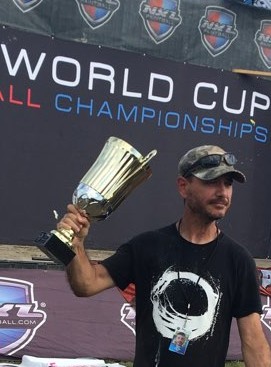
It finally happened.  The first national win and in the semi pro division no less at WORLD friggin’ CUP.  I will get into the crux of this month’s topic but first – I want to say something:  

Celebration next to Celebration

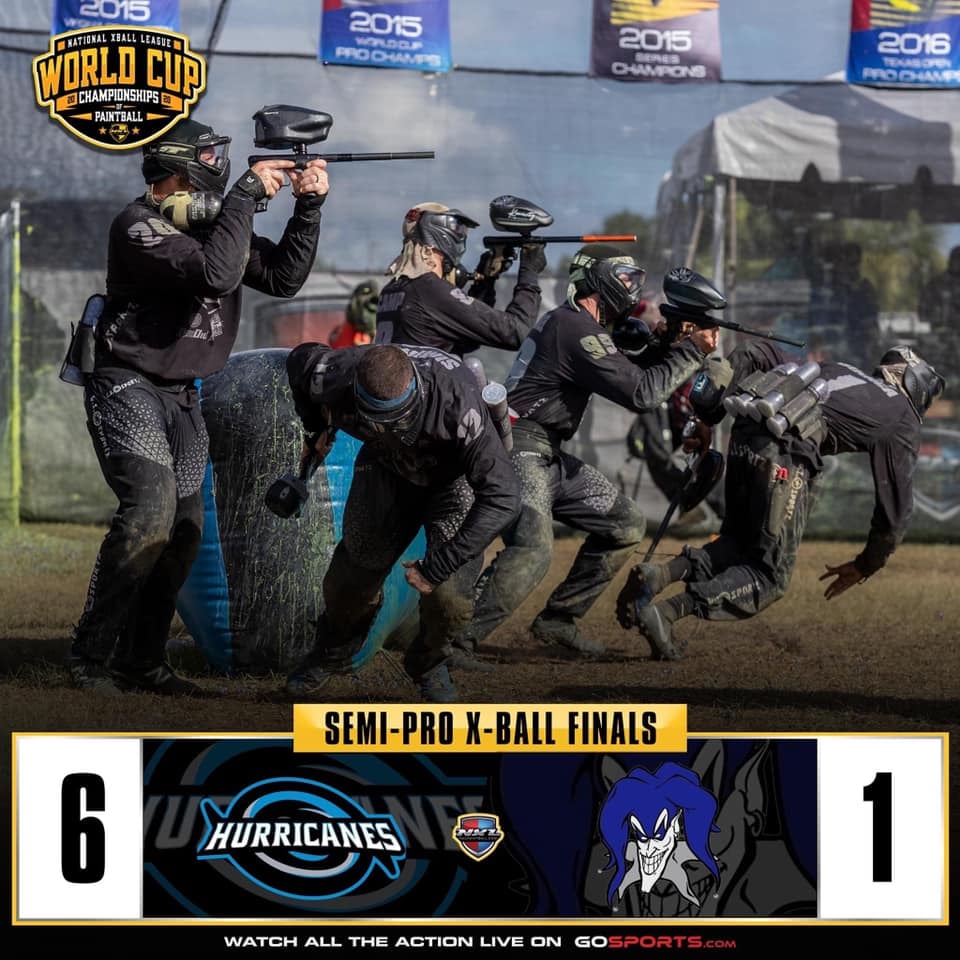
First and foremost, a huge shout out and thank you to the New Orleans Hurricanes…  Here is a program that already had two national event wins under their belt in Division 2 (Chicago 2017 and World Cup 2018 – the latter they did with only 5 guys!) so they knew what it feels like, what it takes, and what it means.  I had coached some of their players back in the Prime program and had even done a clinic with them prior to their Chicago win.  When they first called me, I thought, these guys don’t need me! What’s this all about?  It’s a trap! Man, I am grateful to the One above that I answered the phone that day.

“Victorious warriors win first and then go to war, while defeated warriors go to war first and then seek to win.”

I cannot thank them enough for making that call and making me a part of the program.  It has been an honor.  A couple of quick stats:

  • The ‘Canes outscored our opponents 22-7 in the prelims
    • In other words, 76% of all points played were won by the ‘Canes
    • Or for every point our opponent scored, we scored 3
  • The ‘Canes outscored their opponents 17-8 on Sunday (3 matches: quarters, semis, finals)
    • 68% of all points played were won by the ‘Canes
    • Or for every point our opponent scored we scored 2
  • They were undefeated the entire event
    • Once we obtained the 1st place seed, we kept it the entire event
    • Outscored our opponents 39-15 the entire event
      • That translates to 72% of all points played were won by us
      • For every point scored on us, we scored 2.6 points on our opponent
      • We mercied 3 of our 7 opponents

I think those are some impressive stats.  Way to be Canes! Perhaps it doesn’t matter but we did win the 2 event Covid series too…
Lord have…mercy

“The most essential factor is persistence – the determination never to allow your energy or enthusiasm to be dampened by the discouragement that must inevitably come.”

Okay – pardon that little tangent but I am very proud of their accomplishment.  That is no easy feat.  Some may say, well, the Tons Tons, weren’t there.  Okay, my response would be, had they been, we would have beat them too. See how easy that is?

Now, moving on to this month’s topic… you probably figured it out by the title.

I think whenever someone discusses winning, the term “persistence” is usually, or should be, mentioned.  Persistence has to be a component and it shouldn’t surprise anyone at least when it comes to a significant accomplishment.  Those significant accomplishments are usually reserved for things that are quite difficult to achieve and require great effort, yes?  It is very easy to fold up the tent and just figure it isn’t going to happen.  Trust me, I have considered this many times because it is rather easy to persist at something when things are good or going well.  It is a completely different animal when they are not. 
Amazing feeling

“Success is not a matter of mastering subtle, sophisticated theory but rather of embracing common sense with uncommon levels of discipline and persistence.”

So what does that look or sound like.  Here is my best attempt at trying to justify or explain my own persistence as well as those I have had the honor to coach/play with and why we try to maintain it:

Goal setting:  If you have read this blog for any amount of time you know I write about goal setting.  Well, I take my own advice on this one.  If I set my eyes on something, I’m going to do it.  A very good friend of mine was speaking to a player about work ethic.  I remember him saying this, “If you really want something, you’ll find a way to get it. If you don’t, you’ll find an excuse.”  I asked him where he got that from and if I could steal it.  He said he had read it somewhere regarding business or entrepreneurship but felt it applied.  I agree… it most certainly applies to the sports world or any world for that matter!

I have watched several of my friends, whether former players I had coached, former teammates, or even just those I met through clinics go on and win a national event.  Ever since watching “Push” in 1999, I have wanted to know that feeling and to be a part of something greater.  The motivation was almost unhealthy at times, I kid you not! And it was all worth it.
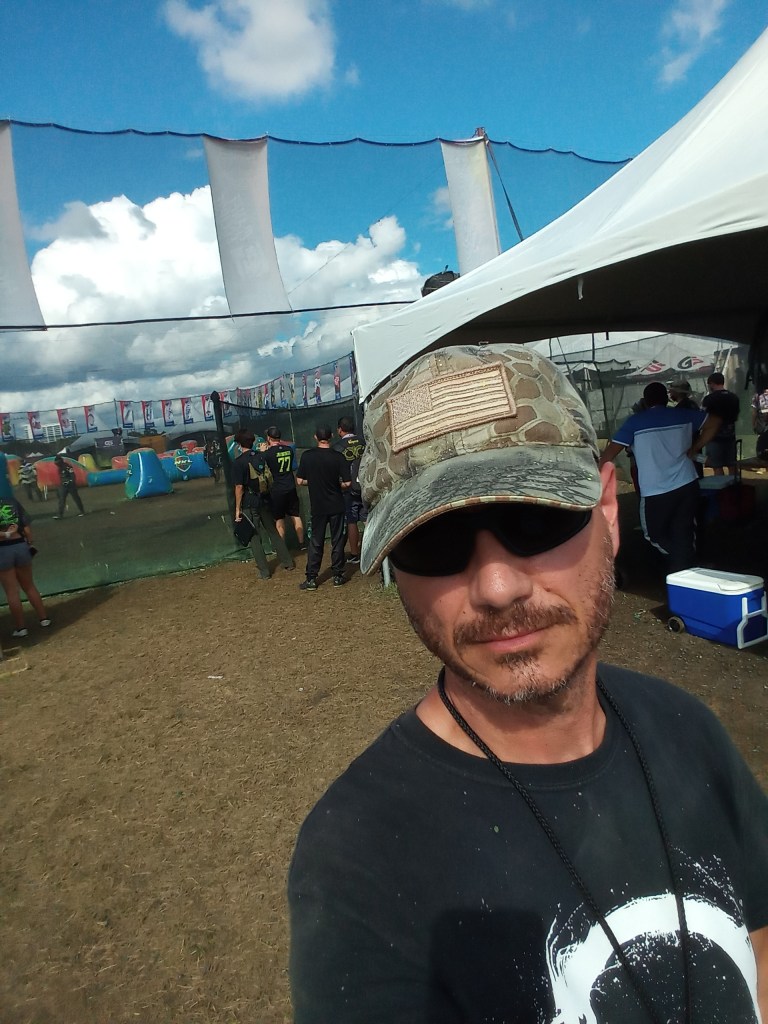
Once more into the breech

“Persistence is to the character of man as carbon is to steel.”

All those national  2nd (11), 3rd (4) and 4th (2) place finishes, all those national Sunday appearances (40)… They just made me more determined.  Why? …because each time I learned something new.  Every. Single. Time.  And each time it just made me want it more and more.  I didn’t make or create excuses.  I recognized the shortcomings and worked to improve them.  I took accountability and actively searched out improvement.  I made an adjustment here or an adjustment there.  I let the process work and fixed it where I could.  Was it disheartening at times?  You bet.  Did I make mistakes in how I adapted?  No doubt.  But you have to reach inside and recognize that it IS coming if you truly stay the course.  Staying motivated is hard, sure, but winners stay after it.  You can’t break the warrior if he loves what he is fighting for.  Find that motivation, that desire, and fuel it.

I was told by many a friend and family member to “give up on this childish dream”.  What made it childish?  What made it a dream?  I have never asked anyone to quit something they were passionate about and I wasn’t about to let anyone convince me (unless it becomes unhealthy – I genuinely believe this pursuit has made me a healthier person both mentally and physically).  See, I know who I am.  I know my capabilities.  Ever heard the term “He hits above his weight class”?  I tell myself that every day.  When I get up in the morning, I pray that God gives me the strength and wisdom to be very best I can be, whether that is being a father, a husband, a friend, a player, or a coach. I pray before every match that my boys stay safe and healthy. Do I care what others think of me?  Certainly.  Do I care what others think of me regarding specific pursuits? Nope.  Some things you will not convince me or challenge me on.  I don’t expect everyone to understand.  The more you say I can’t, the stronger you make me.

“Failure is only postponed success as long as courage ‘coaches’ ambition. The habit of persistence is the habit of victory.”
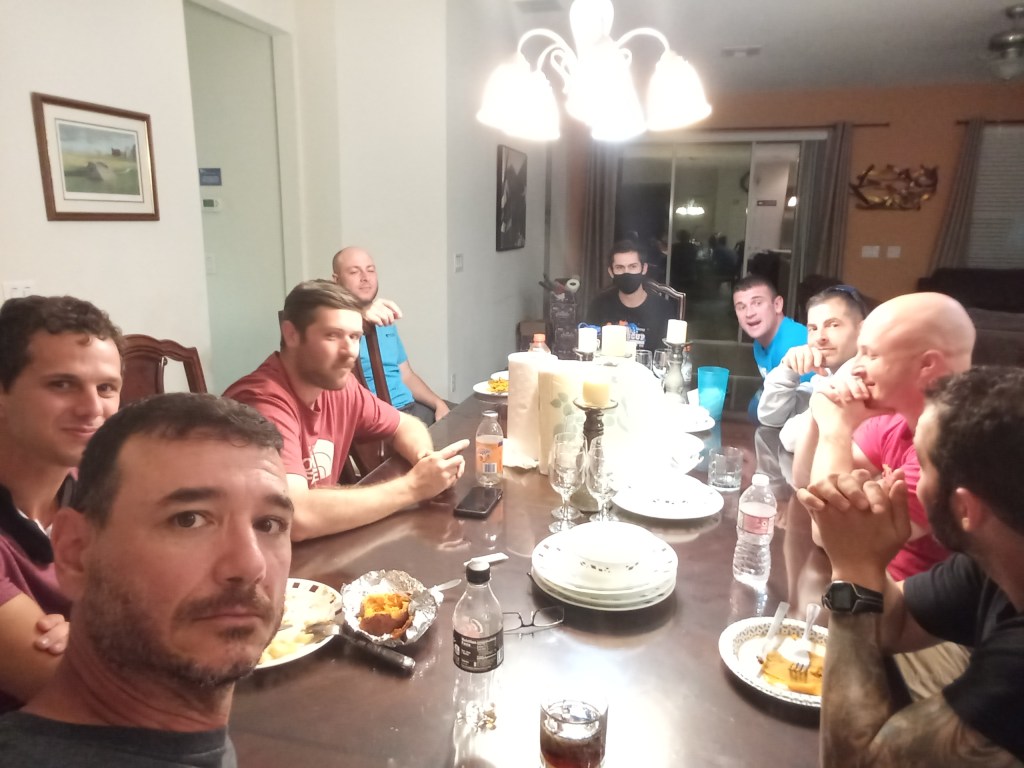
Game planning for Sunday

I have read that winning is habitual and I genuinely believe it.  What that means to me is, in order to win, you must develop the right habits.  Makes perfect sense to me.  Perhaps I’m just pontificating and becoming somewhat introspective and arrogant.  Hell, I am writing a blog as if people care what I think…  anyway… habits.  If you can develop good habits (getting enough sleep, eating right, showing up early, running drills when everyone else stops, so on and so forth) you will see progress each and every time you step out on the field.  If you truly want to reach a goal, you will do what it takes each and every day to reach it.  Otherwise, you’re just full of piss and vinegar.  What you do each and every day will determine your success.  Make it count.

Because if something ISN”T working, you should recognize that.  If I run a guy to the snake twice in a row and he was shot both times going there, and I send him again – whose fault is that?  I’m not going to blindly throw him over their without understanding how to adjust!  I will find a way to get his gun in the fight, get him in the game, and develop a way to make sure he sees a point past the break.  It’s the definition of insanity… right?  Look, sometimes you’re going to meet roadblocks.  There WILL be obstacles to your goal.  The key is finding ways over, around, under, and through them.  Sometimes, that will take time.  So take the time and make that happen.

But it doesn’t stop when you win.  That goal setting now takes on a new perspective.  That adaptation takes on a new meaning.  Motivation has a new approach.  The more it changes the more it stays the same.  Continuous learning is so important, not just in this sport, but in life.  We must evolve with each win as well as with each loss.  Being intellectually honest about capability and sustainability is crucial.

It’s very real

“Nothing in this world can take the place of persistence. Talent will not: nothing is more common than unsuccessful men with talent. Genius will not; unrewarded genius is almost a proverb. Education will not: the world is full of educated derelicts. Persistence and determination alone are omnipotent.”

Which brings me to my final comments – I want to thank some people who were paramount in my learning and who never once, ever, gave up on me.  They saw something I didn’t at the time or perhaps, they saw something and convinced me to see it too.  I don’t know.  I just know they are truly my friends and without them, this win wouldn’t have been possible.  The list is incredibly long and most know who they. After all you have been there a long time. But there are a few that need mentioning:

  • Coach Paul Richards – to the man who helped me see that there really is such a thing as a paintball coach and who taught me what to look for and why.  You gave me a confidence boost when others wouldn’t.  You are the one by which all others are measured.  Rest in Peace Top!  Miss you.
  • Shane Pestana – becoming friends with someone you had only read about and admired is cool. But it is even cooler when they are such an influence.  I sure am glad we shared that pit back in Phoenix. Thanks for the guidance and insight over the years and for giving me the opportunities you did.  Let’s go fishing and hunting soon.  Tell Pax he sucks.
  • Grayson Goff – You may not have realized it but when you respected my thoughts about the game you gave me the confidence to write more about it. For that, I will always be appreciative. Great to see you back out on the field this past Cup Mr. Ocean.
  • Ken Ozvath – you, sir, kept me grounded while continually reminding me of my faith and how to live it, not just through your words but by your example!  Thank you for listening and being there all those times. 
  • Bailey, Barnes, Pate – Don’t have the words, guys. Well… maybe…”Screw you guys.” For real, nothing but love.
  • Willi, Cam, Bruce, Alex, I75 crew, and my former Primates – thank you for always believing.  You’re the best.
  • Finally – to my wife and children – you are the best part of me and I can never appreciate you enough for all the love and support over the years.  I am the luckiest man alive!

Be water my friends,

The Unappreciated

It’s actually happening.  Barring some catastrophic event, the NXL World Cup is scheduled to occur on November 11th-15th across the street from the Gaylord Palms resort in Kissimmee, FL.  Now, seeing as how this is 2020, I’m not ruling out the asteroid hit… but let’s not worry about such trivial things.

With the largest and most prominent paintball event about to go down, teams are doing all they can to prepare or rather, should be.  In this blog post, I am going to talk about an often overlooked yet incredibly important aspect of prepping for an event: 

Your pit crew.

That’s right – the unappreciated, the overlooked, the human afterthought, the shadows… the people who make paintball player’s lives a lot easier and they don’t even realize it.

If you have not done this portion of planning well in advance, you are not doing what you can to properly prepare for the event. Time and time again here at Zen we have discussed and emphasized efficiency in all things we do.  Not just “economy of motion” (physical) but economy of time, energy, and thought.  In this case, we are looking at two points of efficiency – getting your pit crew established ahead of time and how an effective pit crew creates efficiency at an event.

Mo often pitted for Professional Team Damage at the NXL event. I’m no dummy. When he asked if he could help, I said, “Absolutely”

Okay – so let’s establish our reasoning.  Let’s look at what being “efficient” is really about.  Efficiency is “a measure of the extent to which input is well used for an intended task or function (the output)”. Said another way, it is the capability of a specific effort to produce a specific outcome with minimum amount of energy expenditure.  Got it?  So based off that definition, let’s get into efficiency as it relates to event prep.

First and foremost, establishing a definitive pit crew needs to be on your checklist of things to do well in advance of the event.  Along with booking your accommodations, logistics, and practice schedule, planning your pit crew is one of those tasks that you want to get off your plate early so that you and the team can focus more on actual game/event prep (you know…playing well).  Get it done so you can focus on your game and not worry with details like this which have a tendency to add stress.  I can’t tell you the number of times I have run across a team begging people the day before an event for help in the pits. It was an afterthought and then someone finally said, “Hey, who do we have to run pods?” 

Yeah, you’re guilty 😉

A good pit crew is there to help and should help…they are the help!.  They are there to make that long walk from where you parked manageable.  They are there to make your pit manageable.  But most of all, they are there to make your life as a coach or as a player, easier.  And for that, you should take their selection serious.

This is Willi. She’s awesome. So is her husband

Now, a good pit crew needs to encompass, in my opinion, these 3 capabilities:

  • Choreography (efficiency)
  • Game/player Knowledge
  • Be Autonomous

Let’s break these down real quick.

Choreography is pretty self-explanatory.  They need to know what to do before, during, and after a match. This can be something as simple as knowing where to set up in the pit in relation to the team’s movement and where to place pit tables.  I like to have a minimum of 3 pit crew members.  The usual breakdown is 2 pod fillers (supplemented by team members when possible) filling pods and 1 pod runner (this is the cat who runs out between points and ensures the team’s pods stay with the team).  They can, and should, swap occasionally when necessary.  They should be aware of the fact they will be porting some things to and from the pits.  Carrying pod bags with pods or pulling the “paint wagon”.   Understanding their responsibility is a huge must.  The last thing a coach or captain wants to deal with is a pit crew asking, “Hey – what do we do?”  That is not a pit crew.  I decided to reach out to one of the best pit crews I have ever worked with (they are an amazing married couple – shout out to Willi and Cam) and they said the following:

“Understanding the flow of the pit is important.  Once you know it, it is important to be everywhere you need to be, when you need to be, but never in the way.” 

Game knowledge is imperative.  Nothing worse than a pit crew member storming out on the field to grab pods and getting your team a penalty because they didn’t wait for the “point approved” announcement.  A good pit crew will recognize how the game is progressing and understand what needs to be done.  Is the team burning through paint quicker than normal?  Is the team dominating or struggling during the match?  But an even better pit crew is one who not only recognizes those things but KNOWS the team, knows the players.  Keep in mind, many of the best pit crews are paintball players themselves.  Like Willi and Cam again:

“Get to know the team.  Not just them as a person but their tendencies as a player and where they play on the field.  Know how many pods they normally take out.  Know if they like them “up or down”.  If you don’t know these things, ask!”

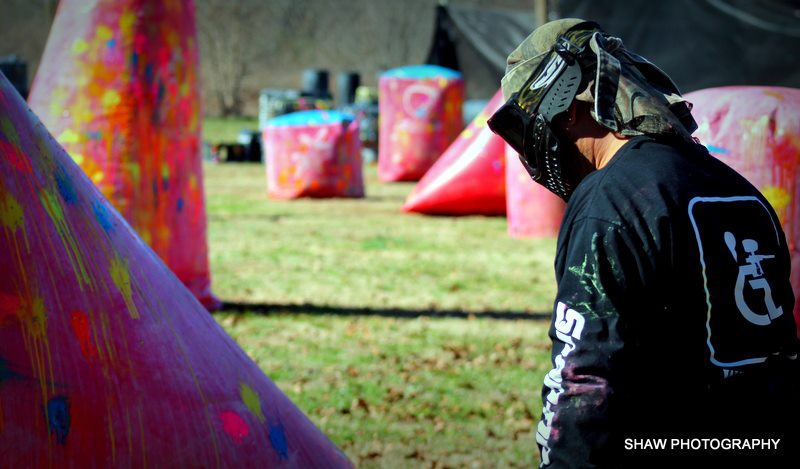
That’s Cam in the background (camo headband, olive drab shirt) gettin’ after it

Now, the last but certainly not least (as a matter of fact, it very well may be the most important quality of a good pit crew) is that they are autonomous.  They are capable without direction.  They don’t need to be told what to do, they already know.  They know when to be at the pit, when to start cleaning pods, when to start loading paint, when to tell coach/captain the team is getting low on paint (*see previous comment about game knowledge??*), when to clean a player off, where to place extra pods and guns in case they hear “I need an extra pod”, or the dreaded “GUN!!!” when team members are chrono’ed on the field.  They do all of this on their own without instruction.  When you have a crew like this, it is a huge relief to a coach/captain and the team for that matter.  Like trusting your teammates on the field, if you can trust your pit crew to know what to do and when, that is one less thing you have to worry about.  And make no mistake about it, that pit crew IS part of the team.  A comment from Willi and Cam that I couldn’t agree with more:
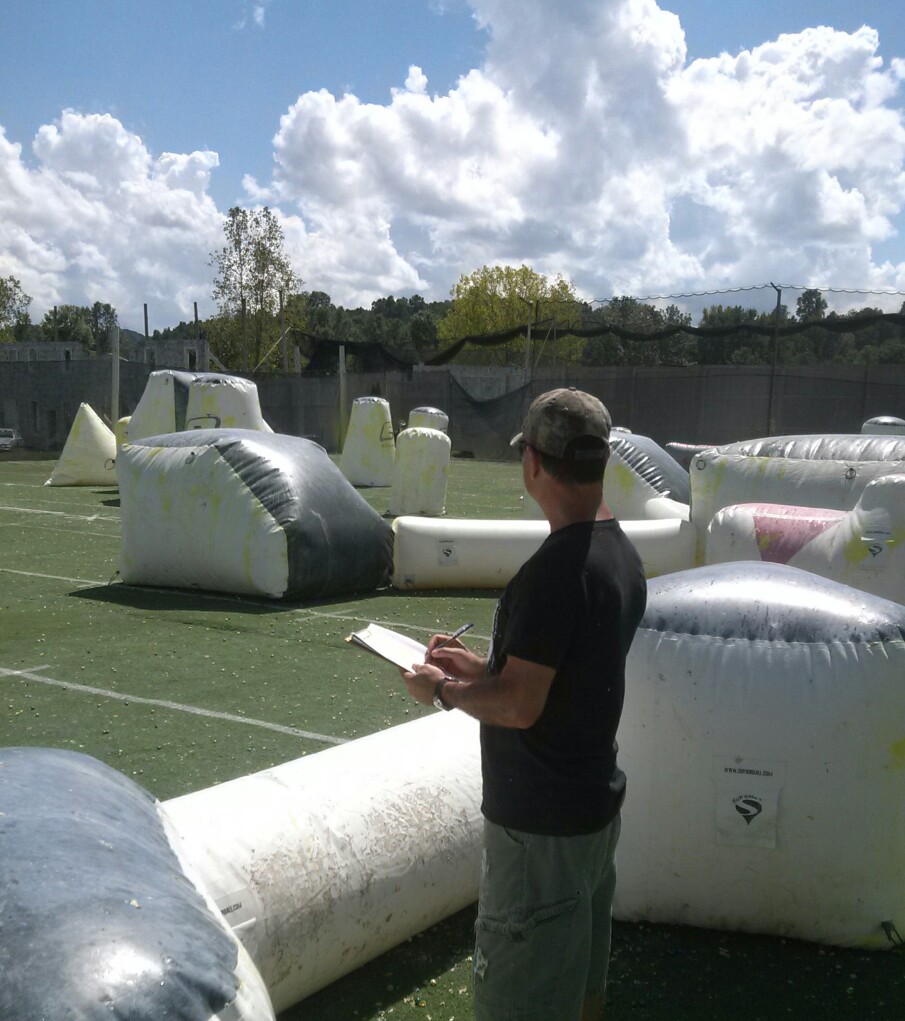
“You’re part of team (the pit crew).  You need to bring the same energy level as though you are stepping out on the field with them.”

Jeez, I love that mentality.  I wish all paintball players had that type of understanding about roles.

When the team wins, we all win!

Which brings me to a few closing notes…  One, let’s lose this moniker of “pod bitch”. Sure sure, it’s a funny jab amongst friends.  But honestly, if I am volunteering my time and energy to help you for no other reason than to be a good person, and you drop that on me?  I walk.  Who’s the bitch now, bitch?

 Now, I believe in compensation.  If you are paying someone to pit, and I think all pit crews should get something for their work if they are worth their salt.  Some suggestions:

  • Let them stay for free at your place
  • Buy their lunch or dinner for the day
  • Pay them in cash/paint/product

Give them SOMETHING to acknowledge the fact that you appreciate their assistance and effort.  If you don’t, then you sir/madam, are a pudnugget.

Be water my friends.

“Quadraginta” Paintball

“All we have to decide is what to do with the time that is given us.”
J.R.R. Tolkien, from his book, “The Fellowship of the Ring”

First off, I hope this finds all of you safe and well.  This is an unprecedented time we are facing and it can be rather alarming.  I am no expert on the matter but I do know that we live in the greatest country ever known and we will survive this and, God willing, be better for it.  For those of you struggling, you are in my thoughts and prayers.

With “social distancing” being the latest fad (so much cooler than “quarantining”… so yesterday), and keeping us away from paintball fields the world over and from the sport we all love, I thought it might be a good time to consider ways to improve our game from home.  Well, what if you don’t have paint?  What if you don’t have air?  The whole physical workout routine has been done and shown countless times (and from the looks of it, several of you will be in excellent shape when this is all said and done – some will not – I see you…lol).  No, I wanted to think of a way to improve your game in a different way.  We are always talking about the mental aspect of the game here at Zen and you have heard me reference “watching tape” several times as well.  Eventually, you can only watch so much.  So let’s DO something.  Let’s DO something that works the most important tool in our arsenal when it comes to our sport.  Let’s work our brain.

59729_582627101766966_9257670_n (3)
I miss the field…

If you have been around me even a short amount of time or read this blog just a few times, you have no doubt heard me discuss processing speed.  When I talk about this, I am talking about the ability to see data, recognize/understand what that data means, and then do something.  In other words, the speed it takes a person to process information and act on it.  Here are some “official” definitions for those of you who like to take it to that level – “the speed at which an individual identifies, manipulates, and responds to information” or more specifically “Processing speed is the ability to identify, discriminate, integrate, make a decision about information, and to respond to visual and auditory information”.

Now, I want to make something clear here.  If you struggle with processing speed on the paintball field e.g. making a read or understanding what is happening or needs to happen during a match, this does not mean you are of low intelligence.  Every scientist in the world will tell you that processing speed is NOT related to intelligence.  All it means is that, depending on what is happening, a determined task or response is more difficult for some.   Again, all processing speed is in the context in which we are talking (paintball) is the ability to automatically process information, which means processing information quickly and without doing it consciously. The higher the processing speed the more efficient you are able to act.  So, for a paintball player, at least how I have tried to use it, processing speed is the time between you hearing/seeing something to the time you understand it and respond to it.

“Energy and persistence conquer ALL things.” – Benjamin Franklin

I hope I haven’t beaten that horse too badly… okay…. Moving on.

Processing speed is best improved through experience.  Getting out there and playing the game over and over again, “road mileage” as I like to call it.  BUT – perhaps there is a way to work on it at home during our current environment?  Perhaps…I don’t know.  It’s just a theory.  Or is it?

44214541-20130203-IMG_6806
Ah – the days when you could get on the field and ball…

I read a lot of psychology journals and articles, mostly sports related these days, but I read other types as well.  Now, my wife and I homeschool our children and my wife is quite learned (much more than I).  She sends me psych articles from time to time, especially those that involve cognitive development.  Obviously we want our children to have as much of an advantage as possible.  So, I really stepped up my reading on cognitive psych.   Cognitive Psychology is the scientific study of mental processes.  Those processes would be things like memory, language, attention, problem solving, creativity, (those last two are awesome talents to have in paintball), etc.

Obviously there are methods to improving a growing, developing, young mind.  It makes sense there are methods to improve our adult brains.  Heck, we do it all the time!  Just like an adult who decides to learn a new language, we can “train our brain” to think or process things differently when necessary.  We are all capable of learning no matter how young or old.  Perhaps we can learn to improve our processing speed on the paintball field while sitting at home?  But how?

Video games, board games, and card games of course!

“Great works are performed not by strength but by perseverance.” – Samuel Johnson

As with any cognitive training, we need consistent practice to improve and maintain the skill. So, when we can’t be on the field, perhaps we could use other means to practice and improve our processing speed.  Research has suggested that playing a game that challenges a child’s cognitive recognition (this is the ability to recover stored information and compare it to information immediately in front of us) can result in functional and structural brain changes if played several times over a period of time.  Their brains actually grow.

Gabriel 2
Block stacking… to a timer?

According to that same research, games that focus on rapid visual detection and rapid motor response can improve processing speed in children. Said another way, games that require a player to look and respond quickly while maintaining concentration can impact/improve the speed at which we process things.  There are several studies out now that prove developing physical dexterity is linked to language and speech in children too.

A specific study of children 7-10 years old over a period of 8 weeks (led by Dr. Allyson Mackey, University of Penn) demonstrated a 30% improvement in processing-speed scores.  They used board games as well as video games.  The board games and video games used, if your interested were:

Board Games                                     Video Games

  • Pictureka Mario Kart
  • Blink Super Monkey Ball
  • Perfection Feeding Frenzy

So who is to say that these games can’t help us?  They can’t hurt, can they?  Why won’t Call of Duty or similar video games work to improve processing for an older generation?

But what if your power goes out!  Or you’re just old school like me and enjoy these sorts of things like board games.  For instance, puzzles…

IMG-20181227-00743 (2)
How could I forget CHESS!!!???

A puzzle would obviously make us work on our visual processing don’t you think?  Especially if we timed ourselves!  Puzzles can be very useful for developing and understanding the interrelationship among shapes and visual images. Or if you have to stick with the video game approach, puzzle games such as Tetris, Candy Crush… okay I don’t know any others but you get the idea.  Any game that can teach “sequential thinking skills” and/or cause and effect could be useful in our theory for developing better/ faster processing speed.

Think about it, how many hours of video games do you play a week?  With the current situation in the U.S. and abroad, perhaps some board games with family?  Research says that you should try to play at least four different games and shoot for 3 to 4 hours a week over 8 weeks.  In order to maintain any gain or improvement to processing after the initial 8 weeks, try for 1 to 2 hours per week.  Yes, you can change games as long as the game is challenging and requires the criteria mentioned earlier.

We can even take it a step further!  What if we try to target a specific processing speed weakness?  Whereas the research that Mackey and her team did suggested that board and card games could improve processing speed skills in kids who had average processing speed skills, they saw the greatest improvement in children with specifically defined cognitive weaknesses.  So whether that is our speed of input, our speed of interpreting visual and/or verbal data, if we target a specific aspect that we may be weak on, we may see a faster improvement… does that make sense?

“We could never learn to be brave and patient, if there were only joy in the world.” – Helen Keller

Challenge yourself with some of these “child” games.  Make it a competition.  Time yourself, set goals (how many times have we talked about that here?), try to beat your last or best time.

IMG-20180524-00383 (2)
What was this one called?  Rock star?

What other games can you think of that might help us hone processing speed?  Board games, card games, video games…  The key is to ensure they require one to utilize skills that demand fast processing.  Something that makes you interpret or respond quickly to some form of visual or verbal que or “sensory response.”

Here is a list of specific skill sets taken directly from the Dr’s article to help you identify some games that might help:

Games that require:

  • Rapid visual detection
  • Rapid motor responses
  • Automatic and fluent performance of cognitive tasks
  • Performance under pressure to maintain focus
  • Performance under pressure to maintain attention and concentration
  • Speed of input and interpretation of visual information
  • Speed of input and interpretation of auditory information
  • Speed and efficiency of spoken language and communication
  • Speed and efficiency of writing or physically completing a task

Or games that do the following:

  • Become increasingly more challenging during the game
  • Use competition to increase the level of challenge
  • Use a timer to increase awareness of speed of information processing
  • Use competition to increase awareness of speed of information processing
  • Tax and adaptively challenge the speed of processing

So far, all of this is in regards to a child’s brain.  How about an adult brain?  Can these games help us?  I don’t know… but I do know some tips to ensure that, if so, our attempts are done with the most opportunity for success:

  1. Get plenty of physical exercise, eat right, and get plenty of rest – I know, I know but there is a reason you ALWAYS hear health professionals talking about this. Hear me out. Cardio exercise and the right nutrition are musts for us to improve our brain and ultimately our processing speed.  As a human with a brain – thinking (or in this instance processing speed) is really just electrical signals traveling across nerve cells.  Your brain is made up of all of this “wiring” which is fed by the blood vessels in your brain.  Well, where there is blood, there is a need for oxygen!  Translation?  Staying fit and getting plenty of exercise will sustain the brain and, potentially, improve your processing speed!   Couple that with foods that promote and sustain brain health, this sets you up for success, yes?  I’m not a nutritionist or expert on this matter!  So be sure to consult who you feel necessary to do so but I have read that avocado, blueberries, and fish are a great start.  And the whole sleep thing? Duh.

“ A regular cardio routine has also been linked to an increase in the birth of new neurons in the hippocampus, which is a part of the brain important to learning and processing.”

  1. Read a book – put yourself in a state to WANT to learn or, if anything, open your mind. I like to try and learn at least one new word a week and work into my vocabulary (this week’s word was “fortuity”).  The brain is a muscle that needs to be worked out.  So get to flexin’!

20200307_123829
Maintain social distancing – especially from Pestana – Cootie magnet

Alright – that’s going to do it for now.  Again, I’m not expert but why not give it a try.  It can’t hurt!

And remember during these trying times…

Be Water my friends!

P.S. For those of you wondering about the title – It’s Latin – “quadraginta” means “forty”. It is also where the English word “quarantine” came from.  Christians are currently celebrating LENT which is the 40 days before Easter. Interesting no?  It was first used in Italy in 1377 to keep ships from plague-stricken countries waiting off its port for 40 days to assure that no latent cases were aboard.  And now you know!

Control vs Affect

Ah February – what a cool month (except this year – been pretty warm here in Bama).  It’s black history month, you have Groundhog Day, Valentine’s Day, President’s Day, Chinese New Year, Ronald Reagan and Abraham Lincoln’s birthdays, can’t forget Shakira, Jerry Springer, and Gary Coleman! Oh, and yours truly was born this month too.

An inquisitive and smart reader made a comment a few weeks back on the Zen FB page looking for some insight regarding the snake. We connected via DM’s and discussed my particular approach to coaching snake players.  This was originally going to be this months’ topic (the REAL purpose of the snake player). But then, a few hours later another reader sent a DM asking about back center priorities.  And then finally, a day later during a recent conversation with a close PB friend, we were discussing the importance of communication (specifically codes) as a means of offense and defense…  So I was going back and forth on what to cover this month.

Just a few afternoons ago as I was helping my two youngest children prepare for a quick camping excursion during which, it hit me.  What do all of these things have in common?  What is a way to bring all of it together?  Or better yet, what is one word, one topic that may carry all of it?

20200216_175217_HDR
Those responsible for my “flux capacitor” moment…

Control:  They are all about control.  Whether that control is understanding those first shots as you enter the snake, winning the snake war, containing the forward momentum of an opponent’s press, or  “joysticking” your teammates to mount your own defensive or offensive push, it all results in some form of control on both sides of the marker.

“We don’t talk about next year. We talk about today, and we talk about the next game. And that’s all we can really control. The rest of it will take care of itself.” – Bill Belichick

Tournament paintball has a tremendous amount of dynamics to it.  In-game circumstances are in constant flux and preparing for that type of dynamic can be… well… dynamic.  Because our opponents and, in some instances, our very own teammates can be rather unpredictable (there are elements which are predictable but that is another topic altogether), we need to understand from a mental and physical preparation point how to be as best prepared for these variables.  So, as with any sport, we want to focus on the things we CAN control and put those controls in place immediately and with great zeal.  Besides controlling what you can, it would make sense too if we could minimize the negative effects of those things we can’t, yes?  Of course!  Don’t be daft.

If you have played sports for any length of time, chances are you have come across the concept of “let’s control what we can.”  In other words, put your time and energy into the things you have complete autonomy of (nothing affects it but you) and not the things you have absolutely no sway over whatsoever.  It’s efficiency at its most basic essence.  And it can be applied to everything you do, from taking care of your gear, to practice, drilling, and preparation for an event, to the event itself.  Heck, your diet, exercise, sleep, and hydration.  These are all things we can control, wouldn’t you agree?  And why wouldn’t you be factoring these things in?  If you’re not, you aren’t serious about winning.  Why?  Because a well-rested, well fed/nourished body that trains appropriately is going to have a well-rested, well fed/nourished mind that will be its most effective when necessary and needed.  We create optimum performance by controlling the factors that lead to optimum performance.  If we follow an effective process for all things within our control, we can almost guarantee a better performance when it counts.  No one can ENSURE success in paintball (a bounce here; a bad call there)…. But we increase our chances or rather put the odds in our favor so to speak.

i-CWTKQKv-L

So – where to begin?  Maybe not everyone on the team buys into this.  Divisional players are a flighty bunch.  One minute they are down for the cause, the next their grandma has died for the 3rd time and they can’t make practice.  Control what you can control… you.  That’s where it starts.  It starts with you being the example.  Remember, winning is a habit so we need to get into the habit of addressing all those good habits that lead to better odds of success.

But let’s take it a step further.  Instead of trying to ensure everyone is doing everything like you… perhaps you ensure everyone is focusing on the right aspect of their game?  The appropriate habit they need to focus on specifically?  The whole “strengths and weaknesses” concept is paramount as we have discussed on here several times.

“What a man’s mind can create, man’s character can control.” – Thomas A. Edison

Don’t get caught up so much on whether or not you are controlling every aspect of  the teams “habits” (although keeping track of these things helps).  Rather, try to identify and nail down the aspects that are under your control prior to an event.  And I guess that is my point… that I just tried making… after 7 paragraphs leading up to…

Appropriate control of preparation is important and ensuring everyone on the team is aware and on the same page is just as important.

13217529_10154291426088010_5224311769481867505_o

That whole “being on the same page” thing?  Yeah, that is certainly controllable. If that isn’t happening, you have bigger issues.

One thing I have really taken into account, especially since I am older than your average bear, is my physicality.  I used to be “wiry” and quick.  I got the wiry back but now I have to build the gas tank.  I am much older, but that is no excuse.  It just means my body recovers differently and takes more coaxing.  As long as I do it safe, recognize my limitations, and control my sleep, my water intake, my diet, and my work outs in a safe manner, I should be good.  I’ll be sure to let you guys know how it goes in a later blog.

Okay, so let’s see… where are we?  We can’t control things like referees, the playing surface, the weather, our opponents.  However, we can control how we address those things.  We can most certainly control our strategy for the opponent, our preparation for the event, our bodies, out attitudes, etc.

Let’s say you are at an event and the playing surface is muddy and its drizzling rain… how many of you are focused on those two things?  “Man, that mud is going to be an issue and this rain… when will it stop?”  Now – do you think this is a good frame of mind before the match?  Or perhaps something along the lines of focusing on what you can control?  “I need to make sure I stretch well so I can get a good jump in this mud.  Good thing I brought my visor since we knew there was a chance for rain.”  See the difference?  Don’t let the stuff you can’t control, in fact, control you.

“If you learn a martial art, you learn to be dangerous, but simultaneously, you learn to control it.” – Jordan Peterson

23157330_10155832897439776_2357656146136767064_o

We all have to understand that we can’t control things outside of ourselves.  But we can almost always have an impact on these things in some form or fashion.

But don’t get confused.  Let’s understand the difference between controlling the things we can control and influencing those things outside of our control.  And why wouldn’t we want to have some form of impact on those factors outside of our total control?  You bet we do!  Again, we want to put things in our favor.  I would argue it comes down to timing; when and where to control and when and where to attempt to impact something beyond our complete control.

When at an event, players and coaches should ask themselves what can we control right NOW, what can we do, to make sure we perform at our highest level. Is that even making sense?  It does in my brain… but let me know if I’m not explaining this appropriately.

Control the “controllables” and do your best to affect those UN-controllables in a positive controllable way.  We want to build an environment that is conducive to winning!   But we need to recognize that there is a time and place for each.  Standing in the pit with 2 minutes on the clock before the match starts is not the best time to be thinking about anything not in your control.  It should be all about what you most certainly can control.  Does that explain it better?  TIMING OUR FOCUS.  There it is!  That’s what I’m trying to say!  Know when to focus on what you can control and when to focus on affecting those things you can’t.  Strategic focus!  I like that better.  Force multiplier.  Yeah…

Be water my friends.

Division Decision

“DON’T WORK FOR RECOGNITION, BUT DO WORK WORTHY OF RECOGNITION.”

One of the most important aspects of being a good paintball player or coach is preparation.  Come tournament time, you will face some teams that are not much of a challenge and your game alone will suffice in being victorious.  But then there are those teams who will be the real test, the real challenge.  The ones that will make you dig deep. The knife fight where someone is coming away bloody, maimed, or dead.  THOSE are the games you prepare for.  THOSE are the games where data, feedback, perception/recognition, execution, paint, etc. all must be on point to win.  As a coach, it is your job to make sure the team is prepared to address THOSE teams.  As a player, it is your job to be able to address the needs of the coach and help him find solutions to the issues at hand.

With all that being said, an interesting phenomenon has occurred the last 3 months.  I field it at least once a year but for some reason this season, I have had several conversations with different players regarding what division to play.  Or rather, what division they WANT to play.

Prepare-2_0

It’s a topic that is always out there in some shape or form.  And there is certainly nothing wrong with the topic or having that conversation. But I want to be clear about something; this is not in reference to those players out there who care more about a rank next to their name on APPA or who think they are better than others because they have a higher rank.  I don’t have time for people like that.

No, this is for those who genuinely wish to know where they need to be.  For the record, those I have spoken with recently about this topic are in the latter end… genuine.  They are not the “I’m cool cause I’m this D-rank” crowd.  Yep, you’re a “D” alright… just not the way you think.

Here’s the conversation in a nutshell I have had recently with a few different players:

“We are looking to play (insert next higher division rank here) at the national level.”

Really?  Curious as to why you would do that?     

“I think we are ready.  I think we could be competitive.  What better way to learn faster?”

Have you won in (insert the division right beneath the division they wish to play) nationally?

“No.”

54520441_1998947293740539_6759130006699376640_n

And there’s the rub… you haven’t won nationally at the division you are ranked.  Why would you then decide to compete above that level?  And how do you know you are ready for the next division?

Let me get something out of the way… do I believe teams in lower divisions can be competitive in a higher division?  Absolutely, yes I do.  Do I believe they should compete? Sure, in some instances.  However…

Let’s break the argument down into its components.

I THINK WE ARE READY

Many players are in a hurry to see improvement in their game.  Some players have natural ability and things come to them quickly, some have to work at it, and still others may not be suited for the game (doesn’t and shouldn’t keep them from enjoying the sport we all love though).  But paintball is a team sport…

Here is my question to the statement “I think we are ready.” –

Based off what?

It’s a simple enough question and one that a truly prepared team would have the answer for almost immediately.  “We won our division at the Las Vegas NXL, placed in the top 5 the last two events, and have been holding our own when we scrimmage this top higher divisional team.”  Or perhaps “We have placed in the top 4 the last 3 events in our division at NXL” or something to that extent.  I would even consider “We won the series title in our division at this Regional event landing in the top 4 every event, have the financial backing, practice every weekend and are really gelling as a team.  We made Sunday and took top six in our division at our debut at NXL.  There are a few more things we need to hone, but we are well on our way.”  Hmmm… not a bad response.  Still, why not try to improve that 6th place first?

Winning an 8-10 team regional event or a 4-5 team local event is not indicative of how well you will do at a national event.  There are lots of factors to consider before making the jump and lots more than just a few wins at small venues here and there.

55526774_280628499523828_5423511137465401344_n

I THINK WE COULD BE COMPETITIVE

What is your team’s definition of competitive?  Do you consider it competitive if you were to go 2-2 in prelims and just miss the cut?  Is that acceptable?  Maybe tying a team in the division above you denotes being competitive?  What does it mean to be “competitive”?  Not losing every match?

There is a word in there that should catch everyone’s attention – “could”.  Don’t you mean “would”?

Here is my question to the statement “I think we could be competitive” –

Based off what?

When I travel to a national event, I’m not going to see if I can be competitive, I’m going because I know we are.  I’m going to win… not compete.  If you are confident that you play above your divisional ranking, then you need to prove it.  Put your money where your mouth is and go show everyone that you can play above your pay grade by winning your division.  I believe that in most cases the top teams in any division at the end of a season should be competitive in the next division the following year.  Sure, there are some anomalies but not many.  Look at just the examples from 2018 to 2019.  Semi Pro to Pro: Aftermath; D2 to Semi Pro: TBD Jits, Gulf Coast Hurricanes; D3 to D2: Grit, Padres, Royal City, Blastcamp, Vintage; D4 to D3: Paintballfit.com.

IMG_20170218_114921

WHAT BETTER WAY TO LEARN FASTER

I have always been a proponent of playing better teams in order to advance the learning curve.  Taking the time to bang with a better team will show you holes in your game pretty quick, especially if you are practicing with a team that believes in sharing knowledge.  There are always those teams that feel it is a privilege for you to share the field with them and therefore don’t share anything but the ass whoopin’.  Not cool but hey, that’s going to happen.  Take what you can from it.

Here is my question to the question “What better way to learn faster?” –

You’re basing this off what?

Here’s my thought on this – If you wish to compete at a higher division to “learn” faster, then you obviously have money to burn.  I would suggest scrimmaging not just a higher division team, but a winning higher divisional team to better know where you stand.  Otherwise, you are about to have a rather expensive practice called a tournament.  Enjoy spending all that money on plane tickets/rental cars/entry fees/hotels/paint/food, etc. to play 4 matches.  Instead, how about taking that money you have burning a hole in your pocket and spend it on more paint for practice?  Spend more time at the field shooting it in useful ways, learning, and getting better. Put in the work to EARN the bump up as opposed to just declaring it.

Now, remember at the beginning of this blog we talked about being prepared.  As a firm believer in preparation, it simply makes sense to understand the level at which you SHOULD BE prepared no matter the arena.  We have talked about it before.  Working harder now saves you even harder work later.  Preparation is a continuous improvement process.

Remember, there are two things to prep for: the expected and the unexpected.  Obviously, the expected is the easier to prepare for.  There are countless examples of how to do this in paintball.  As you can imagine, if we don’t spend the time prepping for the most basic of things (laning, practicing a layout, etc.), this will more than likely lead to disaster at an event.   That being said, not prepping for what we can’t perceive can be disastrous too.

If you aren’t prepared for the unexpected, then you didn’t really prepare now did you?  That goes to the nth degree when you bump divisions.

IMG_20180811_165056
Coaches get shot too… oh and we will have new merchandise coming soon

Here’s how I look at it overall.  If you haven’t really proven you are prepared for the higher division, don’t return from a failed event attempt with excuses.  If you didn’t take the time to prepare appropriately – e.g. KNOWING you have the capability to win because of your preparation and experience – then don’t do it.  You’re just hurting yourself in the long run.

In my opinion (and that’s all it is), if you haven’t earned it, if you haven’t prepared for it, then it really didn’t matter to you anyway.  Ultimately, you have a duty to come prepared for anything that matters to you. There are no excuses.  When things matter, you should want to be prepared. It shouldn’t be a choice.  It just is what it is.  Do the hard work of preparing for the expected and the unexpected. There aren’t any shortcuts.  Put in the time and do it right.  In the long run, you will be happy you did.

Be water my friends.


Smells like rain…

The 2019 Dallas Open NXL is in the books.  And once again, the Dallas event had its share of adverse conditions although not on the level that most had anticipated (perceptions ranging from inconvenient to apocalyptic).  I personally felt the event turned out much better than expected and could have been a lot worse (Think Galveston Hurricane or Chicago Tornadoes).  I will go on record as saying that I like the Texas Motor Speedway venue (both Whataburger and In&Out were packed plus you have a Buc-ee’s right there).  However, it may make sense to move the event to later in the year.  I say this only because, a simple google search will show that Texas’s wettest month is, in fact, May.  To those of you who will then say, “But then it will be too hot!”

20190502_162232~2_resized
Pit row day before event start (Thursday)

Shut up.  Hydrate correctly and play ball.

Dadnabbit… did it again.  Let’s get back to this month’s blog topic…  The conditions of the venue got me thinking about how teams respond and address this very thing.  As a whole, we prepare for events by studying the layout and developing ways to play it effectively.  But what happens when plans become compromised by “adverse conditions”?  How do we conquer things we did not anticipate?

I decided for this month’s blog, I would start by just looking up the term itself – “Adverse Conditions”.

Adverse, according to the Merriam Webster dictionary, is:

  • acting against or in a contrary direction
  • opposed to one’s interests
  • causing harm

Condition(s), according to several definitions of the word, in this case, the most appropriate to our topic:

  • a state of being

What I came away with is this – “Conditions that make it difficult for something to be or happen”.

There we go… a baseline…let’s start there.

20190503_180835_resized
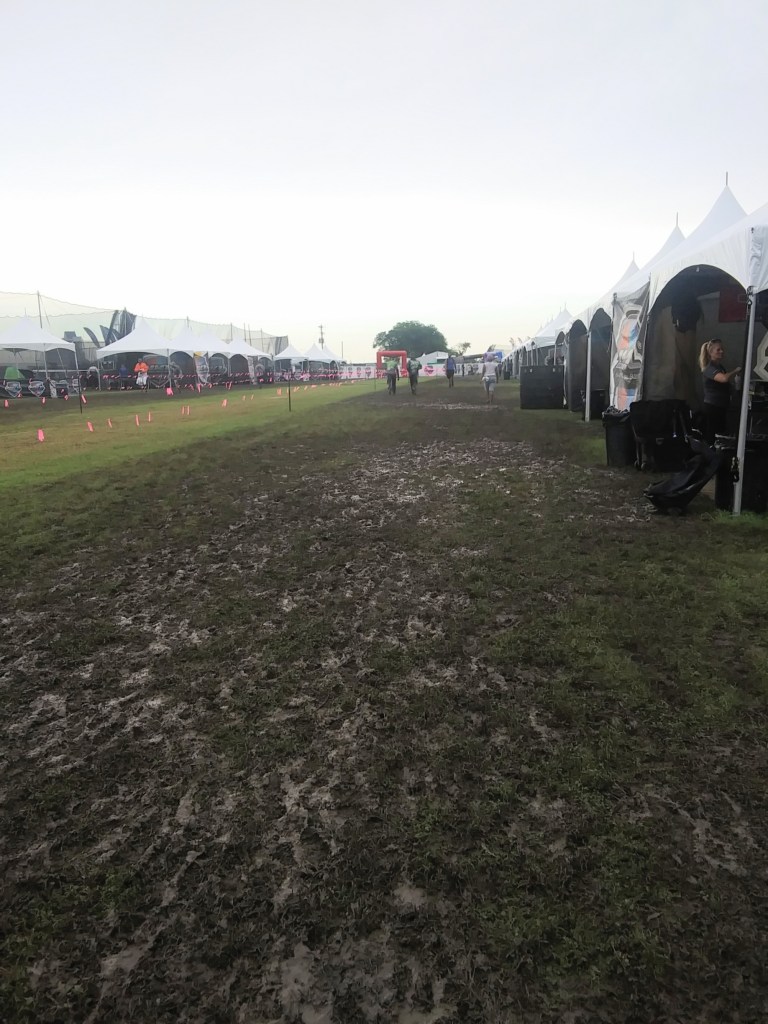
Not just mud… sticky mud

“Prepare for the unknown by studying how others in the past have coped with the unforeseeable and the unpredictable.” – George S. Patton

How should a team address “adverse conditions” when they arrive at an event?  Most people would say with preparation, of course.  If you know it is going to rain, you bring your visor, a clear lens, extra towels/microfibers, plastic bags, etc. We’ve all played in the rain before.  At least, I hope most of you have and understand there are certain necessities to this.  If not, make a comment and we will make it a topic of a future blog.

But what about issues you couldn’t possibly prepare for?

During the Dallas event, certain players or positions may have found themselves hindered by mud. You may have even found your plans disrupted by the solution to the mud… mulch, which anyone knows that if you dive into it, you have a real good chance of stopping quite abruptly.  So, dashed plans and potential injuries have now become a constant concern.  There is a good chance your team was used to running far or using a pocket play or what have you.  But you get to the start box and realize the mud will most certainly be an issue with getting a good jump start.  Or maybe the start box was fine but the center or tapes were mud pits that would cause over-sliding?  Or maybe they put mulch right where you want to dive to enter the snake or dorito? You suddenly realize you may not be able to play the field the way you prepared for it.  How do you prepare for that?

home mud
This could get messy…

Preparing to play the field

The most practical approach to any field is developing plays based off specific scenarios.  I almost always develop a “bread and butter” play.  This is the base play that my team will use most often.  It usually provides a higher statistical success rate by putting us in good position with primaries (our first bunker of choice off the break) and allowing specific goals to be met early.

Then I like to play the “what if” game.

Expect the best, plan for the worst, and prepare to be surprised.” – Dennis Waitley

Let me give you an example.  Not too long ago, the south saw a rather horrendous snowstorm (for the south).  I was at work and lived about 10 miles from there.  Everyone was being told stay in place, don’t travel.  Being the stubborn man I am, I chanced it and made it home safely.  It took two hours but I ended up with my family as the south dug out of a 3 day freeze.  Here’s the thing… what if I hadn’t made it and got stuck or wrecked?

Now, I’m no boy scout (is there such a thing anymore or is it the he/she/we have no identity politically correct hand out trophies to everyone snowflake brigade these days? I don’t recall… oh well), but I believe in preparing for the unforeseen.  I had placed in my car the night before non-perishable food items (granola bars, beef jerky, water), a thermal blanket, flashlight, a lighter, matches, some laundry lint in zip lock bags, a change of clothes including extra socks, a pair of boots, and extra layers.  And before anyone asks, yes, I had a firearm with extra magazines and ammo.  I had no idea the storm would be as bad as it was.  I had no idea I would get stuck.  I had no idea of any of it.  But I thought ahead… I played the “what if” game.


11054356_10206225597064167_570992716500375430_n
Doesn’t matter. Get it done.

What if our opponent plays the layout in a way we didn’t think of?  What if they have great guns off the break and they are chopping us up consistently on the break?  Or perhaps they are taking more ground than us on the break and getting into position earlier or faster?  So on and so forth.  What do you do?

Hopefully, you played the “what if game” before you got to the event.

I realize I have oversimplified this concept. But you get the basic principle.  And that same principle applies to adverse conditions.

The field my team was competing on in the prelims during Dallas had its share of these conditions.  One side of the field had different issues than the other.  So we made note of it and developed our plays and breakouts around those conditions.  I was able to do this based off prepping for a completely different condition (good guns on the break, teams taking ground, etc.)  Does that make sense?

60027891_2380696718915173_6266007330928721920_n
Photo Courtesy of Dane Hawkins Photography

We played the West side of the field (the one in front of our pits) differently from the East side of the pits.  I also relied on data from my players who were actually IN it to let me know what they felt their capabilities were.  Notice how I also mentioned east and west… this meant we were actually dealing with the sun (yes, the sun was in Dallas/Ft Worth) so I also took this into account.

“Success depends upon previous preparation, and without such preparation there is sure to be failure.” – Confucius

The whole point of this particular blog post is this.  You CAN prepare for the unknown.  Adaptation – the action or process of change to better suite an environment or condition – is the basis and lifeblood of any good paintball team.  Adapt or die.  Understand that adaptation is incredibly important to paintball teams.

59863142_439757860123763_8217599805480763392_n
Dane Hawkins Photography

Now, to shift gears just a bit… I was reading some more sports psychology this past week (at home sick … I had time).  And I decided to look up anything that dealt with performing in the rain.  I didn’t find anything… but I did find an interesting article that I want to share the basis of with you all.

One thing we have talked about at length here at Zen is the mind… having the appropriate attitude and better understanding of one’s capabilities through truth.  It has often been joked that I am “toxic masculinity” with certain thoughts and perceptions I have.  I am “outdated”.  Without getting too political, which I admit, I may have already done… I will say that I neither prescribe to nor acknowledge what I believe to be the weak willed and irrational perspectives being taught to our young men and women in today’s society regarding what is “normal” or “socially acceptable”.

That being said, I do want to point something out that came to my attention recently regarding a young man I know.  Dealing with certain issues mentally can be challenging and is becoming more and more common in many of the paintball players I meet. Besides the obvious topic we discussed above in relation to a player’s perception to the conditions (How are we gonna deal with this coach?), there can be heavier or greater issues being faced by players. Here is the basis of what I read:

R.A.I.N.  (Bob Stahl, Ph.D. -February, 2010).

“R” – Recognize.

“A” – Allow or Acknowledge that it is indeed there.

“I” – investigate and bring self-inquiry to the body, feelings, and mind.

“N” – is to non-identify with what’s there.

Besides this one particular young man, it got me thinking about some of the other young men I have coached over the years.  How do I recognize or hope to reach young men who may be struggling with depression or similar issues?  If I can’t recognize what they are dealing with or maybe I do but can’t at least point them in the appropriate direction, what good am I?  My instinct is to toughen them up.  But that isn’t a one size fits all solution.  I can’t beat it into them.  I find this R.A.I.N approach a useful tool for the toolbox.

20190503_181118~2_resized
He always keeps his promises.

The concept is that if we use R.A.I. N. as a practice (make it a standard approach), we develop a better understanding of what fuels or drives our fears, anger, or sadness.

I personally believe that acknowledging stress, anxiety or pain rather than suppressing it is advantageous.   I feel that we need to learn how to cope with and view all challenges as a rite of passage instead of running away from them or hoping someone will fix them for us. Adversity builds character.  Steel is forged in fire… not with long walks in the park and hot showers with lavender…gross.  Face the issue, embrace it, recognize it… and ask for help.

I apologize for detouring there… I always try to keep this light and fun.  Just felt it might need to be said or read by someone.  If you or someone you know is battling depression or going through a tough time, reach out.  Let them know they are not alone, just like you are not alone.

Anyway, like I said, I am under the weather so I am cutting this one short.

Godspeed and remember…

Be water my friends.

Into the Pit!

“A fighter, a real strong fighter, should always look dignified and calm, and I believe that any expression of aggression is an expression of weakness. A strong person will not be nervous and will not express aggression towards his opponent. He will be confident in his abilities and his training; then he will face the fight calm and balanced.” – Fedor Emelianenko

fedor_emelianenko_cuts
Fedor Emelianenko

We all know paintball is a high energy sport.  There is physicality to it unlike any other.  However, with that physicality comes a mental aspect that is totally in lock step with any other competitive high impact sport.  With the intensity that is tournament paintball, coaches and players have a tendency to face an emotional rollercoaster.  With little time between points to determine what went right, what went wrong, and how to adjust, the importance of “pit control” is often overlooked.   How a coach or team responds when in the pit to growing pressure can tell you a lot about how prepared they are, how mature, and for the most part, their overall paintball IQ.

Pit control is nothing more than maintaining composure as a team.  Keeping a calm pit where players and coach are in sync is just as important as having good practices prior to a tournament.  There should be a cadence, a rhythm if you will, to what happens before and after each point.  There should be an understanding of what needs to happen, a process.  The coach pays attention to the opponent as well as aspects of his players.  The players come in and provide data.  The coach takes that data, combines with his own, and proceeds to develop a response (notice how I don’t say “plan”… we aren’t there yet.).

b59586d0a9cbff29177528f5022680ae
What controlling the pit looks like!

From a coaching perspective, the composure of a coach is almost always reflected in their attitude, body language and what we will call “presence”.  Remember, coaching is not just about getting the best performance from and developing your players… it is every bit as much about building a confidence in them.  Helping them recognize capability and pushing them past it. Especially in the pit!

Coaching or playing with players who lack a level of composure or are quick to panic is difficult. A player who has a tremendous amount of talent but lacks the ability to remain calm in a high pressure situation can create a wave of doubt among his/her teammates. It also has a tendency to be a telltale sign that the player is selfish.  Players or coaches who make the smallest issue into a nuclear threat are toxic. If you go thermonuclear war over a small issue that was controllable to begin with, your attitude will not only be a distraction to an easy solution, but create a “vibe” that won’t be appreciated among others.  There is no need, as my mother says, to make a mountain out of a mole hill.  In other words, stop overreacting.  It distracts from the real issues.   If a simple issue causes frustration or panic, imagine what effect a real issue would have on that person?  You must be able to adapt.  Solve the problem. Don’t point fingers and take it out on those around you.  Just get it done and check it off the list of things we need to be aware of next time.

“Anyone can hold the helm when the sea is calm.” – Publilius Syrus

This brings me to my first point.  Don’t be ashamed or afraid to admit when a role is too big for you.  If you have a role for your team and you don’t WANT the job, feel you aren’t up for the task, need help or worse, don’t feel you are appreciated for whatever the reason, say something.  If you don’t want the job, say you don’t want the job and be honest about it.  If you feel you don’t have the assets to perform the job, say something or ask for help.  No one can fix something they don’t know is broke.  If you are doing something so others take notice, you’re doing it for the wrong reason and should almost certainly remove yourself from the equation.  If the only motivational reason you are doing a job for your team is so others will look at you, bow down and show appreciation for it, then step off because you’re selfish and not team oriented.  You’re self-oriented and most teams don’t have time for that kind of drama.  Go step in the ring where it’s just you and an opponent.  Then see how much appreciation you get.

52792952_2057535654332615_6836595527203684352_n
Composure and focus

I got off topic… where was I? Oh yeah…

Frustration and panic is a horrible combination and a recipe for disaster.  Coaches and players with composure have the ability to connect the dots of opportunity in the face of pressure.  Good coaches/players quickly recognize causes of adversity and solve for them immediately.  They head them off at the pass.

When leading – especially during times of adversity, crisis and change – you must avoid showing any sign of lack of preparedness that will make your team feel unsure.  Let’s break it down into some steps, shall we?  Here are some ways to maintain a positive pit environment when the team’s tournament future is on the line:

Take emotion out of it – A good coach shouldn’t have to yell (unless it has reached that point and he has to gain some attention – that is another topic).  Showing self-control is imperative in times of stress. When we get emotional about a scenario, players will see this in a variety of ways and none of them good.   A composed coach can maintain his cool and still express urgency just not to where it becomes distracting from the goal at hand.  Logic, cool heads, data and facts will win the day.

Be nice; until its time not to be nice – Don’t get personal.  And don’t take things personal either.  Decisions and scenarios don’t always play out the way we want them to.  And when they don’t, we have to recognize that, hey, it happens.  We have to take what we can from it and move on.  We can’t afford to get defensive because when we do, it’s no longer about the moment and has become about us.  And that’s selfish.  Selfish players and coaches don’t win long term.  During a match is not the time to justify anything.  Afterwards…maybe.  Do not distract from the task at hand.  Think about it for one moment; the second you take something personal, you have removed sensibility in addressing the problem.  Your decision making has taken a hit and isn’t that what you are there for?   Why hinder it?

Stay positive – Duh.  “We suck again!” helps no one.  Be the example.  How many of you have heard the saying, “You catch more bees with honey than vinegar.”  Same principle here.  If I need a player to believe, I don’t tell him, “Hey man, I need you to do this but… honestly I think you suck but if for some amazing reason you are actually able to pull this off… great.”  Being an example here is imperative.  No matter how bad it gets, if we maintain composure, we can focus more clearly and address what needs to happen or be done.  We have to maintain a positive attitude and manage the goals effectively in order to keep everyone on task and switched on.  This is where a team, player, or coach can really show their capability of controlling a pit.  You have to set a tone before the event, before the match, during, and again following it.  If you have ingrained that positive mental attitude in your players, it is contagious.  That contagiousness will alleviate a lot of issues that may try to rear their ugly heads in the pit.  They are defeated before they arise.  A true team feeds off each during times of stress.   Build upon positivity leading up to things and you can carry that positive momentum into it.  When that first adversity strikes, that momentum blows through it like a locomotive hitting a smart car.  Or perhaps a better more descriptive analogy would be America handin’ it to the Japanese at the Battle of Luzon in 1945? (Okay… that was me just trying to get you guys to read up on some history.  Read a book…and this blog)

Be lions! – If you are able to project your positivity and zeal, you can create a tenacity in your team/teammates that will rival the Roman Centurions!  Make them believe!  If you exude the traits of bravery, strength, confidence, and belief, that can be addictive.  You are communicating these things through body language, attitude, how we carry ourselves and in our words.  Every team experiences slumps and highs.  It goes with the territory.  If you fear the slumps and only expect highs, you make yourself vulnerable to self-destruction.  On top of this, it makes it difficult to maintain composure when you are finally faced with adversity.  Panic leads to mental breakdown which leads to bad decisions or worse, no decision at all.  We have to stay focused.  We have to anticipate.  We have to read the landscape so to speak.  When I am faced with difficulty, I go through a rather simple checklist:  What’s the worst case scenario?  What is the best possible way to affect that outcome?  Do it.  If we can maintain composure and objectivity, we can recognize that things are manageable and we need to resolve them efficiently.  If it doesn’t work out, we MUST learn from it so that the next time that same scenario arises, we are even more prepared.  This leads us to our next component…

Be decisive! –  Don’t show doubt.  Doubt is that evil little villain that creeps in when you least expect it and poison’s the towns’ water well.  Game over man.  Speak with authority, like you already know the outcome!  Confidence is a must; even if you have no idea what you have proposed will work.  Believe!  If you can inspire, you can win.

Be Accountable!  – How many times have we talked about this one?  It goes without saying by now, yes?  Understand something… the buck stops here.  Take responsibility for each and every decision.  Do not fear outcome for if you focus on outcome, you aren’t focusing on the solution.  Does that make sense?  Take action and accept the outcome of your decision.  It’s actually a really simple yet powerful act.  See, when you as a coach or player take responsibility/accountability, you have essentially neutralized the problem from the get go.  You have hit the pause button on the crisis.  Until we meet again crisis!  In other words, ok, the situation won out this time but now I recognize it and I will take steps to keep it from either happening again or defeating it when it does happen again.

Act Like You Have Been There Before – I’ve been saying this a lot lately.  This may seem redundant with some of the things mentioned earlier but that’s because it is true.  Solid coaches and players know that the key to keeping a cool calm pit is to act like you have been in the situation before and that it is nothing new.

53361193_2155753757823314_84860805647958016_n
Share data and adjust fluidly

Listen, it’s easy to lose composure during a paintball match.  It’s easy to get rattled.  How many times have you been walked off the field, got in the pit, and angrily voiced your thoughts on the matter?
But then, how many of you have experienced a coach or teammate who is cool under pressure, shows those quiet reserves, digs deep, focuses and rights the ship only to rally you to go out and win the next point?

Uh-huh… I thought so.


Be water my friends.

Don’t Fear the Reaper

If you are not a sci-fi fan, you may not be aware of a famous series of books written back in the 60’s and 70’s by a gentlemen named Frank Herbert. The Dune series is considered one of if not the bestselling sci-fi novels of all time. In it, there is a quote by the main protagonist Paul Atreides that I absolutely love. Here it is:

“I must not fear. Fear is the mind-killer. Fear is the little-death that brings total obliteration. I will face my fear. I will allow my fear to pass over me and through me. And when it has gone I will turn my inner eye to see its path. And where the fear has gone there will be nothing. Only I will remain.” 

So cool.

How many of you get nervous prior to an event? Perhaps you get a little anxious on the box when you are lining up for that first point of the event? Any of you ever panicked when you realized you forgot something? Do any of you become overcome with the fear of losing, not performing well, or maybe suffering humiliation or injury?

You’re not alone.

thumbnail
Paul Atreides portayed by Kyle MacLachlan in the film DUNE (1984)

Everyone has experienced some form of fear at some point in their life. Fear is our response to perceived physical or emotional danger. How often are we afraid of something that isn’t life or death or legitimately important? Take for instance, oh, I don’t know, not winning a paintball match? Would you put that up on that level? Some of you would, of that I am sure!

Whether you are a seasoned player or brand new to the scene, we will all have specific fears, admitted or not. And that’s okay. Fear can be good. It is how we react to fear that will ultimately define us.

“If you know the enemy and know yourself you need not fear the results of a hundred battles.” – Sun Tzu

The most important thing a player or team can do is understand the “worst case scenario”. Try to identify the worst possible outcome of what it is you fear. Once identified, now we face it, understand it, and reconcile ourselves to that possibility of outcome. Really think about it… is it the end of the world?  In paintball, probably not. If you absolutely cannot face whatever the worse case potential outcome is, then you probably shouldn’t be playing. But let me tell you what happens when and if you are able to reconcile that potential scenario… it will free you to truly perform at your highest level. If you accept whatever outcome, from best to worst, you can compete without real fear. However, if all you can do is focus on the fear, you will never perform to the best of your ability. You should be thinking about, and visualizing, the positive outcome at all times. After we recognize potential outcomes and accept them, now we focus on the best possible outcome. We visualize success. If we only wrestle with the worst scenarios, it will distract us from the desired outcome. In other words, always focus on what you want to happen, not what you don’t want to happen.

IMG_20180729_140614
Fears were overcome for this young player

Here’s where we are going to get a bit psychedelic. The most common reason for fear is the possibility of failure, yes? But here’s where I want to blow your mind for a second. I once read that failure isn’t real. That’s right, it doesn’t exist. See, we invented failure or rather the concept of it. It boils down to this: failure and success are two different ways of looking at the same thing. I would go as far as to say there is no such thing as failure, just attempts at learning how to improve. Now ask me, do I really believe what I just wrote? Sometimes… but let me get to the point or rather the big picture item.
Once you understand that there is no failure, you will begin to recognize what it really is. It’s data. The more data, the better armed we are to face our fears. When we first met our fears it was with a spoon, then we learned the spoon didn’t work, so we grabbed a hammer, and that kinda worked but it was hard and still scary, so we grabbed a M249 LMG, rechambered it in .308 and let loose. Heck that wasn’t scary at all… as a matter of fact, my fear called me up and said, “Leave me alone please. I will never bother you again!” When this happens, we have essentially desensitized ourselves from that specific fear. Congrats! You are now free to perform anxiety free.

Embracing our fears on and off the paintball field can be a difficult and a time consuming endeavor. It is a true struggle for most. But trust those who have succeeded in doing so. Ask them about it and I bet you will be met with a person who is confident and a winner. A person who can focus and maximize their potential every opportunity they get. But I bet you will also find a person who failed more times than they succeeded…

Okay. Let’s dig a little deeper. I also read this sometime ago and it came across my research again recently.

“F.E.A.R. or False Evidence Appearing Real. It appears real, even though it is a fear of the future and is not happening now. Therefore, it has no real substance, arising when the ego-self is threatened, which makes you cling to the known and familiar.” – Neale Donald Walsch

Whoa. Also cool.

Again, each and every athlete experiences some kind of fear or anxiety to some extent. I think we can agree that any person or team who can control their fear on and off the field will be a ferocious and daunting opponent, a capable and inspirational team, and just a plain cool.

Fear
Its lurking but it doesn’t have to win…

But be advised; any fear, if left unchecked, will do nothing but grow. We need to address any anxiety, whether it occurs before a match, during a game, or even afterwards. Fear is obviously a negative mindset and will ultimately diminish you and your team’s capabilities. You have to face it! How many of you see players with earbuds in walking about in pit row? I’m not saying these people are scared of something but I would venture to guess that they are using that music to focus themselves, whether it be to calm themselves or pump themselves up for the upcoming “unknowns”. Others may need a teammate or friend to talk to.

There is an old Japanese proverb that says, “Fear is only as deep as the mind allows.” Any fear, no matter how big or small, maintains a potential to overcome and create a mind numbing negativity that limits a player’s ability to perform. Don’t get me wrong, I seriously doubt any of you have any anxiety or fear to this level on the paintball field… that doesn’t mean it can’t manifest itself to the level that it is a distraction though.

“Courage is the resistance to fear, the mastery of fear…not the absence of it.” – Mark Twain

As with any problem, the first step is acknowledging there is one.  Regarding this particular topic, we need to recognize the fact that we are in fact, nervous, anxious, or afraid. Developing mental toughness (which we have discussed in a previous blog) is crucial and not just to our mental state, it is every bit as important to our physical performance! The greatest players have always had both a solid mental game as well as the physical capabilities.

Paintball has evolved so much over the years that it now requires many variables to have a winning season and team. The physicality of the game has increased and as players become more athletic, the demand for a better mental game and psychology has also developed. Players and coaches need to be able to maintain a positive thought process before, during and after the game.

IMG_20181028_092732
Don’t fear the reaper…

Karl Menninger, the famous American psychologist, believed that fear is educated into us, and can, if we work on it, be educated out. How profound. I couldn’t agree with him more.

One thing I try to do when coaching is help a player focus on the successes they accomplish no matter how big or small. No, this is not a participation trophy approach. This is, once again, developing data… learning. If I can focus a player on how they succeeded and not on how they failed, it will slowly build confidence. I have seen too many players and for that matter coaches, focus on all the wrong things! This is a petri dish for building fear. They think more about not making mistakes than completing the goal of the drill or the point. How many of you have heard me talk about setting small goals and focusing on those first? See, if I point out the small success as opposed to the failure, the player begins to recognize they are moving in the right direction. They can then begin to visualize the positive. Once this happens, the fear no longer controls his or her approach to the goal which ultimately removes any hindrance to learning. They begin to visualize the result which helps them accomplish it.

Ultimately, I think it comes down to an approach on how to conquer fear. If a player has a fear of loss or embarrassment or what have you, then we need to refocus their attention. That attention needs to be on efficiency and consistency. If you can get them to focus on performing efficiently and doing so consistently as opposed to worrying about perfectly, you have already won the mental game and so have they. To put it simply, you don’t have to be perfect to win. There will be things outside of our control. We need to focus on us, not those things. Once a player or team understands that mistakes are a natural part of the game, they are already well on their way to improving performance. The goal is for players to trust in their skills so they can play more freely and feel less tight or controlling.

Does that make sense?

Be water my friends (The spice is life…)


Who’s with me?!

Let me set up a scenario for you.  Tell me if you’ve heard this one…  You’re just returned from a tournament and the team didn’t perform well.  You thought for sure this was your event.  Sure, you struggled the first 3 events of the series but this time was supposed to be different.  Unfortunately, it wasn’t.  What now?  What next?  What do we do?

Who has been there, done that?  Probably 80-90% of the tournament teams out there actually.

“Mindset is what separates the best from the rest.”

Staying motivated after spending time and money to compete and not seeing results can be one of the most difficult issues to overcome for a paintball team (well, for just about anything really).  Motivation is ultimately what leads people to try harder, and more effort usually leads to gains/production for people.  But more importantly, it will lead to eventual wins.  Winning leads to all sorts of good things, which leads to growth in a team’s capability.  On and on the cycle goes… most of the time.

IMG_20180913_183145
Who dreams of the Sunday club?

Unfortunately, there isn’t a magic bullet or drill or strategy that will make all this happen.  Motivation, for the most part, comes in a multitude of ways.  I’m willing to bet that almost every member of your team is motivated by something completely different from one another.  Everyone has unique values and ideas… which leads to a conundrum sometimes.  What motivates one may not motivate the rest.  If you are going to be successful in motivating your team to stay the course, then you have to create that motivational environment (we’ve talked about the culture before yes?).  Nothing will beat hard work, especially when all the hard workers want the same thing.  If you don’t have that luxury of having a team that all rows in the same direction for all the same reasons, then It will take multiple concepts.  Here are a few I have found out over the years that have seen success.  Some you have read about her in the past but it never hurts to have a refresher course:

Set an example

If you are the captain or the coach or the manager, be a leader.  Set the pace, be the example, set the bar!  If you are pointing and telling instead of showing and going, players will not respond well.  You set the tone of the practice, you set the tone of the team, you set the environment.  It can be one of positive growth and affirmative accountability or it can be one of negativity and laziness.  Which do you think a solid good player is going to actively search out and respond to?  Your work ethic and the values you hold dear to your team will determine its longevity.  By setting the right example from the get go and maintaining that example, you will have a meaningful impact on the team’s willingness to follow.  YOU will be the motivation.  For instance, if you drill hard and stay optimistic about everything, even in the face of defeat, or at the bare minimum take an intellectual approach to problems and issues as opposed to just identifying failure, your team will likely do the same. If you set the example with positivity and understanding, your team will mimic you, and the entire culture of the team will become one of motivation.  That’s an environment that IMPROVEMENT will thrive in.

“Don’t Talk. Act.  Don’t Tell. Show. Don’t promise. Prove.”

IMG_20180901_110732
One will.  One goal.  Everyone rowing in the same direction.

Honest Communication is Paramount 

This goes hand in hand with setting the example.  Everyone needs to feel comfortable giving input.  It is the leader’s job to focus input but everyone should feel comfortable enough to comment on matters of the team.  If a player is afraid to ask a question, it stifles growth and promotes an environment of frustration.  Frustration leads to anger which leads to the dark side.  But here is the biggest impact open honest communication will lead to; it leads to trust.  When people understand that leadership isn’t hiding anything, when they understand what is driving the decisions, when they understand the motivation, they are much more likely to trust in the process and the deliverer of the message.  If you openly communicate, you should gain respect.  But that communication has to be both ways.  Open communication and trust lead to clarity of vision and that is really important with a paintball team both on and off the field.  Players who feel appreciated for their input will create opportunities to identify potential problems before they even blossom.  Earlier we said everyone is unique.  They can also be unpredictable.  Know that, no matter how flawless you implement your motivational concepts, not everyone will get it.  But also recognize that one out of 8-9 players doesn’t mark failure.

Individual attention

While teamwork is important, it is hard to beat some good ol’ fashioned individual attention, especially when it comes to motivation.  In a paintball team environment, it is easy to get “lost in the shuffle”.  Taking time out to speak to a player alone and on a personal level can change a player’s attitude almost instantaneously.  It doesn’t have to be about paintball even.  “Hey man, how’s the family?  Good?”  Then do something that is even more important than asking about them… listen.  In order to motivate someone, knowing them, really knowing them will give you tremendous insight in how to do so.  What ails them, what scares them, what they like, don’t like.  Know it, learn it, and then use it to help make them a better player and person for that matter.

When a player does something well, comment on it openly.  It will not only make them feel appreciated but it will also let the other team members know that, if they do well too, it will be recognized.  The domino effect if you will.  It can be contagious.  But probably the most important aspect of this motivational technique is for when someone is struggling.  They are beating themselves up or they haven’t had a couple of good practices, or what have you.  Letting them know you see it, and you want to be an asset to help, can be just the right motivator.  It also demonstrates from a leadership role that you have best interests in mind.  Even if it means cutting them.

received_2287610521268801
Motivation comes in many forms. (Thanks Mr. Mohr! Really, I’m not angry)

Opportunity/Creativity

We all do it.  We get into a routine and soon that routine becomes just another motion and the benefits of the routine become lost.  They become… well… boring.

Throwing in some things to break up monotony of practices or setting specific goals for the team (or even each individual player) can be a big win on the motivation search.  I have found “No position is safe” is a great motivator; then couple it with cross training.  Have my 1’s play the 3, a guy who usually specializes on the snake play the d side.  Have fun with it, create a little bizarre world and see what unfolds.  Who knows, you never know, you might discover something about a player or players you didn’t know before.

Besides, you all know I believe in making paintball players… not a snake player, or a back player… etc. (although having a specialty player isn’t necessarily bad, I would just prefer everyone know how to play everywhere).  This is a great motivator too if you have a feeder team or players who hang out looking for an opportunity.  Give them the shot.

“It’s a slow process but quitting won’t speed it up…”

IMG_20180902_215155
Put in the time and the time will pay off

Take a break

HOW you create the environment is just as important as it will determine WHAT the environment ends up as.  Like we stated at the beginning of this blog post, how you go about creating the environment will affect the overall “vibe” of the team.   Be advised, again, there is no right or wrong way… that will all depend on your team’s make up of players.  It’s going to be different for every team.  I have always preached that the teams getting after it will always surpass the teams who don’t.  But that doesn’t mean that you can’t do other things than paintball together.  Eat dinner together, go play putt-putt or something stupid together.  I personally like to take guys to the shooting.  Something that will build comradery and teamwork while having fun outside of the normal reason you get together as a team (practice or events).  Trust me, this one is worth it.  And who knows, maybe you and the team will learn something…

Trying to separate your paintball team from your social circle just doesn’t make a lot of sense.  Sure, it can work, but I think a lot of successful teams break bread together among other things.  I’m not saying everyone on the team should be best friends.  But that doesn’t mean you can’t associate outside of the field.  Being at least friendly and cordial is important especially on the trust front.  I like cook outs.  Brew and meat.  That’s awesome.

…Here’s the thing and I will leave you with this.  The key to ALL of this, whether you are a coach or a captain or what have you, is simply focus.  That’s right, motivation is ultimately finding a way to focus on a goal.  If I can focus you as a player or a team on a specific goal and arrange it to where you are all moving in that same direction with the same intensity, you will see results.  Simple right?  No, but it becomes easier if we follow the topics we discussed above.

Okay…I will shut up for this month.  Thoughts on the topic?  Agree/Disagree? Let me know in the comments.

Be water my friends.

Preparation H

I have been talking with a few captains and heads of programs recently about preparation. Discussions have ranged from preparation for an event to preparation for a season. Both are important and not mutually exclusive.

So let’s break this down for a season. What should we be looking at? What are some of the factors we should address up front. Understand that, if you have read my blog before, you know each of these steps should ultimately have a goal, a set of factors that must be met. This will ultimately determine what your vision of success should look like. Here are the 5 factors to consider:

  • Personnel
  • Practice
  • Coaching
  • Sponsorship
  • Budget

Let’s just go down the list, shall we?

“Success depends upon previous preparation, and without such preparation there is sure to be failure.” – Confucius

59729_582627101766966_9257670_n

Personnel – One thing I always tried to do was lead by example. I never asked my guys to do something I wasn’t doing. I believe leaders must promote and exude integrity as well as be trusted by the team they are leading. You do this by setting the example and WHEN you do this, you are setting the standard. I was the first guy to that field and a lot of times the last to leave. I took initiative and promoted it among the guys. Something every team needs is a list of expectations for the players that need to be recognized before donning the jersey. Write them out and hand them out at try-outs if need be. If a player can’t meet the requirements, thank you for coming, the door is that way. If it is discovered they can’t meet the expectations later and live up to the understandings set forth from the beginning? One word – cut. This will ensure you have the right band of merry warriors who are down with the cause. Does this always work? Excellent question. You can’t force loyalty but you can identify like-minded people and that’s something.

Remember, you are not paying the players (maybe you are… send me a PM and let’s talk). They are willingly giving of their time so the environment has to be one of mutual respect and drive. You all should want the same thing; to succeed; to win; to promote the team brand. If the team isn’t on the same page about this one simple thing, chances are you will not meet your overall goal much less have any longevity. What does your team stand for? What does it represent? Does the entire team agree?

We’ve talked about it before. Do you have talented players? Be advised, talented individuals do not make a team. Are they coachable, do they get along? Ask yourself these questions:

  • Do I really believe he/she is a talented player? Why?
  • What are his/her strengths and weaknesses and how do they fall within the parameters of the team?
  • Is he/she loyal to the cause/team/teammates? How?
  • Is he/she respectful of others? Does he/she show up on time?
  • Does he/she have their equipment and is it working? Is he/she always borrowing stuff?
  • Is he/she financially capable of carrying his/her own weight?
  • Has he/she shown potential for improvement?

“Luck is a matter of preparation meeting opportunity.” – Lucius Annaeus Seneca

IMG_1702

What are some other factors we should look for? What about honesty or accountability? How do they take constructive criticism?

There has to be a motivation or incentive to make your team want to be there and work hard. This is imperative if you are serious about winning.

Practice – This is a no brainer. I genuinely believe that a team’s practice regimen dictates their capability as well as identifies their drive to win. Now, we can discuss quality versus quantity when it comes to practice by why would you not strive for both? Yes, it is hard with everyone’s schedules to do this sort of thing. That’s why you look for this ability in Personnel…

Practice needs to be more than just the layout practices too. The team needs to get together a minimum of one other time a month to continue the gelling process and work on fundamental aspects of the game. Practices should never be just about the layout.

I am a huge proponent of videoing practices. I believe there needs to be a “film day” or “night class”. If possible, watch the footage as a team and leave the egos at the door. At the bare minimum, if you can’t watch in the same room together, start a private thread on social media or in email. Everyone needs to have input and everyone SHOULD be giving input.

Also, schedule a good team to scrimmage. If possible, schedule against a higher division team. If you must scrimmage a lower division team, ensure they are a serious competitor in their division or handicap yourself in some way.

“You hit home runs not by chance but by preparation.” -Roger Maris

1234567890

Coaching – Having a coach is so much more than having a guy who “tells us what to do”. There are coaches, there are captains, there are even managers. They all have certain responsibilities and those responsibilities need to be crystal clear. “Coach” is such a generic term in paintball. Is this the guy who runs practices? Chances are he is a coach then. Is this the guys who calls lines, plays? Probably a coach… Is this the guy who scouts opponents and brings actionable intel to the team and how to beat them? Maybe an assistant coach. The guy who handles logistics for the team, books the hotels, manages where everyone is and the schedule, makes sure small details are addressed… perhaps a team owner or manager, yes? What I am getting at is get past the semantics of it and recognize who has what responsibility. Make sure stuff gets done. Anytime you have good organization of a team, you have a serious advantage. More time can be focused on getting better. But make sure it is well thought out and delegated. Don’t expect one guy to do it all. That is folly. I am a firm proponent of a coach, an assistant coach, and a manager. Having all three sure makes things easier. Obviously not every team can have this but if you have the capability… you should make it happen. Efficiency is key here and overwhelming someone can be bad. Look at the successful pro teams right now. Each doesn’t have one dedicated coach but a secondary who assists. Bart and Dave, Alex and Ryan, Rusty and Fraige, the Russians… you get the picture. Not to mention all the other important support staff. Maybe this should go under personnel but have a good pit crew too. Pod runner, paint people, you get the picture.

Oh, and while we are on the topic, field preparation, to me, is a lot more than just playing the lay out for two weekends and telling players what they did wrong when they don’t play well. I love breaking a field down to basic components and then building it back up based off a team’s strengths and weaknesses.  I also really enjoy the challenge of finding bunkers everyone thinks can’t be used effectively and turning them into assets.  Coming up with breakouts and plays that push the envelope.  Which leads to the next portion…

You’ve heard me talk about “processing speed”. The top pros are top pros because they have incredibly fast processing speed or rather they recognize what needs to happen when. They have this processing speed because of experience and practice. So how do you make up for that? Good coaches figure out how the player learns. It’s like our education system today. If a player can’t learn the way we teach, perhaps we should teach the way the player learns. Coaches can’t be hammers all the time. Sometimes it needs to be a scalpel or a needle. Coaches need to know their players and they need to generate a cohesive and trusting atmosphere.

Sponsorship – This is an odd one and here’s why…paintball companies and usually any other entity that is going to supply you with goods and services already have a brand image. And chances are, they are getting everything they need out of you at very little investment. But it is worth the conversation. What is it about the company you are sponsored by that drew you to them? Did they have the best deal, do you just like their stuff, or both? What drew them to you? Were you just a sale? As a “sponsored” team, do you feel appreciated? What kind of relationship do you have with them… is it with the sales rep or someone higher? Is it completely transactional/business? Is there a friendship/trust there?

There are two things to look at basically. What you do for them and what they do for you. Is it mutually beneficial or does it favor one or the other? If the answer to this is that it is mutually beneficial, then you are golden. If it favors them, which is the case 90% of the time, it may need to be addressed if you feel you are giving a whole lot more than you appear to be getting (be careful and don’t flatter yourself). If it favors you, you are a winning team and have longevity in their eyes with a sizable social media impact on sales… that, or something is terribly wrong.

“Preparation is a mentality… With wrestling being my background, I’ve always learned to overwork, overwork. Work, work, work, work. It’s not always the talented that wins, but it’s the one who puts in the most preparation and thought into things.” – Dominick Cruz

Day_Imported on Monday, October 21, 2013_9892

What I am getting at here is, what is your image and why? What does the sponsorship you have say about you and your team and your worth to the sponsor? Sponsorships should help your guys compete. The goal of them is to shift some of the financial burden to a company that believes in your brand. And you should rep them hard. The programs offered by the paint companies are impressive these days. It’s fascinating in the fact that the industry has come a LONG way.

Budget – This ultimately guides your sustainability. And that’s something most paintball teams don’t even take into consideration… sustainability. How long can we keep this up? And How? My rough estimate of running an unsponsored team for a season in the NXL would include entry fees, lodging, and paint. So let’s take a high level look at Semi Pro. Newflash – it ain’t cheap. Obviously, it will be a little cheaper at the lower divisions due to entry fees being less, paint consumption, etc. Just the same, I would imagine a season for D1/Semi Pro would be around $30-40K annually. Or essentially $6-8K per event. This is based off the following:

  • $2800 entry fee per event ($14k for season)
  • ($1200) $100 room average per night for 3 rooms over 4 nights ($6k for season)
  • Figure 40-60 cases of paint per event per preliminaries, figure 12-15 additional cases per match for Sunday (4 matches so another 48 to 60). Let’s use the average of 50 cases for just prelims. That’s 250 cases of paint annually at events ($10k)

Here’s the kicker. I’m not including practice paint, flights, gas, and food.

The question is what assets do you have in place to meet these financial responsibilities? A paint sponsorship can certainly go a long way in helping alleviate some of the costs. What other aspects do you have? How much does each player contribute? What are some other methods of finance?

Okay, so based off this quick high level simplistic guide to preparing for a season, do you think you have what it takes to put together a sustainable winning team?

Be water my friends.