Take a Stab At It

I have always been fascinated by the sword. Whether it was through my first introductions to characters such as Robert E. Howards’ original Conan books, Michael Moorcock’s Elric, Fritz Leiber’s Faffhrd & the Gray Mouser, Sir Walter Scott’s Ivanhoe, several Arthurian legends, Saturday morning cartoons such as Thundarr, or my later rabid fascination with the Eastern martial arts, the sword was the preferred weapon of many a hero in my youth. It’s design over the years, clumsy, brutish, elegant, or efficient and the different methods used to create this tool is a fascinating study in culture. Think the Roman Gladius versus the Indian Tulwar, the Japanese Katana versus the Spanish Espada Ropera, the Scottish Claymore versus the German Flamberge… design, technique, material… bronze, iron, steel…

Yes, I’m a nerd. I can’t help it. Very cool stuff in my opinion. But then… I am easily amused/entertained.

Because it is a weapon, there are different techniques and styles, all dependent on the characteristics of the blade and its intended design.

*ZEN NOTE – I started to go off on the history of an item meant to be sharp, pointy and used to pierce or cut a human and then later a human in armor, so forth and so on… I digress).

The purpose of me writing this blog is funny. As per usual, I was having a discussion with a friend regarding an Instagram video of a Kendo Tournament. This friend happens to be a paintball player as well. And a certain historical figure came up which led to comments such as, “It’s a beautiful and frustrating part of high level combat sports when you realize the essence of fighting is counter-fighting””” and “Who wrote the best on taking the initiative versus let the enemy reveal his tactics and counter”. Which led, you guessed it, to a PB analogy.

The historical figure was a renowned samurai and, in my opinion, one who hovers layers above any other swordsmen throughout history. His story is one of legend and, no matter how many fantasy sword and sorcery books you read, none of them really compare to the real life exploits of this man’s battles and accomplishments. He wrote an incredible book around 1645 titled the “The Book of the Five Rings” and his name was Miyamoto Musashi. The man had 61 duels, and 61 wins. Understand that, had he lost, he would have been dead.

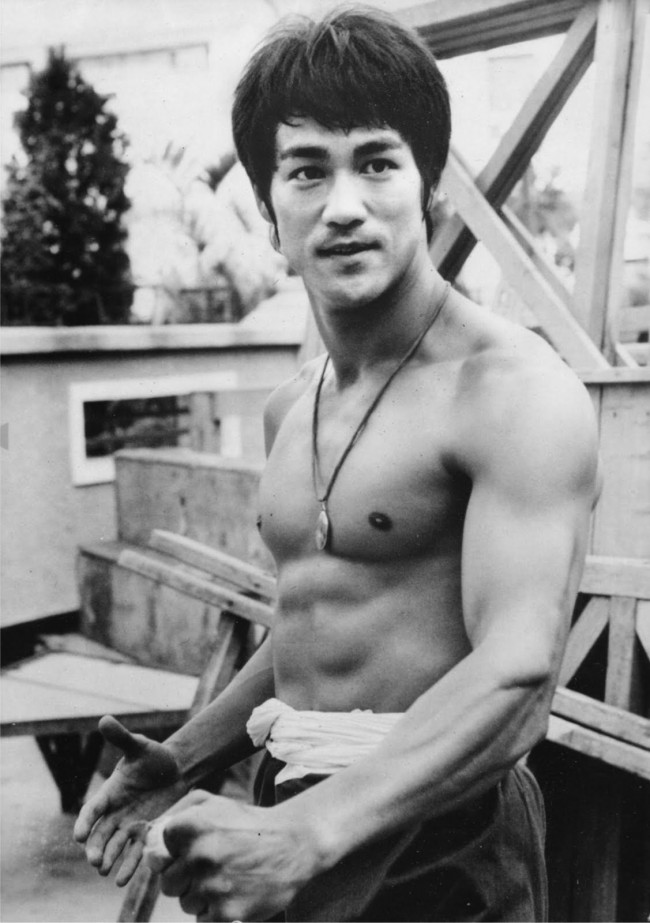
Back to my my conversations with the friend. He wondered what Musashi would have thought of the stroke delivered by the winning Kendo practitioner. To which I responded that Musashi would have appreciated the mastery of the stroke… and that Bruce Lee more than likely borrowed heavily from Musashi because neither believed in limiting their skill-set. True strategy, I said, was not about excelling with a single tool but about mastering the art of adaptability and continuous learning. Therefore… both initiative and countering should be learned so that one knows when to apply which.

My friend compared reading the 5 Rings as, “Like your best friend is the greatest sword fighter ever and you’re just on the porch talking about it.”

Brilliant.

Anyway, this is what inspired this spontaneous blog session.

The Five Rings is NOT about sword fighting. To put it as succinctly as I can, it is a book on strategy within the martial arts and life itself. There are 5 chapters that essentially correlate to eastern philosophy around the elements (Godai) – Earth, Water, Fire, Wind, and the Void. The author uses these elements to illustrate strategic concepts, and then goes on to explain how those same concepts can be applied to your everyday life. At its core, it is a guide on how you can turn a “pursuit” into a way of life. If we understand certain techniques and become competent at them, then we should be able to apply these lessons and processes to other parts of our worldly experiences. Musashi was adamant that becoming a master of anything required not only physical training but mental tenacity and spiritual development, as well. If you can master yourself, well then, you have now unlocked the key to mastering others.

This man wrote the book on the mental game when you really think about it.

So he wrote about strategy and how to apply it anywhere. I’m sure you have figured out where this is going.

What I love about the book , and what has helped shape my view on many things, including coaching (I guess I should say especially my view on coaching) is he preaches on the dangers of depending on a single weapon or technique. He elevates the importance of being a strategist versus being a tactician. For those of you who do not know the difference, both utilize adaptability but a tactician focuses more on specific actions and short term goals, while the strategist looks to develop long term plans in an effort to overreach the goals and ultimately provide direction to and past the goals. Both are critical to any planning but one looks past the immediate need and into the future. It’s the classic tiger/dragon philosophy.

One is purely instinctual while the other is wise

He didn’t believe in tunnel vision. For example, he didn’t think you should study one weapon. By doing so, you reduced your capabilities and would most certainly not be prepared for all combat scenarios. According to the book, when a warrior becomes reliant on a single weapon, they may then avoid situations where that weapon is less effective. This translates to being unable to adapt and limited in their strategic and tactical effectiveness. By relying on one weapon or technique, you have created an illusion… a false sense of capability. You have limited yourself. Similar to Bruce’s teachings, once you say this is my style, then you are limited to said style. True mastery, according to Musashi was holistic, involved multiple weapons and techniques, which lent to being prepared for ANY scenario. It meant adaptation and preparedness.

If you recognize your limitations, you can then work to improve them. This is the key. Honesty with one self must happen first as it is literally the first step in self mastery.

And the same goes for paintball players and coaches. You can’t be single minded. You can’t let ego get in the way. I don’t care how good you think you are, you can always improve, you can always grow. The moment you believe where you are is adequate, the moment you will begin to fall, regress, and be surpassed.

So, we should embrace a mindset of adaptability and one of continuous improvement. We should work our physical and mental muscles. We should be open to new thoughts and ideas, be able to shift course to find new capabilities and techniques, we should want to constantly learn.

But most importantly, we should learn all techniques… both offensively and defensively. Attack and counter attack. If we have one technique, we become predictable. Predictability leads to limitations. Limitations lead to eventual and unplanned defeats.

Ask yourself, if you truly wish to be a good paintball player. Perhaps you have aspirations to be in the professional league someday as a player or a coach. If so, then you better be ready to pursue and push your capabilities to their maximum limit. And once you realize there is no maximum, you will become limitless, formless, shapeless… like water.

I’m still learning.

Be water my friends.

Critical Mass… or is it?

How many of you take stock at the end of the season with your own introspection?  What do I mean by this… put plainly, do you or did you take the time to truly examine your own mental and emotional processes.  Did they serve you well during the season?  Did you falter at some point?  If so, why, and how did you address it? This should be done after each practice, each event, each performance, and not just at the end of the season in my opinion.

Did you go back and watch tape?  Did you go back and read notes?  Did you even take notes? Did you track what you were doing, how you were doing it, and why?  What was working and wasn’t working throughout the season?

If you aren’t doing this or something similar to it, you are probably failing yourself as a player… and most certainly as a coach. That is the first point I wanted to make.

But I want to get into something way more introspective, maybe even a little controversial, and heavy. But, hey, this is my blog and if you don’t agree or don’t like it, kick rocks and pound sand. I’m feeling called to talk about this so here we go.

If you have followed me for any amount of time, you have heard me quote the stoics at least once… Outside of my Catholic faith (but not necessarily mutually exclusive), I try to live by the stoic principles of life.  If I were to sum up the stoic mindset, it would be that we are how we react to experiences.

Socrates said, “Let him that would move the world first move himself.”

“I am not Socrates… and that’s okay.” – photo courtesy of Fava Photography

But what is the opposite of this?  What is the counter to a person who tries to be the best version of themselves and where can that counter come from?  And why does it rear its ugly head?  If you don’t or haven’t experienced this, outstanding!  If you do, perhaps what I am going to share will help in some small manner.

I am very critical of myself.  More so than with my players.  I hold myself to a standard that, when I feel I have not met it, I become supercharged, almost rabid about trying to “fix” or improve it. In some cases, carelessly so. After all, I am only human. 

I have met people who are similar but don’t have my response. In fact, they have quite the opposite response and you are seeing it become quite prevalent in many of the younger generation. And that is what I want to talk about. It is easy to fall for that inner voice that sows doubt, confusion, and distress.  But what is that?  What is that really?

I was recently exposed to several people like this over the past few months and didn’t realize it until I had a conversation with my wife. So I started reading about it.  In Psychology, there is a phrase called the “critical inner voice”.  It is defined as “… a well-integrated pattern of destructive thoughts toward ourselves and others.”  It’s that voice in your head that leads you to detrimental behaviors or keeps us from avoiding the effort it would take to improve.

I am going to try and apply this to Paintball. Recognizing that you are being too critical of yourself, or your team is difficult but important.  There has to be a balance with criticism, a point that isn’t necessarily crossed.  No, I am not saying you need to be nice or to act or speak about how “everything will be okay.”  I am simply saying we should try to recognize that there may be factors outside of what is really happening that are adversely affecting you or the player or the team’s performance that you may not immediately recognize or see.  THIS IS NOT AN EXCUSE.  I hate excuses. This is recognizing a problem, albeit a convoluted and mysterious one, and trying to solve it.

Criticism is important as long as it is constructive.It doesn’t have to be harsh…

How many of you have said to yourself, “I suck at this.”?  Why?  Did someone tell you were bad at a thing?  Was that person a subject matter expert on this thing or perhaps someone with authority or position?  Did they somehow set a bar that you didn’t immediately meet?  Did they express disappointment and gave up on you?

I will share a personal story with you.  Several years ago, I was told that I wasn’t very good at paintball.  As a matter of fact, I was told, “We can’t win with you on the field, but we can’t win without you at the event.”  I didn’t agree… at all.  And I knew better.  All that did was motivate me, drive me, and believe it or not, that was the catalyst that led to the creation of http://www.Zenandtheartofpaintball.com.

That is an example of an external voice but what about the internal ones…the ones we create.  The external voices from our past can certainly create the internal voices of today.   That devil on your shoulder telling you all the negative things about yourself is a manifestation of some earlier experience.  I’ll share another personal story.  When the New Orleans Hurricanes won the pro spot at the end of ’21, I had an inner voice telling me, “This is a WHOLE different level.  You can’t coach at this level.  You are going to make mistakes and they will be on the webcast for all to see… and they’re all going to laugh at you.  Zen and the art of paintball… ha!  No one thinks the Canes’ can compete at the pro level!  And everyone thinks your processes and your blog are stupid.”

That voice was LOUD.  But that’s all it was… noise.  I would do my best and continue to learn and grow with the team.  And that’s what I did. I doubled down on my thoughts, procedures and processes. And my team doubled down with me and supported me with their incredible minds and work ethic as well. I/we shut that voice up.

When Matty Marshall first asked me up into the booth to commentate (and each time since actually), here came that voice… “You are going to sound or say something stupid.  And then you will become an internet meme. You will no longer be taken seriously!”

I believe this was my 3rd time in the booth. Learned a lot from these two gentlemen, and continue to do so

Yet Matty keeps asking me up.  And that voice has been awfully quiet.  Sure, I hear it way in the distance but I enjoy commentating with Matty and all the cool cats I get to commentate with. I learn so much when I am up there. I look forward to it now because it is an opportunity to learn and, let’s face it, it can be a lot of fun.

When my friend Ryan Gray asked me to do a podcast with him, there came a chorus of voices!  “You are not on the same level as this man or any of the other professional coaches for that matter.  You will be exposed when they hear how you do things, and you will be laughed at by everyone. Not only that, but this is not your radio days, you have a FACE for radio and now you will be on camera.  So not only will you sound stupid, you will look stupid too.”

That voice was with me at the first show having just come off a 1-3 performance at Cup. But the more I listened to my friends, constituents, and the other coaches, I realized they weren’t much different from me. I haven’t heard it since. I look forward to each and every show now. The thing we fear is rarely the monster we make it out to be.

We all have our heroes.  Whether they are a family member, a musician, an actor, a friend, a literary character, what have you… they are our heroes because they were able to DO something, OVERCOME something, SUCCEED at or ACCOMPLISH something.  Now they may have been able to do it without adversity or criticism or made it look easy… but I promise you, at one point, they had a doubt or hurdle that they had to overcome. Heck, my heroes had to overcome HORRORS!

Coach Ryan Gray and author Mike Bianca (Zen)check us out on our Podcast “The Coaches Show”

Here’s my point.  What is the difference between the hero and the coward?  It’s simple really, the hero acts.  That’s it, that’s the difference.  They both experience fear but one simply doesn’t let it control him. Read that again.

I believe that leadership and accountability start at the top.  The coach is responsible for how the team prepares and ultimately performs. The buck stops here.  So, that inner voice has told me plenty of times that I couldn’t hack it.  True story, I have been told that A LOT through out my life.  But like I have always done, I fought back.  But before I could, I had to recognize a few things.

Where was this doubt, this critical thought process of my capabilities, coming from? Oh, I knew.  It was like clockwork. When I set out to do something and didn’t succeed at first, I was usually told by someone, (whether that was a family member, a friend, or heck, myself!) “You can’t hack it… move on, do something else.  You aren’t built for this or that.”  But if you truly want something, you will find a way.  Otherwise you will find an excuse. And what do we think of excuses?

According to Marcus Aurelius, the rules of a stoic mind are as follows:

  1. Keep an untroubled spirit.
  2. Look things in the face and know them for what they are.
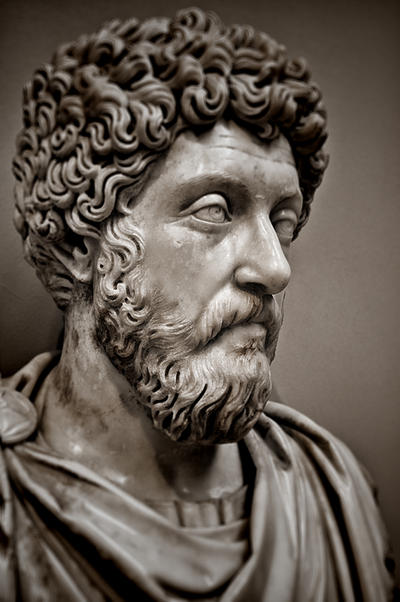
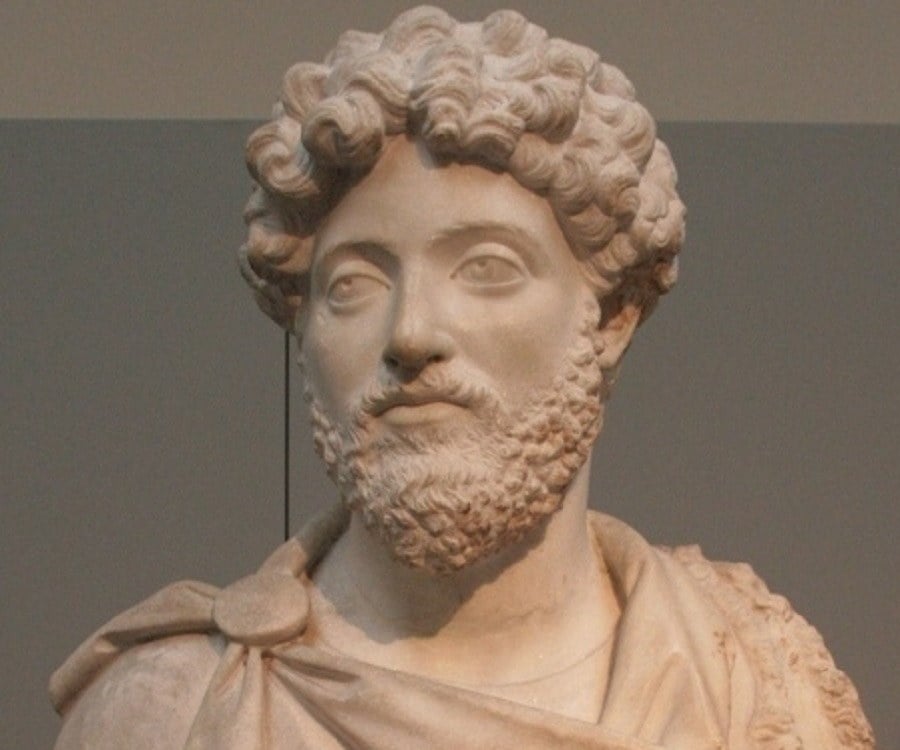
Marcus had an epic beard and Aaron Pate hair…

The ancient stoics didn’t let hardships throw them off balance.  Instead, they looked at situations objectively.  They were able to understand them and recognize them for what they really were… not what their emotions made them out to be.  That’s why we must develop the strength to not immediately jump to conclusions.  We should not LEAD with emotions.  We must be disciplined in our approach.  If we can do that, we can keep that critical inner voice in check and our spirit untroubled, but more importantly, keep our judgement sharp. 

But what if you are struggling on this front? What if that critical inner voice is starting to grow loud and, God forbid, win out? The first thing you need to understand and recognize is that voice is NOT a moral compass. It is not a conscience or anything of the sort. If it were, it certainly wouldn’t be so negative. No, that voice is the enemy. And just like an enemy, it must be beaten, conquered, and diminished to never be a threat again! Once you become cognitive of this, you can challenge it and you can defeat it. Know thy enemy. You are in control and you can now act against that voice and what it is advocating. Take back what is yours and actively pursue your own improvement and happiness. No one needs to be a victim unless you actively choose to be. Look at Epictetus, a famous stoic… he was born into slavery but they could not chain his mind… imagine that kind of power.

You can do this.  If I can, anyone can.  Now… go get some.

Be water my friends

The Evolution of Zen Coaching

I believe it was Thomas Sowell (the economist) who said, “The beauty of doing nothing is that you can do it perfectly.  Only when you do something is it difficult to do without mistakes. Therefore, people who criticize can feel both intellectually and morally superior.”

Ain’t it the truth?

Marcus Aurelius said, “You have power over your mind, not outside events. Realize this and you will find strength.”

Facts

Aristotle said, “We are what we repeatedly do”.

Amen.

In order to achieve excellence, we have to create good habits.  Good habits alleviate chaos in our lives. The goal is consistency… doing things every day to recognize potential. Now hang in there, I am getting to a point.

I see so many bad habits out there among players, but none are more debilitating and crushing than those with the wrong mental attitude.  Unfortunately, it is more prevalent than we probably realize. Changing a player’s mentality and behavior is not very easy once they reach a certain point. 

Listen carefully, becoming good at paintball doesn’t happen “naturally” or overnight. 

If I have said it once, I have said it 1 million times.  The mind is the weapon…

And the body is the ammunition.

Jacob Searight is an excellent example of brains and physicality

If you are constantly feeding your brain with good data and taking care of yourself physically, you are more prone to succeed in something that requires you to think while being physical… say something like paintball. 

I have talked about motivation a lot here at Zen but I have come to believe that this is only part of the equation… and it is the weakest part.  The strongest part of the equation is discipline.  When you can develop the right habits that lead to improvement, no matter how repetitive or routine it may seem, but you stick with it, that is discipline, and it will lead you to where you want to be. I get it, discipline can be tough for some.  There are, often, internal and external factors that make things difficult. Sure. We all struggle with SOMETHING.  But I wouldn’t look at it as a personal failure. At least, not always. We will all have setbacks.  But if you do encounter a set back or worse, several, then I would suggest changing your approach to becoming more disciplined. I would try to create discipline in myself through “smaller wins”. Build to it, with smaller more manageable goals. Then build upon those. See, it isn’t you who are necessarily failing to be disciplined… it is your tactics, your strategy to said goal. Make sense?

I have found that the key to creating a lasting habit is to ensure I “like” it. I have to enjoy something about it. What benefit and enjoyment do I, or rather, will I get from this new habit? That should be my focus. And I need to make sure that the benefit encompasses the whole process, otherwise I have all but ensured failure. Wanting to do something and actually doing it are not the same. Wanting to succeed at something and continuing to do the things required for success are not the same thing. Wanting alone will not create the habit much less allow for it to endure.

Bruce Lee taught, “Absorb what is useful, discard what is useless and add what is specifically your own”

The brain learns best through small, repeated measures set in the right environment.

How many of you are familiar with the S.A.I.D. or “SAID” Principle?  It is an Acronym for “Specific Adaptation to Imposed Demands”.  I stumbled across it recently during some research in sports psychology.  The concept is very simple.  It essentially teaches that to improve in a specific sport, you should practice the specific skills and “moves” used in that sport.  But in its more complex version, it is all about adaptation!  Adaptation does not and will not happen in a vacuum.  Adaptation occurs in a response to a specific stimulus or demand imposed by the environment.  I know, this is getting deep.  But this is what I tried to explain to Matty Marshall about teams becoming more academic… why they are becoming more competitive.  Why the Canes were so successful our Pro Rookie season. I just didn’t articulate it well.       

As a coach, I need to leverage my assets (players) to the best of their abilities.  But I also need to create continuous improvement in them and ensure that it is obtained regularly.  How do I do this?  When I have said in the past that my role as a coach is to put my players in positions to succeed, that means playing them in a role that meets their skill set to a specific layout.  And from there, I begin the individualization of their training!

If one wants to replicate success in PAINTBALL, then coaches must train their players beyond the fundamentals and physicality of the sport.  They must be taught the game.  That includes the tactical and the strategic for each and every layout within the parameters of TEAM while emphasizing their individual strengths and abilities… We have to train the brain! 

Most coaches are caught up in execution and not the WHY we do the execution.  They want to teach “when you see this, you do this.” If A then B paintball (a good concept).  This is a speed factor, an efficiency creator… but it is only half of the potential for making great players.  However, the more we teach, explain, understand the concept behind the why, that process of learning will get faster each time, with each layout.  Their own cognition will take over and their individual understanding will assert itself leading to even greater efficiency and use of time.

Asking and understanding why.

Too many coaches simply teach the fundamental aspects of our sports without emphasizing why.  Sure, a lot of it is self-explanatory.  And don’t get me wrong, the foundation of our sport is certainly important.  But too many take this as the only concept required.  Anyone can pick up a clipboard, call a line with your 5 most talented guys, and ask them to win.  That is not coaching.  That is managing. Great job PB manager.  But what are you doing to continue their growth, to make them elite?  Think about it, if that were the way, there would be a lot more elite players in each division.  But there isn’t… so, in my opinion, it is about the individualized attention and growth plan that must be discovered and then implemented.

Do I know how to do this every time with every player?  Absolutely not.  This is something that will require a lot of trial and error.  And something I started personally about 6 years ago and I am still navigating.

I am a firm believer in training as a TEAM but affirming and supporting that effort with individualized concepts.  None of this is a science.  But we can all be scientists by experimenting and studying results.

I guess my whole point is, as a coach, we need to look at our players in a much more holistic manner.  Their diet, their workouts, their READING, their home life, ALL OF IT… instead of just the one size fits all approach to practice in our sport. They will be better for it, you will be better for it, and the team will be better for it. Who knows, you might be surprised and start winning at a lot more than paintball.

Be Water My Friends,

Zen

S.C.U.D. (Sustaining Concentration Under Duress)

The NXL’s Mid Atlantic open was June 17th-19th.  The next NXL event (not counting the Golden State Open) was the Windy City Major held last month near Chicago from Sept 9-11.  There was a 12 week, or an approximate 3 month time frame between the Mid Atlantic and the Windy City events.

In paintball, that’s a long time.

So, what are the Professional teams doing during those 3 months?  If you are the New Orleans Hurricanes, you are working your day job (in some cases, two jobs), ensuring your career is still on track, taking care of family and significant others, balancing the checkbook, paying bills and taxes, and then shoring up individual and team paintball skill sets at every opportunity.  Because we are so spread out as a team, members get to the field when they can to work drills and teamwork.  If a member of the team can’t make a practice, they are practicing local to where they are.

The everyday life grind coupled with the paintball grind can be difficult.  Priorities for one tend to interfere with priorities for the other.  And that is understandable.  After all, this is the only professional sport that I know of where the pros (or at least a large portion of them) must pay to play at this level.  We are husbands, fathers, sons, and men first.  Our priority and ultimate responsibility is to our loved ones.  We must be solid and good on that front first and foremost before we can be solid and good on the field.  I truly believe this is one of the Hurricanes strengths.  Our support system is a large part of our relative success.

Focus. One voice at a time. What’s the goal and how do we execute/accomplish it?

Okay, but what can we do when your team’s focus appears to be a little blurry?  What can you do if the life grind is interfering more than usual with the paintball grind?  How do you maintain the team’s focus?

How many of you are familiar with the 80/20 rule?  Also known as the “Pareto Principle”. It essentially means that, 80% of your results come from about 20% of your work. More specifically that 80% of outcomes result from 20% of all causes (or inputs) for any given event. So how do we apply this?  It should be obvious, we should focus on that 20%… work the stuff that matters and don’t get distracted by the feeling of “we have to”.  In other words, we should prioritize the 20% of factors that will produce the best results. Logical, yes? But it isn’t always seen that way by a good many…

I see teams fall into this trap quite often.  They over plan.  Whereas, having a plan to begin with is important, and most certainly helps with goal setting, direction, and success, it doesn’t have to be overly complicated. Do not create an environment where, if you don’t do something, it will cause the team to feel they are not prepared.  No need to hamstring the team by developing a “to do” list that isn’t manageable or practical.  It isn’t necessary to get too detailed.   Understand, details are terrific and important but it is a fine line that must be walked.  If we get too detailed, we can get bogged down and miss out on what the real issues are or will be. Efficiency is key. Try not to do something just because other’s do it. Focus on what YOUR team needs. Is this making sense?

Focusing on teamwork and execution of job sets will lead to success.

All that said, try to identify your team’s key needs and best assets. Then try to shore them up in an efficient manner so you get the maximum value added. Now… this is a concept. A rule rather and not a law. What do I mean by this? Don’t make the mistake of thinking that since the 20% gets priority, then the other 80% can be ignored!

We should also recognize the difference between individual and team planning.  As I sated earlier, efficient use of time is really the key to all of this.  When we do have the time together as a team, I want to emphasize very specific team-oriented material as opposed to the individual aspects.  I might mention to an individual player something I see or want them to work on at a team practice and will keep it in the mental Rolodex (maybe discuss during a short break but not spend a lot of time on it)… but the emphasis is, and always will be, on the team dynamic when we are together.  This isn’t to say that individual attention doesn’t happen. It most certainly and almost always does. However, at this level, the individual issues are usually smaller or fewer and less dire.

I will almost always have a specific agenda in mind and time frame for each item on the agenda before a practice.  However, that agenda is fluid in case I see something that needs to be re-emphasized.  The domino effect is very real at practice.

What do I mean by the domino effect?  Well, it’s the whole point of this blog.  Staying focused on the goals can easily be derailed if we allow things to fall off or pile up.  We get off on a tangent and now the tangent becomes the focus as opposed to the intended goal.  At the end of the day, you can’t always control the results.  But you can most certainly control your effort to meet them and focus on them.

When you get down to it, your team is simply a collection of people with a common interest (hopefully). Not to get too high brow but I was recently reading a little Thomas Hobbes. He nailed the concept, at least in my opinion, of what a team is in his book “Leviathan” (well, really government or an organization of civilization… social contract theory… what have you).  He uses the concept of the biblical Leviathan, a giant sea serpent, as a metaphor for the state.  Essentially the creature’s body is a giant body made up of ALL the bodies of its citizens in the literal sense.  The same concept can be applied to a team.  Team, very similar to the different states here in the US, are made up 3 components;  the people, the processes, and their systems.

    “The whole is greater than the sum of its parts.”

    Aristotle

Focus on what you can control.

Ultimately, my main goal for the Canes at a practice is to function as one.  How can we be more efficient and ensure we are all rowing in the right direction with the same desire or outcome in mind?  Our focus – acting as one, a single entity with very specific goals in mind.  What do WE need? Having everyone on the same page is as simple as getting everyone to agree to a very specific list of goals.  Then create acceptance and agreement among the team on how best to get there… as a team.  Identifying and developing focus for the team can be finite.  But alignment on all of it is paramount. 

You have all heard the line, “Trust the process”. If the process leads to small successes over time then it is having the desired effect.

So stay focused on the task at hand, whatever that may be.

And remember…

Be water my friends.

Dream Team

Recently I posted a photo of the New Orleans Hurricanes on social media where I quoted Andrew Carnegie.  He said, “Teamwork is the ability to work together toward a common vision. The ability to direct individual accomplishments toward organizational objectives. It is the fuel that allows common people to attain uncommon results.”

Unfortunately, we don’t see this type of thought embraced very often, especially in paintball. 

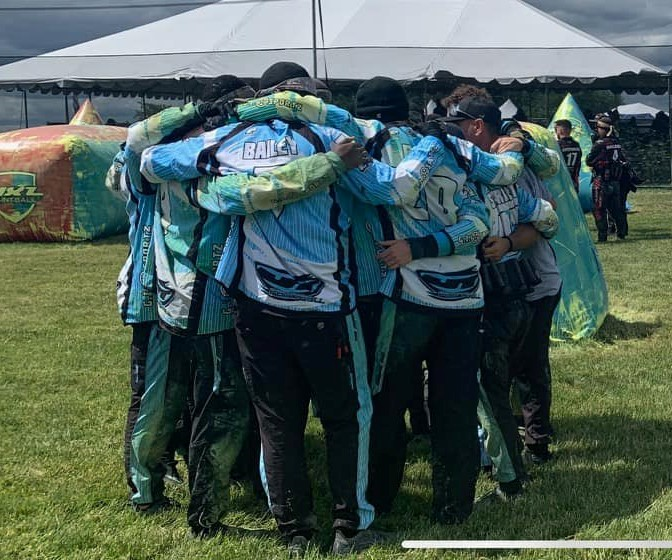
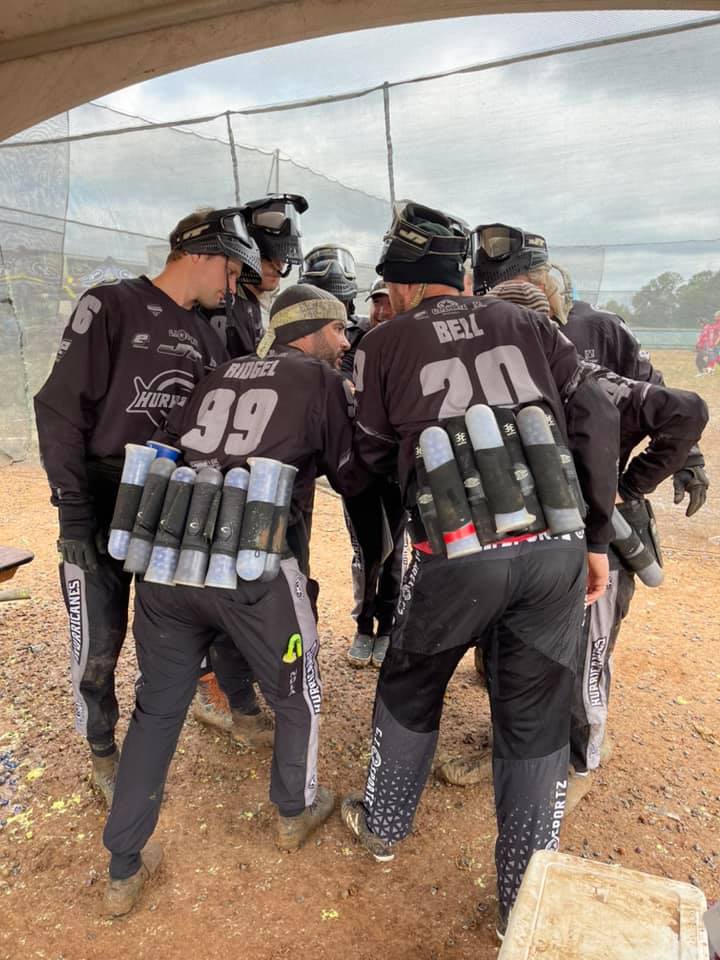
Everyone was smiling inside this huddle because we had just overcome a tough scenario. Because “team”

This past weekend I was asked by a player for advice on how to eventually go pro.  I have been asked this question quite frequently as of late, in one form or another.  A simple enough question really, but one that has numerous answers depending on who you are speaking with all while also weighing heavily on your circumstances and a myriad of other variables… and my answer is no different. Heck, I just got here.

Here are two more quotes for you from tried and true champions:

 “Talent wins games, but teamwork and intelligence win championships.” – Michael Jordan.

 “Individual commitment to a group effort—that is what makes a team work, a company work, a society work, a civilization work.” – Vince Lombardi

Sensing a theme here?

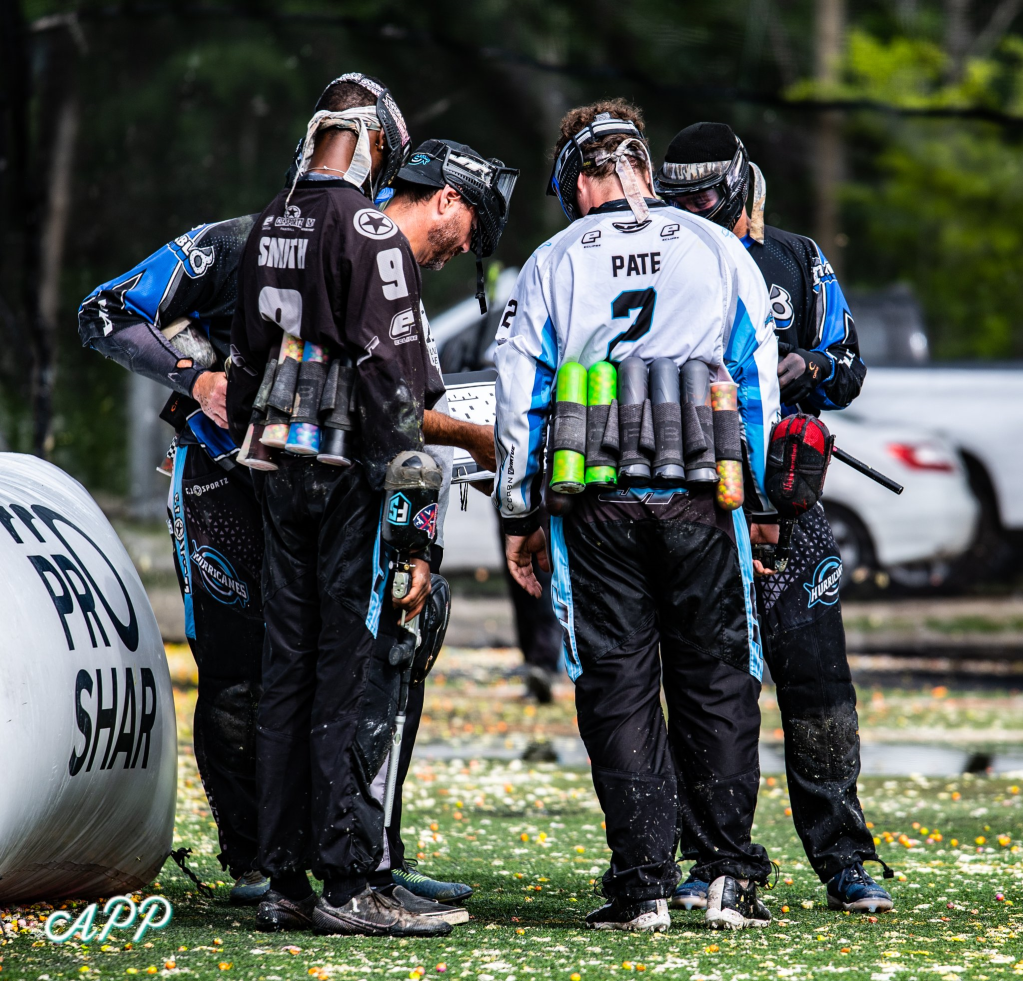
Big thank you to Cory Andrews of APP Photography

Teamwork is what usually leads to success in most endeavors.  Yes, there are exceptions but let’s talk paintball specifically.  Again, yes exceptions, but one would be considered irrational if you thought any successful paintball team achieved success and maintained said success through the simple efforts of individual players.

Teamwork has to have a strong foundation.  That foundation has to be trust.  Personal ambition can be, in some cases, admirable but it can and routinely does poison teams.  The team that removes ego, the team that puts the organization as a whole above the individual will usually survive longer and do better.  Most successful teams have figured out that if everyone “buys in”, has the same goals and are moving toward those goals together in a unified front, then it becomes a matter of when, not if, success will arrive. 

The strength of any team is made up of the individual members. The “weakest link” and all that… but you can overcome that “weakest link” bit if everyone recognizes that the strength of each member IS the team.  There is strength in unity which should lead to no weak links if everyone contributes in their own unique way.

I did an interview recently with Matty Marshall and he inquired about what we attributed the success of the New Orleans Hurricanes to so far.  The question intrigued me at first only because I realized he understood our goals.  To the outsider looking in, we are not successful.  In our first three events as a professional team, we have only made Sunday once.  We are currently sitting in 10th place for the series (and will probably drop to 12th based off what I see happening in Sacramento).  We have played 13 professional matches and only won 6 of them.  We were outscored at the Sunshine State 15 to 19, did better in Dallas 23 to 21, and fell again in Philly 13/17 for a total of 51 scored and 57 scored against. Hardly a success, right?  So why did Matty assume we were seeing success? 

There are a couple of reasons really.  One, because he is familiar with the goals we set for ourselves at the beginning of the season as well as at each event. We are  meeting those goals as a first year rookie pro team.  And two, by most accounts, we aren’t doing too bad regarding the annals of history. But that still remains to be seen as there are still 2 events left (Chicago and Cup).

But I would be totally remiss if I didn’t state that the success is garnered from the guys being a close knit group, who understand the importance of “team”.  It is ingrained in our culture. And that’s a very important aspect. 

To me, teamwork is absolutely essential and quite honestly, the beauty of our sport.  When you have five guys out there, working as one, communicating, selfless, and in a flow state, man… it is something to behold. Even better if you are one of the 5. But if you missed or flew past the word “selfless” in that sentence, then you missed the most important piece of it.

Team, Squad, Crew, Tribe, Clan… Family

Whether most realize it or not, teamwork is the true definition of efficiency.  After all, 9 or 10 brains are better than 1.  I can’t remember who said it, but it struck me as so very true.  What does efficiency really boil down to other than doing something better than what was already being done?  And that is where we are seeing our success:  in the process of creating efficiencies.  The process of learning, the process of repetition, the process of trusting one another, the process of pushing one another, the process of trying to be just a little better than we were the day before. And yes, the process of losing and winning.

When you make that individual commitment to the team goal, you flip a switch that turns on accountability and selflessness.  When everyone has that light on, man that stuff will shine bright. It will drown out all the noise and hyper focus everyone on what needs to be done, what has to be done.

Yes, it takes time and make no mistake, we have been at this for a while.  But I believe we have kept the focus on the right things.  We always start with fundamentals.  We don’t lapse on those drills.  We don’t phone it in. We don’t go through the motions. We make sure it is productive. There are no attitudes on this team.  If we see something that needs to be mentioned, it gets said.  And no one gets offended (no betas here).

What is my role in all of that?  Easy.  Keep them focused on the important things that paint the big picture.  I recognize the things that may take us off course, that distract from what we really need to be doing, and kill them. I identify opportunities for my guys, push them to be their best, remove them from their comfort zones only to make that uncomfortable place comfortable and then develop strategic based concepts which allow my tacticians (the guys) to implement, make better, and execute.

Old and busted

So how did we get here and where is this all going?  Well, we started with a question from a player this past weekend… how do I become better/pro.

Besides getting out there every weekend and practicing the fundamentals and playing as much as you can?  Be something a team can’t do without.  Find a job or role that no one wants to do and get so good at it, you are the only name they think of when it has to get done. That.. and one other thing…

Be a great teammate.

Be water my friends,

Zen

Season Prep Part 2 (be Positive)

The first event of the NXL 2022 season is just four weeks away. Building off last month’s blog, I have continued to received even more questions about my personal thoughts on

1. How well I think we will do

2. How we will prepare

3. What we think about the draw

All legitimate questions and I am happy to answer them to my best ability one on one. However, let me answer as best I can right here:

1 – Simply, we will do our best. And that can mean a lot of things. We have a tough road ahead of us on several fronts. And we will meet it with the same vigor and aggression as before and then some.

2 – We will prepare as we always have: thorough study of layout, apply our strengths to said layout, and develop what we feel is the best approach to game-planning and execution dependent on layout/opponent.

3 – It’s a tough one. Say what you will about recent events, Impact still has tremendous talent. Their depth is substantial and they will have an axe to grind. Reports have Russian Legion back to full strength. That’s scary as hell for any team in the division. We know AC Diesel well and those cats are hungry. They were a semi pro team just 3 years ago and are a top 10 team already. And you can never look past Uprising. They have plenty of weapons on that team. They were a top 10 team as recently as 2019. So yeah, baptism by fire is coming.


It’s interesting because no one really cared when we were Semi-Pro. As a matter of fact, there is a large faction of NXL pro fans who still don’t know we are a professional team. That’s on us. We haven’t done a very good job with our brand. That will change. And it will change because we have decided we need to make that change. Us… the New Orleans Hurricanes. We decided to do better. So we are doing our best to up our exposure. We have decided as a team to take a positive approach to this new endeavor. And this is where we build off last months blog.

Last month we discussed developing SMART goals and how they can lend to creating a positive mental attitude… this month we will talk about what that positive mental attitude looks like from my perspective and how I think others should create or incorporate into their routine and, in essence, practice it.

Competitive Paintball teams devote hours upon hours of practice to honing their skills. At least, serious ones do. The physical aspect of our game requires a lot of training. Talent within that aspect of the game can take players pretty far. But only SO far. There needs to be several other components such as communication, teamwork, chemistry… But something that is occasionally overlooked and required (in my opinion) to maximize a player’s (and team’s) true potential is having a positive mental attitude.

Do you believe any elite players in any sport are successful because they hate what they are doing or have a negative perception of themselves, their team, or their capabilities? Positivity can be that force multiplier to get you where you want or need to be. Physical and mental energy, whether low or high, can and will affect how well you ultimately perform. So why wouldn’t we take note of it?

I believe in a positive culture but one that is ruled by accountability. When you have a negative Nancy culture that’s all finger pointing, no affirmation, dissing each other, and a coach yelling… well… yeah, sometimes that environment can create growth but only for so long. Negativity can promote a drive, sure… but not for the right reasons usually.

Being optimistic is not necessarily the same as being positive but it certainly can help.
I try to build my guys up and I encourage each and everyone of them to do the same. Now, to be clear, should a mistake be made, and made again… and again… well, this is where the accountability “fail-safe” kicks in. Positivity is obviously not working… now it’s time for tough love. But be honest in that tough love and be sincere.

So what are some of the things that affect us in a negative way? Besides the obvious, like injuries, making the wrong read, giving bad data/communication during a game that costs you the point or match… think there is anything else?

For me, I sometimes get adversely affected by something I read or perhaps a family friend’s troubles (or my own) or all sorts of awful things present in the outside world (of paintball). But I have taught myself to recognize that and try not to bring that into my “other world”. I don’t always succeed and when I don’t, I make sure my guys know. And they usually know too before I say something.

One of the ways I use to defeat the negative creep is by (stand by for something that is going to sound crazy in 3…2…1…) talking to myself. I’ll turn my thoughts around and pump myself up by reminding myself of who I am, where I come from, why I am here in the first place. Or sometimes it is as simple as saying one of my family’s traditional Christian prayers. You can make one of your own – create a “catch phrase” or maybe words from one of your favorite songs, hell, listen to the damn thing if you have one of those little boxes with earphones that plays music (phones can do that now too, yeah?). When I’m feeling particularity spicy, I’ll reach back into the old man’s repertoire… I have been quoting Conan the Barbarian for quite awhile (movie came out in 84 I believe):

“Conan, what is best in life?”
“To crush your enemies, see them driven before you, and to hear the lamentation of their women!”

Of course, sometimes just seeing my teammates lifts me up. Just takes that one to realize the camaraderie you have with these men.

Anyway, I find this an effective way to manage any negativity that can get in the way of me doing my job well.

As a matter of fact, research has shown that this technique not only helps reduce anxiety but effectively improves performance. Constant practice of this over a long period of time was shown to be more effective than just physical training alone. Start incorporating it into your training. You will be glad you did.

How many of you have used visualization? I talk about this all the time and tell my guys before each match to play the game in their heads. Visualize what you will see, what you will do, how you will do it, what it will all look like. I use to do this all the time when I was on the field. Still do actually… that is when I find myself on the field which is rare these days. Something I hope to remedy.

A positive attitude can not only help you stay motivated but help you meet any anxiety you may have head on. Listen, it doesn’t happen overnight. As with all change, it can take time. But I promise having a good attitude vs a bad one will positively affect your performance. Create that new mindset and see where it takes you.

Thinking positively before an upcoming and important match is a necessity to grow whether you win, lose, or draw. Self-affirmations have to be there. You have to believe you belong there. You have to believe you earned it. And that is what we will do in preparation for the first NXL event.

We did earn it. We do belong here. And we are going to do our best to be a positive force in the NXL pro division.

I value positive mental attitudes. I currently have 10 under me. All 10 know how to pump themselves up. All 10 know how to control their demeanor. All 10 have confidence in themselves and each other. And all 10 trust me and each other. That’s powerful stuff. But that is only half the battle. It will require us executing, playing as a team, communicating, hitting our shots… but you gotta start somewhere. You have to believe that you can do all those things. And if things go south? Okay – what did we learn? We know where we stand and we will just have to work harder and harder…

Failure is not a catastrophic end. At least not in this sport. But it can be a powerful motivator… as long as you stay positive about it.

Be water my friends.

What’s Your Shelf Life?

How many of you are familiar with the concept of “perishable skill”?  What it means is that if you don’t practice something often enough, your capability with said skill will diminish. So, as usual, understanding this fact and applying it to paintball is incredibly simplistic. Why?
Easy.


ALL paintball skill sets are perishable. 

One that has become increasingly noticeable to me, however, are the qualities required to be a good coach or team captain.  Let’s just sum it up and say, “Leader”.  That will be our focus this month.

Unfortunately, many people today do not recognize that leadership is not a singular quality or skill.  Rather, it is a number of qualities and skills combined.  And just like any other skill, all aspects must be put into practice often or, as you have probably surmised the point, a leader’s capability will weaken or at the very least create inconsistencies and diminishing returns (i.e. lead to other lackluster performances).

Keep this one sentence in mind when developing both physical and mental skills in paintball (or anything for that matter)- “Use it or lose it.”

You may ask or have others say (including me), “It’s just like riding a bike,” Some of it is, especially in the physical realm. But that isn’t what we are addressing here. As established in our opening, true valuable and consistent leadership is a multitude of skills.  These skills require emphasis on communication and psychology ON TOP OF knowing the game (STRATEGIC and TACTICAL thinking).  All of this must be practiced and studied regularly to ensure maximum competency. 

What are some basic concepts leaders can leverage when attempting to manage their teams?  Here are a couple of rules I try to incorporate each and every practice (including communications to team members via electronic means):


1. Learn your players.  Every member of the team is different.  An individual with certain life experiences will respond differently than another individual with different life experiences.  I try to learn what makes each and every member of a team tick, what motivates them, what drives them, what pisses them off, how they deal with challenges and opportunities, how they learn, and on and on.  I talk to individual players differently on purpose in an effort to reach them and ensure the message is being understood, to get the best out of them. Recognize the limitations of this approach too.  It’s easy to screw up.  The basic rule of thumb though is to treat everyone with respect (until when? Check back to last months blog to see the answer to that).  Each and every player brings a value to the team. Yes, everyone…  Be advised, the value you see as a leader may not match the value the player sees themself as though.  Be ready to navigate these types of disagreements with facts and examples to back up your belief.  Do not get emotional.

2.  Everyone needs to be accountable.  This should be established from day one.  And no one is immune, including the leader.  You did something wrong?  Own it.  You were late?  Own it.  You didn’t perform or play well?  Own it.  You didn’t follow direction?  Own it.  You made a bad read or call?  Own it.  Do not ignore anyone who exhibits behavior that is counter to this.  Recognize early and call it out immediately.  It doesn’t have to be aggressive.  See #1 above.


3. Develop a culture that promotes positivity, maturity, growth (and identifies recession), recognizes success and failure, right and wrong, and BUILDS upon it.  I’ve talked about culture a lot over the years.  If you don’t get or understand how the concept of a positive yet stern goal oriented culture can breed and ultimately attract talent, you believe wrestling is real and the moon landing was fake. In other words, I can’t help you.  If your culture is finger pointing, loud mouth, no accountability, with a lack of respect because it’s cool…you and your posse suck. 


4. If there is a cancer or toxic element in your crew, cull it immediately.  Explain why this behavior or that behavior is not acceptable in the organization and let them go. If you feel the need to provide a “second chance”, by all means, do so. But FOLLOW THROUGH if nothing changes. You are the merciless god that rules the small universe in which your paintball time is spent.  Find personnel that is down for the cause and rows in the same direction.  Find someone who gets it.  Next! Be sure to set realistic and obtainable goals for individuals and as a team.  The only focus is on the first goal.  No one considers the second until the first is met both individually and team wise.

All of this should seem pretty straight forward.  It’s obviously easier said than done.  Remember, leadership is cumbersome and burdensome. And it isn’t all fun and games. It isn’t about POWER… it is about TRUST.  The most difficult thing to do as a coach, a captain, a leader, is to look a good friend who plays for or with you in the eye and tell him/her they aren’t hacking it and need to take a seat.  You have to be able to remove emotion from the decision process.  In return, they have to recognize it isn’t personal and isn’t the end. 

Putting all of this into practice is a pooch.  Believe me, it doesn’t happen over night and hopefully those of you reading this are rational and intelligent enough to know that.  But with practice, it becomes a little more natural each time… but not necessarily easier.  As a leader, we should constantly look at past decisions to understand what we could have done better and why – which will make us recognize similar scenarios faster in the future and determine a better solution next time we are faced with that exact issue again.  Because you WILL face it again, I promise.  And usually, there is a clock involved… cognitive recognition and resolution will get faster and those you lead will/should recognize and appreciate it.

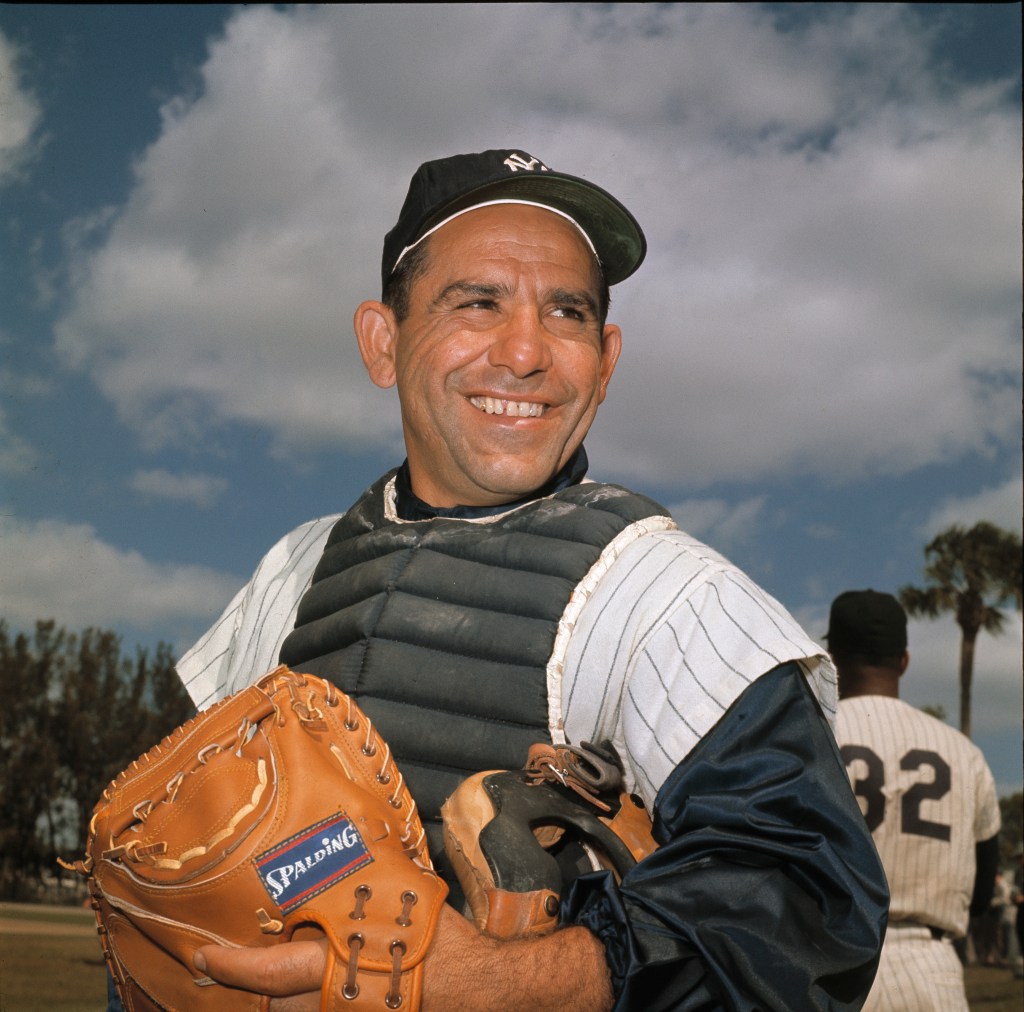
Take Yogi Berra for instance.  He has a great quote attributed to him (he didn’t actually say it) that applies to this perfectly, “In theory there is no difference between theory and practice. In practice there is.” – Yogi Berra

Look, it’s pretty easy to understand. We all respond differently to pressure and different stimuli. The purpose of incorporating what I am talking about as often as possible is to teach yourself how to appropriately address any and all leadership quandaries. Remember, it’s okay to be uncomfortable. Just don’t show it.

Be water my friends,

Zen

Bet Your Assessment

Here is a link to my sad attempt at this written blog in a video format.

https://www.youtube.com/watch?v=EPwa_tOzHio

This month’s topic will be on Assessment or rather, how to assess from a coaching perspective. Now, players, don’t tune out just yet. Read on since this will essentially be giving you your coach’s insight on how to judge you…

As a coach, it is my job to develop and assess the strengths and weaknesses of my players. And not every coach is comfortable doing this. And why should they be? No one is getting paid to play this sport of ours. As a matter of fact, I’m willing to bet most of you reading this pay to play. Yes, there are certainly some players outside of the upper echelon of the pro division who don’t pay to play but they are quite the minority.


I am always trying to take my “process” and find even greater efficiencies. How can I improve my own skill set as a coach while at the same time, identifying opportunities to help my players? My biggest concern right now is plateauing.


Zen note* – plateauing is when a player is no longer improving or progressing. They have plateaued; leveled out… not going any higher so to speak. They are at their maximum potential. This is more common than you probably think.


And this happens to a lot of paintball players and coaches. I know some guys right now, God love them, who have been playing 10-15 years and are still D3 level and I’m not talking APPA ranking. They will never get past that skill level. And that’s okay! They are having fun and don’t have the desire or need to get out there and grind every weekend. But that’s not what I’m about and I doubt that is what most competitive national tournament level players are about either.


Doing what you love only gets you a quarter of the way. In other words, having the passion for our sport is great but it doesn’t make you good at it. Showing up and working hard? Now that gets you further down the line. But ultimately, working harder than others and creating a consistent and highly developed skill set takes you even further. There was a quote I read recently from an author that I think sums it up perfectly:


If you just show up and work hard, you’ll soon hit a performance plateau beyond which you fail to get any better.” – Cal Newport from the book, So Good They Can’t Ignore You


So, how do we stop plateauing? There are two ways in my opinion:


⦁ Mix up your training/keep it fresh and new
⦁ Have good coach


Now we won’t get into the first one. But let’s talk about that second one. I genuinely believe the best results are derived from players who have coaches who know how to assess them accurately and honestly, who recognize specific details. Not all of us have this skill nor will we ever develop it. That’s okay! Half of us are out there guessing anyway.


A quality coach, especially in paintball, must have a skill set too. I personally believe that basic psychology is a bare minimum requirement but don’t get me started down that path. Theories are great but there is nothing better than seeing it in action and having your own real-world experiences with it. You must be a critical thinker.


Besides being a player myself for several years, competing at a high level, and being coached by some great men, I also have a degree in communications, studied psychology, coached some martial sciences, coached little league baseball (don’t’ laugh at this. Those of you who know, know), and taught shooting safety and fundamentals. I also have a successful professional career as a Strategic Planner.


I borrow from all of these other realms and experiences where I saw success. I use these experiences and success to guide my coaching. I try to apply them to my skill set as a paintball coach. Assessment is one of them. It is a key component to success.
No matter what you have read, watched, learned, theorized, conceptualized, thought of, dreamed or had a vision about, …as a coach, you are only as good your ability to recognize and observe capabilities of your team and individual players.


Summed up, your “process” is only as good as your skill at cognitive recognition. Does that make sense?


Whether it’s a players gunfighting capabilities (all aspects of it), their athleticism, their communication, or in game processing, your ability as a coach to recognize a player’s strengths and weaknesses is paramount.
Not only to recognize those strengths and weaknesses but your ability to articulate them to the player as well. This must be followed by a coach’s capability to maintain or increase the players strengths while nullifying their weaknesses.


If you can’t communicate well, you will struggle as a coach. That’s over half of what coaching is.


So – how do we assess? What should we look for?

Here are a few I look for:

Physicality – How fast are they? What kind of shape are they in? What’s their gas tank like? Are they breathing heavy after 2 points? How quick are they? How coordinated are they? Do they move well? In other words, what is their athleticism like? Having a guy who can run a four four 40 is awesome but having a guy who can do it over and over again is better.

Gunfighting – This should incorporate snapping, laning, run n gunning, bunker awareness (that’s their positioning in a bunker as it pertains to threats), anticipation, and instinct. If they are good at one but not the others? Weigh that against their position on the field and how you will leverage them on a layout.

Communication – This one is often misunderstood. A lot think its just talking on the field. Nope. Are they providing accurate in game data? Are they being heard? Can they communicate in game data back to the coach after the point? Can they joystick others? This is what wins games. If a player or players can’t do that well? You may have issues.

Durability – Are they injury prone? Do they have past injuries that manifest themselves occasionally? Did he pull his muscle at the layout practice prior to the event? You must take this into account.

Attitude – This one is really important to me. Do they WANT to be there at practice? Do they want to improve? Are they open to criticism? Are they coach-able? Do they lose their minds if the team is behind or are they positive? This also lends itself towards the social aspect. Do they get along well with everyone else? Do they fit with the culture of the team? A toxic player will ruin a team fast.

Finally, the key component to all of this is knowing when to “coach” a skill and knowing when to let a player do their thing that works for them. And knowing is half the battle


It isn’t easy. If it was, everyone would be taking a shot at it. And the list above certainly isn’t exhaustive as there are plenty of other factors that go into my own personal process. But this is a good start and represents a lot of what I believe coaches should consider. I’m a huge proponent of performance-based assessment and coaching versus outcome-based assessment and coaching. If you want to learn more about that, go to Zen and the art of paintball.com and search for the blog I wrote called “It’s Einstein genius”. Hey, he shot a pan 10 times in a row – yeah, well, the pan didn’t shoot back. Would it have been 10 out of 10 if it did? How many licks does it take to get to the center of a tootsie roll pop? The world may never know…


Start with developing a regimen that incorporates a players ability to practice when and what is necessary, allows you to observe them, and then assess them from a performance aspect as opposed to an outcome aspect. This should lead to a vast improvement on all fronts. Unless of course, you screw it up. So, don’t screw it up

Be water my friends.

To Be or Not to Be…What was the question?


I want to start this month off with a “thank you”. I have received several great messages and ideas as of late from many of you and they are all greatly appreciated. This whole Zen thing started as a rough idea and has turned into something I never imagined. So thank you! FYI – look for an “audio” version coming soon! A lot of my friends tell me they enjoy reading the blog but that, sometimes, it can be a chore, especially with my longer pieces. I had intended to start the audio portion this month but, you know how it goes, things happen.
So, this month’s topic… Recently, I had the opportunity to attend a rather fascinating phenomenon. I watched several young men and women attend a paintball try out for a team that is trying to create a program. No, this will not necessarily be a “how to” on try-outs. This will be more of a cautionary tale I guess. If you want to understand my perspective on the “How” and “why” of tryouts, check out these previous blogs posts:

Potential People

I Spy

Ontogenesis

Now, understand, running a program is a different animal than just having a team. It requires much more time, energy, and effort to be done well. That being said, and without going into too much detail, let’s establish some context. Here are my thoughts on the matter right, wrong, or indifferent:

Try-outs – fun times

A TEAM is a group of individuals that, together, have a singular identity or are associated together in an activity with a goal.
A PROGRAM would be more than one team, usually sharing the same identity but separated by divisions, or skill level, and managed under a coordinated system to have mutual benefits and meet mutual goals.

*Zen note – I also use the term “Camp”. This is a team that isn’t quite a program but has elements of a program or is moving in that direction.

Now, over the years, I have run or assisted in many paintball try-outs. In this case, I was simply an observer. I enjoy watching paintball. You can learn a lot from watching games at all levels. I also enjoy meeting, watching, and learning about the latest crop of newcomers, visiting and catching up with familiar faces and old friends, as well as just being around the sport. Plus, it gives me the opportunity to observe how others do things.

I’m always looking for ways to learn, find ideas and efficiencies, to improve myself, my own methods and processes, so that I can share with others. I try to expose myself to other people’s ideas and approaches as often as possible. You can also learn what NOT to do. And this is every bit as important as it’s opposite.

*Zen note – I believe we should constantly challenge ourselves, evolve, and grow. If you aren’t doing so, there is a high probability you’ll become stagnant and eventually fade. I like to encourage this in others (challenging themselves). Look around you. Everything changes. Everything on God’s earth is in a continuous state of evolution. Whether it is improving or adapting or changing. None of us were put here to grow stagnant. I would never tell you, ‘Today is the best I will ever be.’ I can no longer grow or improve. No, we need to continuously pursue improvement.

Showing what you got

Anyway, back to the try out – Personally, I’m very particular when I run these things. I like structure. I always have a process worked out to help me find what I am looking for. Everything is pre-planned to lead me to my goal. This can be broken down further depending on which team, program, or camp, I am doing this for but let’s not get off topic (or should we?)

Whether it is a specific layout chosen to play to specific skill sets or “position” (this is relative), specific drills to measure strengths and opportunities within the skill sets, an agenda/schedule, name it… all of it should be thought out and pre-planned so that we can keep things efficient and use everyone’s time wisely. Something some people hedge on is the rudimentary “introductory speech”. I find these important and not just because it sets the mood or tone for the day (important BTW). More importantly, it should manage expectations – let them know what to expect and why. You should tell them what you are specifically looking for, why, what they should expect to experience, and what will happen afterwards. Hopefully you can do this in a way where everyone understands. At the end, you should ask if there are any questions so you can ensure you have successfully communicated the goal(s). In some instances, some questions you get may tell you a little (or a lot) about the player asking the question …but I digress.

Getting after it in the snake

So, there I am watching, taking it all in, occasionally engaging those putting on the try out, talking with players, you know… being annoying. They are circled up starting to stretch, about 20 guys and gals and then a gentleman I’ve never seen or met before (not uncommon) steps to the center of the circle. He introduces himself and gives a little background. This is the “coach”. Everything seemed perfectly normal for a divisional try out. He wanted everyone to know who he was (good), where he is from (OK – good), why he is there (Nice – good), and that he is “big *&%$ swingin’ (wait…) and what he said goes (hold on…), he was in charge and you may not like it but you would get over it (huh?), and they were all “gonna learn today!” (Whiskey Tango Hotel). Coach Machiavelli much?

“It is better to be feared than loved, if you cannot be both.”
“Hatred is gained as much by good works as by evil.”
-Machiavelli

Don’t get me wrong, far be it from me to downplay the importance of masculine, confident, swaggery bad-assedness of an Alpha male. I think we need more of these today more than ever. But this wasn’t that really… this was ego. And there IS a difference. At least, that’s what my instinct told me. It didn’t seem genuine much less earned. Does that make sense?

Then the two day try out began.


What is your opinion… Should you coach during a try out? Some would argue that doing so would show the potential team members a coach’s style. I would argue giving a pointer here or there is fine but that, for the most part, I want to see how the player thinks, how they play, see them in that raw element without influence. See their “flow” so to speak. If I give a player insight into how I expect them to play, then they will (possibly) begin doing what they think I want to see. Do you think coaching a hopeful pick up will give you an honest and accurate assessment of their true playing? Maybe. Personally, I am of the mind to watch and learn. I like to ask questions after I see something go wrong for a player or even when they go right. “Hey chief – what was your thought process on that move? What was your idea when you called so and so over to look this way?” Explain there is no right or wrong answer… you want their honest reasoning. This will give insight into what level they are thinking on. If it’s a two day try-out, maybe you save the coaching for day 2…

Drills, Drills, and more drills

What if your coaching style is “aggressive”? What if the coach is yelling a lot and pointing out nothing but mistakes (in his mind)? This is what the young coach explained to me later (you know me, I have to engage) This translated to him essentially being impatient. And aren’t’ we all at times? I know I am. He wanted to make an impact. He later copped to this and recognized it which led me to like him. Takes a real man to admit it and be that honest with yourself. He will go far and will, most assuredly be a successful coach in the future.
Everyone has an opinion and a way to do things. However, I believe you catch more bees with honey than vinegar. So, if I am at a try out for a divisional paintball team, I don’t want General Patton standing over me beating me into submission for a try-out. No, I am there to show what I bring to the table and you are there to see if it’s what you need. Ego must be left at the door. Bear in mind… that’s my opinion. But it’s worked so far.

Watchful eyes

Managing expectations can be difficult… thinking of everything isn’t easy. But it is a little easier with a little preparation (well in advance – not day before under the guise of delusion of how it will play out). BTW – it’s worth mentioning that it‘s also okay to make changes to the plan on the fly as long as the changes are creating efficiency and moving you towards the goal without undue stress on the players.
A few hours into the try out, I decided to walk around and interview several of the players to get their thoughts on things. Just how they thought things were going. Some were okay with it all because, well, they recognized it for what it was… bloviating. Didn’t bother them because they were there to show their stuff (action), make the team, (goal), and advance their paintball career that way (strategic). But most of them led with unflattering comments about the ” lack of organization (as in organizing/herding cats) and, well, unflattering things about the coach. In other words, the potential program organizers had already lost a good many of the potential good players from the pool.

Why? How did it happen and where did it go wrong?

I can only provide my opinion from an outside observer’s perspective, but I have a good feeling I wouldn’t be too far off. I don’t think the organizers of the try out really knew what they wanted to do. Let me be clear, this is not a slight against the team/organization. Expanding your team into a Program is a Herculean task (that means it isn’t easy). But you must have a plan. I don’t think there was much of a plan past the warmup and first drill or two. Introduce the variable of a coach (ego and all) who didn’t really appear to know what he was there to do and you now have a recipe for things to go wrong.

Put the seasoned guys in there against the new guys. See what’s what

The English writer Samuel Johnson once wrote that, “The true measure of a man is how he treats someone who can do him absolutely no good.” He also said, “Integrity without knowledge is weak and useless, and knowledge without integrity is dangerous and dreadful.”

Wham-o.

Look folks, if you are going to put yourself in a leadership position, especially in paintball, you first need to gain the respect and trust from those you are attempting to lead. There is a myriad of ways to do this. BUT… If you have never met me, have no idea of who I am, but step to me and tell me you are the boss now and to follow your lead… expect my inside voice to say, “Sure. After we establish what qualifies you to coach me.” At this particular try-out, there were several players I was familiar with who had played at a D2 or higher level. The coach had not competed past D4. Now I am not saying that a coach must have a pedigree. Absolutely not! That’s a completely different topic BTW. But if I am going to win you over or gain your trust, I need to start from somewhere… telling a bona fide D2 player he “did it all wrong” and yelling at him about “what were you thinking” when we just met… and I come to find out you hadn’t played past D4 or won anything in that division…perhaps podded for a pro team a few times… well… kick rocks. Think it through next time. Be a Boy-scout (well, not the new ones… the old ones). Be prepared.


Be water my friends.

Observe and Report

Ahhh… competitive paintball, it brings out the best in us… and the worst. But those of you who read this blog regularly already know this. With the advent of Covid-19 and its impact on people’s lives, including that of us lowly paintballers, I have taken this downtime (e.g. opportunity) to really study players as a whole over this nonsensical season. When I am out at a field or a practice, no matter who is there, I am always sizing players up, even the ones I have already sized up (this never stops).  Besides tracking skill sets and capabilities, I will engage in conversation, asking about things outside of paintball, understanding their interests and concerns off the field, gauging demeanor… watching, listening… looking for those subtle cues…

What do we call the action or process of watching something or someone carefully in order to gain information?  It’s called observation and it is one of the most important tools in a coach’s toolbox.  It may sound cliche’ but it really is true; a successful coach must have a keen eye for detail.  And not just for the obvious reasons such as an opponent’s tendencies, tactics, and strategies. Among a plethora of other things, just as important is a coach’s ability to recognize (observe – as stated and emphasized in the above definition) his own player’s situations – their physicality, their growth (or recession), and their mental attitude or state of mind.  A small hitch in a player’s step, an aloof or irregular response, subtle changes in behavior…   If you are NOT doing this, you have failed.  There, I said it.  Harsh but true.  Unless you are one of those coaches in “title” only where someone handed you a clip board and said, “You play/pretend to be coach so we can take this many people and reduce costs and no one will listen to you anyway.”  Seen it!

Always be watching… I am.

The topic for this week’s blog… mentality or rather specifically – mental toughness. And do you, or your players have it? Would you recognize it?

How many of us have been described as or have described someone else as “mentally tough”?  Personally, I find this to be rather high praise.  You don’t get mentally tough from a gene, at least, I don’t think so….maybe. But I believe it is developed through trial and error and forged in the fire of experience.  It is most certainly learned.  And those who learn it/have it, probably learned through the school of hard knocks.  This learned behavior has given them a perspective of how to approach tough/competitive situations in a positive manner and with the proper attitude.

Now – most Coaches in competitive national paintball are dealing with young men (as in 18 or older).  So a lot of the work in this area has been done by parents, mentors, employers, or other coaches already.  Whether the mental toughness was taught successfully or not is another story.  You have it or you don’t.  However, that aside for a moment, as a Coach, we are in perfect position to assist players with developing the proper perspective about achievements and the ability to deal with setbacks. If by some stroke of luck, you find yourself coaching a young man who still has room for learning (we all do, even at my age), then you need to really emphasize the player’s attitude when dealing with adversity.

Observing and tracking…

I get this all the time – “You take this too serious coach.  Paintball should be fun.”  Yeah – sure… go play paintball with your friends on rec days.  Get off my field if you don’t want to put in the time and play in a competitive atmosphere to win!  Why???  Because Winning is FUN buttercup!  We should be pursuing achievements no matter how small or minuscule.  We should be trying to move the needle on performance.  We should be trying to improve each and every time we step out on the field. And we should be able to recognize what was and wasn’t accomplished each time we step off.

And let’s not forget ladies and gentlemen that anything worth achieving is NOT going to be easy.  If it were, everyone would be doing it and winning. (You get a trophy, you get a trophy, everyone gets a trophy – for achieving nothing!! YAY!…. ugh.  I think I just vomited) 

One of the hardest things to do in paintball is to win a national event.  It will take a commitment that many aren’t willing to make. You have to want to be out on that field.  You have to want the best for and out of your teammate and same goes for him concerning you.  You have to want it, need it, bleed for it, hurt for it.  And that means being mentally tough and understanding it’s going to push you to a brink.  And we must become comfortable with being there…

I think most understand that the process of winning is, can be, will be, an arduous road.  You can’t just order it up like a burger at a fast food restaurant.  You can’t say, “Please may I be a champion, may I win this time?”  You have to mentally and physically prepare to put in the time – practice, practice, practice! Like that chick from the Brady Bunch yelling “Marsha, Marsha, Marsha!” – yelling it didn’t do squat for her.   

See the source image
Don’t be Jan…

Mistakes are a necessary part of learning anything well.  So, when you do screw up, and you will, learn from it, recognize it, and understand it.  Hold yourself and your teammates accountable.  Without mistakes we aren’t learning anything.  Mistakes are rungs on a ladder to success.  I read somewhere that mistakes are “opportunities for performance enhancement” and that the “only true mistake is the failure to learn from them.”  I like that last one.

I believe it was the character of Deadpool who said, “Maximum effort!” That’s what you need to give.  As a coach, if that’s what I observe you doing, then I am going to recognize that and push you to get the most out of it.  Now, understand that sometimes, even though the effort and attitude are there, the process may take longer with some than others.  It doesn’t happen overnight so don’t expect (as a player) that because you are putting in the time that you will automatically be given a spot.   No – with that effort has to be continuous improvement.  It has to be recognizable, consistent, and repeatable.  So a lower division player playing on a higher division squad has to understand that there IS something to be said for experience.  There is something to be said about road mileage on a player.  Putting in the work needs to show gains too.  Meaning, you want that spot?  Beat the experienced player for it.  Show me you can do it as well, as often, as that experienced player in front of you. But as a coach, don’t lose track with your observation skills that worth isn’t always dependent on performance.  Certain players can bring other variables but that is another topic.

Let’s close with this about mental toughness and observing a players capacity for it…

See the source image
Maximum effort

The stress and pressure a player (or coach for that matter) feels is simply your body telling you we have an opportunity to challenge ourselves and make ourselves better.  Win or lose, we will get something out of it if we have the mental aptitude to recognize it.  It isn’t anything more than a burden we place on ourselves.  You can see it as “OMG, we’re all gonna die!” or you can recognize it for what it is, another opportunity to step up, be bold, show you are not afraid to be in this situation, and give it your best shot.  Now, that doesn’t mean have a laissez-faire attitude and don’t give a rats butt about the outcome.  No, it means, we do care about the outcome and we are going to do everything in our power to ensure it is out desired one.  Make it worthwhile whatever the outcome is.

Observe water my friends…
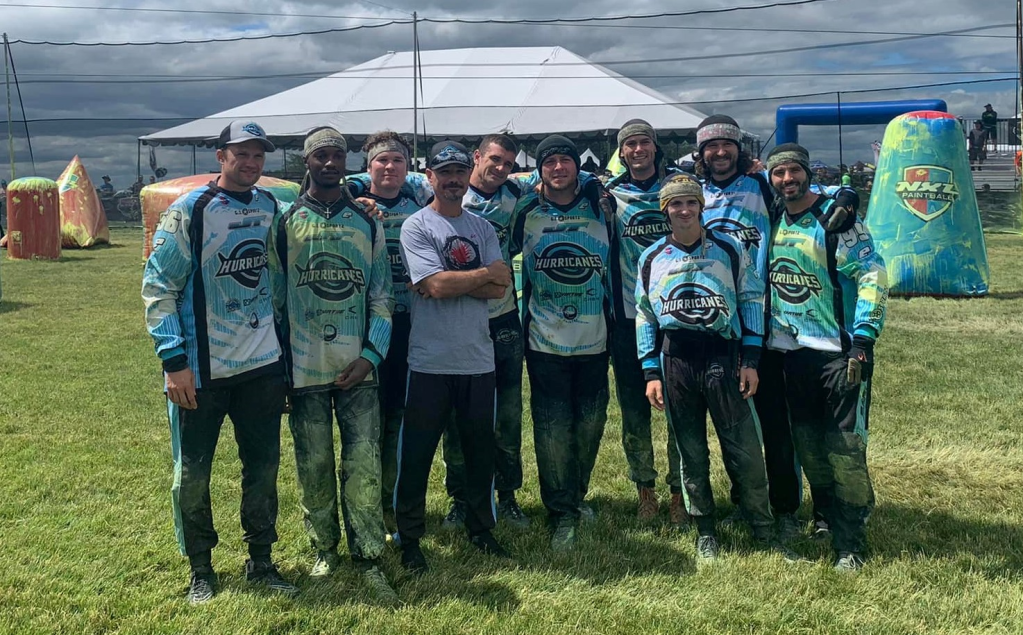
* I want to take a quick moment for a side note and touch on something that I will probably come back to in another blog post later this year. As you know, many of my blogs gain their inspiration from something I saw or heard that I considered relevant to talk about at an event, at a practice, in a conversation with a ‘baller… This took place this past weekend actually and it came from a source that is rare.  I say rare because you don’t find many of these guys/gals in the tournament scene.  The source was an active officer in the U.S. military who happens to play for a competitive paintball team.  The source will remain nameless as I doubt they are interested in the attention but they made an excellent point (which we have made here at Zen several times) – if a program has a “standard” but does not adhere or apply that standard to ALL members, that will breed toxicity and ultimately resentment in the team’s culture.  No Bueno.  If players are investing in the program (time, energy, money)… the PROGRAM needs to return the favor and invest in the player.  Establish standards, live and die by them, or change them. You decide as leaders. Okay – Now… go be water.