Observe and Report

Ahhh… competitive paintball, it brings out the best in us… and the worst. But those of you who read this blog regularly already know this. With the advent of Covid-19 and its impact on people’s lives, including that of us lowly paintballers, I have taken this downtime (e.g. opportunity) to really study players as a whole over this nonsensical season. When I am out at a field or a practice, no matter who is there, I am always sizing players up, even the ones I have already sized up (this never stops).  Besides tracking skill sets and capabilities, I will engage in conversation, asking about things outside of paintball, understanding their interests and concerns off the field, gauging demeanor… watching, listening… looking for those subtle cues…

What do we call the action or process of watching something or someone carefully in order to gain information?  It’s called observation and it is one of the most important tools in a coach’s toolbox.  It may sound cliche’ but it really is true; a successful coach must have a keen eye for detail.  And not just for the obvious reasons such as an opponent’s tendencies, tactics, and strategies. Among a plethora of other things, just as important is a coach’s ability to recognize (observe – as stated and emphasized in the above definition) his own player’s situations – their physicality, their growth (or recession), and their mental attitude or state of mind.  A small hitch in a player’s step, an aloof or irregular response, subtle changes in behavior…   If you are NOT doing this, you have failed.  There, I said it.  Harsh but true.  Unless you are one of those coaches in “title” only where someone handed you a clip board and said, “You play/pretend to be coach so we can take this many people and reduce costs and no one will listen to you anyway.”  Seen it!

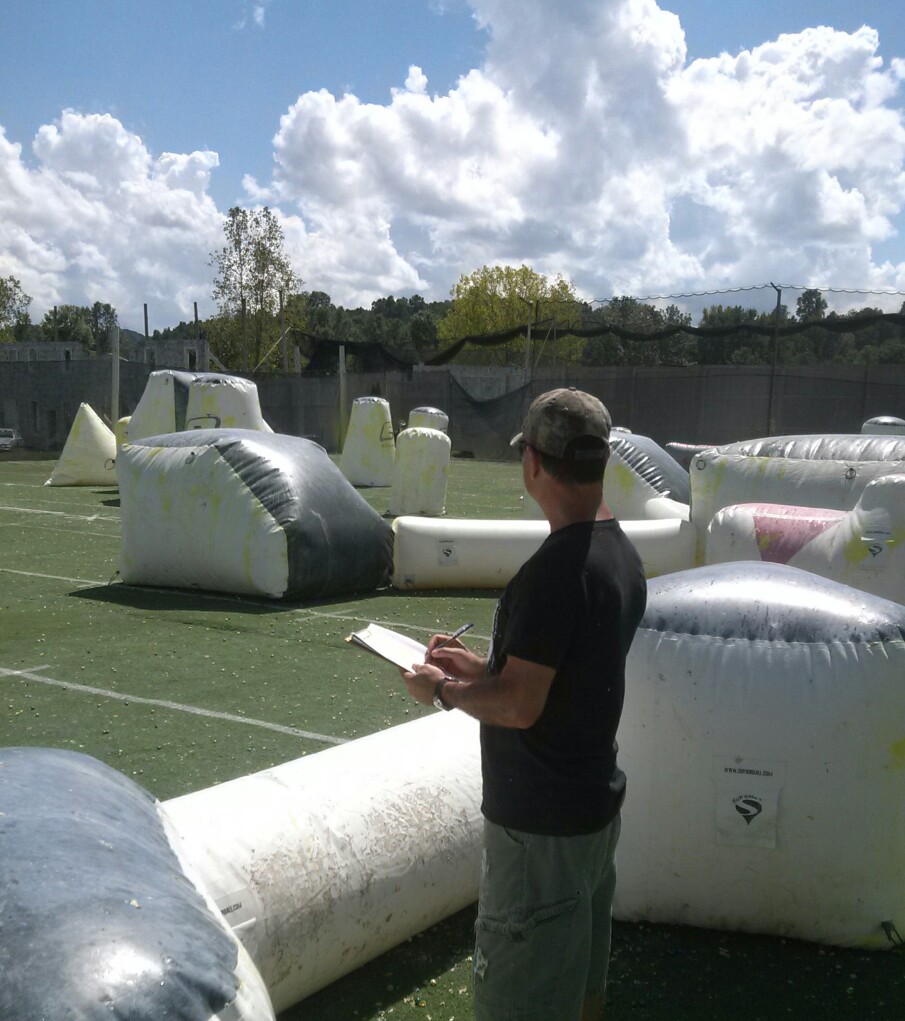
Always be watching… I am.

The topic for this week’s blog… mentality or rather specifically – mental toughness. And do you, or your players have it? Would you recognize it?

How many of us have been described as or have described someone else as “mentally tough”?  Personally, I find this to be rather high praise.  You don’t get mentally tough from a gene, at least, I don’t think so….maybe. But I believe it is developed through trial and error and forged in the fire of experience.  It is most certainly learned.  And those who learn it/have it, probably learned through the school of hard knocks.  This learned behavior has given them a perspective of how to approach tough/competitive situations in a positive manner and with the proper attitude.

Now – most Coaches in competitive national paintball are dealing with young men (as in 18 or older).  So a lot of the work in this area has been done by parents, mentors, employers, or other coaches already.  Whether the mental toughness was taught successfully or not is another story.  You have it or you don’t.  However, that aside for a moment, as a Coach, we are in perfect position to assist players with developing the proper perspective about achievements and the ability to deal with setbacks. If by some stroke of luck, you find yourself coaching a young man who still has room for learning (we all do, even at my age), then you need to really emphasize the player’s attitude when dealing with adversity.
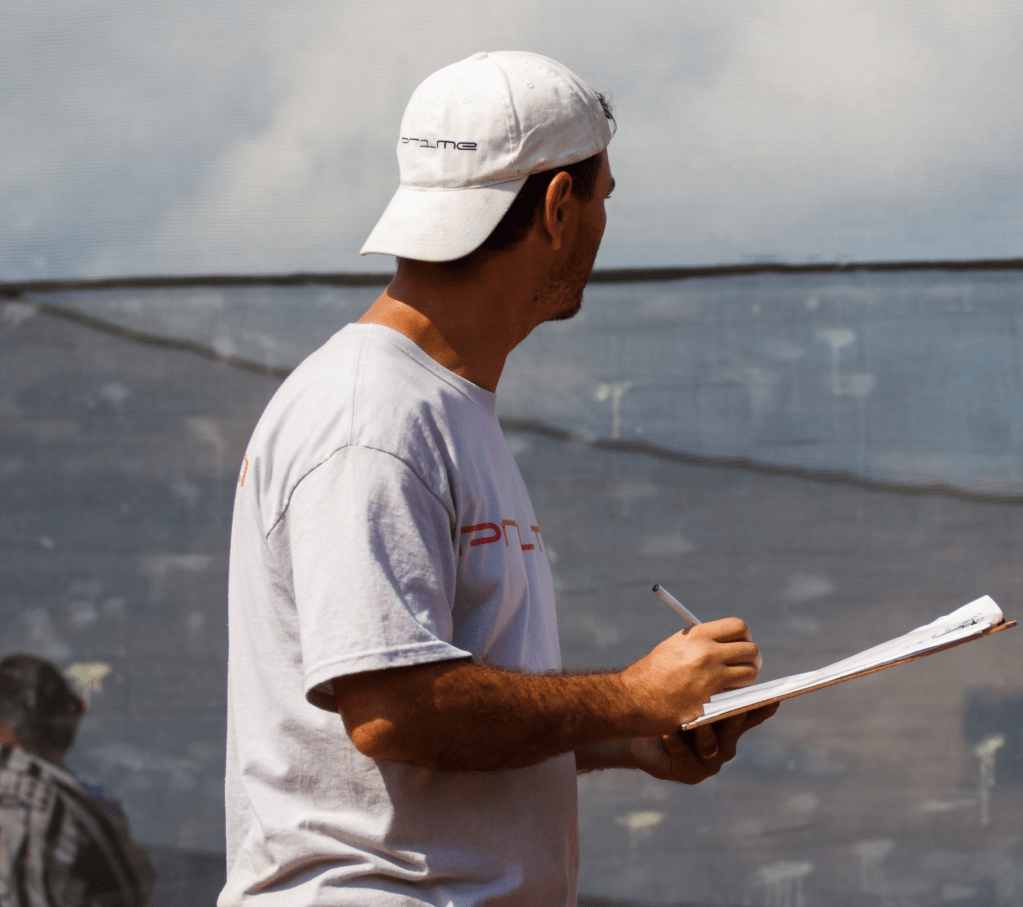
Observing and tracking…

I get this all the time – “You take this too serious coach.  Paintball should be fun.”  Yeah – sure… go play paintball with your friends on rec days.  Get off my field if you don’t want to put in the time and play in a competitive atmosphere to win!  Why???  Because Winning is FUN buttercup!  We should be pursuing achievements no matter how small or minuscule.  We should be trying to move the needle on performance.  We should be trying to improve each and every time we step out on the field. And we should be able to recognize what was and wasn’t accomplished each time we step off.

And let’s not forget ladies and gentlemen that anything worth achieving is NOT going to be easy.  If it were, everyone would be doing it and winning. (You get a trophy, you get a trophy, everyone gets a trophy – for achieving nothing!! YAY!…. ugh.  I think I just vomited) 

One of the hardest things to do in paintball is to win a national event.  It will take a commitment that many aren’t willing to make. You have to want to be out on that field.  You have to want the best for and out of your teammate and same goes for him concerning you.  You have to want it, need it, bleed for it, hurt for it.  And that means being mentally tough and understanding it’s going to push you to a brink.  And we must become comfortable with being there…

I think most understand that the process of winning is, can be, will be, an arduous road.  You can’t just order it up like a burger at a fast food restaurant.  You can’t say, “Please may I be a champion, may I win this time?”  You have to mentally and physically prepare to put in the time – practice, practice, practice! Like that chick from the Brady Bunch yelling “Marsha, Marsha, Marsha!” – yelling it didn’t do squat for her.   

See the source image
Don’t be Jan…

Mistakes are a necessary part of learning anything well.  So, when you do screw up, and you will, learn from it, recognize it, and understand it.  Hold yourself and your teammates accountable.  Without mistakes we aren’t learning anything.  Mistakes are rungs on a ladder to success.  I read somewhere that mistakes are “opportunities for performance enhancement” and that the “only true mistake is the failure to learn from them.”  I like that last one.

I believe it was the character of Deadpool who said, “Maximum effort!” That’s what you need to give.  As a coach, if that’s what I observe you doing, then I am going to recognize that and push you to get the most out of it.  Now, understand that sometimes, even though the effort and attitude are there, the process may take longer with some than others.  It doesn’t happen overnight so don’t expect (as a player) that because you are putting in the time that you will automatically be given a spot.   No – with that effort has to be continuous improvement.  It has to be recognizable, consistent, and repeatable.  So a lower division player playing on a higher division squad has to understand that there IS something to be said for experience.  There is something to be said about road mileage on a player.  Putting in the work needs to show gains too.  Meaning, you want that spot?  Beat the experienced player for it.  Show me you can do it as well, as often, as that experienced player in front of you. But as a coach, don’t lose track with your observation skills that worth isn’t always dependent on performance.  Certain players can bring other variables but that is another topic.

Let’s close with this about mental toughness and observing a players capacity for it…

See the source image
Maximum effort

The stress and pressure a player (or coach for that matter) feels is simply your body telling you we have an opportunity to challenge ourselves and make ourselves better.  Win or lose, we will get something out of it if we have the mental aptitude to recognize it.  It isn’t anything more than a burden we place on ourselves.  You can see it as “OMG, we’re all gonna die!” or you can recognize it for what it is, another opportunity to step up, be bold, show you are not afraid to be in this situation, and give it your best shot.  Now, that doesn’t mean have a laissez-faire attitude and don’t give a rats butt about the outcome.  No, it means, we do care about the outcome and we are going to do everything in our power to ensure it is out desired one.  Make it worthwhile whatever the outcome is.

Observe water my friends…

* I want to take a quick moment for a side note and touch on something that I will probably come back to in another blog post later this year. As you know, many of my blogs gain their inspiration from something I saw or heard that I considered relevant to talk about at an event, at a practice, in a conversation with a ‘baller… This took place this past weekend actually and it came from a source that is rare.  I say rare because you don’t find many of these guys/gals in the tournament scene.  The source was an active officer in the U.S. military who happens to play for a competitive paintball team.  The source will remain nameless as I doubt they are interested in the attention but they made an excellent point (which we have made here at Zen several times) – if a program has a “standard” but does not adhere or apply that standard to ALL members, that will breed toxicity and ultimately resentment in the team’s culture.  No Bueno.  If players are investing in the program (time, energy, money)… the PROGRAM needs to return the favor and invest in the player.  Establish standards, live and die by them, or change them. You decide as leaders. Okay – Now… go be water.

It’s Einstein genius…

“Imagination is more important than knowledge. For while knowledge defines all we currently know and understand, imagination points to all we might yet discover and create.” – Albert Einstein

Albert Einstein.
Brilliant

How many of you train every opportunity you get?  And when you do train, whether it is fundamentals, team practice, or cardio… whatever… what is your mindset when doing this?  This is an important question to ask ourselves, especially considering recent events which has limited our capacity to do some of these things.  What did you do for the last 3 months?  How did you stay sharp?

It’s no secret that most of us, with any semblance of desire to perform well when the time comes, will train every opportunity we get.  Some believe they have a “natural” talent and don’t’ find it necessary, even when the opportunities are right there in front of them.  The words “average” and “adequate” must be amazing comforters for those people.  It must be incredibly awesome to be that lazy.  Yes, that is sarcasm.  You know who you are… don’t run off to a safe space because you feel you are being attacked.  Instead, grow a pair and do something about it.

But it is the root of how and why we train that this particular blog post is about.  I have used a lot of my time during this quarantine to sharpen skill sets that I found wanting.  The one that has most benefited me though outside of the physical is some books and videos by great men.  They have helped me prepare my mindset, especially from a coaching perspective.  Coaching, at least to me, is more of a mental math equation involving different variables and a sprinkle of psychology.  I never realized I did this but a few former and current military operatives helped me put this into perspective… so here we go:

Most of us when we step out onto the paintball field are focusing on one thing, whether it is during a match but almost ALWAYS when we train.  That is regardless of WHAT we are training.  The majority of you are focused on outcome.

That’s right, the majority of PB players (and well, a lot of other sports and competitors too but this is PB blog so…) focus and strive for a positive outcome.  They base most if not all training on success rate… how many times did I snap, how many times did I hit my target, how fast was I when I did it, how many reps did I do, and how many more do I need to feel accomplished?

OIP.l6nMoerWbr6mpxEOFUO5mgHaEG

“As you think, so shall you become.” – Bruce Lee

People have often asked me how I found success with coaching certain teams or lines.  And I realized that it boiled down to OUTCOME based training versus PERFORMANCE based training.  That was the difference.  What’s the difference you may ask?  Outcome based training is based around whether or not you SUCCEEDED.  Performance based training is based around  how well an individual or team did the required specific task at that moment.

See, we ALL perform differently, wouldn’t you agree?  Some better than others.  But the deal with performance based training is quite simple.  Your performance is basically measured by doing what you can with what you have (coaches – take heed).
One thing I have learned over the years coaching 100+ different individuals and 10+ different teams is this – When you give a player the opportunity to train within his capabilities, you will find that, in most cases, that player will improve quicker than if we simply said, this is how you do it, now do it until you can do it like that.  Does that make sense?  You are creating the environment where the player learns in the most efficient means.  In other words, if they can’t learn at the pace that you teach, then you need to teach at the pace that they learn.  And THEY will handle the rest…

Over the years, I have watched players get stuck in ruts.  They would peak just when I thought they would excel… they get stuck and disillusioned because of this reason or that…they can’t snap a certain way, or run and gun, or communicate, or dive, or move… the list goes on and on.  And they get stuck and disillusioned because they are focused on the OUTCOME.  Why?  Because when you are so set and focused on outcome, you are essentially handicapping your ability to perform.  And that is the problem with most programs and coaches for that matter.  They want you to go from level A to level B by simply telling you to perform a task and viola – you are better!  This works to an extent but a very limited one.

So, “learning” outcome is, in itself, limiting.  It is like pointed at a list and saying here is the list of check marks, now check them.  Okay… why?

In my opinion, the outcome based training method of teaching or coaching is not just limited/limiting but, quite frankly, anybody can do it.  You don’t have to have any expertise to tell someone they should be able to perform a snap shot in paintball…. Duh!  It’s completely arbitrary and you see it all the time.  I watch players who think they can now coach because they learned a bunch of drills from a video on youtube or the Dynasty Dissected DVD.  Or they think they can run a practice because of how they watched pros do it.  Coaching and teaching is so much more than that.

Focus-on-where-you-want-to-be-not-where-you-were-or-where-you-are (2)
Wise words

Try being the guide… the mentor, a teacher, a COACH.  You should be able to show the player what he/she is doing.  Then show them what they CAN do, what they are capable of doing.  When you do this, they will take control and you will be amazed usually of how quickly that player will push themselves to accomplish and meet the goal.

24y5tn

 “Limits begin where vision ends”- Anonymous

I was listening to one high speed low drag former operator and he said the most amazing thing.  It resonated with me.  He said something along the lines of the probability of achieving your desires (outcome) will increase exponentially the moment you let go of your need to have it.  Awesome.

In other words, stop worrying about what others are doing or can do.  You need to focus on what is best for you and your team.  Start noticing what you need to improve regarding you and your team before you worry about what other players and teams are doing.  That’s their problem… not yours.

It’s going to be a cognitive dissonance really.  You can choose to change the behavior.  But will you..?  And why?  Going to leave you with one more Eistein quote:

“Everything should be made as simple as possible but not simpler.”

Be water my friends.


Potential People

So the off season is over (did it ever truly begin?).  We are smack dab in the middle of prep for the upcoming competitive paintball season.  Teams are taking stock in what they achieved last year, where they succeeded, where they fell short, what they have, and what they will need for the grind ahead.  Or perhaps you’re a new team looking to make your mark this season and taking a shot at the title.  Either way, lots to do.  This month’s blog may seem a little remedial but then who doesn’t need a refresher course?  Plus, this blog isn’t for just one group of players; it’s for all players and coaches alike.  Also, for a quick refresh on some other thoughts concerning this process, check out these previous blog posts:

round-up-the-usual-suspects
i-spy
ontogenesis

How many of you watch the off season moves in the professional division?  You track the big move here, a surprise move there.  It’s always fun to discuss and speculate on these things, what players and coaches at that level were thinking and why.  There are a myriad of things that need to be looked at, assessed, and decided/acted upon. But divisional teams don’t necessarily have the capabilities or infrastructure to address all of them like the professional programs do.  Running an efficient, organized, tight ship is not an easy task… especially when talking about paintball players (Paintballus absurdus)

One of the commonly misunderstood and poorly executed processes for teams can be try-outs.   The common theme is, we will have try-outs, people will come, we will pick up some talent, and then we take the paintball world by storm!  Oh, if it were only that easy.

20200112_085630_HDR

Besides the plethora of variables that must be addressed before you even plan your try out, you need to have a goal – what’s the plan and why?  What do we need in the effect of a pick-up(s)?  What’s our existing depth, our existing strengths, where are we weak?  What EXACTLY do we need?  And once you determine what you need, what does your potential pool look like?  Is there appropriate level talent in the area to choose from?  Do we want someone that can hit the ground running at our level or are we looking to develop someone?  Do we want someone local/regional?  What parameters do you need to set?

Once you understand the parameters, then you can start planning:

  • When do you hold a try out?
  • Where do you hold it?
  • Is it a one day or two day?
    • Is it multiple weekends?
  • How much paint should they expect to shoot?
  • What layout will you use?
    • Is the layout conducive to what we are looking for?
  • And of course, what will we have them do in order to determine if they have what we are looking for.

First I think we need to determine a baseline of requirements.  What are skillsets that most paintballers should possess?  Gun fighting, laning, communication, survivability, field awareness, aggressiveness, speed, coachability…  These are the things I look for and I use a point system usually to determine where they fall in each of these categories.  Once all the points are tallied, it tells me where they fall regarding a division scale.  Now… just because they may only mark a D4 rating on the scale, if their coachability among other things is high… perhaps there is an opportunity to develop them into a higher caliber player?

Ah – I see.  You are waiting for me to post my point system.  No, not this time, but I will help you with a few suggestions for your try out.

Pic-02082014-001
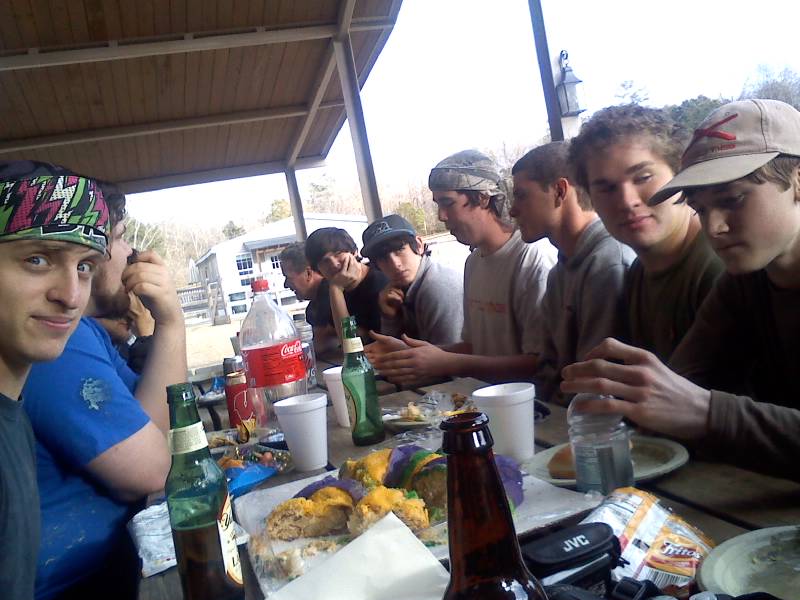
Food is always good after a try out to see how people interact

Gun fighting – you hear this term a lot in paintball, “he’s one of the best gunfighters in the division.”  Okay – what does that mean?  It usually means they are not only a good snap shooter but that they know how to use their bunker and have good timing and anticipation skills to boot.  Any good ideas on what would be a good measure of this for a player at a try-out?  You guessed it, snap shooting drills.  Either king of the hill, what I call the “quadrant drill” or even just using a stationary target but know what to look for.  Their base, gun placement, elbow, speed, accuracy, what “leads” (head, barrel, hopper, or are they all one piece when they snap?).  You get the idea.

Laning – This is where we see what they can do on the break.  Can they shoot an accurate lane with their first 5-7 paintballs?  They can do this from the start box and/or the “pocket”?  How consistent are they? Let’s go ahead and throw run and gunning in here too.  Can he shoot a gap on the run accurately while moving quick and with purpose?  This one is a no brainer.  Set up a stationary target, make them snap off the box and put their first 5-7 at the target.  How many times do they hit it?

You’re getting the picture, I’m sure.

So, after checking and identifying fundamental and individual skillsets, now you need to see what they can do in a team environment.  This can be accomplished by running scenario drills or points.

I personally, like to “build” if I have the time.  First, I’ll run some 2 v 2’s one side of the field only.  This tests a microcosm of coms and teamwork – since a lot of times we are working in pairs on the field (perhaps a future topic?  Let me know as I will gladly explain).   After a few points seeing how they communicate, move, make reads, etc. we then graduate to 3v3 full field.  This will now take into account field awareness, communication with more than one…

And finally, with time and personnel permitting, 5 v 5’s for the whole picture.

17620459_10155287405523010_3151766668352205075_o
A basic run and gun drill is a good way to understand a players gun handling and footwork

Now – do we make a decision after one or two days of watching a player?  The answer is – “It depends.”

How familiar are you and the team already with this player?  Do you know their financial stability?  Will they be able to commit to your season and your requirements?  Do they appear to fit in with your culture and other personalities on the team?  Perhaps a call back is better suited then a yes or no answer?  This is when you tell the player something along the lines of, “We like what we saw.  We would like to see more…”  Of course, don’t string the player along!  Eventually, they either fit what you need or they don’t.  So be sure to be professional and courteous about the whole process.  Honesty is the best policy.  If they aren’t what you are looking for, tell them.  Let them know what you liked, give them positive feedback but explain why they aren’t what you are looking for.  They will appreciate that much more than any other approach, I promise.

IMG-20190426-00896~2
Prepping my 4 year old for his try-outs… I just like the picture

Okay – that’s enough for now.  Feel free to direct message me on my FB page if you have any questions or thoughts on this one.

Be water


Coaching is easy. Winning is hard.

coach

[kōCH]

VERB

coaching (present participle

train or instruct (a team or player)

“He has coached the Edmeston Panthers for six years”

give (someone) extra or private teaching.

synonyms:

instruct · teach · tutor · school · educate · upskill · guide · drill · prime · cram · put someone through their paces · train

This month’s blog is, again, based off conversations I have had with a few team owners and captains as of late.  The topic is centered around coaching, or rather more specifically, how to be a good, better, or just simply a coach.  It’s often an overlooked position and one that, in the sport of paintball, doesn’t get as much attention from teams as it should.  I truly believe that several teams or programs could benefit from having a dedicated individual who can help the players grow as well as allow them to focus on playing. But first, I think there needs to be a little context or background on where I am coming from.

There was a time I believed coaching in paintball was just an empty title.  More than likely, the “coach” was the guy who called a line or maybe he managed logistical issues. Or he was the guy who was yelling from the sidelines when in game “coaching” was legal in paintball.  He was anything but a coach by the very definition of the word or what most of us think of when we hear the term.  There was no Vince Lombardi, Bear Bryant, or John Wooden of paintball.  And I never really thought there would be.  Sure, there have been several great leaders in paintball, Shane Pestana (LA Ironmen), Alex Martinez ( San Antonio X-Factor), Bart Yachimec  (Edmonton Impact), Mike Hinman (San Diego Aftermath/Dynasty), and Rusty Glaze (Dynasty) to name just a few.  Please do not get me wrong, they all are incredibly talented leaders and a coach must be a good leader.  But I guess I never really looked at them as “coaches” per say back then (I would now).  Maybe I was hanging onto images or memories of my grade school and high school wrestling, boxing, baseball, and football coaches?  Possibly.  But “paintball coach” never really seemed practical.  Sure, there were talented individuals who knew how to up a players skill set, or motivate a team, or suggest approaches but no definitive coaching role.

319e8a48d095e328146c3b36120fec41 (2)
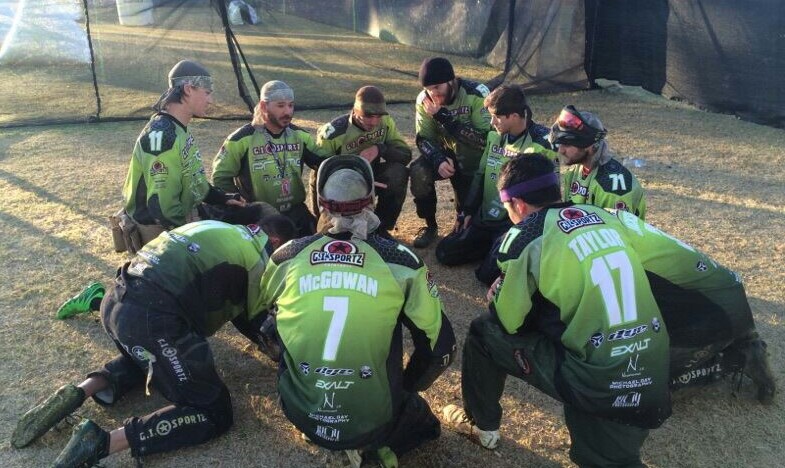
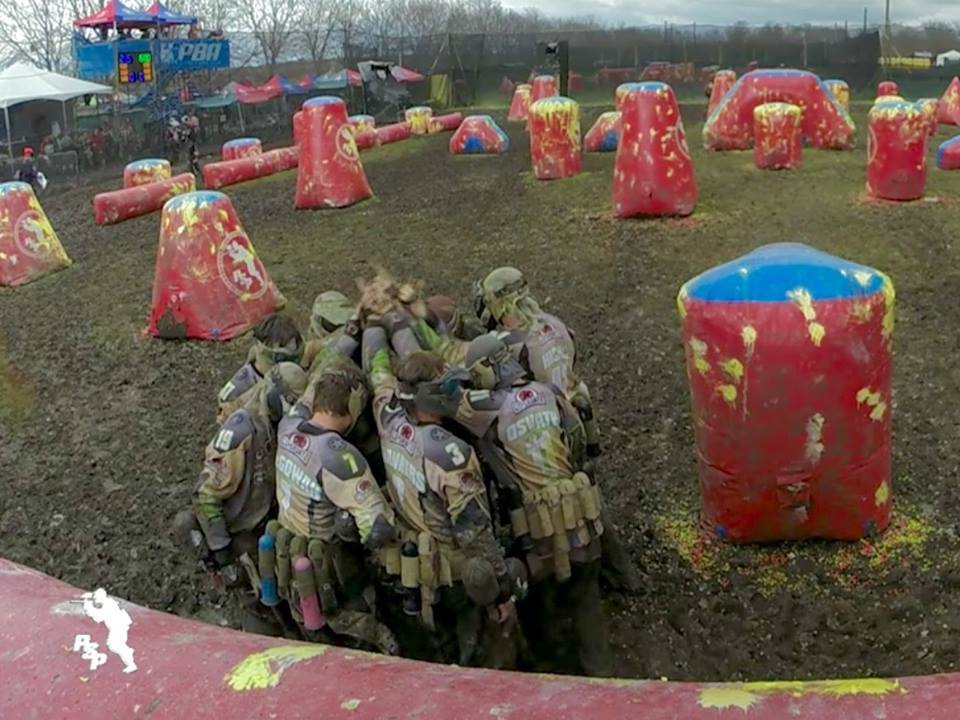
“Huddle up!”  Data sharing time


That all changed when I met Paul Richards.

Baca, or Top as I affectionately called him during our time together, was my introduction to what a paintball coach could and should be.  He was the whole package of what one would think of when using the term coach.  He was a leader but also the offensive and defensive coordinator with managerial capabilities who had an eye for talent.  He not only recognized who the potential talented players were but also specific talents in each player.  Sure, he knew the Xs and Os.  But his greatest superpower, in my opinion, was his recognition of a player’s abilities and how those abilities could be leveraged to win matches.  He was truly talented in that way.  He could take the weakest link on a roster and make them an asset simply by using the one or two things they were good at and mixing that in with the other tools on the team to meet the needs of the point.  He made it look and seem so easy.

It isn’t.

162693_496093427120_94437_n
Baca Loco or Top – The man himself – Coach Paul Richards

If you read any books on coaching, sports psychology, or biographies about famous coaches in professional sports, you will see that almost all of them have similar themes.  We covered the psychological approach to them here – https://zenandtheartofpaintball.com/2016/08/21/dodge-duck-dip-dive-and-dodge/

(Or look to your right on the page and click the link for past blogs on the topic of coaching – might I suggest the following:

Who’s with me?!

What’s in a name?

Lightning In a Bottle?

Touche’ Cliche’

(trigger warning on “touche’ cliche”)

Most successful coaches recognize that, besides the importance of the Xs and Os, there is another element that is just as significant.  A solid relationship between the player and coach is paramount to a successful process.  It must be symbiotic (mutually beneficial).  At its core, its very foundation, there must be, there has to be, the element of trust.  The player has to trust the coach to identify what will make them better.  The coach must trust that the player has the capability of meeting that level of improvement.

It is worth noting however that the relationship must be in the best interest of the team while still fulfilling the needs of the player.  This includes, but should not be limited to, benching/cutting that player or replacing that coach. 

87f3aa19af8f5fae91622ee0459b8d4a (2)
Positive reinforcement and constructive criticism must be measured/coupled with trust


Here are some things I have learned over the years, whether from those great leaders I mentioned earlier or from other walks of life and sports.

  • Failure is not always bad. We can all learn from our mistakes.  They can make us better.  Failure is “fertilizer”. It creates the healthy environment in which a player and coach can grow.  If you can eliminate future mistakes by learning from them, you are on the right path to growing into a great player or coach.
  • Knowledge and discipline are indispensable. But without truly caring for a player, genuinely wanting what is best for them, those two traits won’t matter.  See, if the player knows I am real, I can let them have it and then we can share a beer and joke about it later.

    • If you don’t see yourself becoming or utilizing this method, it doesn’t mean you can’t be a successful coach.  It just means you will have to use something else to gain that trust and confidence.
  • Piggy backing on the bullet point above, I have seen my most success when I treat the players like family. As Rocky Cagnoni said in PUSH, “It’s like a big family… I mean, people see us fightin’ and everything but that’s what a real family does. I think anyways. I mean, fightin’ one second and the next second it’s all cool. It’s the heat of the moment.  I think that that’s what gets the passion.  I’m Italian, I like the passion…”
  • Coach Paul taught me that the key to coaching is taking players and truly analyzing their ability. Then putting them in a position where they can improve not only the effectiveness of the TEAM but gain individual improvement for the benefit of the team. Getting players to play better than they think they can is a superpower.
  • Coaching can be complex or it can be simple. It depends on the assets in front of you.  It’s like a tool box.  You need the right tool for the job (simple) or it can be like a puzzle and you have to find the right pieces then put them together to make things work (complex).


33060919_630461653963736_4188779868898459648_o
There are several elements to coaching.  Fundamentals should never be overlooked.


I can’t remember where I read it, but the comment stuck with me. “All coaching is, is taking a player where he can’t take himself.”  (I just looked it up – Bill McCartney – head football coach at the University of Boulder Colorado from 82’ to 94’).  How profound… and yet how astoundingly true.  A coach is a guide.  He can show you the way, but the player has to commit and follow the path laid out before him.  It is ultimately the player’s choice.  Coaches can’t execute for you on the field.  You have to do that as a player.  But what if the coach has chosen the wrong path or doesn’t really know or recognize what a player needs?

As a coach you have to recognize the power you wield when the player trusts you.  In other words, as a coach, you have to know the WHY behind each instruction.  I have seen it a hundred times.  A “coach” shows a player something but doesn’t explain the why.  “Just do it this way.”  Or worse, makes players run a drill that is teaching them the wrong thing or maybe emphasizing the wrong thing.  This can cause regression, delay growth, or just plain teach a bad habit.  Understand the why before implementing the how. You better know how to implement said how. (That was a fun sentence to write.)  Ultimately the key to gaining and building trust is simple.  Be honest.  An honest coach is a successful coach.  If you don’t know, so say.  But if you do, explain why…


41412345_2004428422933380_5369280208916447232_n
Great message


Another key factor I have learned from the great paintball leaders I mentioned earlier (some I call friends and others I just know from meeting in pits and short conversations) also happens to be one of the 4 C’s mentioned in that blog post from 2016.  It is confidence. But not confidence from a player’s perspective or a champion’s perspective, from a coaching perspective.  I think one of the key elements about being a successful coach is that you have to have a sense of confidence about what you are doing. You are essentially selling a process, a concept, a vision of the future.  Anyone who comes in trying to show me something that seems unsure of what they are doing, I may not have checked out the moment you opened your mouth, but I was most certainly skeptical.  So be confident.  Now I didn’t say smug. There is a difference.  I often tell my players, “Let your game speak for you… no need to make anything personal through words.  Your game will speak much louder than anything your mouth says.”   This should apply to coaching as well.  They either see the results from what you have implemented or they don’t.  Your actions and the results should speak for you.


65881700_10219245407103087_503090985627025408_n
The “it just might work” face…


A good coach has to be able to fill multiple roles.  They must be a good communicator, motivator, teacher, goal identifier, confidence builder, organizer, manager, politician, physicist, wizard, cat herder, and mentor.  (okay, some of those I made up)  They must recognize the strengths, the weaknesses, the opportunities, and the threats to the team and plan accordingly.  A coach takes action anticipating the outcome based off data he sees and knows.  He creates a culture that will benefit all the players, not just a few.  But he can’t do it alone.  He has to have buy in from the players.

I guess, in the end, coaching is all about “the process”.  One of my favorite moments as a coach is when I see that light bulb go off in a player’s head when they “get it”.  I love when players begin to recognize their potential and see it come to fruition in a match.  I love when teams see the hard work pay off by making Sunday or winning those tough matches.  I love the practices where you see players dig deep and really give you 150%, the ones who want to be there, the ones who believe… that’s good stuff man.  At least, I think so… that’s why I do it.

Be water my friends.

Smells like rain…

The 2019 Dallas Open NXL is in the books.  And once again, the Dallas event had its share of adverse conditions although not on the level that most had anticipated (perceptions ranging from inconvenient to apocalyptic).  I personally felt the event turned out much better than expected and could have been a lot worse (Think Galveston Hurricane or Chicago Tornadoes).  I will go on record as saying that I like the Texas Motor Speedway venue (both Whataburger and In&Out were packed plus you have a Buc-ee’s right there).  However, it may make sense to move the event to later in the year.  I say this only because, a simple google search will show that Texas’s wettest month is, in fact, May.  To those of you who will then say, “But then it will be too hot!”

20190502_162232~2_resized
Pit row day before event start (Thursday)

Shut up.  Hydrate correctly and play ball.

Dadnabbit… did it again.  Let’s get back to this month’s blog topic…  The conditions of the venue got me thinking about how teams respond and address this very thing.  As a whole, we prepare for events by studying the layout and developing ways to play it effectively.  But what happens when plans become compromised by “adverse conditions”?  How do we conquer things we did not anticipate?

I decided for this month’s blog, I would start by just looking up the term itself – “Adverse Conditions”.

Adverse, according to the Merriam Webster dictionary, is:

  • acting against or in a contrary direction
  • opposed to one’s interests
  • causing harm

Condition(s), according to several definitions of the word, in this case, the most appropriate to our topic:

  • a state of being

What I came away with is this – “Conditions that make it difficult for something to be or happen”.

There we go… a baseline…let’s start there.

20190503_180835_resized
Not just mud… sticky mud

“Prepare for the unknown by studying how others in the past have coped with the unforeseeable and the unpredictable.” – George S. Patton

How should a team address “adverse conditions” when they arrive at an event?  Most people would say with preparation, of course.  If you know it is going to rain, you bring your visor, a clear lens, extra towels/microfibers, plastic bags, etc. We’ve all played in the rain before.  At least, I hope most of you have and understand there are certain necessities to this.  If not, make a comment and we will make it a topic of a future blog.

But what about issues you couldn’t possibly prepare for?

During the Dallas event, certain players or positions may have found themselves hindered by mud. You may have even found your plans disrupted by the solution to the mud… mulch, which anyone knows that if you dive into it, you have a real good chance of stopping quite abruptly.  So, dashed plans and potential injuries have now become a constant concern.  There is a good chance your team was used to running far or using a pocket play or what have you.  But you get to the start box and realize the mud will most certainly be an issue with getting a good jump start.  Or maybe the start box was fine but the center or tapes were mud pits that would cause over-sliding?  Or maybe they put mulch right where you want to dive to enter the snake or dorito? You suddenly realize you may not be able to play the field the way you prepared for it.  How do you prepare for that?

home mud
This could get messy…

Preparing to play the field

The most practical approach to any field is developing plays based off specific scenarios.  I almost always develop a “bread and butter” play.  This is the base play that my team will use most often.  It usually provides a higher statistical success rate by putting us in good position with primaries (our first bunker of choice off the break) and allowing specific goals to be met early.

Then I like to play the “what if” game.

Expect the best, plan for the worst, and prepare to be surprised.” – Dennis Waitley

Let me give you an example.  Not too long ago, the south saw a rather horrendous snowstorm (for the south).  I was at work and lived about 10 miles from there.  Everyone was being told stay in place, don’t travel.  Being the stubborn man I am, I chanced it and made it home safely.  It took two hours but I ended up with my family as the south dug out of a 3 day freeze.  Here’s the thing… what if I hadn’t made it and got stuck or wrecked?

Now, I’m no boy scout (is there such a thing anymore or is it the he/she/we have no identity politically correct hand out trophies to everyone snowflake brigade these days? I don’t recall… oh well), but I believe in preparing for the unforeseen.  I had placed in my car the night before non-perishable food items (granola bars, beef jerky, water), a thermal blanket, flashlight, a lighter, matches, some laundry lint in zip lock bags, a change of clothes including extra socks, a pair of boots, and extra layers.  And before anyone asks, yes, I had a firearm with extra magazines and ammo.  I had no idea the storm would be as bad as it was.  I had no idea I would get stuck.  I had no idea of any of it.  But I thought ahead… I played the “what if” game.


11054356_10206225597064167_570992716500375430_n
Doesn’t matter. Get it done.

What if our opponent plays the layout in a way we didn’t think of?  What if they have great guns off the break and they are chopping us up consistently on the break?  Or perhaps they are taking more ground than us on the break and getting into position earlier or faster?  So on and so forth.  What do you do?

Hopefully, you played the “what if game” before you got to the event.

I realize I have oversimplified this concept. But you get the basic principle.  And that same principle applies to adverse conditions.

The field my team was competing on in the prelims during Dallas had its share of these conditions.  One side of the field had different issues than the other.  So we made note of it and developed our plays and breakouts around those conditions.  I was able to do this based off prepping for a completely different condition (good guns on the break, teams taking ground, etc.)  Does that make sense?

60027891_2380696718915173_6266007330928721920_n
Photo Courtesy of Dane Hawkins Photography

We played the West side of the field (the one in front of our pits) differently from the East side of the pits.  I also relied on data from my players who were actually IN it to let me know what they felt their capabilities were.  Notice how I also mentioned east and west… this meant we were actually dealing with the sun (yes, the sun was in Dallas/Ft Worth) so I also took this into account.

“Success depends upon previous preparation, and without such preparation there is sure to be failure.” – Confucius

The whole point of this particular blog post is this.  You CAN prepare for the unknown.  Adaptation – the action or process of change to better suite an environment or condition – is the basis and lifeblood of any good paintball team.  Adapt or die.  Understand that adaptation is incredibly important to paintball teams.

59863142_439757860123763_8217599805480763392_n
Dane Hawkins Photography

Now, to shift gears just a bit… I was reading some more sports psychology this past week (at home sick … I had time).  And I decided to look up anything that dealt with performing in the rain.  I didn’t find anything… but I did find an interesting article that I want to share the basis of with you all.

One thing we have talked about at length here at Zen is the mind… having the appropriate attitude and better understanding of one’s capabilities through truth.  It has often been joked that I am “toxic masculinity” with certain thoughts and perceptions I have.  I am “outdated”.  Without getting too political, which I admit, I may have already done… I will say that I neither prescribe to nor acknowledge what I believe to be the weak willed and irrational perspectives being taught to our young men and women in today’s society regarding what is “normal” or “socially acceptable”.

That being said, I do want to point something out that came to my attention recently regarding a young man I know.  Dealing with certain issues mentally can be challenging and is becoming more and more common in many of the paintball players I meet. Besides the obvious topic we discussed above in relation to a player’s perception to the conditions (How are we gonna deal with this coach?), there can be heavier or greater issues being faced by players. Here is the basis of what I read:

R.A.I.N.  (Bob Stahl, Ph.D. -February, 2010).

“R” – Recognize.

“A” – Allow or Acknowledge that it is indeed there.

“I” – investigate and bring self-inquiry to the body, feelings, and mind.

“N” – is to non-identify with what’s there.

Besides this one particular young man, it got me thinking about some of the other young men I have coached over the years.  How do I recognize or hope to reach young men who may be struggling with depression or similar issues?  If I can’t recognize what they are dealing with or maybe I do but can’t at least point them in the appropriate direction, what good am I?  My instinct is to toughen them up.  But that isn’t a one size fits all solution.  I can’t beat it into them.  I find this R.A.I.N approach a useful tool for the toolbox.

20190503_181118~2_resized
He always keeps his promises.

The concept is that if we use R.A.I. N. as a practice (make it a standard approach), we develop a better understanding of what fuels or drives our fears, anger, or sadness.

I personally believe that acknowledging stress, anxiety or pain rather than suppressing it is advantageous.   I feel that we need to learn how to cope with and view all challenges as a rite of passage instead of running away from them or hoping someone will fix them for us. Adversity builds character.  Steel is forged in fire… not with long walks in the park and hot showers with lavender…gross.  Face the issue, embrace it, recognize it… and ask for help.

I apologize for detouring there… I always try to keep this light and fun.  Just felt it might need to be said or read by someone.  If you or someone you know is battling depression or going through a tough time, reach out.  Let them know they are not alone, just like you are not alone.

Anyway, like I said, I am under the weather so I am cutting this one short.

Godspeed and remember…

Be water my friends.

Ontogenesis

Make no mistake about it… I had to look that word up too.  But I find reading a new word a day helps in the development of my vocabulary (duh).  You will see what I did there in a moment…

In last month’s blog, we did a quick dive into depth charts of rosters and the difference between recognizing potential talent and simply picking obvious talent.
This month, I wanted to continue along those lines and discuss something that happens whether you chose door number one or door number two (recognizing potential or picking obvious). No matter which you chose, you now have another duty… will you manage the player or develop the player?  This is usually based off the first decision you made.  Although, I believe all players still have room to develop.

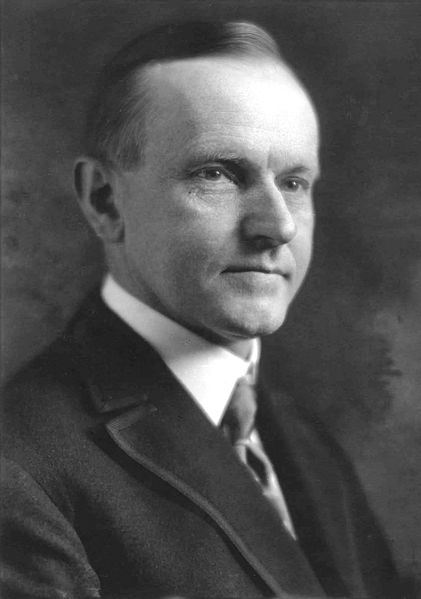
“All growth depends upon activity. There is no development physically or intellectually without effort, and effort means work.” – Calvin Coolidge

Calvin-Coolidge
Calvin Coolidge was the 30th president of the United States.  Read about him and get your learn on.

As with many of my blogs, this topic developed out of a conversation. I was speaking with a semi pro player I have come to know over the past year. We were discussing our opinions on what a “paintball coach” really is or should be. I, personally, believe it is the role of the coach to create an environment where the players can be just that… a player. The coach needs to remove all external factors to make sure the player’s focus is on getting better and performing well. In other words, create an environment where they can be their best. If I keep bringing issues to the players, if I bring drama, I am putting roadblocks in their progress. Why? Because I am distracting from the number one goal of being a coach… helping and guiding the players so they perform at their peak. The coach needs to recognize the strengths and weaknesses of each player, and leverage them against the layout. Then, during a match, leverage those same strengths and weaknesses against the opponent within the parameters of the layout.

If you can recognize how a player responds or rather how they learn, then you can “coach” them more effectively. One size fits all works with some teams but most teams are pretty diverse. You have to know how to approach each player individually and know what motivates them. So let’s focus on DEVELOPING a player.

In my experience, there are three things that cause teams to fall short or adversely affect their performance:

1. Not clearly communicating expectations
2. Ineffective/infrequent/inappropriate feedback
3. Lack of accountability

So if the above is bad it makes sense that the following would be better:

1. Clearly established expectations
2. Continually coaching (environment of always learning)
3. Creating accountability

Bruce-Lee-
You better know who this man is.

“Ever since I was a child I have had this instinctive urge for expansion and growth. To me, the function and duty of a quality human being is the sincere and honest development of one’s potential.” – Bruce Lee

These are the 3 most important steps in developing a player, as well. From this base line, all goodness will spring… which means you need to establish a good base line. Without a good base line, all badness will spring and now you’re in a pickle.

EXPECTATIONS

How do we effectively manage expectations? I believe when you establish an expectation and/or a goal with a player (and the team for that matter) there needs to be the understanding that they currently have the capability of achieving it but that it is challenging enough to push them.
As a coach, you and the player or team, should understand that these expectations should have a “cadence”, and recognize which are priorities. Develop a consensus on that and you should be off to the races.
I have found that teams perform better and learn quicker when the players are responsible for both individual AND team goals. In other words, the focus of the individual player should be to improve something about themselves that leads to the overall strength of the team. If the betterment of the individual doesn’t increase team capability, we’re wasting time.

COACHING

Another 3 pack for you to consider. Coaching should have a minimum of 3 components. And this shouldn’t just apply to paintball but all aspects of life. The three “F’s”:

1. Frequency
2. Focus
3. Fairness

IMG_20160320_182132
Everyone should get something out of it…

Always engage. Always look for ways to improve. Now this doesn’t mean rag a player over and over every point and every drill. You have to find the balance. When you see an opportunity to create an improvement, say something. If they ASK you, respond. You should WANT the engagement. Most players WANT to get better. And this doesn’t have to just be the coach. Players can make players better. Steel sharpens steel.

No matter how frequently you engage, if there isn’t a purpose behind the engagement, if there isn’t a focus on what is or was the issue, then you are simply creating static. This can lead to a nagging relationship or a stressed player who is afraid to be engaged.  They will usually shut down. Make sure there is a point.

Finally, be fair with criticism and praise. If you compliment a player on an accomplishment make sure others are receiving similar positive reinforcement. Same with criticism. If someone’s doing something wrong, call it out but not just when THAT person does it. When ANYONE does it.

lao-tzu
Lao Tzu was a Chinese philosopher and the created Taoism

“The key to growth is the introduction of higher dimensions of consciousness into our awareness.” – Lao Tzu

ACCOUNTABILITY

This one is easy. Recognize success, celebrate it, but do NOT ever ignore failure. Identify it and embrace it with the understanding it must be fixed or improved. Or over strengthen a strength. If you create a positive environment, the players will usually hold THEMSELVES accountable recognizing things they need to work on. THAT is a great thing unless that’s all they are doing and they become Eeyore from Winnie the Pooh (okay, some of you just went… “What??”. Google him.)

Be careful though. Measuring performance can be subjective, especially in paintball players. Set individual goals, develop some metrics, and observe. Base it on the data you have and can read/see.

100_1250
One on one time is important in development

All three of those components can be summed up in the following analogy – The report card!

Remember when you used to bring your report card home to your parents? (Do they still do that or does the new generation not get held accountable? Perhaps grades are a micro-aggression… I don’t know these days…I digress) Let’s say you bring home 3 A’s, 2 B’s, and a C. Where does the conversation with your parents start? Usually around that C, yes? If not, maybe it starts with the A’s and then the C? Either way, they both should be discussed.

I will leave you with this. Ask yourself these three (there’s that number again) questions in conjunction with everything stated above:

1. What’s the goal?
2. What does success in reaching that goal look like?
3. Always align a player’s goals with those of the team’s needs.

Count-Dracula-3-Sesame-Street
This blog post was brought to you by the number 3 ah, ah, ah….

Remember, you can create your own truth when you don’t hear the truth…

Be water my friends

I Spy

Happy New Year!  The season is soon to begin and in some instances, has already begun.  Coaches, captains, and players alike are all getting in on the “grind”, preparing for what could be their most challenging season yet.  Preparation, as we have discussed several times in the past, is multi faceted.  There are several elements that go into preparing, training, creating, in order to roster a winning team.  Just like in other sports, it is critical to have the right mix of talent on your paintball team.  I thought, since it is the beginning of the year, we should look at a specific aspect of team building.

A team/coach needs to understand not just the fundamental level of talent but how that talent is spread out and in what areas.  In other words, what is the depth of your roster?  This is the topic of this months blog – roster depth and recognizing talent.

49522503_2301682633385368_9149162092970901504_n
Try outs are a great way to scout and recognize or select talent

In all team sports, every serious team looks at their “depth chart”.  This is usually a list identifying the starter in each position.  So, a starting player would be listed first or at the top of said list, while back up or second string is listed after or lower on the list.  The list is developed and based off capabilities or who is better at what when.

Now, before I go any further I want to explain my stance on paintball players and their positions.  I’ve had this conversation several times lately but I feel it bears mentioning due to our topic.

Yes, I believe in developing a paintball player versus a snake player or a dorito player.  If you identify as a snake player, dorito player, or as a cat, you have already limited your abilities on the field and my ability to utilize you in a game setting.  I prefer to use the terms 1’s, 2’s, and 3’s.  In its most simple form, it would go like this; if you are a “snake player” – you’re usually fast and a good gun fighter (hopefully).  These basic precepts apply to dorito players too (I would hope).  So if I have a fast gun fighter, why shouldn’t he train for both environments?  Playing from your feet, knees, stomach, should all have the same basic principles, yes?  Take into account the field layout and how a player does based off its shown opportunities…well…

I believe that it’s solid for players to cross train anyway, to try different positions on field, especially given layout changes.  This is in hopes to better understand what the opponent can and cannot see.  It also gives the player a better perspective and understanding of how their opponent may act in certain circumstances.  I also am a firm believer that layouts will dictate player’s capabilities by highlighting strengths and exposing weaknesses.

Couple this with the fact 2’s (mid players) should be able to play both front and back and that 3’s have to be able to take the 2’s spot and clean games up, that means they should be familiar with the 1’s and 2’s capabilities/knowledge set too.  Translation?  Everyone needs to know how to play everywhere.  Does that mean you don’t have “specialists”?  Not at all.  Can you have specialists?  Certainly.  Especially at higher levels.  So it’s not an outright disregard or disposal of the thought process.  Simply a different look or approach to training and improving ones skill.

when-everything-seems-to-be-going-against-you-remember-that-the-airplane-takes-off-against-the-wind-not-with-it
This.


Okay… moving on.

When we look at roster depth, at least in paintball, we should be looking at several factors.

  • Experience – How have they learned/grown from their experience? Are they knowledgeable. Can they articulate it?  Just because someone has played a long time doesn’t instantly make them “experienced” by the way.
  • Physicality – Are they physically fit?  Are they durable, have good cardio, think clearly when tired? Injury prone?  Are they fast, slow?
  • Skill set(s) – What are the players strengths over all from a fundamental perspective?  Good laner, snap shooter, gunfighter, communicator, head for the game?
  • Character – Are they coachable, do they listen, are the respectful, are they loyal, are they a team player, do they get along, fit in the culture?

How do you measure these things and how do you develop your own depth chart?  This all begins by understanding the difference between “recognizing talent” and “picking talent”.

Now, most paintball teams happen organically.  What I mean by this is most teams are a group of friends or acquaintances who attend the same field or know each other in some common manner.  It isn’t so much about the “draft” so to speak but working with what you got.  Honesty is a big part here.  But that doesn’t mean you can’t utilize what you have, take a serious look at your roster depth, and plan accordingly.

img_20190106_114332
Watching.

Where was I?  Oh yes…

Picking talent is easy.  “That guy is a good player.  I just watched him get two consecutive 3 packs and no one has stopped him.  And he seems like a cool guy.  We should pick him up.”  Easy.

Recognizing talent is a little more nuanced.   I would go as far as to say an “art”.  This is the evaluation of how good a player can be based off their existing capabilities.  In other words, you are predicting whether or not a player will grow in the future based off their current physical, technical, and psychological qualities shown.

The major difference between the two is that one will probably get you better results starting day one.  The other will more than likely (if done correctly) build you an elite player for the future of the program/team and get you results down the road.

Several teams I have encountered over the years have the “win at all cost” mentality.  This is usually what leads teams to actively searching out better existing players (picking talent).  Not many have the patience, desire, or even capability to farm talent.  And that is understandable.  When you focus on building a team based off picking existing talent throughout the area (or even more so, outside your area), you are basically picking team members to start the winning process right away.  This, of course, includes  cutting those team members/try outs who do not help with the winning process. This will certainly lead to short-term successes.

1393190_10151975922663010_1900971888_n
I spy talent…

However, teams that do this have a tendency to be short-lived or see sporadic success.  They didn’t invest in the culture, they didn’t invest within the team name, all topics we have discussed in past blogs.

Now teams that choose to identify talent and farm it have a tendency towards a little more longevity.  They certainly have a healthier culture (in my opinion) and are usually the greater “team”.  Paintball is, in fact, a team sport so I don’t see why that wouldn’t be an advantage.  Is this always the case?  No.  Same with the paragraph above.  From my experience, it is true more than not.

I will say that I believe this is where solid coaching comes into play.  Not just in recognizing talent but ensuring the creation of an environment in which players can thrive and learn.  The coach must be able to know what that player needs to work on, how they need to work on it, how they learn, and recognizing what motivates them (and not necessarily in that order).  A coach must target the physical, psychological, and technical components of a player then identify if a player does indeed have what it takes to become a great or elite player.

Talent recognition is obviously a long-term approach to player selection and development since it mainly emphasizes training players instead of cutting all but the best ones and finding better players to fill the gaps. Of course, identifying a player who you think has what it takes , investing the time, and then learning you were wrong can be a bummer.  It happens.  But that almost always lies with a misidentification of that players attitude and willingness to learn or the culture that exists around them (environment).

26168502_2027954253886934_2137868186803752161_n
Not a bad guy to have on your squad.  But he is old and ornery…


Some teams have farm teams, usually lower divisional teams, that they try to build.  Of course, some programs use these teams to fund the higher level team (I can’t stand this  if it isn’t mutually beneficial.)  One advantage of having farm teams that is often overlooked is, you can transfer players up and down (barring APPA rankings).  A player doesn’t have to be cut if they are just learning at a slower pace.  Its like having  majors and minors in baseball.  We’re not cutting you, we are putting you on this roster until we get you up to the speed we need you to be.  Of course, you have to be careful as sometimes other teams will scoop them up.  You also have the issue of your top players, if the culture isn’t sound, feeling they are not growing, or you surround them with sub par players, you run the risk of them leaving for another team.

The key is balance.  If you help the less skilled ones catch up technically to the proficient ones, you are in a win/win environment.  Your talent book just doubled in size as did your roster depth.

We need better coaches in our sport too.  But that is a blog for another day.  Better and more educated coaches in our sport will lead a better understanding of the difference between picking and growing talent.  Hopefully more decide to teach and encourage players to develop rather than try to win at all costs.  Again, not that there is anything necessarily wrong with the latter…

Be Water My Friends…

Don’t Fear the Reaper

If you are not a sci-fi fan, you may not be aware of a famous series of books written back in the 60’s and 70’s by a gentlemen named Frank Herbert. The Dune series is considered one of if not the bestselling sci-fi novels of all time. In it, there is a quote by the main protagonist Paul Atreides that I absolutely love. Here it is:

“I must not fear. Fear is the mind-killer. Fear is the little-death that brings total obliteration. I will face my fear. I will allow my fear to pass over me and through me. And when it has gone I will turn my inner eye to see its path. And where the fear has gone there will be nothing. Only I will remain.” 

So cool.

How many of you get nervous prior to an event? Perhaps you get a little anxious on the box when you are lining up for that first point of the event? Any of you ever panicked when you realized you forgot something? Do any of you become overcome with the fear of losing, not performing well, or maybe suffering humiliation or injury?

You’re not alone.

thumbnail
Paul Atreides portayed by Kyle MacLachlan in the film DUNE (1984)

Everyone has experienced some form of fear at some point in their life. Fear is our response to perceived physical or emotional danger. How often are we afraid of something that isn’t life or death or legitimately important? Take for instance, oh, I don’t know, not winning a paintball match? Would you put that up on that level? Some of you would, of that I am sure!

Whether you are a seasoned player or brand new to the scene, we will all have specific fears, admitted or not. And that’s okay. Fear can be good. It is how we react to fear that will ultimately define us.

“If you know the enemy and know yourself you need not fear the results of a hundred battles.” – Sun Tzu

The most important thing a player or team can do is understand the “worst case scenario”. Try to identify the worst possible outcome of what it is you fear. Once identified, now we face it, understand it, and reconcile ourselves to that possibility of outcome. Really think about it… is it the end of the world?  In paintball, probably not. If you absolutely cannot face whatever the worse case potential outcome is, then you probably shouldn’t be playing. But let me tell you what happens when and if you are able to reconcile that potential scenario… it will free you to truly perform at your highest level. If you accept whatever outcome, from best to worst, you can compete without real fear. However, if all you can do is focus on the fear, you will never perform to the best of your ability. You should be thinking about, and visualizing, the positive outcome at all times. After we recognize potential outcomes and accept them, now we focus on the best possible outcome. We visualize success. If we only wrestle with the worst scenarios, it will distract us from the desired outcome. In other words, always focus on what you want to happen, not what you don’t want to happen.

IMG_20180729_140614
Fears were overcome for this young player

Here’s where we are going to get a bit psychedelic. The most common reason for fear is the possibility of failure, yes? But here’s where I want to blow your mind for a second. I once read that failure isn’t real. That’s right, it doesn’t exist. See, we invented failure or rather the concept of it. It boils down to this: failure and success are two different ways of looking at the same thing. I would go as far as to say there is no such thing as failure, just attempts at learning how to improve. Now ask me, do I really believe what I just wrote? Sometimes… but let me get to the point or rather the big picture item.
Once you understand that there is no failure, you will begin to recognize what it really is. It’s data. The more data, the better armed we are to face our fears. When we first met our fears it was with a spoon, then we learned the spoon didn’t work, so we grabbed a hammer, and that kinda worked but it was hard and still scary, so we grabbed a M249 LMG, rechambered it in .308 and let loose. Heck that wasn’t scary at all… as a matter of fact, my fear called me up and said, “Leave me alone please. I will never bother you again!” When this happens, we have essentially desensitized ourselves from that specific fear. Congrats! You are now free to perform anxiety free.

Embracing our fears on and off the paintball field can be a difficult and a time consuming endeavor. It is a true struggle for most. But trust those who have succeeded in doing so. Ask them about it and I bet you will be met with a person who is confident and a winner. A person who can focus and maximize their potential every opportunity they get. But I bet you will also find a person who failed more times than they succeeded…

Okay. Let’s dig a little deeper. I also read this sometime ago and it came across my research again recently.

“F.E.A.R. or False Evidence Appearing Real. It appears real, even though it is a fear of the future and is not happening now. Therefore, it has no real substance, arising when the ego-self is threatened, which makes you cling to the known and familiar.” – Neale Donald Walsch

Whoa. Also cool.

Again, each and every athlete experiences some kind of fear or anxiety to some extent. I think we can agree that any person or team who can control their fear on and off the field will be a ferocious and daunting opponent, a capable and inspirational team, and just a plain cool.

Fear
Its lurking but it doesn’t have to win…

But be advised; any fear, if left unchecked, will do nothing but grow. We need to address any anxiety, whether it occurs before a match, during a game, or even afterwards. Fear is obviously a negative mindset and will ultimately diminish you and your team’s capabilities. You have to face it! How many of you see players with earbuds in walking about in pit row? I’m not saying these people are scared of something but I would venture to guess that they are using that music to focus themselves, whether it be to calm themselves or pump themselves up for the upcoming “unknowns”. Others may need a teammate or friend to talk to.

There is an old Japanese proverb that says, “Fear is only as deep as the mind allows.” Any fear, no matter how big or small, maintains a potential to overcome and create a mind numbing negativity that limits a player’s ability to perform. Don’t get me wrong, I seriously doubt any of you have any anxiety or fear to this level on the paintball field… that doesn’t mean it can’t manifest itself to the level that it is a distraction though.

“Courage is the resistance to fear, the mastery of fear…not the absence of it.” – Mark Twain

As with any problem, the first step is acknowledging there is one.  Regarding this particular topic, we need to recognize the fact that we are in fact, nervous, anxious, or afraid. Developing mental toughness (which we have discussed in a previous blog) is crucial and not just to our mental state, it is every bit as important to our physical performance! The greatest players have always had both a solid mental game as well as the physical capabilities.

Paintball has evolved so much over the years that it now requires many variables to have a winning season and team. The physicality of the game has increased and as players become more athletic, the demand for a better mental game and psychology has also developed. Players and coaches need to be able to maintain a positive thought process before, during and after the game.

IMG_20181028_092732
Don’t fear the reaper…

Karl Menninger, the famous American psychologist, believed that fear is educated into us, and can, if we work on it, be educated out. How profound. I couldn’t agree with him more.

One thing I try to do when coaching is help a player focus on the successes they accomplish no matter how big or small. No, this is not a participation trophy approach. This is, once again, developing data… learning. If I can focus a player on how they succeeded and not on how they failed, it will slowly build confidence. I have seen too many players and for that matter coaches, focus on all the wrong things! This is a petri dish for building fear. They think more about not making mistakes than completing the goal of the drill or the point. How many of you have heard me talk about setting small goals and focusing on those first? See, if I point out the small success as opposed to the failure, the player begins to recognize they are moving in the right direction. They can then begin to visualize the positive. Once this happens, the fear no longer controls his or her approach to the goal which ultimately removes any hindrance to learning. They begin to visualize the result which helps them accomplish it.

Ultimately, I think it comes down to an approach on how to conquer fear. If a player has a fear of loss or embarrassment or what have you, then we need to refocus their attention. That attention needs to be on efficiency and consistency. If you can get them to focus on performing efficiently and doing so consistently as opposed to worrying about perfectly, you have already won the mental game and so have they. To put it simply, you don’t have to be perfect to win. There will be things outside of our control. We need to focus on us, not those things. Once a player or team understands that mistakes are a natural part of the game, they are already well on their way to improving performance. The goal is for players to trust in their skills so they can play more freely and feel less tight or controlling.

Does that make sense?

Be water my friends (The spice is life…)


Who’s with me?!

Let me set up a scenario for you.  Tell me if you’ve heard this one…  You’re just returned from a tournament and the team didn’t perform well.  You thought for sure this was your event.  Sure, you struggled the first 3 events of the series but this time was supposed to be different.  Unfortunately, it wasn’t.  What now?  What next?  What do we do?

Who has been there, done that?  Probably 80-90% of the tournament teams out there actually.

“Mindset is what separates the best from the rest.”

Staying motivated after spending time and money to compete and not seeing results can be one of the most difficult issues to overcome for a paintball team (well, for just about anything really).  Motivation is ultimately what leads people to try harder, and more effort usually leads to gains/production for people.  But more importantly, it will lead to eventual wins.  Winning leads to all sorts of good things, which leads to growth in a team’s capability.  On and on the cycle goes… most of the time.

IMG_20180913_183145
Who dreams of the Sunday club?

Unfortunately, there isn’t a magic bullet or drill or strategy that will make all this happen.  Motivation, for the most part, comes in a multitude of ways.  I’m willing to bet that almost every member of your team is motivated by something completely different from one another.  Everyone has unique values and ideas… which leads to a conundrum sometimes.  What motivates one may not motivate the rest.  If you are going to be successful in motivating your team to stay the course, then you have to create that motivational environment (we’ve talked about the culture before yes?).  Nothing will beat hard work, especially when all the hard workers want the same thing.  If you don’t have that luxury of having a team that all rows in the same direction for all the same reasons, then It will take multiple concepts.  Here are a few I have found out over the years that have seen success.  Some you have read about her in the past but it never hurts to have a refresher course:

Set an example

If you are the captain or the coach or the manager, be a leader.  Set the pace, be the example, set the bar!  If you are pointing and telling instead of showing and going, players will not respond well.  You set the tone of the practice, you set the tone of the team, you set the environment.  It can be one of positive growth and affirmative accountability or it can be one of negativity and laziness.  Which do you think a solid good player is going to actively search out and respond to?  Your work ethic and the values you hold dear to your team will determine its longevity.  By setting the right example from the get go and maintaining that example, you will have a meaningful impact on the team’s willingness to follow.  YOU will be the motivation.  For instance, if you drill hard and stay optimistic about everything, even in the face of defeat, or at the bare minimum take an intellectual approach to problems and issues as opposed to just identifying failure, your team will likely do the same. If you set the example with positivity and understanding, your team will mimic you, and the entire culture of the team will become one of motivation.  That’s an environment that IMPROVEMENT will thrive in.

“Don’t Talk. Act.  Don’t Tell. Show. Don’t promise. Prove.”

IMG_20180901_110732
One will.  One goal.  Everyone rowing in the same direction.

Honest Communication is Paramount 

This goes hand in hand with setting the example.  Everyone needs to feel comfortable giving input.  It is the leader’s job to focus input but everyone should feel comfortable enough to comment on matters of the team.  If a player is afraid to ask a question, it stifles growth and promotes an environment of frustration.  Frustration leads to anger which leads to the dark side.  But here is the biggest impact open honest communication will lead to; it leads to trust.  When people understand that leadership isn’t hiding anything, when they understand what is driving the decisions, when they understand the motivation, they are much more likely to trust in the process and the deliverer of the message.  If you openly communicate, you should gain respect.  But that communication has to be both ways.  Open communication and trust lead to clarity of vision and that is really important with a paintball team both on and off the field.  Players who feel appreciated for their input will create opportunities to identify potential problems before they even blossom.  Earlier we said everyone is unique.  They can also be unpredictable.  Know that, no matter how flawless you implement your motivational concepts, not everyone will get it.  But also recognize that one out of 8-9 players doesn’t mark failure.

Individual attention

While teamwork is important, it is hard to beat some good ol’ fashioned individual attention, especially when it comes to motivation.  In a paintball team environment, it is easy to get “lost in the shuffle”.  Taking time out to speak to a player alone and on a personal level can change a player’s attitude almost instantaneously.  It doesn’t have to be about paintball even.  “Hey man, how’s the family?  Good?”  Then do something that is even more important than asking about them… listen.  In order to motivate someone, knowing them, really knowing them will give you tremendous insight in how to do so.  What ails them, what scares them, what they like, don’t like.  Know it, learn it, and then use it to help make them a better player and person for that matter.

When a player does something well, comment on it openly.  It will not only make them feel appreciated but it will also let the other team members know that, if they do well too, it will be recognized.  The domino effect if you will.  It can be contagious.  But probably the most important aspect of this motivational technique is for when someone is struggling.  They are beating themselves up or they haven’t had a couple of good practices, or what have you.  Letting them know you see it, and you want to be an asset to help, can be just the right motivator.  It also demonstrates from a leadership role that you have best interests in mind.  Even if it means cutting them.

received_2287610521268801
Motivation comes in many forms. (Thanks Mr. Mohr! Really, I’m not angry)

Opportunity/Creativity

We all do it.  We get into a routine and soon that routine becomes just another motion and the benefits of the routine become lost.  They become… well… boring.

Throwing in some things to break up monotony of practices or setting specific goals for the team (or even each individual player) can be a big win on the motivation search.  I have found “No position is safe” is a great motivator; then couple it with cross training.  Have my 1’s play the 3, a guy who usually specializes on the snake play the d side.  Have fun with it, create a little bizarre world and see what unfolds.  Who knows, you never know, you might discover something about a player or players you didn’t know before.

Besides, you all know I believe in making paintball players… not a snake player, or a back player… etc. (although having a specialty player isn’t necessarily bad, I would just prefer everyone know how to play everywhere).  This is a great motivator too if you have a feeder team or players who hang out looking for an opportunity.  Give them the shot.

“It’s a slow process but quitting won’t speed it up…”

IMG_20180902_215155
Put in the time and the time will pay off

Take a break

HOW you create the environment is just as important as it will determine WHAT the environment ends up as.  Like we stated at the beginning of this blog post, how you go about creating the environment will affect the overall “vibe” of the team.   Be advised, again, there is no right or wrong way… that will all depend on your team’s make up of players.  It’s going to be different for every team.  I have always preached that the teams getting after it will always surpass the teams who don’t.  But that doesn’t mean that you can’t do other things than paintball together.  Eat dinner together, go play putt-putt or something stupid together.  I personally like to take guys to the shooting.  Something that will build comradery and teamwork while having fun outside of the normal reason you get together as a team (practice or events).  Trust me, this one is worth it.  And who knows, maybe you and the team will learn something…

Trying to separate your paintball team from your social circle just doesn’t make a lot of sense.  Sure, it can work, but I think a lot of successful teams break bread together among other things.  I’m not saying everyone on the team should be best friends.  But that doesn’t mean you can’t associate outside of the field.  Being at least friendly and cordial is important especially on the trust front.  I like cook outs.  Brew and meat.  That’s awesome.

…Here’s the thing and I will leave you with this.  The key to ALL of this, whether you are a coach or a captain or what have you, is simply focus.  That’s right, motivation is ultimately finding a way to focus on a goal.  If I can focus you as a player or a team on a specific goal and arrange it to where you are all moving in that same direction with the same intensity, you will see results.  Simple right?  No, but it becomes easier if we follow the topics we discussed above.

Okay…I will shut up for this month.  Thoughts on the topic?  Agree/Disagree? Let me know in the comments.

Be water my friends.

What’s in a name?

“How great are the dangers I face to win a good name in Athens.”

Alexander the Great

gvmon8d
Alexander III of Macedon identified as “Great”.  Probably because he was undefeated in battle and by age 30 had smoked most of the known world


Happy New Year!  I hope you all had a great 2017 and here’s to you having an even better 2018.  Remember, “Be at war with your vices, at peace with your neighbors, and let every new year find you a better man”.  Ol’ Ben Franklin said that.

I wanted to start this year off with the topic of identity or more specifically, your team’s identity.  I am not necessarily talking about how others outside of your team think of your team, although, that can certainly be affected.  No, I am talking about it from a psychological perspective of your own team.

Why this topic you may ask? It’s quite simple really, you might even say literal. Successful teams usually have a good or positive team identity.  In other words, identity, in relation to that of a team, is when individual teammates have a positive perspective of their team. They essentially put the needs of the team before their own.  For instance, I would imagine that members of Edmonton Impact walk around feeling proud of their accomplishments, which in turn, creates a shared bond of sorts between them.  The team identity is one of success, winning, and brotherhood.

This sort of attitude among teammates is critical as it can and will ultimately lead to all sorts of measurable success.  It should breed good performances which in turn should create a competitive edge over others.  How you might ask?  If you have confidence in your teammate that he will do his job, you can relax and focus better on your own.  How many times have you heard Zen say, “If you don’t trust the guy in front of you, behind you, beside you, your team will lose”?  If you appreciate your teammate for what he brings to the table, this more than likely, will elicit positive emotions towards them.  That will then lead to other behaviors and have a positive cultural impact among the team.  Trust and cooperation amongst teammates will become the norm and this should bring results.

11054356_10206225597064167_570992716500375430_n
External factors don’t affect a team that has the right identity

If a team feels a sense of “family” (a term thrown around way too much, almost to the point of belittling the importance of the word so let’s change that), if they have a sense of “oneness” as a team, that environment will create more positive energy… and that can be addictive… like winning.  When identity is prevalent, you will find team members putting the needs of the team ahead of their own.   Vice Versa, if a team doesn’t have much of an identity, what you will probably encounter are a lot of individuals running around like a bunch of circus clowns.

When a team has a shared and proud identity, members will more effectively coordinate their efforts to achieve team goals.  The whole “we” argument vs the “I” argument.  It’s a powerful motivator, to know you are all on the same page, have the same goals.  A feeling of team unity motivates individuals to commit more time and energy to achieve the team’s goals.

Now, it would be obtuse of me to not mention the counter to all of this.  When team identity is weak or lacking, you will find a team where the members are more focused on what’s in it for them.  I don’t think I have to tell what affect this will have.  Let’s just say that orchestrating a successful integration of team member skills will become significantly more difficult and compromise the team’s performance.

So how do you create team identify or rather a positive one?  What are some things as a coach or owner or captain that we can do or “identify”?  It breaks down to three things we have discussed in the past; Purpose, Emotion and Behavior.

10428138_10153235894938010_8649623519859287992_n
We identified as a 1970’s rock album cover here.

Purpose is simply a shared goal.  How many times have we talked about goals?  Everyone needs to recognize the purpose of the team and the path to reach said purpose.  This can be multi-faceted or layered but I would imagine the end result is to be successful at winning.  Now, there can be several sub goals/purposes but they should all lead to the main purpose/goal of winning.  Everyone’s perception needs to be the same regarding what success is and everyone’s value to the end game must be clear.  The purpose will have a domino effect – e.g. you must practice, the purpose of practice is to get better, the purpose of getting better is to win, so on and so forth.

Creating this purpose and value really goes back to where we talked about the team’s culture.  That culture will influence the sustainability of the team identity—this includes the effectiveness of leaders’ activities at reinforcing a team’s identity.  So you must create an environment that promotes this thinking.  Of course, it helps to be a smart recruiter.  That’s why I always look for the hard workers and coachable players as opposed to the super star.  If I can find both in the same player, well, you found gold.  Which leads to the next factor…

The emotional aspect each team member brings to the table is a critical component to team identity. When everyone is aligned emotionally, their playing needs are considered when deciding how to coordinate and direct performance efforts. Being aware of each member’s feelings on specific team oriented topics is basic communication and you will need this to be effective in your pursuit.  Now, what does that mean really?  It means when you’re hot, you’re hot.  If you are bringing it at practice and playing well, you will start/play.  And if you aren’t, you know it, recognize it, and are happy for your teammate.  That makes sense yeah?  I’m laughing to myself because there may be a few of you out there rationalizing or arguing this aspect.  Remember the whole purpose thing we just talked about?

Behavior associated with team identity consists of the “coordinated” action.  You know, when everyone recognizes the purpose/goals of the team and does what they need to accomplish it?  See, if everyone puts what is best for the team first and all of the time, that’s like stepping on the gas to reach effective results.   An example might be that you got to practice early so you start doing what you can to make sure when the rest of your teammates arrive, the little things are already done.  You gridded the field, you blew up bunkers, you did what you knew needed to be done without being asked.  This leads to more time practicing for the team as a whole as opposed to using some of the limited time the team has on menial tasks of preparing to practice.


10460723_10153224877968010_6206148412786426845_n
Your purpose, your emotion, your behaviors… they will get you here

Not only should team identity positively impact tangible, short-term outcomes by leading to effective accomplishment of team goals, it should also positively impacts less tangible and longer-term outcomes by solidifying effective team processes and increasing satisfaction and commitment of team members.  That means the team becomes more efficient and happy.  And a team that is efficient, happy, likes one another… well, they are more than likely to improve quicker.  And what does that usually mean?  One word:  Winning.

So what will your team identity be?

Now, I want to take this topic on a slightly different route before I close.  Let’s mix a little resolution and a little identity together shall we?  This one is for the NXL actually…

“Never throughout history has a man who lived a life of ease left a name worth remembering.”

Theodore Roosevelt

TeddyRoosevelt
Identity? “Bull moose”.  Read a book.

Something that has really irked me over the past year is the webcast commentary.  Make no mistakes; I appreciate Matty and the crew for what they are trying to do.  However, something they have done CONSTANTLY since the webcast began, bothers me and quite frankly, there really isn’t any excuse for it.  It is an easily solved issue but one that continues to plague the webcast event after event.

Know the professional players’ name.  ALL OF THEM.  How difficult is that?  It isn’t!  How difficult is it to have a roster in front of you with the player’s name and number?  How many of you, when watching the webcast, have heard commentary like this?

“Keith Brown takes the snake but gets picked up by the Katana player at the wall.”

“Ryan Greenspan is in a gun battle with the Outlaws player who, I think may have slipped a ball in on him.”

“The Boom player just made a great shot cross field on Thomas Taylor.”

These players worked hard to get where they are.  They should be shown the respect they deserve, to be recognized, to have an identity.  So they aren’t household names in the world of paintball… but you could help change that.  It would certainly sound more professional if you put a name with the screen shot.  It isn’t a lot to ask but could go a very long way on several levels.  Have each team hand you their rosters with names and numbers and if they don’t match up, hey, that’s on the team. A little work can go a long way.

matty-marshall-1024x683
You don’t owe me anything.  But you do some other guys I know.


Someone once said that you are your brand.  You can’t build your brand if those who have the power to do so in the box don’t recognize (or care) who you are.  Come on NXL… you can do better.

Okay, that’s it for this month.  Here’s to everyone chasing your goals and the 2018 season.  May it be awesome.

Be water my friends