How many of you take stock at the end of the season with your own introspection? What do I mean by this… put plainly, do you or did you take the time to truly examine your own mental and emotional processes. Did they serve you well during the season? Did you falter at some point? If so, why, and how did you address it? This should be done after each practice, each event, each performance, and not just at the end of the season in my opinion.
Did you go back and watch tape? Did you go back and read notes? Did you even take notes? Did you track what you were doing, how you were doing it, and why? What was working and wasn’t working throughout the season?
If you aren’t doing this or something similar to it, you are probably failing yourself as a player… and most certainly as a coach. That is the first point I wanted to make.
But I want to get into something way more introspective, maybe even a little controversial, and heavy. But, hey, this is my blog and if you don’t agree or don’t like it, kick rocks and pound sand. I’m feeling called to talk about this so here we go.
If you have followed me for any amount of time, you have heard me quote the stoics at least once… Outside of my Catholic faith (but not necessarily mutually exclusive), I try to live by the stoic principles of life. If I were to sum up the stoic mindset, it would be that we are how we react to experiences.
Socrates said, “Let him that would move the world first move himself.”

But what is the opposite of this? What is the counter to a person who tries to be the best version of themselves and where can that counter come from? And why does it rear its ugly head? If you don’t or haven’t experienced this, outstanding! If you do, perhaps what I am going to share will help in some small manner.
I am very critical of myself. More so than with my players. I hold myself to a standard that, when I feel I have not met it, I become supercharged, almost rabid about trying to “fix” or improve it. In some cases, carelessly so. After all, I am only human.
I have met people who are similar but don’t have my response. In fact, they have quite the opposite response and you are seeing it become quite prevalent in many of the younger generation. And that is what I want to talk about. It is easy to fall for that inner voice that sows doubt, confusion, and distress. But what is that? What is that really?
I was recently exposed to several people like this over the past few months and didn’t realize it until I had a conversation with my wife. So I started reading about it. In Psychology, there is a phrase called the “critical inner voice”. It is defined as “… a well-integrated pattern of destructive thoughts toward ourselves and others.” It’s that voice in your head that leads you to detrimental behaviors or keeps us from avoiding the effort it would take to improve.
I am going to try and apply this to Paintball. Recognizing that you are being too critical of yourself, or your team is difficult but important. There has to be a balance with criticism, a point that isn’t necessarily crossed. No, I am not saying you need to be nice or to act or speak about how “everything will be okay.” I am simply saying we should try to recognize that there may be factors outside of what is really happening that are adversely affecting you or the player or the team’s performance that you may not immediately recognize or see. THIS IS NOT AN EXCUSE. I hate excuses. This is recognizing a problem, albeit a convoluted and mysterious one, and trying to solve it.
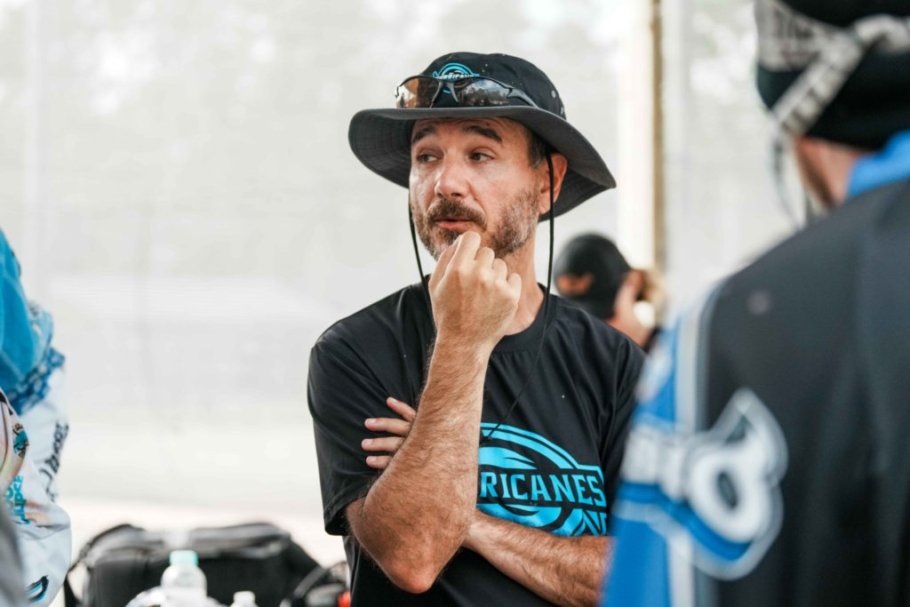
How many of you have said to yourself, “I suck at this.”? Why? Did someone tell you were bad at a thing? Was that person a subject matter expert on this thing or perhaps someone with authority or position? Did they somehow set a bar that you didn’t immediately meet? Did they express disappointment and gave up on you?
I will share a personal story with you. Several years ago, I was told that I wasn’t very good at paintball. As a matter of fact, I was told, “We can’t win with you on the field, but we can’t win without you at the event.” I didn’t agree… at all. And I knew better. All that did was motivate me, drive me, and believe it or not, that was the catalyst that led to the creation of http://www.Zenandtheartofpaintball.com.
That is an example of an external voice but what about the internal ones…the ones we create. The external voices from our past can certainly create the internal voices of today. That devil on your shoulder telling you all the negative things about yourself is a manifestation of some earlier experience. I’ll share another personal story. When the New Orleans Hurricanes won the pro spot at the end of ’21, I had an inner voice telling me, “This is a WHOLE different level. You can’t coach at this level. You are going to make mistakes and they will be on the webcast for all to see… and they’re all going to laugh at you. Zen and the art of paintball… ha! No one thinks the Canes’ can compete at the pro level! And everyone thinks your processes and your blog are stupid.”
That voice was LOUD. But that’s all it was… noise. I would do my best and continue to learn and grow with the team. And that’s what I did. I doubled down on my thoughts, procedures and processes. And my team doubled down with me and supported me with their incredible minds and work ethic as well. I/we shut that voice up.
When Matty Marshall first asked me up into the booth to commentate (and each time since actually), here came that voice… “You are going to sound or say something stupid. And then you will become an internet meme. You will no longer be taken seriously!”

Yet Matty keeps asking me up. And that voice has been awfully quiet. Sure, I hear it way in the distance but I enjoy commentating with Matty and all the cool cats I get to commentate with. I learn so much when I am up there. I look forward to it now because it is an opportunity to learn and, let’s face it, it can be a lot of fun.
When my friend Ryan Gray asked me to do a podcast with him, there came a chorus of voices! “You are not on the same level as this man or any of the other professional coaches for that matter. You will be exposed when they hear how you do things, and you will be laughed at by everyone. Not only that, but this is not your radio days, you have a FACE for radio and now you will be on camera. So not only will you sound stupid, you will look stupid too.”
That voice was with me at the first show having just come off a 1-3 performance at Cup. But the more I listened to my friends, constituents, and the other coaches, I realized they weren’t much different from me. I haven’t heard it since. I look forward to each and every show now. The thing we fear is rarely the monster we make it out to be.
We all have our heroes. Whether they are a family member, a musician, an actor, a friend, a literary character, what have you… they are our heroes because they were able to DO something, OVERCOME something, SUCCEED at or ACCOMPLISH something. Now they may have been able to do it without adversity or criticism or made it look easy… but I promise you, at one point, they had a doubt or hurdle that they had to overcome. Heck, my heroes had to overcome HORRORS!

Here’s my point. What is the difference between the hero and the coward? It’s simple really, the hero acts. That’s it, that’s the difference. They both experience fear but one simply doesn’t let it control him. Read that again.
I believe that leadership and accountability start at the top. The coach is responsible for how the team prepares and ultimately performs. The buck stops here. So, that inner voice has told me plenty of times that I couldn’t hack it. True story, I have been told that A LOT through out my life. But like I have always done, I fought back. But before I could, I had to recognize a few things.
Where was this doubt, this critical thought process of my capabilities, coming from? Oh, I knew. It was like clockwork. When I set out to do something and didn’t succeed at first, I was usually told by someone, (whether that was a family member, a friend, or heck, myself!) “You can’t hack it… move on, do something else. You aren’t built for this or that.” But if you truly want something, you will find a way. Otherwise you will find an excuse. And what do we think of excuses?
According to Marcus Aurelius, the rules of a stoic mind are as follows:
- Keep an untroubled spirit.
- Look things in the face and know them for what they are.
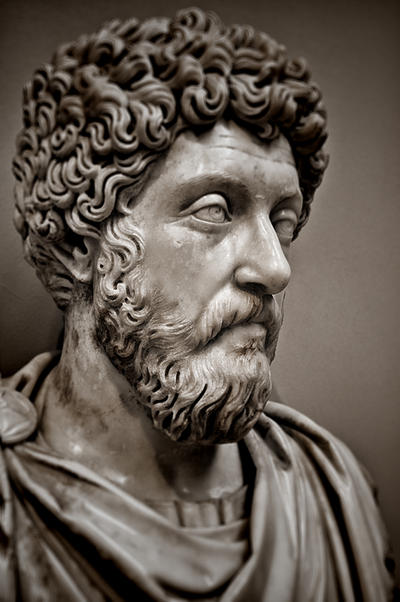
The ancient stoics didn’t let hardships throw them off balance. Instead, they looked at situations objectively. They were able to understand them and recognize them for what they really were… not what their emotions made them out to be. That’s why we must develop the strength to not immediately jump to conclusions. We should not LEAD with emotions. We must be disciplined in our approach. If we can do that, we can keep that critical inner voice in check and our spirit untroubled, but more importantly, keep our judgement sharp.
But what if you are struggling on this front? What if that critical inner voice is starting to grow loud and, God forbid, win out? The first thing you need to understand and recognize is that voice is NOT a moral compass. It is not a conscience or anything of the sort. If it were, it certainly wouldn’t be so negative. No, that voice is the enemy. And just like an enemy, it must be beaten, conquered, and diminished to never be a threat again! Once you become cognitive of this, you can challenge it and you can defeat it. Know thy enemy. You are in control and you can now act against that voice and what it is advocating. Take back what is yours and actively pursue your own improvement and happiness. No one needs to be a victim unless you actively choose to be. Look at Epictetus, a famous stoic… he was born into slavery but they could not chain his mind… imagine that kind of power.
You can do this. If I can, anyone can. Now… go get some.
Be water my friends
 Zen and the Art of Paintball
Thanks, I needed to read this post today.
LikeLiked by 1 person
Hope it helped.
LikeLike
Thanks for sharing, Mike! Very insightful.
LikeLike