Ground Control to Major Tom . . .

A small note- This topic and this particular blog post almost killed me. My brain came close to disintegrating from all the important tangents this post could have run off on. I tried to keep it streamlined and focused on but a few of the more important factors regarding said topic. I still feel as if I may have had a small aneurysm or hemorrhage of the brain. I apologize ahead of time. It has been rewritten 6 times . . . no joke. This is a topic I will try to readdress later if I am alive. If I die don’t let me vote Democrat after I am dead.

Communication is the means by which we transfer and decipher information. Whether it is thoughts, emotions or ideas, we use our speech, gestures, and facial expressions, to transmit whatever it is we wish to get across to those we are communicating with. There are three essential components to communication: the sender, the medium by which we are delivering the data (method of delivery), and the receiver. Now, I could get into theory and further explain the science around all of this but let’s proceed using this base understanding.

“Wise men speak because they have something to say; Fools because they have to say something.” – Plato

“First learn the meaning of what you say, and then speak.” – Epictetus

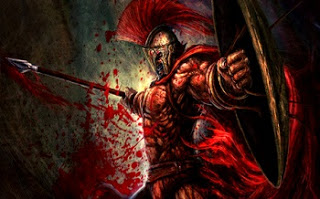
Ancient Greek philosophers understood the importance of communication. They were quite articulate about it actually. (Get it?). With the creation of the Olympics, all those chiseled bodies (see what I did there?) and their understanding of communication based off the philosophical minds they had at their disposal, would have made excellent paintball players.

42
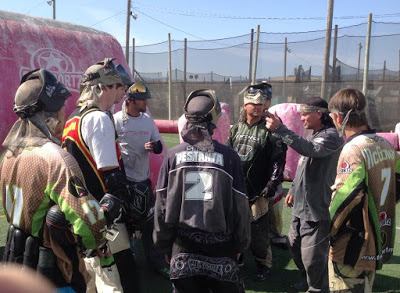
Communicating the game plan

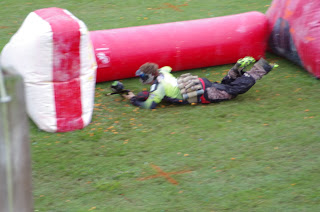
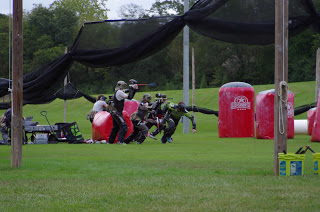
Probably the most overlooked, misunderstood, and vitally important aspect of paintball is communication. I don’t care if you are a beginner or a pro, you can never have enough good information. The importance of receiving and transmitting this information well is a crucial element teams should master if they intend to be successful.

Think about it for one moment in the most basic of contexts: You communicate to your teammates the game plan prior to a point. You communicate what you want to accomplish. If you are down bodies, good communication will help you pull it back. If you are up bodies, good communication will help you ensure your success.

Too many players have a simplistic understanding of what communication is or should be in paintball. They feel that it is simply shouting out bunker codes or kill counts. Sure, it is important to identify threats. But is that the extent of it? Is that where it ends? Absolutely not. Now that we have information, how do we continue its transmission and how do we use it effectively?

43
Communicating expectations

Something many players look past is listening, another incredibly important factor of communication. This is my own personal issue. I have a tendency to communicate well in the first part of a point. While I am communicating, I am piecing things together in my head on how I am going to react to the data I have. I see the game plan unfold, make my reads, and then act. Regrettably, I may have missed a key point of data from one of my players because I was talking/yelling and not listening too. Or even worse, I may not communicate what I knew or my intent. In other words, I have a tendency to forget to share “my plan” and just act essentially diminishing my success rate by not getting the “help” I need. This is where some of you would argue, “Hey, if you see the move you have to take it!” That is true. And you are still wrong.

Once you have the necessary information (location of opponents, recognizing your teams position in relation to those of your opponents, up/down count), now we have to take this information and form a response to it. Whether it is sharing what we know (if we have additional information) or simply acknowledging we heard what our teammate(s) shared, they have to know the message was received as well as the additional information we can provide. Once this is established, now we have to build a game plan. Yes, you had a plan on the box of who was laning where, who was going where (and why) and you want to execute that plan. One or two specific goals should have been determined, too. It is important to understand the reasoning behind the play (your goals).

So, the point begins and we go to accomplish and execute our plan/goals. But now, based off the latest data, we have to piece together how to execute said game plan based off our new environment (what happened after the break). Has the game plan now changed and if so how, why and where? What elements have changed? Did we lose someone off the break? Perhaps two? Did we drop one or two of them on the break? Did we make it wide and they didn’t? Does this allow us to take more ground quickly? What elements and variables have happened and how do we adjust? How do we know how to adjust? Communication, that’s how! After enough time working with your teammates, instinct will also play a role, but that is another topic/blog. Communication paints the picture for us and now we have to finish the story by painting our own ending. Communication is the paintbrush.  BTW, that is what we call “analogy”, a good communication tool . . . anyway. . .

44
What next?

It should be noted that the information derived from communication is only as good as the context in which it is received. It is important in paintball to get the most amount of information across in the most efficient way. Power words or short sentences that are code for specific and distinct meaning are key. Perhaps your team has a code meaning the snake side is clear from a particular prop over? Same for the D side. Or that there is a particular situation you anticipated to encounter and trained to beat? If you don’t have these things, again, you are behind the curve.

Additionally, the knowledge you already possess must be built upon with the knowledge you receive. If you are told it is “G4! Home only!” and truck down the field to dunk the guy and end up getting smoked by a guy in the corner everyone missed, well, that’s bad. However, having your data, building upon it as accurate (trust but verify) gives even greater detail which allows you to make a better informed decision. But most importantly, have you and your players walked the field well enough that they have a 3 dimensional map of it engraved in their brain? This is the next level. If I tell my front snake player “G out of the can! Aztec is D side, corner is on the wire!”, can he/she now see the field in his/her mind and make an informed decision to set up and shoot another threat he is aware of? AND BECAUSE he has walked the field so well and knows the shot from his position in the snake, it is second nature to pop up and make an accurate shot without having to gather his bearings. Make sense?

Translation: If you tell your snake player an opponent is looking away and he now has a shot on another bunker but he doesn’t know the shot instantly, he could very well miss the opportunity. He now has to prairie dog causing him to lose a valuable opportunity.

45.jpg

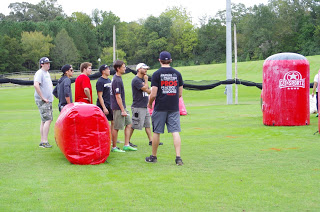
Being able to talk to your team off the field is valuable

Interestingly enough, communication doesn’t just have to happen on the field. It is important that good communication among a team happens off the field too. I had this conversation recently with a member of Prime. We were talking about the difference between his perception of his game and other more experienced members in the program. We were discussing how one takes steps to understand what to do in complex situations and how one learns “instinct”. The more we talked the more I realized his problem was that he didn’t understand exactly what we had been teaching. If A then B. The issue he was struggling with was comprehension. That’s an issue since the “receiver” wasn’t understanding the message and it was obvious the “sender” wasn’t delivering the message well enough. But once I recognized the issue, I began to break it down for him and really focused in on his concern. I did my best to explain as well as I could, what we were driving at. It clicked. He had a breakthrough and understood the point. It was really cool to witness and be a part of (I dig things like that… when the light bulb goes off and the player is better for it. Man, I love that stuff!)

Are there ways to improve communication? Yes. Are there drills for this? There sure are. What is an example?

Supper. . .

Yep, supper. For those of you not in the know, supper is the correct term for dinner here in the south. Now that we have the nomenclature squared away . . .

46
Prime Time SUPPER TIME

I love to eat, but I love eating with my friends and teammates more. There is something about breaking bread with guys you have chewed dirt with all day. No, this isn’t a drill. There are plenty out there and several the Prime program uses. It would be easy to supply you with a few that assist you with communicating better on the field. But I have news for you. If you don’t get to know the guy in front of you, beside you or behind you on that field, and you don’t trust them, then there is no amount of drills that will help your comms on the field. If you can’t talk to your teammates off the field, you won’t do it effectively on the field either. No manner of drill will make you a better teammate much less a better team.

Emphasize communication at your next (and all) practices going forward. Try to think of ways to improve it. Trust me when I tell you that a team that can communicate well and adjust will take the game more times than not.

Be water my friends,

Mike Bianca

Team Pr1me


Previously Posted

The Prime Dojo – Gun Fu Episode #1

35

Benjamin Franklin was a pretty smart cat. He invented the Franklin stove, bifocals… he created an artificial fertilizer and charted ocean currents. He designed a flexible urinary catheter (What??!!) and swim fins. Did you know that he even designed an improved glass harmonica with spinning goblets? And, of course, he was one of the Founding Fathers, in my opinion, his greatest accomplishment.

But did you also know that he never patented his inventions or ideas? Get this… He said, “As we enjoy great advantages from the inventions of others, we should be glad of an opportunity to serve others by any invention of ours; and this we should do freely and generously.”

Classy.

Which leads me to the point of this post… The members of Prime and I have had numerous opportunities to learn from some great people in the paintball world. And through these years we have created lasting friendships and memories. Like Franklin, we have always felt we should give back. However, unless you were physically at the Prime Farm, these gifts weren’t readily available. That being said, we have decided to take it to another level. Hopefully this is successful. Without further ado, I am proud to present to you Prime Paintball’s first edition of “GUN FU”!

36

Waaaasssssaaaaahhh!

To kick things off, it just made sense to have this young man as our first resident SME (Subject Matter Expert) or Sifu. He is someone who wants to give back too and has been doing so with his BKi paintball page. I had the opportunity to meet Grayson Goff early last year when we reached out to him in regards to BKi and Prime forming a relationship. We were looking for guidance after Coach Paul passed. As most of you probably know, Paul Richards coached X Factor prior to their World Cup win in 2013. Grayson came to the Farm and spent 3 days with us putting us through the paces. One thing you learn about Grayson in just a short time being around him is he is a born competitor and absolutely, without a doubt, loves the sport of paintball. What he has accomplished in his 30 years on this earth as a member of San Antonio X-Factor and what he has given back to the paintball community with BKi is remarkable.

37

Grayson at the Prime Farm

You could say Grayson got his start in paintball by being the 11th man. He was invited to a kid’s birthday party because one of his other friends couldn’t go. They needed 10 so… Grayson got the call. The party was at a paintball field and that’s all she wrote. “I was instantly hooked on the raw competitive spirit and started spending any money I made doing chores around the house towards paintball.” He eventually joined some teams (Vaqueros, Arch Angels, Smart Parts Factory) and worked his way up through the divisional ranks to where he is now with X-Factor.

The man eats, sleeps, and breathes paintball. If you ask him what he does outside of paintball, he will tell you “Teach people how to play paintball.” And teach people he does with his BKi website. He started BKi for two reasons; first, his obvious love for the sport. Like I stated earlier, if you are around him for any amount of time, you see his love for the game. “It’s taught me more about life and myself than anything else.” His second reason is just as obvious. He wants to share that love and the ability to learn with others. That’s what I love about Grayson. There is no ego here. “BKi offered the perfect channel to reach out to as many players as possible. I want to play a role in the next generation of paintball players. As a professional player, we only have so many free weekends a year to teach clinics. There’s also a ton of players out there that have and may never get a chance to learn from a pro in person. With BKi, they have a pro dedicated to helping them improve their game no matter their location or schedule.”

38
hint hint

Grayson is engaging and is always looking to improve his craft. He is a firm believer that the mental aspect of the game is certainly the most important. I asked him what he believes is one of the more difficult hurdles in the sport; “As paintball players, we have to take in tons of information, quickly analyze it, and make smart decisions. Sometimes this can occur in the span of the less than a second of time. The ability to do this effectively is the hardest thing for most players to overcome at our level. It’s what separates good players from the great ones.”

One of the ways he works his mind out (mental push-ups so to speak) and stays sharp is literally studying the game itself. What we use to call back in my day “watching film”. This is a great way to see how things can be done, should be done and vice versa.

39

Rockin’ Exalt, VForce and DYE Rotor

“I improved my ability to analyze situations by doing just that. Instead of just ‘watching’ games of paintball, I would (and still do) constantly analyze the situations players were in, situations teams were in and think about what each player or team as a whole could do to win that specific game.”

“Whether it’s two pro teams facing off at an NXL event or a D4 team practicing against their D5 feeder team, I will watch and analyze. I believe I can learn something from any game of paintball. So many people waste valuable time out at a paintball field bullshitting around while they wait for their chance to play. I made the best use of this time growing up intently watching and expanding my knowledge.”

Good stuff.

40

If you aren’t shootin’ or talkin’ you better be movin’

At this point in Prime’s Dojo, we would present you with a small video clip of a drill that Grayson suggests to improve an aspect of your game dutifully presented by a member of Prime. But Grayson does this ALL THE TIME. Be sure to check him out at BKi paintball.Here is the link.

http://bkipaintball.com/

Be sure to subscribe. I promise it is worth it.

I did want to leave you with one thing Grayson shared with me that I certainly appreciated. He shared what motivates him.

“I love the raw emotion paintball brings out of people. It’s that you vs. me, no holds barred fight mentality. It pushes us to our limit and in those moments we’d sacrifice anything to win. And at the end of every failure, we’re left with a few reminders of our mistakes. That coupled with the fact I hate losing in anything motivates me the most.”

41

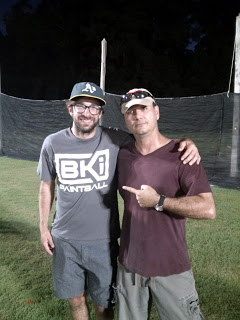
The author and THAT guy

I want to thank Grayson for being my Guinea pig and taking the time out of his busy schedule to placate me. Xiè xiè nín de bāng zhù, Mr. Goff 谢 谢 您 的 帮 助

Check out this youtube video of Grayson running one of his clinics, pay particular attention to his comments on a steady platform while running and gunning.

https://www.youtube.com/watch?v=6pX1gTFyG3Q

Previously Posted

在旅游淡季枪方式

I have often used the martial arts or rather, more specifically, the practice of hand to hand combat techniques, training, and philosophies to help players better understand instruction. I am a huge believer in “biomechanics” and “kinematics”. Now, I am no scientist and I certainly don’t mean to suggest that I am an expert on these topics. I don’t even use the terms in the literal sense when I reference them. However, these techniques have proven to work and that’s what I choose to call it, so… there.

Now, many people believe that Kung Fu is a martial art from China and they would be partially correct. It is not necessarily inaccurate but the literal translation for the Chinese term Kung Fu is “hard work” and can be applied to anything someone has achieved great skill in by studying or dedicating themselves to its pursuit. Keep that in mind as you read on.

Paintball can certainly be approached from a martial perspective. If you look at it from the perspective of a set of skills to be applied in order to defeat your opponent, it can translate very well. Especially when applied to the physical as well as the mental. We use footwork, body positioning, conditioning, active and reactive response to our opponents, tactics and strategies… we apply techniques to keep us safe and to ultimately defeat our competitors.

31

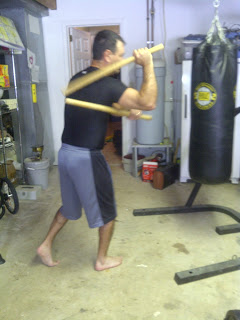
The author working some basic Kali stick drills

That being said, starting next year and hopefully with assistance from some friends of mine in the professional paintball community, we will try and bring you some paintball “Gun-Fu” lessons. The details are being hashed out now and I am really excited about this opportunity to share with you what I really hope to be an impactful endeavor by Prime and the programs good friends and sponsors. So keep an eye out for these lessons in Gun Fu… they should be fun but most importantly, informative.

On a completely separate topic, I wanted to make some quick comments about the off season. Something that is often overlooked and every bit as important as putting in the time and hard work required to become a better player. It may appear counter intuitive but I assure you that is not the case. I am willing to bet the majority of pros use this very simplistic technique.

Let’s talk about taking a break from paintball.

Nearly every professional athlete isn’t a professional athlete 24 hours a day, 365 days a year. Just as important as training is the time athletes take off to rest, relax, and recover – mentally and physically. While that off-season break can look different for different people, it nearly always involves a few days or weeks completely off from the sport after their last big event. It is usually a mini vacation, some time doing other activities they are interested in and a lot of catching up on… well…. life.

Dr. Doug Graham, who coaches elite track and field athletes and who founded FoodnSport says, “If you train year-round in your sport, you don’t do as well as if you take two to six weeks off.” I agree with his assessment. Countless times the guys/team comes back after a few weekends off rip roaring ready to go. They missed their boys, they missed that mission, and they missed that adrenaline that is our sport.

Most professional athletes – from the up-and-comers to the seasoned veterans – use a few weeks to do everything they don’t during the season: they don’t worry about what they are eating, they aren’t wigging out about their schedule or their training. They catch up on errands, spend a lot of time on the couch, and pig out a little. They see family and friends and do things they don’t necessarily get to do during the regular season. And why not??? How many of you LIVE for paintball? If you do, you’re doing it wrong.

32

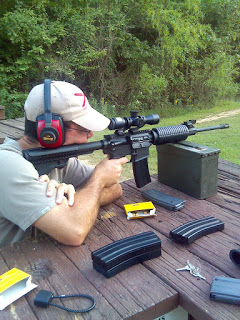
A little relaxation at the range

 Now this doesn’t mean you throw your regimen out the window completely. You don’t start smoking cigarettes, getting trashed, eating fast food every day or stop physical activity altogether. Toxic is toxic according to Graham and I certainly agree with him on this as well. He says, “It’s not a treat to abuse yourself even a little.”

If I had to sum it up, it’s the time to mix it up a little. Spend some time with the girlfriend, go see your mother and tell her you love her, eat some pizza or chocolate, catch up on those movies you missed, have one of those micro brews you’ve been meaning to try, travel, hit the beach, whatever…

However, just in case you were thinking of getting straight back into training for next year, here is some reasoning on why you should probably take a few weeks of active recovery and definitely take a break.

The Physiological Aspect:

The end of season break allows for the body to fully repair any tissue damage. Granted, body fat levels may increase but it will also allow your stores of essential vitamins and minerals to be restored. And your immune system usually needs it too. Your immune system has to work overtime if you are constantly training. Giving it a break gives it a chance to fully recover and reduce your risk of illness throughout the winter.

Something I am constantly aware of is recurring injuries. By resting and following a rehab program for a recurring injury, you decrease the chance of… you guessed it…the injury happening again. Use the time off from training to get a proper diagnosis and the correct treatment. An extra couple of weeks off at this time of year will not effect next year’s performance but not treating an injury correctly certainly will.

33

Down time on the couch with my son

The Psychological Aspect:

The end of season break, especially this particular off season, has helped me see some really important qualities that I miss during the regular season. Before I can be Mike Bianca, member of Prime, I have to be Mike Bianca, husband, father, son and friend. This season I have spent some quality time with my wife, children, friends, and family. It has been AWESOME! They have helped me recover from this past season which saw a lot of undue stress and its fair share of issues and problems with the program. I have not stepped on the Prime field since our tryouts back in November and it has been incredible. I stepped out on the field for the first time yesterday (December 13th) and I noticed something almost right away. I really enjoyed being there… I wanted to be there! And my game was anything but stale. As a matter of fact, someone said, “Whoa! You looked like a 25 year old out there!” (Take that Grayson… lol… kidding brother! But not really…) I am going to take a few more weekends off for the holidays and then hit it hard in January. My batteries should be fully charged by then. I am going to use that time to constructively review the previous season and identify strengths and weaknesses for myself and the team. I will more than likely set a goal for myself and hopefully for the team. I will get a certain nagging injury further under control and finally, get ready and plan for my in depth training.

34

Serenading the wife… romantic, I know

This post has proven to be much longer than I anticipated. If you are still reading, here is my suggestions/recommendations for those of you who feel taking a small break will do you some good:

– Train when you feel like it

– No high intensity work outs

– At least two rest days per week if you do train

– Try to avoid running.

– Maximum 30 minutes per session

Remember the goals; Recover from injury, recharge the batteries, analyze performances from this past season, set goals for next season, but most importantly…enjoy life man!

Be water my friends,

Mike Bianca

Team Prime

Previously Posted

Do or do not. There is no try…

Winning is an easy motivator. But a true champion needs a motivation beyond winning, right? When you attempt to inspire your team to work harder after losing, falling short of expectations or having a less than expected season, I assure you it is no easy task. Motivating a team that has no other reason to be out on that field, no other reason to spend money and time on a pursuit that has nothing more to offer than a prideful glory… that is a feat. Maintaining team motivation is especially difficult at the divisional level because of individual player’s personal levels of commitment (family, school, money). I am pretty sure it was President Eisenhower who said, “Motivation is the art of getting people to do what you want them to do because they want to do it.” Well alrightie then Dwight…

But how? Remember, it is motivation not manipulation. These two should never be confused. Any attempt to motivate in this context should be based off discipline. This obviously has a lot to do with the attitudes and drivers associated with your team (that whole environment deal we have talked about before). If you have recruited wisely, it shouldn’t be too far of a leap to make happen. Remember, the secret of discipline is motivation. When a man or team is sufficiently motivated, discipline will take care of itself.

28

The Prime leadership has always believed and continues to believe in hard working players. I will take the motivated hard working player over the super star every time. Why? Because motivation will, over time, almost always beat out talent alone. But here’s the catch; motivation only gets you so far. It gets you started. Once that hard work becomes a habit, then you really start to see results. So you need to learn how to convince your team to develop the habit of working hard. Sure, you can have a player who is worth two players but he can’t be two people. He needs to inspire the guy next to him to step up and then it needs to become contagious. The domino effect, if you will. There are some who believe that motivation is “easy” – eliminate those who aren’t motivated. Now, that shouldn’t be confused with creating fear. Sure, that may work in the zombie apocalypse if your name is Carol but that doesn’t usually work for paintball teams. You can motivate by reward but how many of us, besides professional programs, have the means to do this right? Both ways have their merits I suppose but the best motivator? That will always be self- motivation.

The off season tells the tale of a paintball team whether it is the team’s rebirth/rejuvenation or the beginning of its death/demise. The off season is where you see where each member’s level of motivation (commitment to improving) really lies and it can almost certainly tell you how well you may expect to do (especially in the divisional levels) the following season. Everyone knows, and I think this applies in all sports; champions are made in the off season.

29
Second place is a strong motivator

Now, every team needs a break from the grind, a time to heal, rest up physically or depending on the team’s performance that season, mentally. I have nightmares about how our competition, the teams we will be facing next season (and those that beat us the previous season), are outworking us. They are all homeschooled or have unlimited funds and paint and sponsorships and practice every day. And then there is us… we only have a few weekends to prepare for them. I mean, it really is a lot of sleepless nights for me. Of course I recognize these as nightmares and not reality. However, they get the better of me sometimes, especially if my guys have a lot going on and struggle to get to practice (hint, hint).

Remember the saying that “Hard work beats talent, when talent fails to work hard”? Here are some ideas I have thought about to motivate my guys. Perhaps you might want to use them as well. They may work, they may not, but we are darn sure going to try them and see what it gets us:

  1. Remember how we have talked about training tired? One of the ways I motivate myself when I am out there with Prime and I am tired is, I will remember a team or match we lost during the season (for this off season, I don’t have to think too hard… just back to World Cup). I will fire myself up by dedicating my efforts to “those guys”.   For example, right before I get on the box to start a drill or point, I will think to myself “This one is for Team so and so”. Now, there is no reason that this can’t be a team effort as well. Perhaps when you get to practice, your team captain says we are dedicating this practice to that loss at Cup! And every opportunity you have, you mention it throughout the day. That will get some blood flowing, I bet.
  2. I thought of this one the other day. Pin a print out or list of your teams finishes for the past season up where everyone can see it. Remember how they felt? Yeah, well I remember every one of them and to me that is motivating. If you see guys on the team that are OKAY with those finishes, especially if they aren’t podium finishes…cull them. You could even combine this one with the first by posting a picture of the teams that beat you that past season… oh yeah… that’s motivation there.

Scream.png

I want to devour the liver of my enemies! Motivation

  1. Have a very organized schedule. As soon as the season ends, this is the time to develop a schedule that might involve a team dinner or team activity. It is also important to give them a few weeks off but then make sure they understand it is time to work. Plan drill days; work out days, clinics, whatever you have to do to keep them focused on the goal of getting better for the next season. Once the schedule is solidified, stick to it. There should be no surprises and they can ask employers for those days off work. Talk to as many of your players as you can and do your best to match schedules.
  2. Not every team can do this one but now that Prime has lights; I plan on being available during the week. I am actually excited about practicing in the evening, especially during the season (when it is much cooler in balmy Alabama). If you can find the time, set up dates that aren’t status quo. It doesn’t have to be with a paintball gun. It can be getting together in the gym or track to run.
  3. Acknowledge those that put in the work. Whether it is through social media announcements, internal emails let those who do put in the time and effort know that you see it. I once gave out fun “dollar store” toys to the guys. They got to pick their prize. Turned out to be pretty fun and everyone had a laugh (but you could tell it was appreciated). Recognition can be a great motivator.

30

“If you ain’t first, you’re last” – strive for #1

And those are just a few of the ideas. What are some of yours? Post them up or let me know. Shoot me a message on our public Facebook page or hit us up on our PBNation thread in the Alabama forum found in the Southeast area.

Whatever you do… do SOMETHING. Because if you don’t, well… you’ll get what you put in.

Oh, before I forget a big thank you to one of our biggest supporters, Ken Osvath! He’s the man who keeps the pit running smooth for team prime. And he is a great motivator! Check out this video he made to pump us up (click the link below)

In the meantime, be water my friends

Mike Bianca

Team Prime

https://www.youtube.com/watch?v=cfSGXMt_8is

Previously Posted

Retreat? Hell, we just got here!

“There is a destiny

That makes us brothers

None goes his way alone

All that we send into the lives of others

Comes back into our own.”

The NXL’s World Cup is just a week and a half away and I, for one, am rather pumped up. There are a lot of things to be excited about; the venue, the competition… I can tell you the atmosphere here at Prime is pretty intense and with good cause. The camaraderie of the Prime family never ceases to amaze me.

But I want to take a moment and reach out to those of you who may not be as excited, who may be dealing with issues that don’t often get addressed in paintball, who may not feel so “blessed”. I want to talk about internal issues, those aspects of being on a competitive national team that are often overlooked but have a significant impact on a team as a whole. Not the physical and mental aspects of playing the game, per say, but those issues that have a negative effect and lie off the field. They can manifest themselves in several different forms creeping in slowly and infesting an otherwise solid crew of friends and teammates until one day, BAM! It’s all gone leaving some angry and/or disappointed, others confused and everyone with memories of “remember when” or worse “what if?”

No one wants to experience that … some reading this may have already. But how do you avoid it for the first or in some cases another time? Here’s how:

23

Surrender. Yep, I can see many of your faces now. “What is up with Bianca on this one? You mean give in? You flipped on us and found religion?” Nope, I have always been religious and most will tell you I have always been crazy. Once again, I am going to ask you to bear with me.

To too many people in today’s society (the era of social media/narcissism and instant gratification), this post is going to be a very foreign concept. But it wasn’t so foreign in the eras of the Great Depression, WWI and WWII. Yeah, yeah, I digress but you get the point…I hope… shut up and listen.

If you are still reading (thank you), it has a lot to do with being selfless versus being selfish. Many of you who know me personally have heard me say, “Don’t be a bad guy, be a good guy.” Let me share with you what influenced this latest blog and why I felt the need to address this topic:

Recently a good friend and mentor of mine shared a Forbes article with me on leadership. I felt the article really personified the “Prime way”. I love reading and learning about leadership styles and accomplishments from historical figures. The article itself emphasized broad leadership and management style traits BUT it translates well into a broader spectrum that we can all benefit from if we apply it appropriately.

In it, the author said, “A leader operates at their best when they understand their ability to INFLUENCE is far more fruitful than their ability to CONTROL – the purpose of leadership is not to shine the spotlight on you, but to unlock the potential of others so they can in turn shine the spotlight on countless more. CONTROL, in contrast, is about power – not leadership.” Here’s where giving in and being selfless enters in… “SURRENDER allows a leader to get out of the way and focus on increasing the value to those whom they serve… Controlling leaders operate in a world of ADDITION and SUBTRACTION, while the return on investment (ROI) of a leader who understands SURRENDER is built on exponential multiplication!”

24

Whoa! Deep stuff, right? That surrender comment from earlier makes more sense now, doesn’t it!? Mikey and I like to use the term “Force multiplier” when referring to aspects of the game but I think it applies here too.

At Prime, from the outside looking in, there are leaders like Mikey McGowan and myself each with traits that benefit the program. Mikey drives and leads the team and provides assets most programs would kill for. I am more of an NCO…lol…. Shut it. Prime, the team however, is full of leaders. Not something every team is fortunate to have. Every member brings something to the table. It’s the sum total that makes the team successful:

  • Leadership isn’t about position or stature
  • Leaders grow/have a wish bone and a funny bone. In other words, they develop a vision (wish bone) and have a sense of humor (funny bone). They don’t take themselves too seriously or it will tear them apart. Trust me on this one
  • Leaders build confidence; they have a positive attitude
  • Leaders control their emotions and don’t let them cloud their judgment
  • Leaders recognize and appreciate the benefit of diversity and different perspectives; everything isn’t black or white, all or nothing, there can be a compromise usually that benefits all.
  • Leaders are able to accept unjust criticism
  • Leaders are passionate
  • Leaders have excellent communication skills, verbal (looking someone in the eye and talk with them), listening, body language. Text, Email and phone are not effective tools since there is no inflection
  • Lead with questions not answers. Leaders don’t have to have all the answers

The Prime team has been selfless and this has led to our longevity and cohesiveness.  Let me put it this way: if my Primates and I had to “clear a room” in a house where we knew the first guy through the door was going to take the hit, we would all be fighting for the spot.

25

So, back to “surrender”. I assume what the author of the Forbes article meant is not the contemporary meaning of the word. Unless, of course, you mean to serve those you lead. You surrender to the needs of the team or greater whole and focus on improving the team and the team’s environment, putting self- ambitions to the side.

When everyone on a team has this attitude, it’s a truly remarkable thing to behold. Things become smooth and fluid. Groovy if you will… they become a Prime environment for improvement and success (see what I did there? Clever… I know). And those self ambitions? They will be met.

Don’t get me wrong. This is not to say there are not moments of conflict, disagreement or tension. We are, after all, only human. We will make mistakes, we will address internal issues inappropriately at times. This is not to say there are not moments when CONTROL is certainly required. Those moments and scenarios certainly exist. It’s how we address them later, how we respond or grow from them, that shows a cohesiveness and understanding of what is required for success. Once you recognize the mistake, you address it and you address it the second you recognize it. You don’t wait. I saw this recently in a young man I know. And the young people he led and humbled himself before gave him what he had sought after in the first place. It was AWESOME!

I’m going to switch gears on you for a second and look at it from another perspective.

Bruce Lee didn’t believe in “styles”. He felt once you bought into the concept or idea that you are of this style or that style, you had already limited yourself. If they do this, I will react this way. But as with all things, especially say… a street fight, things don’t always happen the way you think they will and you had best be prepared.

26

A teammate or leader who does not serve or surrender and is controlling (his way or the highway) would be a single style martial artist. He is limited in his approach and therefore will be limited in what he gets out of his players/team members. He does great in his weight class and against people without his experience but usually ends up bloody, maimed or dead when he finds himself in a knife-fight or up against someone with more varied experience. Make sense?

The author of that Forbes article said, “CONTROL restricts potential, limits initiative, and inhibits talent. SURRENDER fosters collaboration, encourages innovation and enables possibility”. Man, sounds like this guy read Bruce Lee’s “Tao of Jeet Kune Do”. And I can dig it.

Finally, and I think it is worth mentioning, a controlling leader or teammate usually lacks TRUST in his team members and therefore will not be trusted in return. How many times have you heard that if you don’t trust the guy in front of you, next to you or behind you, you can’t win in paintball? The guy who doesn’t trust the guys he has been in the trenches with will more than likely be arrogant and insensitive and probably not even realize it. In essence, he’s a bully. I hate bullies. Bullies have hurt many of my friends. (Unless the Bully is America. And then I am all for it… but I digress.)

27

If you find yourself on a weak team, I bet there’s a lot of stress on the leader. He more than likely feels there is a tremendous amount of pressure on him. And, more than likely, there is a fear among the team members. Yes, I said fear. Chances are they are scared to address the issue. This is what a controlling leadership brings to the table. This is the environment it breeds, one of discomfort, inefficiency and distrust. You know what it doesn’t foster? Winning…

Contrary to that, the good leaders learn to serve. Good teammates will look past themselves and give everything they can. They want to help, they want to bring the best out of everyone, they want to build on a foundation and improve it, making it stronger. No, this doesn’t mean everyone gets a trophy for participating, that’s all bullstuff and doesn’t fit into this discussion. But it does mean the quickest way to improve something is not to destroy it. Remember, a good leader or team member who serves his teammates, will not only add value but will certainly gain value in return.

Here’s the thing… there is a saying that true leadership can’t be taught, it has to be learned. And it’s a tough class.

“When what you seek is to build into others more than glorifying self you have developed a level of leadership maturity that values surrender over control. SURRENDER is the mindset which creates the desire for leaders to give credit rather than take it, to prefer hearing over being heard, to dialogue instead of monologue, to have an open mind over a closed mind, to value unlearning as much as learning. CONTROL messages selfishness, while SURRENDER conveys selflessness – which is more important to you?”

I want to buy that Forbes guy a beer.

So, take stock in what you have. If you have a control freak for a teammate or leader, talk to them. Find out what is motivating them. There is a chance they are facing things you aren’t aware of.   You will be glad you did because one of two things will happen. Either you will work things out or you will discover you need to make a change. And that’s okay. If you find yourself already a part of something that resembles the “service” environment of good leadership like Prime, count yourself lucky my friend… chances are you have podiumed or will podium real soon. Congratulations. Revel in it. In the meantime, I will continue to appreciate what I have on Prime. McGowan and I have been friends a long time and thanks to the Prime Program, we are surrounded by friends and family who will be friends and family long after this Prime thing is gone.

Be water my friends,

Mike Bianca – Team Prime

Previously Posted

Insane in the Membrane

This past weekend, I was out at the Prime farm a little before 7 am. The plan was to have a relaxed fundamental drill day with a small contingent of the team which would allow a lot more one on one time. I like days like this because we can really focus on individual players and their techniques, get into the minutia of body mechanics and work muscle memory. Not only did we execute drills that emphasized quick target acquisition (short, medium and long range) but also footwork, hand switching and plenty of cardio. As we continued to perform these drills, we did them at a relatively fast pace. As we continued to push, I began to see a slight decrease in performance. Every so slight… someone wouldn’t keep their gun up, more cant to their gun than normal, a stumble from a surefooted player or they would stop in the middle of a drill to check off on something. Fatigue appeared to be setting in. Or perhaps, it was already there….

World Cup is coming and there is no doubt, based off Virginia Beach, it will be a dog fight. So, we need to prepare for the scenarios we may find ourselves in. Playing tired can lead to mistakes and mental errors. Sure, physical fitness training, good sleep, even good solid field walking can and most certainly will alleviate the issue. Bruce Lee use to say, “Knowing is not enough; we must apply. Willing is not enough: we must do.” So let’s do that here. But understand that, being “tired” doesn’t necessarily translate to just physical fatigue. As stated earlier, that can be addressed through a proper regimen of workouts. I’m talking mental fatigue.

20

The mind does crazy things when it is tired and obviously paintball players (even though some of us may believe we don’t make mistakes and are legends in our own minds) are not immune. Physical fatigue can lead to mental fatigue and vice versa for that matter. Perhaps you had a particular stressful week at work, maybe you received some bad news or finances are tight, family issues, relationship issues, whatever the matter may be… these things can all lead to mental fatigue.

One of the things you learn when training in gun defense (we’re talking real guns here… the “bang bang” someone is dead kind) is you want to train in a “real” environment if you can. When I can, I like to elevate my heart rate to mimic the stress levels of a potential engagement. I will do a jog or wind sprints or even jumping jacks to get the blood really pumping and then see if I can effectively square a target. We want to make ourselves uncomfortable so that, God forbid, if we do find ourselves in a gunfight, we are not in too unfamiliar territory.

This is why I like to utilize drills that emphasize a multitude of skill sets. As I stated at the beginning, we did drills that emphasized, targeting, footwork, hand switching, gun stability and cardio… but we did it all in the same drill. I like drills that have a lot going on because they make the brain process a lot more than “hit the target” or “go here and do this”. It’s not just physical training but mental training. Any drill that can mesh the two and can change in dynamic in the middle of it is a great tool. Call it mental push- ups… or don’t.

21

What are some of the drills you do that would fit in this category? Can’t think of any? If you can’t, you should know that you are a little behind the curve.

Try this one: Set up 3 targets in a “V” shape on one end of the field. These targets will each be assigned a number. For example, the back left target of the V is 1, the point of the V is 2 and the back right corner of the V is 3. Then, at the 50, set up two cones about 30 to 40 feet apart from each other. What you will do is run left to right between the two cones and vice versa 4-6 times. While you are doing this, a teammate calls out one of the numbers. You must put a stream of paint on that target on the run. This drill works cardio, footwork, (horizontal movement), hand switching, target acquisition and listening/comprehension.

See what I am talking about? There are several others you can utilize that “train the brain” so to speak. If you feel you have a great drill that “trains the brain”, post it up. Would love to know and understand what others do to improve their mental strength.

22

“Excellence is an art won by training and habituation. We do not act rightly because we have virtue or excellence, but we rather have those because we have acted rightly. We are what we repeatedly do. Excellence, then, is not an act but a habit.” – Aristotle

“The first virtue in a soldier is endurance of fatigue; courage is only the second virtue” – Napoleon

Ole Aristotle and Napoleon probably knew a thing or two about it, huh?

Be water my friends,

Bianca

Previously Posted

How do you get to Carnegie Hall?

“I fear not the man who has practiced 10,000 kicks once, but I fear the man who has practiced one kick 10,000 times.” – Bruce Lee

It is no secret that I am a Bruce Lee fan. Perhaps fan isn’t the appropriate word. Disciple? Anyway…

What is he trying to tell us? To me, it is perfectly clear. The man who practices 10,000 different kicks only one time each would, theoretically, have a wide range of knowledge about kicking. However, his execution of each kick would be terrible. His technique would, more than likely, be incorrect and ineffective in a real life scenario. Translation: He gets his butt whooped.

17.png

Now, someone who has practiced one kick 10,000 times would almost certainly have a mastery of that one kick. He would execute it correctly and appropriately. He would know all the ways to deliver it in a real life scenario and I would imagine would have a much better success rate than the 10,000 different kick fool. Translation: Maybe doesn’t get his butt whooped. Instead whoops opponents butt.

But what is Bruce really trying to get at with this statement? The operative word here is “practice”. Let me put it in simpler terms so some of you millennials understand it (and some D3 and D4 guys… you know who you are). Two guys practice free throws. One of them practices his shot 10 times and then goes home. The other guy stays there and practices his shot 1,000 times. Who do you think will have the better free throw the next day?

Again, not to harp on this topic but if you want to be good at paintball, here’s a newsflash… you have to practice. You have to commit to a regimen that is either equal to or greater than your potential opponents. You have to do it better and smarter. Ask yourself, how much do you want to win? If it is a driving goal of yours to be successful at something whether it is as a paintball team or as a professional nose picker, get your butt out on the field and get at it. (Keep the nose picking to yourself)

18.png

Don’t just run points. That isn’t practicing… it is but it is practicing how not to get better. That is the 10,000 different kicks guy. I am not saying you shouldn’t run points. What I am saying is you should do MORE than run points and scrimmage. You should constantly strive to stay sharp in the fundamentals: snap shooting, laning, run and gunning. No one likes to run drills but those who do them are always a step ahead of the competition. You should practice situational drills. You should practice communication drills. You should do muscle memory drills. You should practice, practice, practice.

I will make this one short because I have to get back on FB as I have seen there are many sheep who are in need of saving from their political ignorance and lack of logical, rational and critical thinking (I blame the new math… driving kids straight to the streets). I will leave you with another quote from Bruce. I want you to apply it to your practice schedule. He said, “If you always put a limit on everything you do, physical or anything else. It will spread into your work and into your life. There are no limits. There are only plateaus, and you must not stay there, you must go beyond them.”

19.png

Boo-yaa…

Be water my friends,

Michael Bianca

Prime Paintball

Previously Posted

Whippersnappers and Adversity

As a member of the upper echelon of competitive tournament paintball players when it comes to age, I sometimes find it difficult to understand viewpoints presented by younger players. No, this is not going to be a sociopolitical rant about how terrible the younger generations are when it comes to responsibility, history, vision, work ethic, common sense, consequences of actions, Bernie Sanders and a plethora of other issues that boggle my mind. No, this will be something different. This will be more or less a bit of an emotional rant. I want to talk about adversity and how we approach it. More specifically, how Prime did not meet its normal exacting standards prior to the last event and how that should be expected to change.

Shortly after Prime took its 4th second place finish at a national event (Dallas PSP), the paintball community was dealt a mini off season as things between the PSP and the NXL were being ironed out (or not for that matter). It was expected (<<< operative word there) that we would meet this opportunity with the same fervor and zeal we do a normal off season… with blood, sweat, hard work and determination to improve our game. We have always prided ourselves on that. It doesn’t matter if it is 103 degrees outside or if we are shoveling snow off the field before practice, members of Prime could be found practicing and honing skills. If you are a member of Prime, you have pretty much said goodbye to the majority of your weekends throughout the year. That is expected because that is how we, since the foundation of this team, did things and how we found initial success. It is also how you grow as a team and as a player. That’s what Champions do… they sacrifice and this program, or any program for that matter, should do the same if they wish to build a winning, competitive team.

That didn’t happen after Dallas…

We were “okay” with a 2nd place. After all, it was our first event in D1 and we did “okay”. We got our groove after the prelims and proved we “deserved” to be there. I personally (see previous blog post – The Riddle of Steel) tried to motivate myself and others on the team into recognizing we were on the cusp. I fear I may have given players an out or rather, a way to rationalize our performance. My mistake. But I learn from them and hopefully this version of Prime does too.

Instead of taking advantage of the time given us to hone our skills, work as a team and improve upon our performance like we have in the past, we fell into complacency. That is the only way to describe it without becoming foul mouthed. We become complacent. Complacent means “feeling so satisfied with your own abilities or situation that you feel you do not need to try any harder”

Boo-yah…

Granted, no one on the team believed that and no one on the team ever came out and said that (nor would they). However, it is the only way to describe what happened. Perhaps subconsciously? I don’t know. All I do know is that team members began to focus on other things almost as if to say, “we can play in that division, we will be fine!” not realizing that the other teams were not being complacent. I am by no means saying that the Prime guys can’t have lives. That is not the point here and my statements should not be construed as such.

What I am saying is, somewhere along the line between last season and this season, that fire, that drive, that quest for winning lost its way. You cannot afford to become complacent for one second in the competitive national paintball scene or you will simply create new adversity… one that is difficult to overcome. Was the team burnt out? Were we working too hard too often and now we were tired and wanted a reprieve? Maybe.

I faced my own adversity prior to the first NXL. I injured myself and was unable to attend the event (the irony being I did so after posting the last blog – see Cowboy Up from last month). I have been healing for the past several weeks. Those of you who know me know that I push things and I have a tendency to push too hard. Well, it caught up to me. If I really want to overcome my injury, I need to listen to my body and my doctor and follow a strict regimen. So far, I have done so because I want to play with my team. I have done it because that is what is EXPECTED by normal rational teammates who want me as a teammate at the next event. I have had to go against my nature in order to overcome. I will not miss the next event. That’s how I view things and how I had hoped my teammates viewed things. We were on the cusp… meaning we should have continued with what we were doing… we should have listened to our “doctor” and realized we should have tried harder to make it happen. We didn’t.

The first NXL was not our finest moment. For the first time in 3 seasons, Prime failed to make Sunday. I heard all sorts of reasoning. Team members were quick to rationalize one thing or the other. But deep down, I think everyone on both squads (our D3 squad did not perform well either) knew the real reason. No one put in the time needed. No one committed the effort that is required to win. No one was on that practice field as often as they should/could have been. D1 teams are next in line for the pro division and we were anything like a team vying for a pro spot leading up to that event. The proof is right there in front of the squad. Prior to Dallas, we had some of the most in depth and intense practices we have ever had and it equated to a 2nd place finish in division 1 paintball (a 3rd place for D3). Contrary to that and prior to the first NXL in Cleveland, we had some of the most automaton (going through the motions, lets practice what we are good at and that should make up for what we are bad at mentality) practices with scarce participation from all members and it equated to a 2-2 performance topped with a 13th place finish.

There are consequences to action or, in this case, inaction. And it hit us in the face…hard.

We are re-evaluating because we were shown that we may not have what it takes to be a professional program. That is why Prime was started. A grass roots program to work our way up to the professional ranks. We are almost there but to be honest with you, I don’t want it if we can’t compete. I don’t want it if the guys don’t give 150%. I don’t want it if we are just going to be a flash in the pan. I don’t want it so I can say we are “pro”. I want it because we earned it. I want it because we can do it. I want it because we can win. I want it because the guy behind me, in front of and next to me in that matching jersey wants it. And I will always do what I can to help my boys achieve that. Can all the members of the program say that to one another? If not, you better call me because we need to have a talk.

Say what you will about us. Love us or hate us, I know what the soul of this team is and I hope to see it again. I saw some of it this past weekend when professional player for San Antonio X-Factor, Grayson Goff came out and banged with us in 100 degree weather. I hope to see more of that in action and deed, not just word.

Gen. George S. Patton said, “Success is how high you bounce when you hit bottom.” Here’s to one hell of a bounce after Cleveland. Whatever Prime decides to do prior to Virginia Beach, you can rest assured it is in the best interest of the team.


Be water my friends,


*On a side note, I want to take another moment to remember my friend, Boca Loca himself, Coach Paul Richards. Words can’t express the sincere feeling of loss at his passing. Rest In Peace, Top.

Previously Posted

Cowboy up!

“My first injury ever was a broken toe, and my mother made me run laps around the mat for the rest of the night. She said she wanted me to know that even if I was hurt, I was still fine.” – Ronda Rousey

My good friend and team captain of Prime, Mike McGowan, started an incredibly informative page on Facebook wherein he addresses common (and not so common) paintball injuries. He details how to avoid, heal and recover from most injuries sustained playing our sport. Check it out at: https://www.facebook.com/PaintballInjuryPrevention

Injuries are something I know a thing or two about…

14

2011 -The author being carried by Primemate Evan Manners and Matt Sossoman of Vicious

We have all played injured. As we head into the maiden NXL event this week, I am nursing a broken toe on my right foot, inflamed tendon on my left and a damaged hip flexor. When speaking to one of our up and coming players this weekend during practice, he said, “Pain is simply weakness leaving the body, right?” I corrected him and told him that my family had adapted that phrase and put our unique spin on it. “No sir, pain is weakness entering the mind.”

I regret telling him that. He has a tremendous work ethic and I know that if he is hurt, he will now continue to push himself even if he is injured, possibly injuring himself more. I am a perfect example of what NOT to do when you are injured. I am doing okay for a player in his 40’s but I could be much better if I had taken better care of myself when competing over the years. That is, if I had let myself heal and heal properly. Most people will tell you I am practically glued together. Granted, it is glue from the corpses of my fallen foes… but glue none the less.

In any sport, there is potential for injury (accept perhaps Chess… is that a sport? And if you were injured playing it, I think you are playing it wrong). Every athlete knows the risks when they compete. The extent of the injury and the potential for further damage must be weighed.

Why do we do it? We all have different reasons. Professionals do it because they want to get paid. College athletes may do it because they want to keep a scholarship or be seen by a scout. But paintball players? We are a breed that for simple lack of a better term… are just too crazy. Like most competitors, I think your average to above average tournament paintball player feels the need to compete when injured for no other reason than simply to show his boys he has a drive. Very brave. Stupid… but brave. We are dedicated to the sport and when you love something, there aren’t many things that will stop you from doing it.. That is what drives us.

16

2012 – Mike McGowan dislocates his shoulder in Phoenix during a snake dive

The National Athletic Trainers’ Association says that athletes who play injured cannot only re-injure or attain new injuries but also experience psychological issues such as fear and anxiety, too.

The key to all of this and the questions that one must ask themselves: “Is it worth it?” and “Do I know my limits?” You have to recognize when to push forward and when to rest and heal. I think all of us recognize a particular level of injury that is our limit. Me? Bleeding out of a majority of orifices would do it. Notice how it has to be a Majority….

See? Stupid. Know your limits people. Take precautions and keep yourself from getting hurt. You can start by going to my boys page and reading up on how to stretch and avoid common injuries.

The maiden event of the NXL is just a couple of days away and for all intents and purposes, it promises to be quite the shindig. I will be sure to post about it.

Until then…be water my friends…

Mike Bianca

Team Prime

Previously Posted

The Riddle of Steel

“We who found it were just men. Not gods. Not giants. Just men. The secret of steel has always carried with it a mystery. You must learn its riddle. Steel. It you can trust.”

So I was sitting in my living room, licking my wounds from yet another 2nd place finish and feeling sorry for myself, when sure as shinola, Chuck Norris came on the TV.

11

He was doing an interview or something or other…. And he spoke to me. He literally looked away from the interviewer, looked out of the TV and into my soul because that is what Chuck Norris does. He said to me, “I’ve always found that anything worth achieving will always have obstacles in the way and you’ve got to have that drive and determination to overcome those obstacles on route to whatever it is that you want to accomplish.”

Well alright then. Thanks Chuck. Now shut it. (Yeah… that’s right, I told Norris to kick rocks. What about it?)

Shortly after this happened (and I mean literally within minutes), my son, whom is homeschooled, was reading about Christopher Columbus. He says to me, “Hey Dad, you are a lot like Christopher Columbus!” Intrigued and amused at the same time but still not over feeling sorry for myself, I responded, “Really? How so son?”

He says, “It says here that he said, ‘By prevailing over all obstacles and distractions, one may unfailingly arrive at his chosen goal or destination.’ You are always telling us to never quit, never give up, so I figure he must have been a lot like you.”

(blink…blink)

12

Children say the darnedest things…

Paintball is a sport that has shown me every spectrum of emotional and physical capability. I have seen men openly weep from the joy of winning or I have seen players vomit from the sorrow of losing. I watched some idiot guy duct tape his knee to keep his patella in place so that he could play the next point.   I watched a friend pick his gun up after he dislocated his shoulder diving into the snake and win a point. And I have seen players complain about being hurt at the pinnacle of an event only to be perfectly fine afterwards. What separates these men? They are all paintball players. But which wants to win more? Who has that warrior soul?

Birmingham Prime entered the 2015 Dallas PSP in Division 1, our maiden voyage at this new level of competition as did PR1ME 2, who entered Division 3 after a season in D4.  It was interesting to me as none of us seemed to really notice it. “It” being that we were now playing up a division. It was another tournament and another opportunity to play Prime paintball.

13
Kill, kill, kill, kill and…kill.

All things being equal, the D1 team took home the silver after an incredibly disappointing yet hard fought match against a very adept and solid Seattle Uprising team. It came down to who would make the mistakes. It was us. The D3 team took home the bronze (3rd place) after struggling a little in prelims. Once they were given that second life, the fought on like the champions they are only to fall short at a crucial moment.

So how do you come back from that? How do you refocus and reset the teams fighting spirit to the level it was prior to the event?

Here is how I have come to terms with Prime’s 4th 2nd place finish at a PSP in the last two years. Prime is a sword. A Japanese Katana to be more specific. To make a katana, it took the swordsmith many weeks to complete and it is said that a piece of his soul was imbued with it during the manufacture (our coaches and experience would be that soul). There are actually 3 types of metal that go into this process but I won’t bore you with the fine details of Japanese sword making (however, the point of the 3 metals should not be lost as the ingredients i.e. the players on the team, are very important). Rather I will share with you what most consider the fine point of the process; folding the steel. The swordsmith will heat the steel, hammer it out and then fold it again. He then repeats this process, over and over again ultimately folding the steel as many as 20 times. This is what gives the steel its strength. It is bent and hammered and burned again and again… and each time it is beat, hammered, folded and heated… it becomes stronger and stronger. Between each heating and folding and beating, the soon to be blade is smothered with ash, clay and water. This actually creates the outer layer of the blade and pulls out impurities until it becomes as tough as it can be. Getting the analogy yet?

That is Prime. Those losses only strengthen us, unite us, and take our impurities out so we come back stronger and better until we are razor sharp.

14.png

Who wants it? You? Then go hard until you get it.


Learn from your losses. Learn from your heartbreaks. Learn from each other. Be that team you know you can be. Forge yourselves into the weapon you wish to become. YOU have to do that. No one will do it for you. YOU have to decide what it is you want out of this paintball thing… if it isn’t worth the hardships and the sacrifice… take that silver and go be a spoon.


Be water my friends…


Michael Bianca

Team PR1ME


PS Thanks to Gary Baum of PaintballPhotography.com for the amazing photographs!

Previously Posted