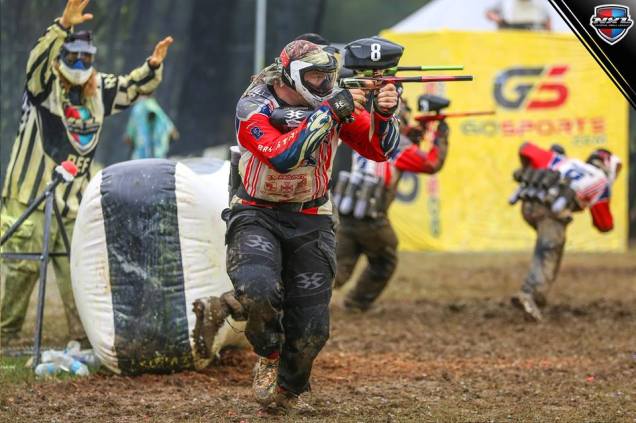
Testing…testing…is this thing on?

Ah, World Cup.  This event is the end all be all, the big show, the culmination, the pinnacle, no, dare I say… the epitome of the competitive NXL season!  The feelings of excitement for first timers, the energy one feels when they actually step foot on the grounds of the event.  None of this can be ignored.  I’ll never forget the debut of “Push” in 1999.  That set the stage for me.  There is no other feeling like standing there with your teammates, holding the cup, knowing  your team are the best in the World that day.  Trust me, I’ve talked to people who have experienced it… lol… sigh…

15049556_1421825101180359_1325238767_n
2nd place…. again.

As can be expected this time of year, there will be several articles, blogs, and videos explaining to you the best way to approach a field.  There will be pros telling you how they see the field playing, how they will approach it, where to lane, why, etc.  And it is precisely why this blog will not be about any of that.

14971978_1421825141180355_797943131_n
After the big show

Instead, I want to discuss something many people overlook.  Something you should keep in mind during your World Cup preparation.

We have examined communication on and off the paintball field on several occasions and most people (including myself) discuss effective communication as a whole.  But sometimes, it needs to be broken down regarding who is communicating to who and why.  Let’s confer about some of the things effective players in specific positions should do when communicating to their fellow players.

Again, for convenience, let’s define what effective communication is.  Effective communication is the process of sharing information between two or more people which should ultimately lead to a specific outcome. With effective communication, information is shared and received efficiently without any misunderstanding or distortion.  In other words, what was meant to be understood by the sender is understood by the receiver.  Again, effective communication includes not just the sender but the receiver… so effective listening is an important part of the equation.  In paintball, and for the sake of this blog’s intent, we will deal with verbal communication and attentive listening only.

Effective and efficient communication is necessary to succeed on the paintball field.   When we say efficient, we want to share the greatest amount of data in the quickest manner possible.  This is where codes come in.  But that isn’t the subject of this article.  Codes are certainly important.  Bunker names, codes for protecting players, codes meaning a player is about to go do something , kill count, down count;  are all integral to success on the field.  But I am talking about having a conversation.  If a 3 (usually a back player of some sort) can have a comfortable conversation with his 2 (mid) or his 1 (front), then things will usually go well.

i-Hd726Gp-XL

If you are able to speak with your teammates during a game where the communication is consistent and unhindered, especially if projection is used, then, in a perfect world, the data is flowing and everyone knows what is going on with their opponent as well as their teammates.  There is no such thing as too much communication.

Being an effective communicator requires a skillset that isn’t easily obtained.  Recognizing the fast changes in a paintball game, quickly communicating them, while relaying what needs to happen based off the new data, well… having a firm foundation in this ability would put you and your team light years ahead of most competitive teams.

As a 2/3 player, I like to ask questions.  No, not the “whatcha got?” variety question because I was too busy not paying attention on the break … effective questioning.

Let’s create a scenario.  You and George (your fictional teammate) are the 1 and 2 on the D side of the field.  You guys have just survived the break and eliminated an opponent from dorito 1.   You know another player is in a D side Aztec.  You hear snake 1 and snake corner from your teammates on the other side of the field.  No one knows where the 5th body is.  You check in and you see you lost a player on your snake side.  How do you think that conversation would go?

i-RG3ZPw3-M

After you communicate the kill to your front player and your snake side teammates, the conversation could start like this: “Yo George (use first names, gets their attention quicker)!  Kill one from D1, we lost Patrick.  There’s a D side Aztec, snake 1 and snake corner (I’m sure you would have bunker codes).  Don’t know where the other body is.  Caution the wall.  What do you need?”

This is how a 2 or 3 may communicate with a 1.  They give the data they have and make sure their teammate hears it.  Then they ask for feedback.  Effective communication is only effective if it flows freely and in a continuous loop between teammates.   And this is where things can go wrong.  A miscommunication or inaccurate data will create consequences (not all bad but it certainly isn’t always good).

My point is the 2 or 3 should communicate what he knows and then ask what he can do to improve the current situation.  Sometimes, it is his job to joystick the 1.  “George! Go now!  I have Aztec contained”.  But sometimes that 1 will know things you don’t. “Snake one is shooting cross”.  Now how do you think the conversation may go?

“Shoot the Aztec and I will see what I can do with snake.  You got him?”

“I’m on him.”

After putting your stream of paint on snake player, it pushes him in creating an opening.

“George, I’ve got snake in.  Check off the wall and go!”

i-ZnrpVGz-L

Okay, real basic example of how this might play out.  But let’s get back to the 1 now.

The 1 usually has a different approach/goal.  He wants to get up the field without too much threat to his own hide.  Failure to effectively communicate his needs will usually result in his demise or that of someone else on his team.  1’s need to be effective communicators  too.   Too many players believe that it is their job to be talked to… not with.  When they are fed data from a 2 or 3, they need to do two things if possible.  First, they need to acknowledge the data they received and then, if possible, complement that data with data of their own.

2/3 player – “Down one, kill one George! D side Aztec, snake corner, snake one, caution the wall.”

George, the 1 – “Down one, kill one, Aztec, snake corner, snake one, caution wall.  You on the Aztec?”

2/3 player –“Yeah”

George, the 1, now shooting at the Aztec  too – “I have the Aztec, put paint on the snake. Have Gary (who doesn’t know a Gary?) shoot the bounce on the wall”

2/3 player – “I’m on the snake!  Gary!   Shoot the bounce!”

1’s can joystick the field too.

i-b5jQ3DN-L

Of course, all of this hinges on effective communication across the field too.  Most teams are good at communicating with their side of the field.   Two guys on the D side usually don’t have a problem talking to each other.  Same with the snake side players.  You see this a lot in divisional play.  But teams that have these conversations across the field?  They are usually dominating.

The point is, you can usually avoid damage to the game plan with effective conversation and/or you can repair damage to the game plan with effective conversation.   You will also increase your success rate.

Remember, effective team work begins and ends with good communication.  Go make it happen.

And best of luck to everyone competing at World Cup this year.
Be water, my friends!

Do you even pew pew Bro?

“Without continual growth and progress, such words as improvement, achievement, and success have no meaning.” – Benjamin Franklin

There is always room and opportunity for improvement.  Whether it is regarding your skills on the paintball field or in everyday life in general, one should always seek to better oneself.  That can be achieved in many different ways but for this particular post, we will try to identify a quick process.

ben_franklin-1-2-e1336601575917
Ol’ Ben… a wise man.  Would have made a great PB coach

I have a saying that I share often at practice and in my clinics.  That is, “We should always pursue that .1% percent gain.”  No, that is not a typo, there is a decimal in front of the 1 meaning a tenth of a percent.  You may be asking yourself, “Why so little?” and, I would certainly agree, that is a valid question.  Here is my answer: any gain, any improvement, no matter how small or what may be perceived as insignificant, denotes an increase… an improvement.  We should never go to practice or go to a clinic and leave feeling as if we haven’t learned or accomplished something.  If you do, you need to reassess either yourself or the practice/clinic regimen.

So how do we ensure an increase at practice?  Let’s break that down and see if we can’t develop that  process mentioned in the opening paragraph.  You can approach this from an individual perspective or a team perspective.  Don’t limit it.

Improving any performance, whether it is your run and gun, your snap shot, what have you, we have to develop a baseline.  So first things first, we need to understand and communicate the expectation.  We must manage the expectation from the onset.  Let’s use snap shooting as an example…

Polaroid CUBE
Studying shots in preparation for an event far, far away….

I make my crew do what we call a quadrant drill (video coming soon).  Place them in a bunker (doesn’t matter but an Aztec is usually the best for this particular drill, again don’t limit, use different bunkers).  Place a target at a predetermined distance from the bunker.  The player must snap 3 quick times from four locations in the bunker: High right, Low right, high left, and low left.  All 3 shots from each position must find the target for a total of 12 hits.  One miss… just one… equates to a having to start over.  You must run this until you can do it.

Now, what did we just establish with the above scenario?  We established an expectation and what a successful run (result) should look like.  Notice how we didn’t talk about technique or speed etc.  those are additional expectations, yes?  We should establish that.  But it all really depends on your team’s personnel and abilities.

Polaroid CUBE
And studying some more…

Next we need to recognize where our problems are.  Again, we can do this from an individual perspective or a team perspective.  Let’s use the snap drill as an example again.  Perhaps the player who is struggling with the drill doesn’t have the proper set up, it doesn’t fit him, he isn’t using proper alignment, or leaning wrong, or he has an eye dominance issue, or he/she is going to fast or too slow.  Once we recognize the issue, we then can address it, work on it and improve it.

Which leads us to the next step in the process, one that is absolutely necessary.  We need to provide the opportunity to get better. We have to create an environment that allows for people’s improvement.  In other words, as we have discussed several times in previous blog posts, set goals for each practice and set aside time to drill or what have you to address the issues at hand.  Once again, using the snap drill, we should set time to do this at every practice until the crew is accomplishing the goal.

Once you have identified your issues, developed ways to address them, and established a timeframe in which to do this, you now have to implement it.  In others words, as Nike would say, just do it.  Let the process work.  If you have done your homework, and the team has been honest with itself, you should see gains.

Polaroid CUBE
Putting into practice what we studied

I believe I read somewhere that a particular car manufacturer (Toyota perhaps? Makes sense as this approach is very Japanese.  In other words, efficient) believed that the best way to keep things positive and moving in the right direction was to never create a problem in the first place.  They were basically saying, do it right from the get go.  That can translate into PB by putting in the work before an event… maybe before ever deciding to compete.  They believe that it begins with the process, not the personnel.

A man by the name of Edwards Deming once said that, “Workers are responsible for 15 percent of the problems; the system, for the other 85 percent. The system is the responsibility of management.” Again, what is being said here is that the “system” or process is the key.  The workers (players) are only as good as the process allows them.  Make sense?

i-N45bzpG-XL
Practicing to get those gains

So I was right, I just looked it up.  It was Toyota.  They have a “process improvement methodology” (kaizen).  You and I would call it quality control.  They believe in improving quality through the process approach.  Guess how they do this?  They look to change the culture in order to achieve continuous improvement.  Remember how we talked about paintball as a culture and what needs to happen in that team environment (Place link to previous blog here)?  Anyway, I won’t harp on this too much but they essentially break it down into 3 steps.  1) Focus on the goal 2) everyone works towards goal 3) everyone strives to innovate.

I think PB teams, programs, and coaches, etc. can all learn a lot from the business world when it comes to effective improvement and innovation.

wcppl-216
Gains lead to gains…

Here’s what it all boils down to people… you have to plan.  You have to have a plan.  You have to have a plan for improvement.  And you have to have a plan for improvement by developing a good process that covers the bases.  Identify, make note/document, study the data, develop a plan, implement said plan, rinse and repeat.

Once you have accomplished your goal, then it is time to identify a new issue and apply your process again.  Simple.  Now go do it.

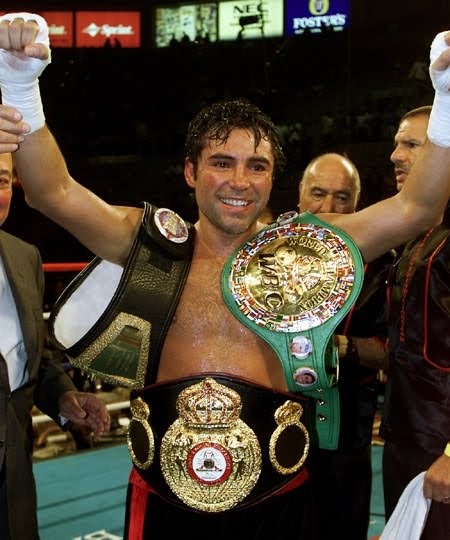
oscar-de-la-hoya-1

“There is always space for improvement, no matter how long you’ve been in the business.” – Oscar De La Hoya

Be water my friends,

Bianca

Hulk Smash!

“There is only one corner of the universe you can be certain of improving, and that’s your own self.” – Aldous Huxley

Some may be surprised I am quoting a pacifist but then, he has a point here.  In order to improve ourselves, we must first recognize that we are the purveyors of the act.  We must understand that it starts and ends with us and we must initiate the change but only after we recognize that we must or want to improve.  Whether it be physically, mentally, spiritually, at work, at home, whatever the case may be, we have to begin.

Okay, where am I going with this.  Recently, one of my good friends and a talented player became incredibly frustrated at practice.  He wasn’t hitting shots he thought he should hit, was getting shot when he obviously had the better position, was getting dinked out on key moves, etc.  He. Was. Mad. Furious, he cursed and bemoaned the game and himself.  Mad to the point where he didn’t want to hear what could be done better or what could be done to improve the chance of success.  No, he just wanted to believe he sucked and would never improve.  Filth flam flo blah!

4ebf2ac7dc09b04fbdb97569f18f0ee9
Who has felt this way before during practice?


After he calmed down, and certain things were explained (missed your shot? Don’t stay out in the open gun battling and don’t use the top of a dorito since it is the smallest portion of a bunker out there.  Got shot when moving into position?  Next time let your teammate know what you need him to do to improve success.  Did you check off your danger bunkers?) it struck me how refocused he was.  As the day went on, he began to become more methodical, not overly cautious, but smarter about his approach.  I made a mental note of it to address this topic.  And so here we are…

Why do we get angry about our performance on the paintball field?  The simple answer is we are all competitive and want to win.  Why else do you play, right?  But at practice?  Why get angry there?  Practice is where you are supposed to make the mistakes, where you are supposed to learn.  So listen very carefully… practice is exactly where you are supposed to get angry with yourself!

Now, I am not saying you should always get angry.  This is more of a “if you are the type who…” blog about understanding and dealing with people like this.  Or perhaps it is you who does this.  Either way, hear me out.  First we have to understand why we get angry in the first place.

IMG_20170224_193433
Is this your happy place?  It can be mine.  Sometimes it isn’t though…

There is always some sort of event that happens right before someone gets angry that serves as the catalyst.  In most cases, players have a tendency to say things like, “That dude is totally cheating” or “I shot him first but this paint sucks and didn’t break.” The idea is that a specific occurrence caused the immediate and harsh behavior.  The truth of the matter is, there were probably a lot of factors taking place prior to the incident that led to the angry outburst.  People rarely go 0-90 with a single offense.  And if they do, I would certainly avoid them…

Obviously, all of us have different triggers (oh, how I hate that word these days… but in this case, it is applicable).  What then, are the other elements that cause our anger? In the case we described above, the person was cheated or the paint didn’t perform.   But was that all?  There are actually two things happening when a person gets angry: the persons own personality and the environment they are in at the moment.

People’s personalities weigh heavily into this equation.  Competiveness, frustration, and other traits can certainly affect who, how, and why we get angry.  It makes sense that a competitive person is playing competitive paintball yes?  So too, it makes sense that they may get angry when not winning or performing.

IMG_20170708_124643
Some guys are happy, some are overheated…


Okay, so we have a competitive or easily frustrated individual playing a highly competitive team sport that involves consequences when failure is introduced.  Failure can equate to a ‘pain’ aspect of being shot with a paintball.  So now we have a competitive or easily frustrated player who failed at an aspect of the game and they are “rewarded” with a painful reminder of said failure.  No, we will not trail off into classical conditioning.  Maybe some other time we will… I digress.

What about the environment or what was happening prior to the event?  How was work that week?  How is their relationship with their girlfriend/wife/kids?  How hot is it outside?  Did they get enough sleep?  We’ve all been there before.  When we are tired or upset or anxious because of other events off of the paintball field, or we are physically uncomfortable due to heat or an injury… we are much more likely to respond with anger.  Not everyone has that reaction and to those that are able to center themselves and refocus immediately following the “failure” more power to them.  “My apologies Wyatt, you are an oak.”

65d743b0160be36d8e2ec1b2ba816407

As a leader, a captain, or even a good teammate, we should (operative word here is “should”) recognize these personality traits and the environment at practice.  Check in on that guy you know is that way.  Stay positive and recognize tendencies.  Anger can cloud one’s learning.  But if you can refocus the energy of a player, congratulations and well done.  Identifying issues prior to them coming to fruition is a sign of a great leader and friend for that matter.


Now, recognizing this behavior should not rest solely on the captain/teammate. No, if you recognize that you have these tendencies, you have won half the battle.  It is ultimately YOUR responsibility to address your issue.  Be a man and own up.  Take steps to be a better teammate.  Evaluate yourself prior to and during practice regularly.  You never know how your attitude will affect those on your team around you.

I am not advocating for a snowflake team where everyone is nice and pixies and fairy-dust and everyone is happy.  Utopian paintball teams are extremely rare and will eventually dissolve. Why? Because some conflict in some form is necessary for growth. The sooner the younger ones among you recognize this, the better for the rest of us.

Back to my friend who got angry, frustrated, and downright pissed.  He calmed down, recognized he was being his own worst enemy, and refocused on the task at hand… learning.  I’ve know this gentleman for a while now and he is one of my good friends.  He and I have a mutual understanding that we have come to.  When he gets this way, I recognize it, he recognizes it, and he doesn’t need me to “talk to him”.  No, a simple comment about “you see what you are doing?” and bam! He’s back on point.  The environment he finds himself in is a supportive one but not to the point of being coddled.  When you reach that point, you’ve lost.

19113837_1777070578976818_159380842576123346_n
I like to give more than receive

For those of you who want the scientific reasoning for this particular article need to look into a guy by the name of Dr. Deffenbacher and his writings on “cognitive appraisal”.  Cognitive appraisal is this:  a theory which states that a person’s emotion nal evaluative judgment (or appraisal) of a situation, event or object determines or contributes to his or her emotional response to it.

I think there is an important aspect to remember when evaluating others or ourselves though.  A person’s interpretation or appraisal of a situation that leads to their anger isn’t necessarily wrong.  That person very well may have cheated or that paint bounced.   In other words, his reaction may have certainly been justifiable.  But we need to recognize all the factors involved, solve for it and move on.  This is to ensure that everyone gets the most out of the day, not just that individual. Does any of this make sense?  I hope so.

Be water my friends,

Bianca

Gun Fu #5

Imagine winning the series Championship for the semi pro division in the NXL.  Now imagine being asked to be the latest and newest NXL Pro team.  You will now step out on the field the following season playing against the likes of Bobby Aviles, Archie Montemayor, and Ryan Moorehead.  Your opponents are now teams named Houston Heat, Edmonton Impact, and San Antonio X-Factor.  What would that be like?

This is the scenario PC Katana’s very own Collin Cherry found himself in.  The 24-year-old Memphis TN native took some time to speak with me for this edition of Gun Fu.  Collin and I have known each other for a long time now and I was really pleased he agreed to this interview.  He is most certainly one of the most down to earth guys you will meet in professional paintball.

13925071_10154519991637033_1574506571305894161_n

But where did Collin’s paintball career begin?  It wasn’t your standard birthday party like most.  He didn’t even have a gun the first time he played, much less a rental.  He couldn’t even shoot back!

“The first time I played paintball was probably in my next-door-neighbor’s yard when I was about 10 years old. He’d stand on his deck while we would run from one side of the yard to the other, tree to tree while someone would shoot paintballs at us from about 20 yards away. I wore a Motocross helmet my first time through the gauntlet” he laughed.

“I played a lot of sports growing up. I loved playing cooperative sports. Basketball, Baseball and Lacrosse were the ones I found myself playing the most. I played other sports while I was playing paintball in high school.  It was always funny explaining welts on my arms on a Monday basketball practice after a tournament. Other sports have played a big part in shaping the way I look at the game. You can compare certain situations in paintball with any other sport. You can appreciate what guys are doing in the NBA and NFL. They hit their big shot in the biggest of moments. With literally, millions of people watching sometimes. I just try emulating what they do as best I can on the paintball field.”

But what drew him away from those other sports to focus on paintball?  I am always interested in peoples answer to this question as it really gives you some insight into their psyche.  Collin’s was of little surprise.  It essentially boils down to legally shooting someone.

18342715_10154353367926571_4044954734882847607_n

“What drew me to paintball initially is what still draws me back every weekend now. Shooting someone with a paintball is just fun. You go from standing on a back deck shooting at your helpless neighbor, to dodging paint in a gun fight. The feeling never changes. It only gets more intense after each ball you see goes splat on someone. Those who have taken time off from paintball often call it, “the itch”. Because it does itch, you feel it in your bones when you haven’t tasted the paint in a while.”

No ladies and gentlemen, this does not make him a psychopath.  Quite the contrary, I would argue.  It keeps most of us from becoming one I would imagine.  But I digress…Keep in mind that Collin isn’t necessarily new to the professional division.  Some of you may remember him from when he was a member of the former professional team Chattanooga CEP.

“I try not to compare the two teams really. They’re two different squads. I’m grateful for my time with CEP. I’m fortunate to have two of my best friends, Logan and Zuppa join me from CEP.”

He is referencing Logan Landry and Mike Zuppa.  And he follows it up with an interesting point when I asked him what he felt was the biggest difference between the two squads…

“The CEP players on Katana are at different stages in their game now. We’ve seen how it can be and know what to expect now. All the players on Katana have been in tight games before. We’ve won some and lost some heartbreakers. But we train hard to recognize and execute when those situations arise again.”

467256_10150581679766571_1401273617_o

When you ask Collin about who he admires in our sport, you get a very straightforward answer:

“I admire the guys in paintball who are trying to play any tournament, and teach every clinic. No matter where it is in the world. I think Ryan Greenspan is one player who is truly a professional paintball player. Traveling the world to win paintball games. If you can do that and make money doing it, why wouldn’t you? You get to travel and play paintball. If either is crummy, at least you got to do the other.”

PC Katana has played the first three NXL events placing 14th out of 16 teams in the professional division the first two events and improving to 10th out of 16 recently at the third NXL last month in Atlantic City.  A marked improvement.  But he doesn’t mince words when it comes to the competition.  I asked him if he felt they were creating any rivalries:

“I feel like we have rivalries with the teams we play the most. Last year it was Distortion. This year we’ve played teams like Boom twice and had some good games. We practice Damage in Florida and have played them once. There’s never bad blood in our rivalries…for the most part. So, it’s really just a matter of time until we develop another good rival.  And these Pro guys don’t take kindly to new comers…” he says with a smile. “Everyone is trying to rip your head off every single point out there. I think that kind of pressure allows the toughest players to shine.”

15135867_10157652917530251_1864836615200694760_n

So what got Collin to this point and the team for that matter?  What does he bring to the equation that is PC Katana?

“I think my strengths are reading the field and putting myself in a position to break open a point. I like being able to sit back, see a breakout, then make a move from there. I like to be aggressive. I like to remain unseen. I like trying to catch someone by surprise. I’m looking for the best move in each situation. If I see a big move, I’m gonna take it. “

But there are two sides to every coin.  That’s what I really like about Collin.

“An area I’d like to improve on would be gun fighting and survivability. You’ve got to be alive to make plays.”

So how does he do it?  How does he stay sharp on the professional level?  What does he do to keep his game up and prepare for events?

“Drills.  Drills I like are running and gunning while shooting a fixed target from various ranges. 4 on 2’s, 1 on 1’s. And the classic snap shooting. I like to have an even mix of fundamentals and live action application. I like to get in a good rhythm shooting a target and then jump into a 4 on 2 drill to put the new knowledge to the test.”

3npRo670h4L7lqYB8erxNcOXoeqDaZJ8Zpr2FqIQOoo

Does he have any advice for the up and comers in the sport?

“Advice I’d give anyone in paintball is to always have fun. And always play to win. Paintball will test your limits physically and mentally. Train hard, work hard. Strive for excellence. Love the feeling of winning, but don’t be afraid to lose. You see the move; take it. “

What was the best advice he ever got?

“I can’t think of any specific advice anyone has given me, but I love to watch paintball. Old Derder or Mwag kind of stuff. I tried to emulate their moves. Like Fedorv with his diving, John Richardson periscoping over a temple. They were guys I’d watch and copy. And now I’m playing them. It’s really a dream come true for me.”

See kids?  Eat your Wheaties and pay your dues.  Work hard, play hard.  The opportunity is there.  Thanks again to Colling and best of luck to him and the PC Katana Camp!

Lightning In a Bottle?

“The way a team plays as a whole determines its success. You may have the greatest bunch of individual stars in the world, but if they don’t play together, the club won’t be worth a dime.”
-Babe Ruth


What is it that every paintball team wants but doesn’t always have?  I’ll give you a hint… a drill or coach can’t make it happen.  If you guessed wins, nope, that’s not it either although I can certainly see why you would answer that way.  This particular thing certainly can lead to that and will most certainly have an effect on the consistency of winning but no, it is not that.

Almost every paintball team these days is looking for the secret that makes them a better “team”.  What does that even mean?  Becoming a successful paintball team requires its members to step up commitment levels that weren’t necessary not too long ago.  Teams with the right personnel and direction could practice twice a month and succeed.  That is not the case these days.  To reach the level of success that other winning programs have shown requires team members to invest significant time on and off the field honing our craft. In other words, if you aren’t out on a paintball field almost every weekend with a day during the week once in a while, you will fall behind.  Now, you may say, my team only practices twice a month and we have won.  Sure, but that team that you walked over last event is putting in the time and they certainly won’t be a walk in the park the next time you meet.  The point is, teams are catching on and realizing what it takes meaning they are catching up to you.

wcppl-147
Shane Pestana sharing knowledge

Older players paved the way.  They were piecing it together, creating and innovating training regimens as they went.  They developed processes, concepts, and drills that improved the learning curve for paintball players everywhere.  Players today can pretty much throw a rock and find an older player who is familiar with these processes and who can take a D5 or D4 team and show them what is necessary to progress and improve.  DVD’s and YouTube videos are everywhere on how to snap, how to lane, how to drill, how to practice, on and on.  There are even stupid bloggers out there who think they know what they are talking about (I know a guy).  Yes, it becomes more difficult in the higher divisions but we will talk about that some other day (I don’t want to debate the “which jump in divisions is hardest” question – It’s pro duh.) I believe that some of the newer generations of players were hurt by the introduction of X-ball.  The coaching aspect and crowd interaction placed less emphasis on teamwork and paintball IQ and more on listening to the guy who is telling you what you needed to know, what you needed to do and when to do it.  It took a lot of the skill out of the game.  So, there are a few players out there who didn’t learn the flow of the game and became automatons rather than educated players.

scteam

Barring that thought, how did the successful teams find the lightning in the bottle that improves that sense of “team” and team work?  Some of it was luck.  A lot of it can be summed up in something I have said for many, many years.  A good paintball team is not a bunch of friends who happen to play paintball. It is a paintball team full of good players who happen to be friends.  In other words, there has to be that dynamic we have talked about before.  But let’s get serious.  What would that look like?

NXL2017TexasSat_1949

Create ground rules for practice. There needs to be a rigorous schedule of drilling/playing, watching film, then more drilling/playing based off the data we take from the film.  Then repeat it.  The goal here is to not only learn from your mistakes but do so EVERYTIME you are out on the field.  Players who refuse to grow or improve are either not putting in the work, giving lip service while hiding their true intentions, or would rather just be told what to do instead of learning what to do.  No automatons need apply to successful teams.  This brings us to the next point…

Everyone participates.  Not everyone is going to learn at the same pace.  But there is no learning if you aren’t there with your team.  Don’t take suggestions for improvement or critiques as personal or criticism.  Take it for what it is… data.  We need to know where we need work.  If everyone on the team recognizes their strengths and weaknesses openly and fairly… that is one hell of a team right there and half the battle is won.  Listen to understand, not listen to respond or make excuses.  Have a dialogue so that both of you understand where each other is coming from and how each is thinking.  Make sure everyone on the team has contributed both physically and verbally.  Be heard, voice concerns, and show up.  And once again, this leads us to our next point…

19105733_1777070728976803_7479767322002870623_n
There is no try.  Only do.

Don’t assume.  Not everyone knows every aspect of the game.  If you believe someone may not be aware of a particular technique or thought process, share it.  And those that are receiving the information should not be offended if they do know.  Obviously you did something that made them think you didn’t and they are being a good teammate to point it out.  Be open.  Honesty is an amazing thing and crucial to the success of a team.

Share, analyze, and decide. I read this somewhere, I can’t remember where, but it stuck with me (a stocks/money magazine maybe?) I don’t see why it can’t apply to paintball.  Too many teams aren’t “systematic” enough.  I’m not just talking about teams.  I’m talking about doing everything as a team.  Drilling, scrimmaging, eating as a team, watching film as a team, staying in the same hotel as a team, etc.  Everyone needs to share space and everyone needs to share knowledge.  In the case of share, analyze, decide, the team needs to share what they know (or think they know), analyze possible alternatives, and then make a decision.  If that doesn’t work… simple… repeat the process again with the new knowledge you have as to why it didn’t work that time.

NXL2017TexasSat_2295
Sharing

Finally, and this is one that is very near and dear to me right now, recognize that failure means you are succeeding at learning.  Most teams become nuclear at the thought of losing – but losing is essential to understanding how to win.  It should lead to new innovation. As a leader, I try to model certain behaviors I have seen in friends and family who are successful.  I also do this in hopes that my teammates will be inspired to do the same.  The right attitude isn’t about winning or losing or your performance at an event went (sure, that is included and the performance should be noted) but rather should center on understanding what we learned each time (even when we win).

19059212_1777071702310039_1528281739903615634_n

“It’s about how hard you can get hit and keep moving forward.”  That line from Rocky keeps dancing in my head.  A friend told me recently that it is how you respond to defeat that defines you.  I had to be reminded of that.  We all do.  So what is the lightning in the bottle that makes a great team?

Go make it.

Be water my friends.
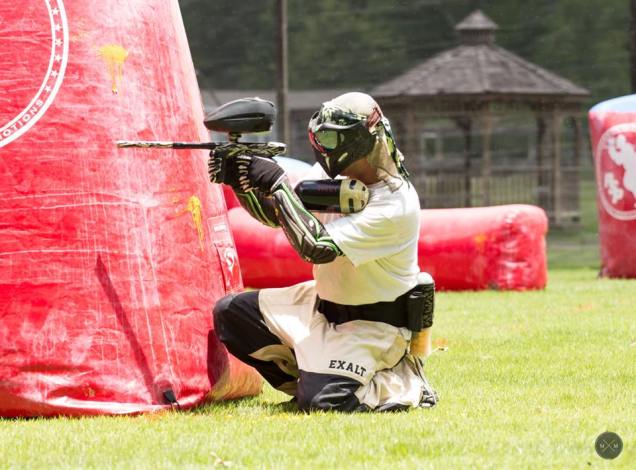
Excuse me, do you have the time?

“You don’t have to swing hard to hit a home run. If you got the timing, it’ll go.” – Yogi Berra

“Hitting is timing. Pitching is upsetting timing.” – Warren Spahn


Here at Zen, I am always looking for analogies to help me explain aspects of paintball and this months’ topic will certainly be no exception. This month we will discuss the importance of timing.

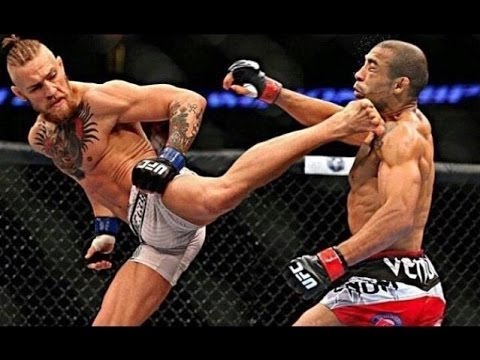
How many of you watch MMA (Mixed Martial Arts)?  If you do, did you happen to see UFC 189 when current UFC Featherweight Champion Conor McGregor fought the #1 contender, Jose Aldo?  Spoiler alert, McGregor knocked Aldo out in the first 13 seconds of the first round.  How?  McGregor had a great quote afterwards where he said, “Precision beats power and timing beats speed every time”.

In the world of boxing, timing is everything. Timing is everything when it comes to not only an effective offense but a solid defense (See two opening quotes from Berra and Spahn to see how timing is used on both sides of the baseball).  The best boxers in the world, throughout history, have always had great timing, whether it was there counter punching, head movement, foot work, lead jab… Boxers like Muhammad Ali, Roy Jones Jr, and Oh! Sugar Ray and Mayweather, they all had great timing.  And, of course, I would be totally remiss not to mention Bruce Lee.  How many of you have heard me talk about his “broken Rhythm” technique?  That’s right…timing.

djZaVUZIckcxc3cx_o_conor-mcgregor-vs-jose-aldo-ufc-full-fight-ea-sports-
A well timed spin kick landed by McGregor on Aldo.

But what is it?  What is “timing”?  I have given you examples of it from another sport(s), sure, but how does it translate to Paintball?  Excellent question.

First, let’s define it. The dictionary will tell you it is the judgement or control of when something should be done.  Remember those words, “judgement” and “control”.  The best definition I can give in reference to paintball and how it is applied to our sport is this; Timing is a mixture of instinct and reflex.  Now might be a good time to add to McGregor’s comment in the context of paintball.  When you have timing, you don’t have to be fast.  I am not a fast man (there was a time… but it has passed) but I have proven to be successful in scenarios where my timing gave me the upper hand.

Timing can be utilized in paintball by identifying the best/appropriate time to move, the best appropriate time to snap, the best/appropriate time to switch position in our bunker… you get the picture.  We need to recognize elements and variables within the game and react swiftly and accordingly.  I often use the analogy that our brains are computers, our eyes and ears give us data, we then take the data to develop a solution, and finally act.

i-FMPcVtP-M
A well timed load and move

Some people’s processors are much faster than others (better timing).  So how do we speed up our processor (improve out timing)?  Another excellent question.

The key to training and improving our timing is twofold.  The first is individually and the second is team oriented.  We will focus on the individual aspect.  That means we need to focus on hand, eye, and feet coordination to start.  We need to TRAIN THE BRAIN.

Training our brain to process quicker is different for everyone.  Some will take a little longer than others and that’s okay.  It doesn’t mean you can’t do it or are broken.  It just means you need to work a little harder.  So put in the work!

i-RG4zRRW-M
A well timed dive into the snake

Footwork

To increase timing, it helps to improve coordination.  There is NO BETTER tool/way to improve footwork coordination than the speed ladder.  You can pick up a speed ladder super cheap and the whole team can utilize it during a drill day or heck, make your own, it’s easy to do.  If you have never worked with a speed ladder, you can search the internet for a plethora of drills.  Here are my favorites performed in this order:

  1. Side step – with the ladder to you left (or right depending on which lead foot you choose), step in to ladder, followed by your other foot, repeat. Ways, left and right lead foot
  2. Hop/Run -5 hops with feet together followed by 5 quick steps down ladder, repeat
  3. In/Out – from the side of the ladder, step in with lead foot, followed by rear foot, back out, and repeat all the way down the ladder
  4. Doubles – two feet into one box, both out. In, in, out, out. Whole ladder. Repeat with different lead foot.
  5. Shuffle – one and two in the box, three is out. Repeat

Start slow.  Develop the muscle memory and slowly build your speed over time.

Of course, if you have read my other blogs or watched some of my drill videos, we can also apply foot work to our drills.  See if you can’t think of how to do this as well.

i-2wpQmhz-M
A well timed destruction at the wall

Gun work

Drills for gun work are your standard drills; however, we can add some twists.  Not all drills have to involve shooting paint.  For instance, how many of you practice transitioning your gun from hand to hand?  Just stand there and transition over and over again.  Remember to move your marker around you not you around the marker.  Work on trying to keep your barrel apexed (imagine a view over your head with your barrel being the tip of a triangle and your right and left shoulders the base points) and linear.  You can actually train transitioning your gun from one hand to the next over and over again without ever shooting a ball, right?  So why aren’t you doing it?

Next, I like to snap shoot left hand then quickly shift right hand and snap the same target.  Do this from a mayan or a can or even a dorito bunker. One ball snap left, one ball snap right, over and over again.  Go slow.  Do this for an entire hopper.  Focus on your fundamentals of course but recognize how the sight picture will change each time.  Eventually you will train your brain to pull the trigger the moment your eyes realize A. you see the target and B. your barrel has cleared the edge of the bunker.

i-Gggmwn7-L
The player on the left is right eye dominant.  The player on the right has achieved Zen with left handed shooting even though he is right eye dominant.

This would be a good time to mention eye dominance.  Most right handed people are also right eye dominant.  You will notice when they go to shoot left handed, they lean their head further over the marker to get their right eye in on the sight picture.  We need to break that and train the brain to see sight pictures equally out of our weak eye.  There is a great training tool for that.  We will address that in our next video.

Another two drills I like to do are the corner to corner drill and the post drill (should probably have a video of the post drill… I will get on that).  The corner drill is simply one where you stay in the pocket (exposed to shoot) and maintain dominance on your opponent even when paint is coming.  This will teach you how to recognize trajectory of paint and help you know when to get out of the way and when to stay in the pocket. The post drill helps the timing of both participants but from different perspectives.  One guy posts in a bunker and is not allowed to move.  His only job is to recognize when he feels his opponent is about to snap out and hit him.  The other participant’s job is to snap out and accurately place paint on the “post man” without getting shot.

Here are video examples of the corner to corner drill.  Notice how I try to stay in the pocket gun up and rolling unless my opponent puts a ball right at me. I win both of these but only because I was able to stay in the pocket longer and time my shots.


Here is somewhat of a timing example as well as a read offense.  When I shoot their aggressive player off the break I realize no gun can stop me AT THAT MOMENT so my slow butt uses the timing of my opponent’s settling into their bunkers to take the 50.

Back to the point

Ultimately, the more you experience, the more you practice, the more time you spend doing these things, the more you will begin to recognize specifics and the quicker you will get acting upon the data.  In other words, you will improve.  The more data we provide the brain, the quicker it processes.  Does that make sense?  The brain is a muscle.  Work it.

Anyway, we need to understand timing.  If I time my move where you drop your lane for a second, more times than not, I will make it safely.  If I time my snap right, more times than not, I will get a ball down range before you put paint on me.  So I don’t have to be fast.  That isn’t to say speed doesn’t help… let’s clarify that now.  However, timing can make or break a game, whether it is used to make an awesome move or used to stop one.

Timing within the team dynamic is a much more complicated process but one that can be improved and trained as well.  We will address that soon.

Until then… be water my friends.

Only you…can prevent forest fires

Poster of Smokey the Bear w. Smokey hold
Get your “Smokey” on you jackwaggons!


How many of you have heard the phrase, “Life is 10% what happens to you and 90% how you react to it”?

This month’s blog has a correlation with that saying. Originally, this month’s topic was going to address “timing” on the field and how it can impact the outcome of pretty much any circumstance you and your team find yourselves in.  However, due to some recent occurrences, I have decided to revisit a topic we’ve addressed several times in one capacity or the next (and will probably do so several more times over the course of this blog’s existence).  In full disclosure, you could almost say this is being written TO someone or some team specifically.  I promise… no names.

Imagine, if you will, you have just been handed a disappointing finish at a recent national event that you felt relatively prepared for. Murphy and his Law showed up and made absolutely sure you and your team knew he was there, rampaging through your carefully laid out plans like Godzilla on steroids in downtown Tokyo.  And yes, you were the guys on the tram… Where did it go wrong, why did it go wrong, and how do we overcome the disappointing setback and get back on track (anyone pick up on that mild correlation?  Tram/track?… nevermind)

Godzilla1
Meet Murphy in metaphorical form


Let’s skip the first two questions and focus on that last one… overcoming the set back and getting back on track. How do you and your team refocus and remotivate yourself after that whooping that essentially equated to a 20- year old Mike Tyson fighting Justin Bieber.

In the past, we have talked about defining our values, picking the right personnel, practice schedules, how to practice, how to set goals, how to approach the game, how to learn, on and on and on. We have discussed those guidelines at length.  These are proven approaches and not just from my experience but many at the professional level.  But for some reason, this event didn’t pay off and the team fell way short of expectations and goals.  Was it the process?  The process has worked in the past, so why not this time?  There are countless variables that can affect outcome.  The question becomes do we reexamine the process in an effort to identify all the variables that went wrong and why?  Do we chalk it up to sometimes stuff happens?  Do we burn the whole process down and start over again trying something new?

No.

First, recognize something(s) went wrong.  Now we have to reset.  Remember, it is how we respond to what took place that will ultimately decide whether or not we succeed in overcoming the obstacle.  And it will ultimately define you.

How do we get motivated again? We have to have buy in from the entire team.  If we don’t have buy in from the ENTIRE team, if there is an “oh well” attitude in just one team member, then there is a good chance we have lost before we have begun. We can turn around and blame that guy… sure.  We could cut him from the team but who else did he infect?  Or, we can address him and the team as a whole.  We can engage our team and tune up the “motivational engines” so to speak.

IMG_0883-L
Motivated?  You better be…


Vince Lombardi said, “Individual commitment to a group effort — that is what makes a team work.”

So what can we do to inspire? As a coach, a captain, a leader, a teammate, how do you bring your crew to that level of commitment and motivation after a loss (or several losses… that may be a different blog)? You begin by showing belief.  Belief in the system, in the process, in the team and in the individuals.  Make it apparent that you are going to hold them to a higher standard, because you have confidence they can achieve it.  When the going gets tough… the tough get going, right?

Step 1 should be to make sure everyone is on the same page with the team’s goals. Refresh everyone’s memory what those goals are.  If necessary, speak one on one with each team member and make sure they understand where they stand and what their role is in meeting the team goals.  Remind them of their opportunities (what they need to be working on) but also give them positive reinforcement by discussing what they bring to the table and how that will help move the team forward.  Everyone can bring something to the table.  If they can’t, it’s time for a different sort of talk… you trackin’?

Step 2 is recognizing our short comings as individuals and as a team; then providing the opportunity to improve them. This is where we understand WHAT to practice and HOW.  Honesty is important here…we need to acknowledge our shortcomings and work on them.  We can’t say you need to work on this and then not provide the opportunity for them to work on it.  Work on it as a team, emphasize those who need it and build upon it.  If you don’t, you will sow seeds of discontent and things will come off the tracks.  Of course, it is a two-way street.  If you provide the opportunities and they still don’t improve, well then, it’s time for that “other” convo again.  Copy?

IMG_1021-L
An opportunity presented itself to hang the flag…


Step 3 is quantifying the goals. We have established our team/individual goals and we have established what we need to work on in order to meet those goals.  Now we need to determine or rather gauge what equates to achievement.  Plans never survive contact with the enemy, right?  So we need to establish what success will look like.  Sounds counter intuitive.  “But Bianca, if we set a goal, wouldn’t meeting that goal equal success?”  Yes and no.  We have to recognize improvement in steps.  Are we seeing improvement towards the goal?  Are we seeing improvement in a favorable time frame?  Are some seeing success and others not?  Ask yourself these questions and proceed from there.  You need to have reasonable objectives for everyone and be able to recognize when they are being met and when they aren’t.

Step 4 is for coaches, leaders, captains, etc. Lead from the front.  Be first.  Set the example.  Being the example is leadership.

Step 5 is recognizing the successes of the team and the individuals. When something gets done well, even if its small, make sure the team and the individual know.  Recognition is a great motivator (next to money but who are we fooling, we are ballers.  Money doesn’t translate here).

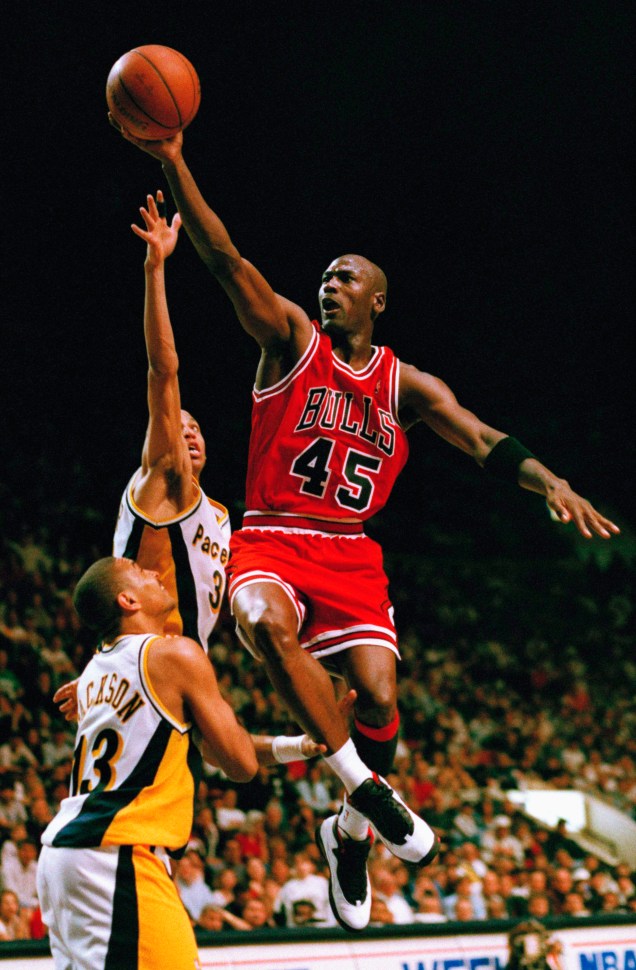
As Michael Jordan once said, there’s no “I” in “Team,” but there is in “Win.”

Bulls Jordan 1995
Winning


Remember, the real test of team motivation efforts is results. What have you done to motivate your team? An excellent question to myself. Or perhaps it is a question that maybe I did something to demotivate them… we better all check on that.

Be water my friends…

What About the Twinkie?

Twinkie
Telling people about the twinkie.  Don’t own this photo but love the movie

The creator of “gonzo” journalism, Hunter Thompson, once said, “Anything worth doing is worth doing right.” I agree with the sentiment.  Then there are those who say that, every once in a while, it’s worth going back to the basics. Don’t know who originally said that, don’t care.  The latter, when applied to paintball, is simply false.  It shouldn’t be every once in a while.  It should be all the time.  Teams would almost certainly see greater levels of success with just a little bit more effort in the basics of paintball and the practice arena… especially if they know how to practice appropriately.

I will ask a team, “What and how do you practice?” or “What does a normal practice for your team consist of?”  It’s a simple question.  The answers I get, as you can imagine, are diverse.  Some teams practice to their strengths in order to ensure they remain strengths while others practice their weaknesses in order to shore them up.  Whereas they are practicing and looking to improve, I find many are simply going through the motions.  “A pro said to do this so we need to do this or a good team we talked to does this so we should do it”.  Now, those statements may seem self-deprecating, especially to a guy who writes a blog to help people in paintball.  I’m not saying you shouldn’t do those things, whatever they are.  What I AM saying is you need to understand WHY you are doing those things and HOW to do them correctly.

Day_Imported on Monday, October 21, 2013_8984
Practice not to get shot… seriously

What I see often at these practices or clinics is a lack of accountability and execution.  This can be due to a misunderstanding of the how and why or simply a lack of quality leadership. I learned a while ago that there are two big obstacles to running a successful program (winning). They are a lack of an appropriate practice routine and a lack of clarity at the leadership level. It’s not surprising that the teams that lacked a clear direction at the leadership level don’t see success frequently.   Look at it this way, if you think of your team as an airplane leading you to the promised land, then you can’t have 10 different pilots trying to fly the aircraft and shouting out different directions, at least not if you want to end up at your intended destination.  Logical, right?  Communication between teammates and leadership plays a heavy role as well.  You have to be open and honest with each other.  But I am getting off topic.

Let’s take one of the most basic tenants of paintball and break it down: field walking.

Some of you reading this may recall a time when you didn’t see the field layout until you arrived at the event.  This made walking the field, identifying key bunkers, how it would play out, and understanding how to play it an indispensable skill set.  Especially if you had to walk 10 fields… okay, just dated myself.  All good.  Moving on…

IMGP2830
Lanes aren’t just for on the break.  Holding gaps is just as important

If you don’t get practice doing a field walk, you can watch a plethora of field walking videos on youtube.  Most of these vids will take a straightforward approach to the field and that is a good thing.  It will give you an idea of what basic necessities you will need to look for.  Some not so much but take in as much as you can.  You will notice patterns and consistencies which will make sense.  Some may not… ask why.

That being said, some of you have heard me say that you are thinking 2-dimensionally and that we need to be thinking 3-dimensionally.  Ask yourself, when you see something i.e. a bunker on a field, your brain “sees” that it is a 3 dimensional object.  You know that the other side of the bunker and the things behind it exist, you just can’t see them through the bunker.  That doesn’t mean they aren’t there, right?  However, we THINK about it 2 dimensionally.  We don’t think past what we see.  We see we are in the bunker but we struggle to see what we know is on the other side in our minds eye.  Make sense?  There is a reason I am bringing this up.

Without constantly studying this yourself, it is hard to understand and create the process in our minds of how to walk a field appropriately much less process data in our mind during a live game.  Here is the basic premise in a nutshell.  If you are going to spend time learning the execution aspect of a play or game plan on a layout, then you should spend just as much time understanding the development process.

IMGP2845
Walking a field is vital.  Make sure you understand it in context of the whole field

What I am trying to highlight here is that you need a common, clearly defined process in which you can use to develop game plans consistently.  In order to operate at a higher level in our sport, we much adapt our thought processes.   It goes without saying that this is accomplished through hard work and dedication to the learning path.

Which brings me back to my original point, if you’re going to take the time to develop a plan… do it right. The way to do it right is to understand why we are doing what we are doing and create a process that is simple yet effective.  Here’s how I like to do it (something I learned from Coach Paul Richards, easily one of the greatest minds in paintball and the man who taught me how to simplify on the paintball field (miss you Top).

Identify specific bunker types.  Is it an “attack” bunker?  Is it a “support” bunker?  Is it a “containment” bunker?  Is it a defensive or “Alamo” bunker?

IMGP3117
Know your shots

In other words, understand what a player can accomplish from that specific bunker and know this for every one of the bunkers on the field.  Once you have identified what a player can accomplish from each bunker, now you have a way to identify fluid and effective game planning.  “If I have a guy here, her can accomplish this.  However, I can double the chances of that player succeeding in what he is trying to accomplish by making sure that we get a guy into THIS bunker as well.”  So on and so forth.  Making sense?

But don’t get limited to looking at it 2 dimensionally.  Don’t just look at it from the D side or from the snake side.  Look at it 3 dimensionally and in full context.

Get it? Got it? Good.

Now go forth and walketh thy field..eths….

Be water my friends,

Bianca

Go With What You Know (Gun Fu #4)

“Mistakes are always forgivable if one has the courage and character to admit them” – Bruce Lee

How many times have you thought to yourself, “Man, I would be good at that?” or perhaps “I bet if I were to apply what I learned over here to that thing over there, I could make it better.”  Have you ever taken something you heard or learned and applied it to paintball?  I do this all the time as there are much smarter men in this world (and no longer in this world) than me, especially regarding leadership qualities, processes, and teamwork.  In addition, there have been several instances where I applied elements from my career or job or education.  And, surprising (or not depending on how you look at it) they bore fruit in the paintball team arena.  Using what you know and have seen work, well, that just makes good sense.

In this episode of Gun Fu, we are featuring a gentleman I know who has successfully done just that.  He is the Lead Technical Project Manager for a university in the northeast and his strategies and tactics have proven to work.  He also owns Warzone Paintball & Airsoft up in Rhode Island.  Ladies and gentlemen, since Gun Fu is about getting sage advice from those in the paintball world, I give you Jeff Stein.

575353_4107398281388_1775800447_n
Jeff Stein’s signature move

Jeff started playing paintball as a freshman in high school.  He had come across a paintball magazine and wanted to give it a go. So he convinced his neighbor to take him out to the local field.  Of course, it didn’t hurt that there was the added pleasure his younger brother, a talented athlete, couldn’t go.  Later, when that same younger brother was old enough to go with Jeff, Jeff made it an experience his younger brother would never forget.  He snuck up behind him and put one on the back of his brother’s melon.  The brother hasn’t played since.

When you ask Jeff about his sports background, you will find he played sports here and there recreationally and in youth leagues but what is truly fascinating (and makes sense) is he was more of a Chess Club guy.

Now, those of you not in the know, Jeff started the former professional team New England Hurricanes.  He started the team in 1998 and played with them until 2002.  He transitioned to team manager in 2003 and remained in this position until 2009 when the pro team folded.  He eventually retired the team name in 2011 after two seasons in D1.

“Dave Adams (Coach DA) handed me the reigns of a local team – Team Green – when he went off to serve our country in 1995. In 1999, the NPPL was coming to Boston (Slam Paintball on Cape Cod). I, and some of the guys from Team Green, wanted a team for the Boston NPPL so we went out and recruited people. I mean, a super grass roots effort (if Jeff Stein from 1998 messaged me today, I’d probably tell him not to bother, I didn’t know shit about shit). But we got lucky, we grabbed some good players and we practiced all the time. We reffed a tournament series to help raise money and we made it happen. Took 6th place.”

Afterwards, the team ended up sticking together and went on to compete at the World Cup.  Now, Jeff mentioned to me a story about being summoned to South Boston to meet with an alleged mob boss.  I want to hear this story and will to its full extent when I speak to him next.  Needless to say, the team moved on and prepared for the next season.

“For the most part, I was figuring things out as I went along. Roster changes, good events, bad events and learning through doing. Mistake-driven learning. Lotta mistakes.”

Read that last part again Zen crew. “…learning through doing. Mistake driven Learning”.  Love it.

13133374_10208687943174075_1715113088053783026_n
Photo courtesy of Sonsini Media – Jeff surrounded

“At some point – 2002, I think – I got elected to the NPPL Steering Committee and that gave me access to team owners in higher divisions. I started peppering anyone who would talk to me with questions. Rosie, Mooner, Lane Wright, Glenn Forster, Chuck Hendsch, Paul Alders, Frank Watson, Phil Dominguez and, the big one, Rocky Knuth. I’d spam the hell out of these guys with questions and anyone foolish enough to answer would get spammed even more. Rocky, he was nuts, he’d get on the phone with me and talk through issues. After practices, I’d call him and we’d go over what happened and what I should do.  Part of the reason I do the JeSSoP page* is give back because without all these people taking the time to help me, NEH probably would not have been what it became.”

*The JeSSoP page (Jeff Stein’s School of Paintball) is a private FB page where coaches, players, etc. come to exchange ideas and concepts

Before Jeff and the Hurricanes decided to embark on the Pro Circuit, they did a little scouting.  He and two of the players flew out to the NPPL Championships in 2003 to see what skill level they felt they would equate to in 7man.

“We decided we’d be pro (we were young and full of ourselves), hooked up with Redz and made the jump. I’m generally somewhat risk adverse, so I don’t know what I was thinking, but it worked. We avoided relegation in 2004 and from there we learned and started to grow.  We stayed pro until the end of 2009, always playing NPPL, sometimes playing NXL either as NYX or as NEH. We took a handful of top 4’s in NPPL, ended the 2008 season ranked 4th. Then the NPPL folded, we had a miserable year in the NXL – we sorta sucked – and I shut down the pro team.”

But the story doesn’t stop there.

“I picked up a bunch of D2 players with a few returning Hurricanes or D1 kids from NEX and created a new roster to play D1. We played 6 events between 2010 and 2011, winning one and taking top 4 two other times. Then I shut down the team and took a year and a half off. It didn’t end well. That’s probably my fault. I don’t play well with others.”

It is worth mentioning who was on that roster:  Billy Bernacchia (X-Factor), Matt Darula (187 cRew/Tampa Bay Damage), Keith DeVit (formerly Heat, currently in contention to join the Ironmen), Thomas Mantoni (187 cRew), Benny Carroll (New York Outlaws, also in contention to be an Ironman). From the looks of things, that team certainly had the talent needed to compete.

“We just couldn’t put it all together.”

So what did Jeff learn?  What did he do after this?

12801525_10209659479109492_7766355364081825547_n
Photo Courtesy of Mike Oates – A Stein Monster in it’s natural state

“… I use what I learned in running the team every day at work. Managing people, managing situations, remaining in command even when you are not in control, setting expectations, communicating.”

Coaching a paintball team and managing a paintball are not necessarily synonymous.

“I’m a manager, not a coach.”

What’s the difference?  Jeff lays it out for us:

“Coaches need to play the following roles:

  • Game Manager: Manages the clock (knows when to concede a point, when to call a timeout)
  • Head Coach: Calls plays & lines in match. Deciphers what the other team is doing and counters it.
  • Scout: watches other teams to learn what they do, or try to do, what their tendencies are
  • Trainer: works on individual skills, comes up with drills, conducts drills.
  • Administrator: sets goals and expectations, enforces accountability and follow through. Sets agendas and tracks performance

As far as traits… general organization, communication, the ability to understand people and get through to them. Anything you’d look for in a leader.”

When it comes to questions regarding success in paintball, Jeff is point blank and lets it go with both barrels.  When I asked him what he thought is the one thing a team or player needs to excel in our sport, he didn’t mince words.

“Money. I mean, I agree with drilling. I’m a big fan of drills, both individual and team. There are a ton of factors that go into it. Discipline, commitment, drive…. But paint is the lifeblood of our sport and paint costs money. If I have $1000 to spend on practice paint and you have $500, then I can shoot twice as much paint. If we assume equal organizational skill (you and I can both set up practices that are value-add and move the team forward) but I have twice the paint, I’ll get better faster.”

I appreciate the way Jeff cuts to the quick when it comes to team dynamic and improvement.

“All the other stuff are table stakes. If you aren’t committed, you don’t belong on a team. If you don’t have heart, you don’t belong in sports. If a player doesn’t have the things my team needs, I can find a player who does. So the PLAYERS need those things. The TEAM needs money.”

But again, the story doesn’t stop there.  Jeff has been managing the now Division 1/Semi Pro team, the Bay State Bandits.  They were the 2016 NXL Division 2 series title winners.  Again, that full bore honesty is on display when you ask him about how they plan on tackling the semipro division and what his feelings were regarding the series win last year.

15078827_10157631406795251_3789275141448961061_n
2016 NXL Division 2 series Champs

“It would be a lot better winning the division with two 1st places and three 5ths. Not getting that event win sucks.”

Now pay attention to this part Zen readers –

“Contributing factors? Well, I guess, to start with, we have the “four foundations” of a team – management, ownership, coaching and players. We had great practices with the New York Outlaws at Matt’s Outback in CT and with REVO and A-Team (and others) out at Paintball Adventure Park in MD.  We have a great deal with GI Sportz that provides us with a tech in the pits during matches. Half the time Alfred was just hanging out (I even remember one time he was filling pods because there wasn’t much else for him to do), but just having him there provided peace of mind for the guys. Having the All In tents, too – just little things to provide a sense of normalcy and familiarity when you are traveling.”

Summation?  My interpretation of that is the following: They are organized, have descriptive understood goals, everyone pulls their weight, the have a support structure, and they are all pulling in the same direction.  They are all on the same page.  Something 90% of most paintball teams are not.

But it was his answer to my next question that really made me understand his approach as I share this same mentality and have been preaching it for a long time.

“You build success over time. You lose in the moment.  What I mean by that is, winners overcome. Every team, every season, something is going to go wrong and you either take that and learn from it, overcome it and become better for it, or you let it overwhelm you and beat you and maybe it starts you down a death spiral.”

Bam!  See Primates and Zen followers, it ain’t just me who thinks this.

“So a winning season requires a team that is comfortable with failure-driven learning, that can deal with setbacks without losing their composure. It requires faith in the organization and the people involved. Winning is the easy part, staying the course when you don’t is hard. Look at the winners of the NXL Semi-Pro division, PCK. They took a 7th, a 4th, two 2nds and a 1st. That’s actually a tough season. If they got discouraged early, they never would have been champions. Bay State took a 4th, 5th, 3rd, 2nd and a 9th. Looking back, it’s great to have won the division but living through it, that season sucked.”

Now, those who read my blogs know how I feel about drilling.  Jeff agrees and feels that there is an “overemphasis” on point driven practices.

“I think, in general, teams should be doing more drilling. At least local to me, there is, in my opinion, an over emphasis on playing matches versus running drills.”

Addicted to Jeff’s whiskey and cigar approach, I couldn’t resist and asked him what was the best advice he had ever been given regarding our sport.

“The best way to make a small fortune in paintball is to start out with a large one.”

This stuff never gets old.

“Yeah, it’s a joke, but it’s also not a joke. If you are in this for the money, you are in the wrong sport. If you think you can break even playing tournaments, you can’t. Either do it because you love the doing or don’t do it.  I’m going to go with that. The fact is that Ronnie Butler had a profound impact on my approach to life and Rocky Knuth spent a lot of time teaching me about how to run a team, but those things didn’t break down well into soundbites.”

As we were wrapping up the interview, I wanted to understand how he was preparing the Bay State boys for the jump to semi pro division.  Which, in itself prompted another question about where we thought the biggest jump between divisions is most difficult.  This is an interesting discussion and one I have had with many.  Jeff, in the Stein way, had an opinion on it as well.

14457550_901786013260626_6301012888451324698_n
Photo Courtesy of the NXL – Bay State on the break

“Semi-Pro to Pro is a big jump. The skill of a D1 player versus the skill of some of those top players is huge. Hell, the Bandits hire people to come give us clinics that we could conceivably be competing against next season. Then you add in the infrastructure of those top pro teams – the professional level coaching, the experience of players, the money. You aren’t just stepping up against better players, you are taking on all the inertia and establishment of the pros. BUT, I would actually say jump from D3 orD4 5-man to X-Ball. As with every transition up, you are now facing better players but with this one, you just went from an individual game-based format to a match-based format. You are introducing the idea of coaching and pit crew. You are introducing the pit. You are introducing the need to turn around quickly. That’s a lot to ingest, especially when you consider that majority of groups making that jump are younger.”

So what about the Bandits and how they will approach the new season and division?

“The same thing we’ve been doing, just hopefully doing it better. We may make some roster changes – since 187 broke up we have some local options that could help us. We’ll adjust our practice schedule. Part of my role is to be constantly evaluating things. Are we getting good practices? If not, what can we change? Are events running smoothly? If not, why not? We are lucky in that we have the independence to make changes on the fly if we feel we need to.”

Excellent.  And there you have it… a look inside the mind of a team manager. Does any of this sound familiar?  Or maybe some of this is completely new to you?  Either way, take a look at your own house and see if these comments and ideas could help make yours better.

bruce-lee

Be water my friends.
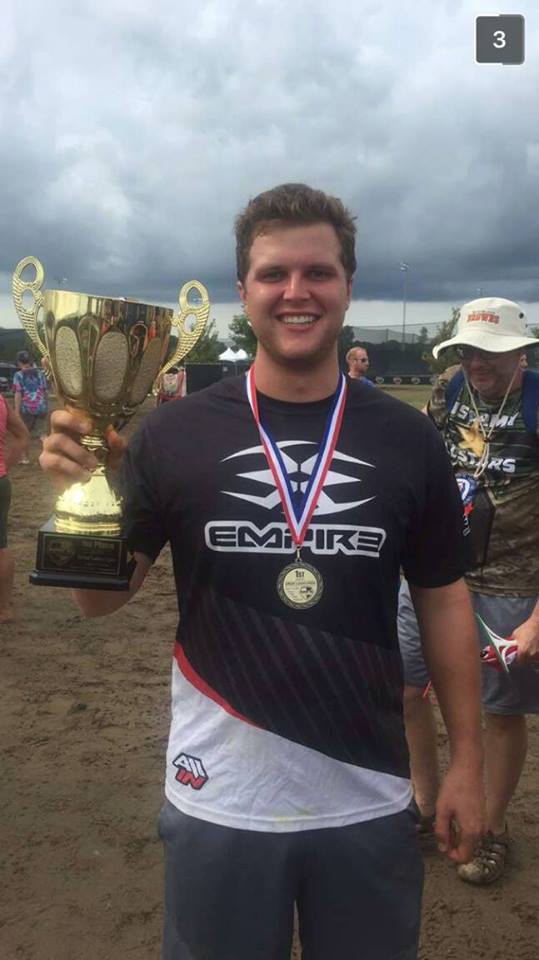
R.E.S.P.E.C.T

“Always be yourself, express yourself, have faith in yourself, do not go out and look for a successful personality and duplicate it” –  Bruce Lee

I remember meeting 3 young ladies at the 2000 Mardi Gras Open in New Orleans.  They were called the Fallen Angels, I believe.  They were a big deal because they were young attractive females who were playing a male dominated sport.   So who can tell me what is wrong with that last sentence?

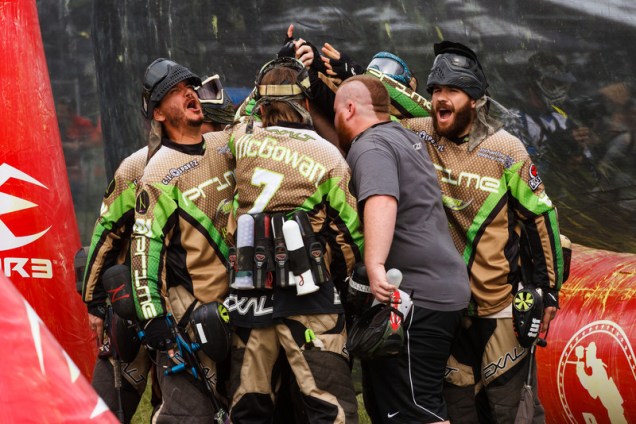
No, this is not going to be about sexism or feminism or any other “ism”.  This will not be an argument for women in the military or who gets paid more or a glass ceiling or any of that.  The point is quite simple and I will put it out from the get go.  Are you a good paintball player?  Do you contribute?  Are you a team player?  Good.  Play paintball.

I will say that I believe women ARE different from men and I celebrate that difference; that is what makes a woman unique.  In other words, I appreciate women for being women and the differences/balance they bring.  That being said let me explain what brought this topic about and why I decided to write about it this month on Zen.  This is a topic that came to my attention when speaking with my daughter.  The gist of the discussion was about her wanting to play competitive paintball and what she would need to do to go about learning and being competitive.

10400106_58539394047_504_n
My friend Tiffany about to do some work

Personally, I don’t understand why more women don’t play paintball.  Biologically, on average, men do have the advantage in size and strength.  But how does that translate to paintball?  Does my bicep size make my paintball gun better?  Do you really require great strength and size like a football or basketball player to be competitive in our sport? The answer is no.

Teams like the Fallen Angels and the Femme Fatales paved the way for teams like Fat lady Charms, Poison Ivy, and Destiny.  Regrettably, if you Google “Women of paintball”, you will be greeted with images of scantily clad girls holding paintball markers.  Not likely the end game Tami Adamson, Bea Paxson or Keely Watson had in mind when they started.  It should be about the ability just like when we look at any other player.  Of course, being friends with Bea, easily one of, if not the most recognized female in the sport, I decided to reach out to her and see what she had to say about how she got started and what it was like.

15871535_10210235872606265_3715826064901222066_n
Winning.

“The airball fields are what attracted me – how different it was from any kind of sporting activity I’ve ever observed or have been a part of. I wanted to be part of something different and paintball was, well, different.”

She went on to explain how being a woman in the sport brought about its criticisms.

“I didn’t like how I was accused of getting support simply because of my looks. Not saying that I’m the most beautiful person in the world, but because of being a female in a sea of males in this industry, it was somewhat easy for me to stand out a bit. But, I wanted to be more than just a “pretty face” and I wanted to earn my spot in the paintball world by being revered as someone that also knew about all aspects of paintball, to be able to explain it, to teach it, and to encourage others to get involved.”

Bea has advice for other ladies out there, “Just practice and train more to be treated equally and selected to play alongside other men. I remember in my rookie years, I wanted so badly to learn from my mistakes that I would go up to the many men that bunkered me or shot me to ask what I could’ve done better or what I did wrong. And 9 times out of 10, the guys were always willing to explain to me what I could do to improve…. diversify yourself as a player and learn all positions. Don’t just start in the back, too, like most females are typically set up in initially. If they do end up starting in the back, change it up and learn how to be a mid or front player, too.”

Excellent advice.

Now, I have experience with coaching females.  During the 2014 Season, I had the pleasure of meeting and coaching a young lady from Texas when she guested with one of the Prime squads for a couple of events.  One of the things I appreciated about Taylor Mitchell was that she didn’t want to be given anything because she was a woman.  She wanted to earn her spot because she could play.   And make no qualms about it, she did.

“…if you don’t bring up the fact that you’re a girl while playing, then people forget that you’re a girl and treat you like normal.”

10423261_10202826948222995_2773183033984729121_n
Taylor runnin’ and gunnin’ for Prime

What drew her to the sport? “I loved eliminating people. That’s the best part.”  Sound familiar guys? Taylor knew what was required.  She came to play and that is why I treated her like any other player.

10547621_10202826983943888_3062909158438874467_n
Here to play. 


Taylor has always been athletic and has played competitive softball almost all her life. But she firmly believes that being good at paintball has nothing to do with your gender and all to do about your ability to play and be a team player. “…it has nothing to do about your genetic makeup. But the effort and talent you put into it to become a better player.”


This past 2016 World Cup I was introduced to two other females who made me take notice for their attitude and ability. First is Willi Cohen, a former competitive dancer and swimmer.  Willi came down to help Birmingham Prime in the pits.  I had heard about her from my friends in the Atlanta area.  Willi was introduced to paintball through her boyfriend Cameron on an agreement, she would play paintball if he would go to one dance class (Yo Cameron, she’s still waiting on your end of the bargain, chief.)

15541945_1539239956093196_4853718700827420395_n
Willi is in the JT jersey 2nd from left

Willi ended up enjoying the rec side of the game but didn’t feel confident in the tournament format. This led to her becoming a gifted “pit boss” but things are changing after this past year.  “I loved watching all the air ball players, but I was not confident enough to try for myself, so I did whatever I could to help out the teams at the field, which led me to pitting for the Kennesaw State team and then eventually Birmingham Prime. It was the NXL events this past season that made me decide to actually get on the field and play. Being in the pits and helping out allowed me to see what it truly means to be a team… when I saw teammates pushing each other to be better on and off the field I knew I wanted to be a part of it.”

15337566_10154872879158010_2417654366309084154_n
Willi with Prime @ World Cup 2016


And think about it, Willi’s background.  She was a dancer, lithe on her feet, and a swimmer who has great cardio.  Sounds like a great foundation for an excellent paintball player.  Bruce Lee use to talk about how, if he could train Fred Astaire for 6 months, he would have him beat any boxer.   Footwork is such an integral part of playing paintball and many players don’t understand that.

“In the long run I hope to be a part of a team after I get out school, but honestly I just hope I can prove to myself that I have the ability that if I put the work in and push myself I can accomplish my goals.”  Sounds like the attitude required to be a good paintball player.   “When we put the mask down we are all equal.” Here here Willi.

The other young lady was Karin Worhle’.  Karin had traveled from Germany with her boyfriend Felix who was guesting with Prime for the event.  Karin was there to guest with Destiny.  I believe Karin is the embodiment of what I am trying to say with this whole blog post.  It’s about the skill set not the gender.

15171079_1370002463032616_2335402952558033148_n
Karin with Destiny at WC 2016

Karin has played all over the world.  Malaysia, The United States, Russia, Sweden, Denmark, Italy, UK, France, Belgium, and she’s not done.  Unlike Bea who had a martial arts and cheerleading background, Willi who has a swimming and dancing background, or Taylor who had played softball all her life, Karin wasn’t really into sports at all. She wasn’t even introduced to paintball by a guy.  Her friends at her university suggested they all go for her birthday because she was “crazy” and would obviously enjoy this “crazy” game.  Little did her friends know it would change her life.

“I constantly try to surround myself with people whose goals and passions are consistent with mine. I became healthier – I stopped smoking, started going to the gym a minimum of 4 times a week (very strictly). Some months ago, I started to work with a personal trainer to improve my fitness and nutrition to the max. Last but not least I got used to car rides – long ones (for e.g. to Paris 1200km) and “short” ones (almost every weekend 500km to practice).”  Sounds like someone dedicated to the craft and who knows what it takes to be competative, yes?

935146_716623585037177_1138987202_n
Krin with Fat Lady Charms


With that kind of dedication and drive, you would think she wouldn’t have had a hard time finding a team.  Not true.

“… it was not that easy for me. The first team I approached did reject me, because they didn’t want to have women in their team. That’s the first time I had to realize there are apparently men, who definitely doesn’t want women to participate in this sport.   However, this didn’t stop me to keep searching and yes – it made me even more eager to play and compete in tournaments. I just had a lot of fun playing, getting to know the different people anywhere in the world. I wanted to improve my skills, learn the game, perform as much as possible and win!”

When you watch Karin play, it is easy to see she knows what she is doing.  Speaking with her while walking the field, you can certainly see she has a mind for the strategy of the game as well.  I can’t say that about half the guys I meet in paintball.


“I like to be “the killer”, the person who completely changes a game or situation. I also like to be a team mate everybody can rely on and trust on the field. In general, I want my team to be successful and I want to contribute to the max.”

femtami
The legend herself Tami Adamson

These women all have something in common besides gender.  They are dedicated, enjoy the game and want to continuously improve their skills just like every other tournament player should.  So next time you see a female baller out there, don’t get complacent or look past her.  She’s likely to light you up… especially if it ends up being my daughter.  Just sayin’.

Be Water my friends.