Dream Team

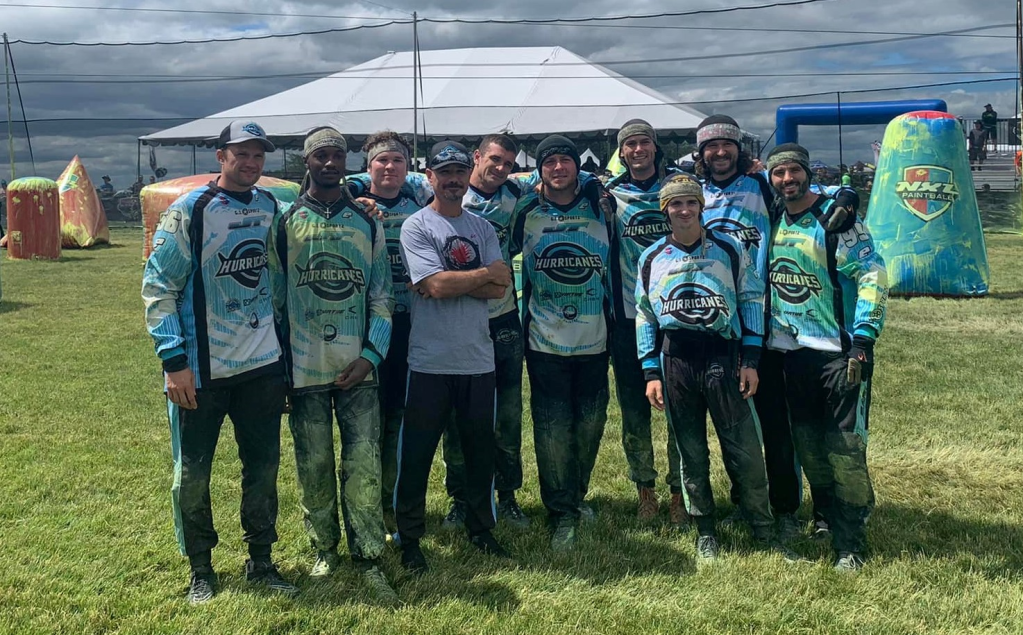
Recently I posted a photo of the New Orleans Hurricanes on social media where I quoted Andrew Carnegie.  He said, “Teamwork is the ability to work together toward a common vision. The ability to direct individual accomplishments toward organizational objectives. It is the fuel that allows common people to attain uncommon results.”

Unfortunately, we don’t see this type of thought embraced very often, especially in paintball. 

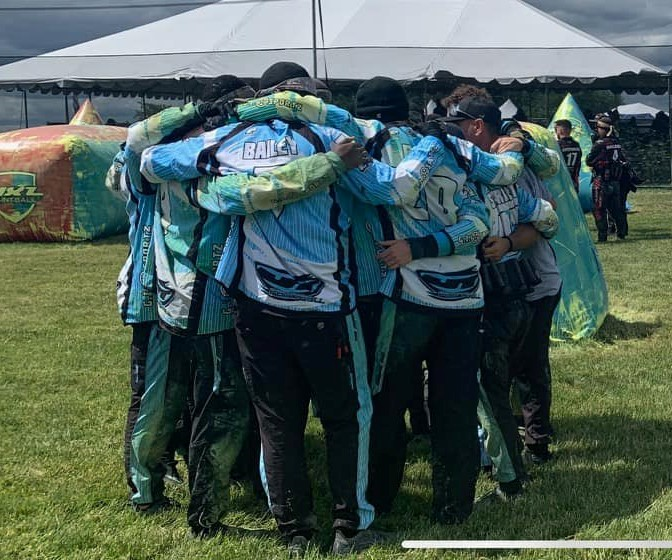
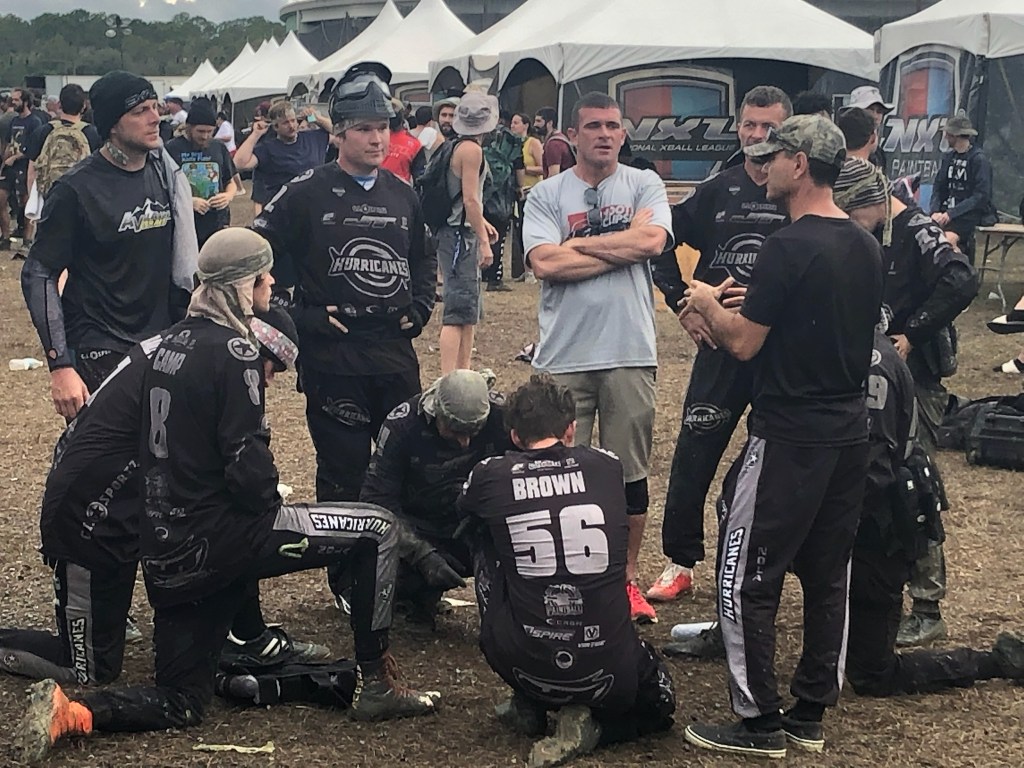
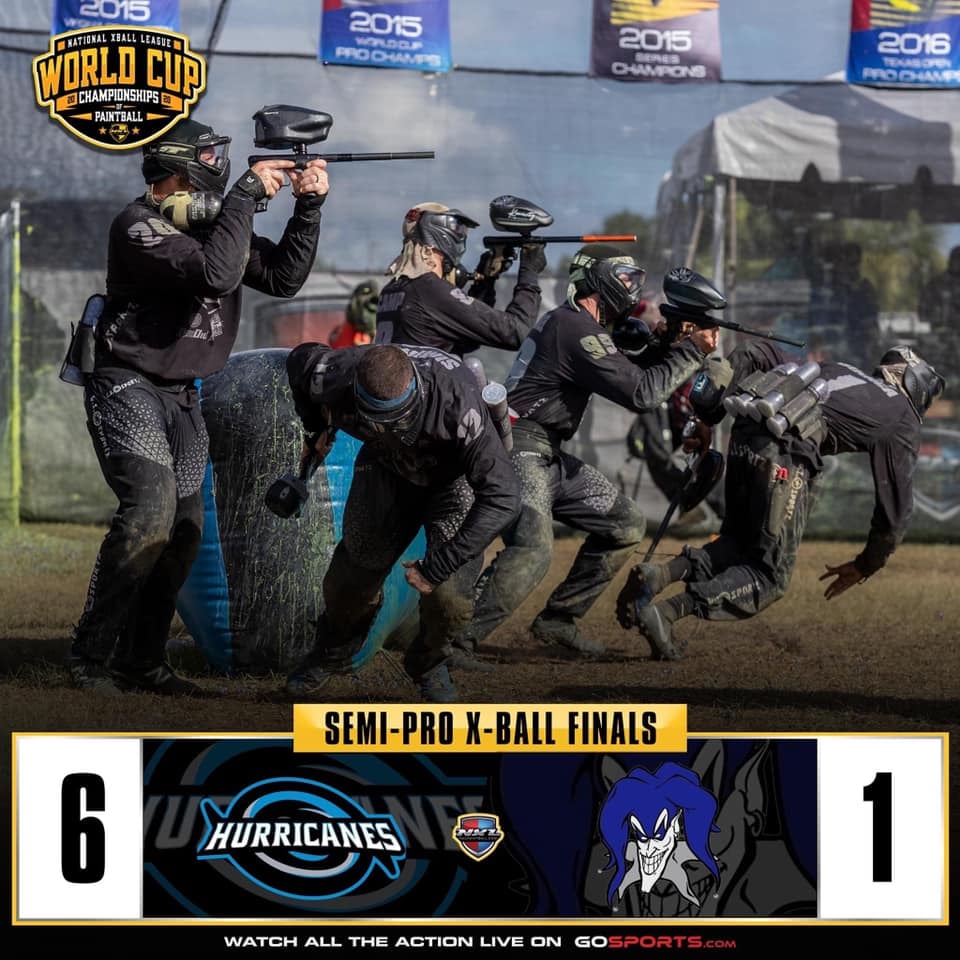
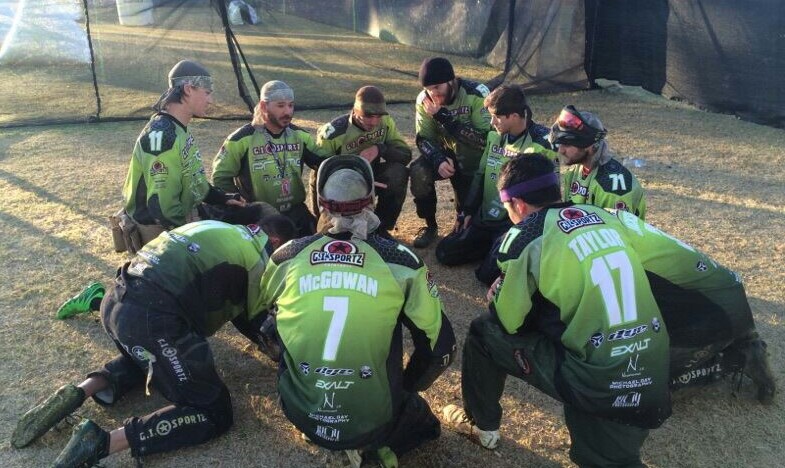
Everyone was smiling inside this huddle because we had just overcome a tough scenario. Because “team”

This past weekend I was asked by a player for advice on how to eventually go pro.  I have been asked this question quite frequently as of late, in one form or another.  A simple enough question really, but one that has numerous answers depending on who you are speaking with all while also weighing heavily on your circumstances and a myriad of other variables… and my answer is no different. Heck, I just got here.

Here are two more quotes for you from tried and true champions:

 “Talent wins games, but teamwork and intelligence win championships.” – Michael Jordan.

 “Individual commitment to a group effort—that is what makes a team work, a company work, a society work, a civilization work.” – Vince Lombardi

Sensing a theme here?

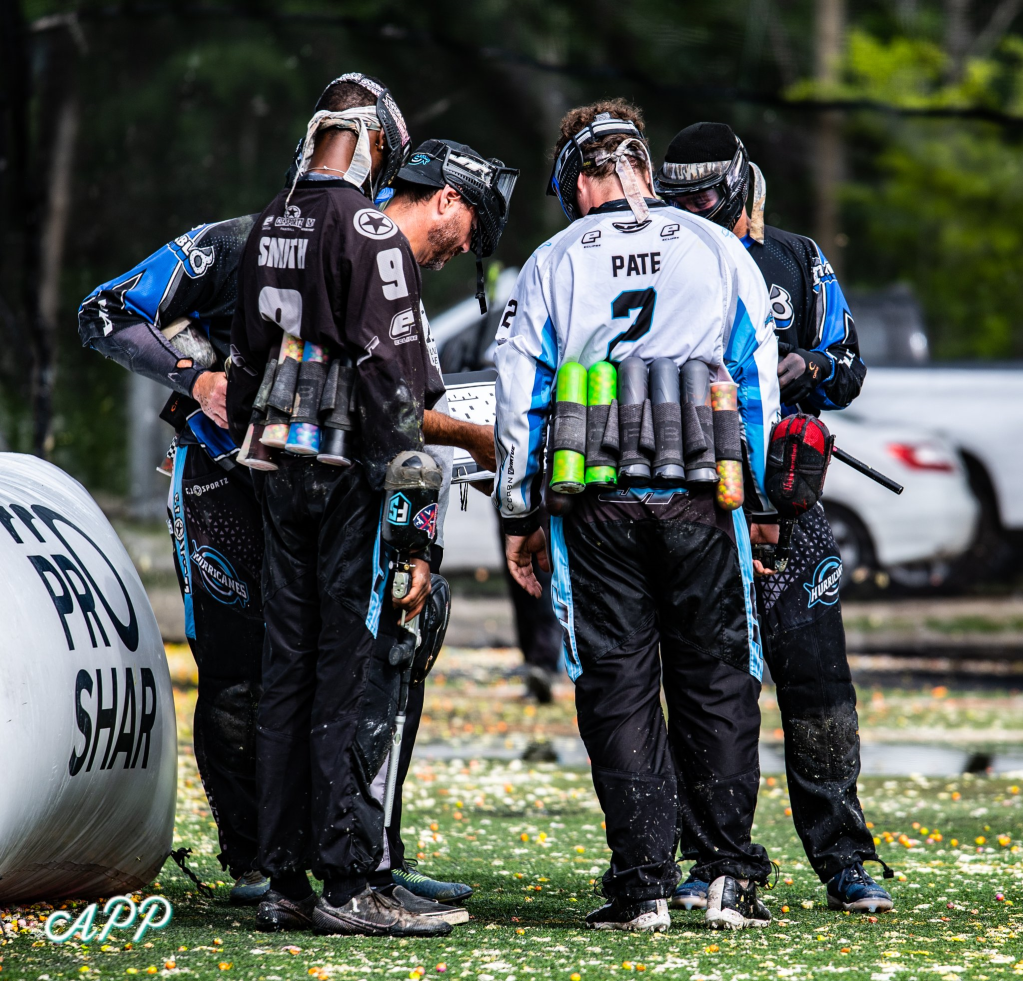
Big thank you to Cory Andrews of APP Photography

Teamwork is what usually leads to success in most endeavors.  Yes, there are exceptions but let’s talk paintball specifically.  Again, yes exceptions, but one would be considered irrational if you thought any successful paintball team achieved success and maintained said success through the simple efforts of individual players.

Teamwork has to have a strong foundation.  That foundation has to be trust.  Personal ambition can be, in some cases, admirable but it can and routinely does poison teams.  The team that removes ego, the team that puts the organization as a whole above the individual will usually survive longer and do better.  Most successful teams have figured out that if everyone “buys in”, has the same goals and are moving toward those goals together in a unified front, then it becomes a matter of when, not if, success will arrive. 

The strength of any team is made up of the individual members. The “weakest link” and all that… but you can overcome that “weakest link” bit if everyone recognizes that the strength of each member IS the team.  There is strength in unity which should lead to no weak links if everyone contributes in their own unique way.

I did an interview recently with Matty Marshall and he inquired about what we attributed the success of the New Orleans Hurricanes to so far.  The question intrigued me at first only because I realized he understood our goals.  To the outsider looking in, we are not successful.  In our first three events as a professional team, we have only made Sunday once.  We are currently sitting in 10th place for the series (and will probably drop to 12th based off what I see happening in Sacramento).  We have played 13 professional matches and only won 6 of them.  We were outscored at the Sunshine State 15 to 19, did better in Dallas 23 to 21, and fell again in Philly 13/17 for a total of 51 scored and 57 scored against. Hardly a success, right?  So why did Matty assume we were seeing success? 

There are a couple of reasons really.  One, because he is familiar with the goals we set for ourselves at the beginning of the season as well as at each event. We are  meeting those goals as a first year rookie pro team.  And two, by most accounts, we aren’t doing too bad regarding the annals of history. But that still remains to be seen as there are still 2 events left (Chicago and Cup).

But I would be totally remiss if I didn’t state that the success is garnered from the guys being a close knit group, who understand the importance of “team”.  It is ingrained in our culture. And that’s a very important aspect. 

To me, teamwork is absolutely essential and quite honestly, the beauty of our sport.  When you have five guys out there, working as one, communicating, selfless, and in a flow state, man… it is something to behold. Even better if you are one of the 5. But if you missed or flew past the word “selfless” in that sentence, then you missed the most important piece of it.

Team, Squad, Crew, Tribe, Clan… Family

Whether most realize it or not, teamwork is the true definition of efficiency.  After all, 9 or 10 brains are better than 1.  I can’t remember who said it, but it struck me as so very true.  What does efficiency really boil down to other than doing something better than what was already being done?  And that is where we are seeing our success:  in the process of creating efficiencies.  The process of learning, the process of repetition, the process of trusting one another, the process of pushing one another, the process of trying to be just a little better than we were the day before. And yes, the process of losing and winning.

When you make that individual commitment to the team goal, you flip a switch that turns on accountability and selflessness.  When everyone has that light on, man that stuff will shine bright. It will drown out all the noise and hyper focus everyone on what needs to be done, what has to be done.

Yes, it takes time and make no mistake, we have been at this for a while.  But I believe we have kept the focus on the right things.  We always start with fundamentals.  We don’t lapse on those drills.  We don’t phone it in. We don’t go through the motions. We make sure it is productive. There are no attitudes on this team.  If we see something that needs to be mentioned, it gets said.  And no one gets offended (no betas here).

What is my role in all of that?  Easy.  Keep them focused on the important things that paint the big picture.  I recognize the things that may take us off course, that distract from what we really need to be doing, and kill them. I identify opportunities for my guys, push them to be their best, remove them from their comfort zones only to make that uncomfortable place comfortable and then develop strategic based concepts which allow my tacticians (the guys) to implement, make better, and execute.

Old and busted

So how did we get here and where is this all going?  Well, we started with a question from a player this past weekend… how do I become better/pro.

Besides getting out there every weekend and practicing the fundamentals and playing as much as you can?  Be something a team can’t do without.  Find a job or role that no one wants to do and get so good at it, you are the only name they think of when it has to get done. That.. and one other thing…

Be a great teammate.

Be water my friends,

Zen

Go Pro

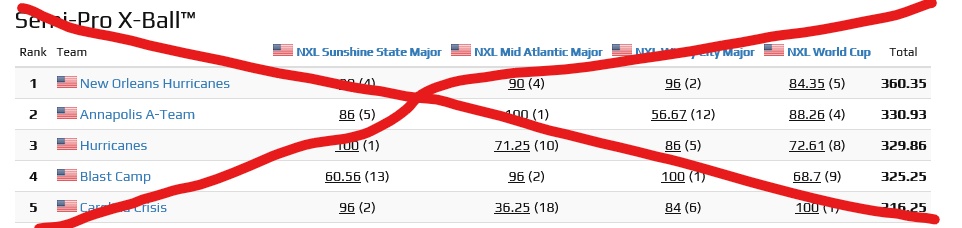
The New Orleans Hurricanes are the newest team in the NXL’s pro division. Honestly, it’s a bit odd writing that sentence but, at the same time, a little satisfactory. Now, I have always believed that setting goals is the first step in making the impossible possible. And this team is no different. We set out to accomplish two specific goals this season. The first was to be in the top 4 every event. It was funny because we took 4th at the first two events and I let the guys have it – jokingly of course – about how I didn’t mean 4th every time. We were on task to pull it off but unfortunately, we fell just short of that specific goal this past event (World Cup) by placing 5th. As you can imagine, the second goal was to win the pro spot. Most people would say, “Hey, that’s pretty good.”

Meh… it could and should have been better.

I didn’t write that last sentence with disdain, disappointment, or any negativity. I wrote it because I know what this team is capable of. We hold ourselves to a high standard. I know each and every one of these guys well, their wives, girlfriends, parents, siblings, children… Each and every one of these guys (including myself) sacrificed a tremendous amount this year. We overcame some pretty incredible challenges; injuries, medical emergencies, life events, roster changes, and a real life hurricane (Ida) and still found a way to stay competitive and ultimately win the series. And not by just a little…by almost 30 points (29.42 points to be exact). And not by just a little… by almost 25 points (24.75 to be exact).

It would seem scores were changed… odd. As is the new scoring used for the final event…

And I guess, maybe that is what bothers me… the public education system.

The ignorance of systems, process, and math… emotional responses (as opposed to considering statistical probabilities) from paintball teams is sometimes quite staggering.

But don’t get me started. That’s another topic completely. And frankly, it doesn’t matter.

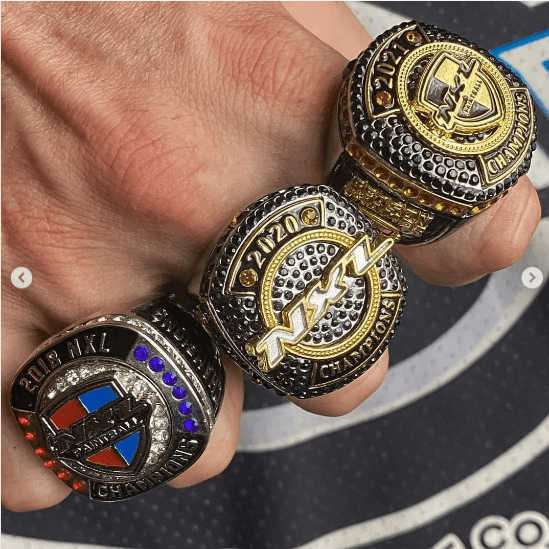
After winning the series in 2020 (the Covid series as I call it) and winning World Cup that year, the New Orleans Hurricanes were focused and prepared to win the series again, leaving no doubts. Granted, we wanted an event win for the cherry on top. But I think consistency says a lot about a team as well. We won 2020 World Cup, something many are quick to forget, and came into 2021 taking 4th at the first event of the 2021 season (the Sunshine State in Kissimmee). We would go on to take 4th at the Mid Atlantic (Philly), and 2nd at Windy City (Chicago). None of the other top 5 teams for the season had done that (been in top 4 every event) up until that point headed into cup. A-Team took 12th at Chicago. New England had a 10th place at Mid Atlantic. Blast Camp had a 13th at Sunshine and Crisis had an 18th at Mid Atlantic.

Season rings waiting to be claimed.

Here is another interesting note – each event we were knocked out – it was by the team that won the event. Well, save for Sunshine in Kissimmee. Crisis took 2nd there. A-Team knocked us out at the Mid Atlantic and won. Obviously Blast Camp knocked us out at Windy City. And finally, Crisis knocked us out again at Cup.

Heading into Cup all we cared about was the win. We weren’t thinking about the series as much as we were just laser focused on the event itself. We wanted that back to back Cup win bad. We had good momentum and were feeling motivated after the 2nd place finish in Chicago. Hell, Drew Bell had found a two dollar bill after Philly. And if you don’t understand that, I can’t help you. The team felt prepared and had some excellent practices prior to the event (shout out to Austin Notorious for their series win as well – keep an eye on those young men – with Coach Ryan Gray at the helm, they’re coming to a nightmare near you in semi pro next season). Of the 21 matches we had played over the last 3 events, we had won 48% of them by mercy (That’s 10 for those of you doing the math). We had won 64% of all points played (110-62). The 2nd place team headed into Cup had only won 57% on average (80-61 I believe) with only 2 mercies. But why does any of that matter? It doesn’t… just pontificating…

End of a great layout weekend with Austin Notorious and Utah Bro Army

Of course, heading into Cup, we knew this was a chaotic field and anything could happen. We had shown promise not only controlling the chaos and using it to our advantage but creating it as well. We were even happy about our draw. Even though every team in our bracket got a free win with a D4 team deciding to play Cup in Semi Pro (shout out to Midwest Bandits – I heard the story as to why you played up and if true, that’s really cool of you. Well done!), we knew we would be tested early. And we were tested by some great teams. We still went 4-0 and won our bracket. I like being tested early in events and coming out on top. It almost always prepares you for the Sunday grind. And we had some Sunday matches in the prelims.

However, we drew Carolina Crisis for our quarters match. Crisis is a team that has been on the verge for some time. Whereas, it was another knife fight and we almost tied it at the end (had I conceded a point earlier in the match, we would have) they played a really balanced game and prevailed. Woulda coulda shoulda. At the end of the day, you have to execute. The team and I made one too many mistakes that match and they capitalized. Congrats to them and well played!

You can’t be a winner without knowing how to lose. Learn from it each and every time.


All that being said, I wanted to do a quick recap of some of the teams I think need to be recognized. After all, it was a helluva season and when you really think about it, they helped us progress.

Annapolis A-Team – This team took 2nd in the Covid series last year and finished this season strong with another 2nd place finish in the semi pro series this year a 3rd place finish for the year. This is the 2nd most consistent team in the division if you really look at it. They had three top 5 finishes this year with a win in Philly and a slip up in Chicago. There is some real talent on this team and there is no doubt teams will be scouting them next season. Ignore them at your own risk. Don’t be surprised when they hit you upside the head and don’t stop hitting you.

New England Hurricanes – They took 15th in the Covid season (we gave them their only mercy rule loss at 2020 Cup) but started this season off right with a win in Kissimmee. They stumbled in Philly (we sent them home again with another mercy in an epic match) and at Cup. They have some great players and a lot of experience on this team. You have to respect them or they will punch you hard and fast. They have the components to win but consistency has proven to be elusive for what should be a consistent team. That being said, a motivated NE Canes team will be a tough draw next year.

Blast Camp – I can’t say enough good things about this team. I don’t know if that is because of what I have seen with my own eyes at events or their amazing social media talent. Their communication is top notch on the field and they have a very academic approach to layouts (something we strive for). And, of course, they are young. This team has a great facility, gets to bang with members of Heat on the reg, and they have tremendous support. When you play them, you are also competing against the energy of that group outside the nets. They will be a major force to reckon with next season. Trust me on that one.

Carolina Crisis – Now, I know a few of the cats on this team and their coach from back in the CFOA days. I think everyone saw a tremendous growth out of them this season. They started the season strong and ended the season even stronger. I think that trip up in Philly really motivated them. Some weaknesses were exposed and they said, hell no, we’re going to shore those up. Which they obviously did. That’s the sign of a team to watch, one that is self aware and understands what needs to be fixed (and actually does it). They showed a real balanced and controlled approach to this layout. The question is can they do that on every layout? I bet they can.

… and NEW Professional team!

I was actually going to do a breakdown of the top 10 teams but then this would be a book and not a blog… All of them had great moments this season. To finish out the top 10, shout out to Wolfpack, Noobies, Brawl, Brooklyn Bears, and Indy Mutiny. I enjoy watching different teams/coaches and how they approach the layout, their styles, personalities, etc. Whereas most people look at the teams in their division as the opponent/enemy, when it’s all said and done, they are paintball players just like you and me. They have a love of the game and are trying to do something in it. I can’t dislike someone for that. Sure, some of them will say some truly asinine things but I don’t get caught up in all that “noise”. You want to run your mouth about stuff instead of performing, be my guest. Doesn’t bother me or change anything. Oh, but I understand that I may have to explain the differences in southern slurs to some of you LOL. Maybe someday I will… but let it be known, we are not “hillbillies” 😉

Now, as far as the New Orleans Hurricanes are concerned, we understand what is in front of us. It will be a tough and difficult season full of challenges and learning. We have already set some pretty simple goals for the 2022 season. I believe that successful teams will always maintain a positive focus no matter what is going on around them. Winning teams stay focused on their past successes rather than their past failures (although they don’t forget them), and on the next action steps they need to get them closer to the next goal. We can’t afford to let all the other distractions cloud our vision. And we won’t. I don’t believe we have to be better than anybody else. I believe we have to be better than we were the day before and the day before that. And then, eventually, better than we ever thought we could be. Then and only then will we see the results we are after. Constant improvement will be the name of the game. If we can’t continually up our game each event, it’s going to be a long season. No one knows that better than us.

Thanksgiving is just two days away… and no one in the paintball community is more thankful than we are currently. We are thankful not only for the opportunity to now compete at the highest level, but for all our friends and family who have supported and sacrificed for us over the years. We are thankful for our awesome sponsors who legitimately supported us all season long- GI Sportz, Planet Eclipse, Carbon, Virtue, and JT Paintball. We use their products because we genuinely like and believe in them. We are thankful for Gulf Coast Paintball in Slidell, LA for the facility to hone our skills. We are thankful for all the teams that came and scrimmaged us over the years, you know who you are! We are thankful for our opponents, especially the ones who beat us and taught us what we needed to learn. And finally, I am thankful for each and everyone member of this team… there isn’t another group of guys I would want to do this with. None. Zero. Nada. Zip.

So let me wrap this up by telling you something about these “hillbillies”… We may not talk like you, act like you, or meet your perception or expectation of what a pro team should be… but that’s alright because at the end of the day, we are who we are and I am damn proud of that. We are the New Orleans Hurricanes, the newest professional team in the NXL. And we out here. Roll ‘Canes!

Be water my friends

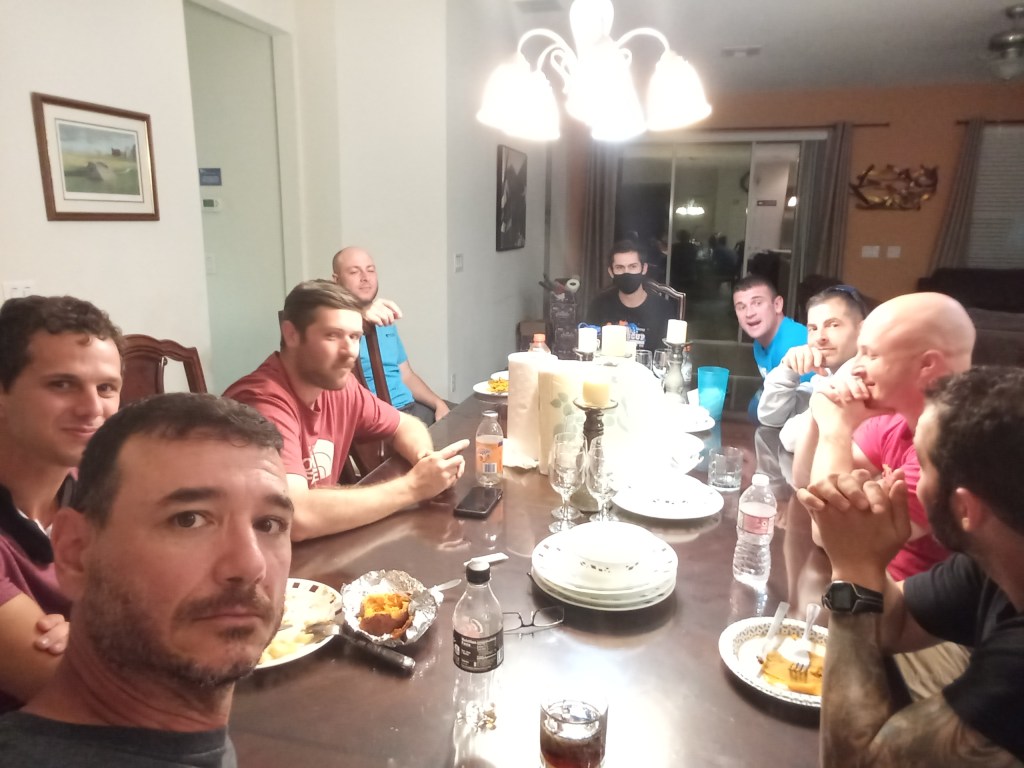
The gang – every member of this crew has the love and admiration of each other
Consistency

Don’t Do It!

by Aaron Pate

*Zen Note: This month’s blog post, as you can see, was not written by me but by one of my closest friends.
Trigger warning – Aaron is blunt and pulls no punches in how he addresses friends and strangers alike no matter the topic. This is why I asked him to write this months’ blog; to expose you to different points of view and delivery similar to my good friend Nolan Osvath’s article earlier this year (found here – https://zenandtheartofpaintball.com/2020/03/17/mushin-state-of-no-mind/ )

I asked him if there was anything in paintball that really ground his gears. Well, here you go… read on and enjoy…

Most topics that are discussed during an off-season revolve around keeping one’s skills sharp while waiting for the next year’s schedule of events to roll around. I know, I know. Boring, right? Luckily, this is not that article! Unfortunately, it may be one that breaks your heart – but that will depend on what division you and your teammates think you should play in the upcoming year…

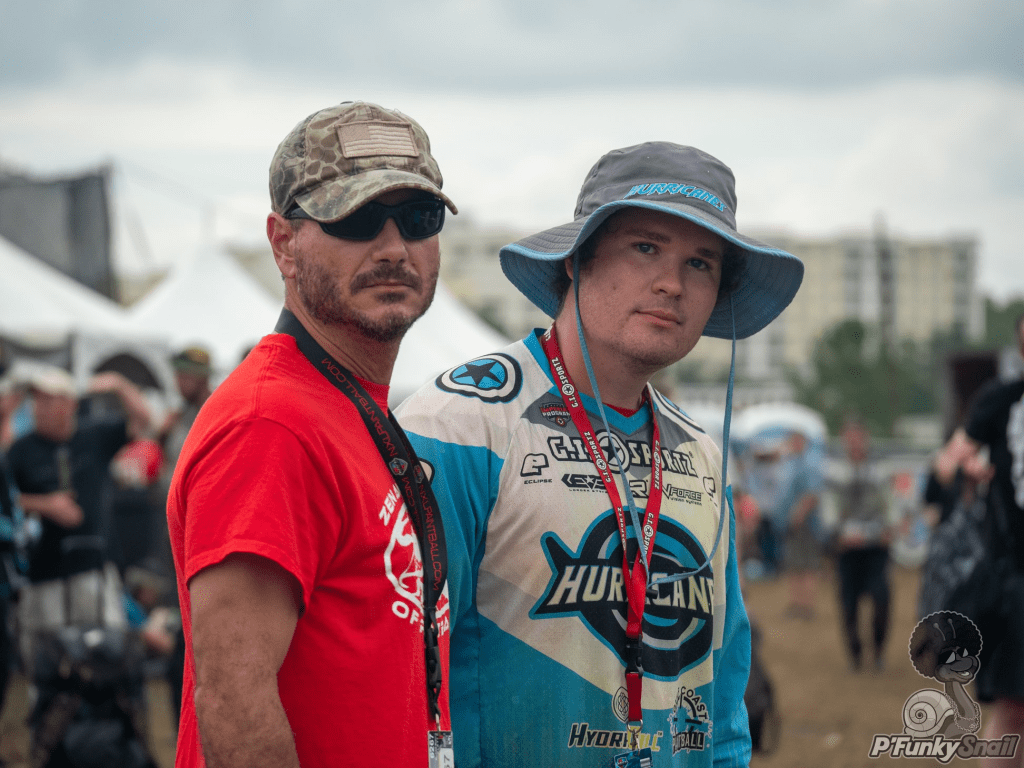
Zen and the author Aaron Pate

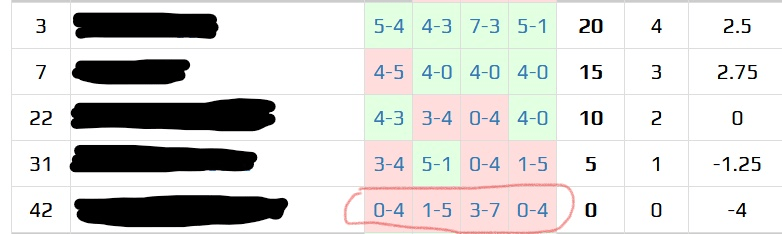
Each year, there is one team or several teams that decide to make “the jump” to “prove themselves” at a higher level. By now, you have already thought of at least one team that fits into this category, and if you are on that team, share this article with them. It will save you and your teammate’s hard-earned money, time, and hopefully, dignity. The result of teams that do this is the same – they all fail. Period. Destined to have zero wins and four-ever losses (0-4), and at the end of one or two seasons, the team folds, and every player has a higher ranking they should not have.

What motivates teams to act in this way? I can only speculate because the teams I have been on commit first-degree murder on those teams. Could it be the millennial mindset those boomers keep talking about? Perhaps.  Or maybe it is hubris from staring at a target for two seconds before pulling the trigger and claiming one’s self as the two-time snap shooting champion? Honestly, I think it boils down to one of two factors: One, your team wants the badging and accolades without anything to show for it; or (2) the team genuinely thinks it can rise to the challenge and overcome mediocre finishes.

“Please, do not ask me for autographs until after practice.”

The first option is simple to address. No one gives a (Zen edit) that you are the highest divisional team in the area because everyone has the internet, and everyone can see how sorry your team is performing in real-time, and that is no joke; those live scoreboards are the best thing an overpriced entry fee could pay for. What kills me the most are the players that have told me, “I play division X,” but I have done enough research to know they are ranked division X less four. When your team holds tryouts this offseason, do yourselves a favor and write off those people from the start. They do not want to get better. They are creatures of ego and not performance. (This reminds me. Go buy a LV1.6 today! Brought to you by Planet Eclipse. Full disclaimer: I play on a team sponsored by Planet Eclipse.)

Don’t be this team. 42nd out of 42 teams

“We smoked those guys at practice! How did they win the event?”

Let us turn our attention to the second option, and maybe, just maybe, we can right the ship before that first entry fee is due. Think back to the practices before the COVID Cup, err World Cup. Everything seemed to be going well, but then the event happened, and you may still be asking yourselves why the event went the way it did.

I’ll tell you why – you wanted to win practice.   

*Zen Note – See https://zenandtheartofpaintball.com/2019/09/21/practice-all-star/ for further detail).  Which is somewhat coincidentally funny when you think about it…Who wrote this month’s blog and who is being eluded to at the very beginning in the linked blog.Yep, he was the guy I had the convo with in the first paragraph (as if it wasn’t obvious by the picture right beneath it)

But Aaron, isn’t the goal to win? Well, yes and no. The goal is to win the event. Too many teams get caught up in keeping up appearances or wanting to stunt on the teams in higher divisions and lose sight of the goal. My advice? Forget about winning the practice scrimmage and drills at practices and learn how to play. The team’s focus should be on asking questions and obtaining answers as time goes by on the field layout. Tailor your layout practices to the competition. A good rule of thumb: Increase the aggression against upper divisional teams and do the opposite for lower divisional teams. The idea here is to test the best breakout shooters (in theory) and plan accordingly for your division. For lower divisional teams, you should be testing pocket plays and progressions – along with that, taking advantage of their lack of experience as fast as possible. At the end of the two weeks, the team should have a very good indication of how the field will play. Winning practices should be secondary to learning the field.

Seriously – don’t. Last place and mercied every match

If you are reading this, your team has cut its discount pro player(s) and now understands the purpose of layout practices leading up to an event. So, what division do you play? Here is where the PBLI/APPA ranking system becomes useful. What are the rankings of the players on the roster? The player rankings set a baseline. For example, if every player is ranked D4, then D5 is out of the question.  Has the team made the podium in the last year or two? If the answer is no, then chances are, you are right where you need to be, and if you think otherwise, please reference the “zero wins and four-ever (0-4) losses” portion of the article.  In cases where the podium has been achieved but the roster is significantly different since that win, I would encourage you to not make the jump until the current roster gets a medal. Some refer to this scenario as the “rebuild”, and this is nothing to be ashamed about. If anything, people notice that your organization is something special when success is attained no matter what the roster is, and people want to be a part of that.

If only one team is saved from complete annihilation due to reading this article, I would be happy with that. Sadly, it is inevitable that teams will still make the jump with no data to back up the decision. To those teams, I say, “good luck”. I hope you can put up a point or two to show everyone you “competed”.

*Zen Note: There is a similar article to this one from this past summer.  See also https://zenandtheartofpaintball.com/2020/07/10/facts-vs-narrative-reality-check/

Pontification on Permanent Persistence

“Ambition is the path to success. Persistence is the vehicle you arrive in.”

Alex Trebeck: Answer, “Obstinate continuance in a course of action in spite of difficulty or opposition.”

Me, you, us: “What is persistence, Alex.”

It finally happened.  The first national win and in the semi pro division no less at WORLD friggin’ CUP.  I will get into the crux of this month’s topic but first – I want to say something:  

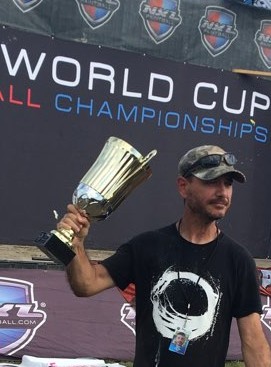
Celebration next to Celebration

First and foremost, a huge shout out and thank you to the New Orleans Hurricanes…  Here is a program that already had two national event wins under their belt in Division 2 (Chicago 2017 and World Cup 2018 – the latter they did with only 5 guys!) so they knew what it feels like, what it takes, and what it means.  I had coached some of their players back in the Prime program and had even done a clinic with them prior to their Chicago win.  When they first called me, I thought, these guys don’t need me! What’s this all about?  It’s a trap! Man, I am grateful to the One above that I answered the phone that day.

“Victorious warriors win first and then go to war, while defeated warriors go to war first and then seek to win.”

I cannot thank them enough for making that call and making me a part of the program.  It has been an honor.  A couple of quick stats:

  • The ‘Canes outscored our opponents 22-7 in the prelims
    • In other words, 76% of all points played were won by the ‘Canes
    • Or for every point our opponent scored, we scored 3
  • The ‘Canes outscored their opponents 17-8 on Sunday (3 matches: quarters, semis, finals)
    • 68% of all points played were won by the ‘Canes
    • Or for every point our opponent scored we scored 2
  • They were undefeated the entire event
    • Once we obtained the 1st place seed, we kept it the entire event
    • Outscored our opponents 39-15 the entire event
      • That translates to 72% of all points played were won by us
      • For every point scored on us, we scored 2.6 points on our opponent
      • We mercied 3 of our 7 opponents

I think those are some impressive stats.  Way to be Canes! Perhaps it doesn’t matter but we did win the 2 event Covid series too…

Lord have…mercy

“The most essential factor is persistence – the determination never to allow your energy or enthusiasm to be dampened by the discouragement that must inevitably come.”

Okay – pardon that little tangent but I am very proud of their accomplishment.  That is no easy feat.  Some may say, well, the Tons Tons, weren’t there.  Okay, my response would be, had they been, we would have beat them too. See how easy that is?

Now, moving on to this month’s topic… you probably figured it out by the title.

I think whenever someone discusses winning, the term “persistence” is usually, or should be, mentioned.  Persistence has to be a component and it shouldn’t surprise anyone at least when it comes to a significant accomplishment.  Those significant accomplishments are usually reserved for things that are quite difficult to achieve and require great effort, yes?  It is very easy to fold up the tent and just figure it isn’t going to happen.  Trust me, I have considered this many times because it is rather easy to persist at something when things are good or going well.  It is a completely different animal when they are not. 

Amazing feeling

“Success is not a matter of mastering subtle, sophisticated theory but rather of embracing common sense with uncommon levels of discipline and persistence.”

So what does that look or sound like.  Here is my best attempt at trying to justify or explain my own persistence as well as those I have had the honor to coach/play with and why we try to maintain it:

Goal setting:  If you have read this blog for any amount of time you know I write about goal setting.  Well, I take my own advice on this one.  If I set my eyes on something, I’m going to do it.  A very good friend of mine was speaking to a player about work ethic.  I remember him saying this, “If you really want something, you’ll find a way to get it. If you don’t, you’ll find an excuse.”  I asked him where he got that from and if I could steal it.  He said he had read it somewhere regarding business or entrepreneurship but felt it applied.  I agree… it most certainly applies to the sports world or any world for that matter!

I have watched several of my friends, whether former players I had coached, former teammates, or even just those I met through clinics go on and win a national event.  Ever since watching “Push” in 1999, I have wanted to know that feeling and to be a part of something greater.  The motivation was almost unhealthy at times, I kid you not! And it was all worth it.

Once more into the breech

“Persistence is to the character of man as carbon is to steel.”

All those national  2nd (11), 3rd (4) and 4th (2) place finishes, all those national Sunday appearances (40)… They just made me more determined.  Why? …because each time I learned something new.  Every. Single. Time.  And each time it just made me want it more and more.  I didn’t make or create excuses.  I recognized the shortcomings and worked to improve them.  I took accountability and actively searched out improvement.  I made an adjustment here or an adjustment there.  I let the process work and fixed it where I could.  Was it disheartening at times?  You bet.  Did I make mistakes in how I adapted?  No doubt.  But you have to reach inside and recognize that it IS coming if you truly stay the course.  Staying motivated is hard, sure, but winners stay after it.  You can’t break the warrior if he loves what he is fighting for.  Find that motivation, that desire, and fuel it.

I was told by many a friend and family member to “give up on this childish dream”.  What made it childish?  What made it a dream?  I have never asked anyone to quit something they were passionate about and I wasn’t about to let anyone convince me (unless it becomes unhealthy – I genuinely believe this pursuit has made me a healthier person both mentally and physically).  See, I know who I am.  I know my capabilities.  Ever heard the term “He hits above his weight class”?  I tell myself that every day.  When I get up in the morning, I pray that God gives me the strength and wisdom to be very best I can be, whether that is being a father, a husband, a friend, a player, or a coach. I pray before every match that my boys stay safe and healthy. Do I care what others think of me?  Certainly.  Do I care what others think of me regarding specific pursuits? Nope.  Some things you will not convince me or challenge me on.  I don’t expect everyone to understand.  The more you say I can’t, the stronger you make me.

“Failure is only postponed success as long as courage ‘coaches’ ambition. The habit of persistence is the habit of victory.”

Game planning for Sunday

I have read that winning is habitual and I genuinely believe it.  What that means to me is, in order to win, you must develop the right habits.  Makes perfect sense to me.  Perhaps I’m just pontificating and becoming somewhat introspective and arrogant.  Hell, I am writing a blog as if people care what I think…  anyway… habits.  If you can develop good habits (getting enough sleep, eating right, showing up early, running drills when everyone else stops, so on and so forth) you will see progress each and every time you step out on the field.  If you truly want to reach a goal, you will do what it takes each and every day to reach it.  Otherwise, you’re just full of piss and vinegar.  What you do each and every day will determine your success.  Make it count.

Because if something ISN”T working, you should recognize that.  If I run a guy to the snake twice in a row and he was shot both times going there, and I send him again – whose fault is that?  I’m not going to blindly throw him over their without understanding how to adjust!  I will find a way to get his gun in the fight, get him in the game, and develop a way to make sure he sees a point past the break.  It’s the definition of insanity… right?  Look, sometimes you’re going to meet roadblocks.  There WILL be obstacles to your goal.  The key is finding ways over, around, under, and through them.  Sometimes, that will take time.  So take the time and make that happen.

But it doesn’t stop when you win.  That goal setting now takes on a new perspective.  That adaptation takes on a new meaning.  Motivation has a new approach.  The more it changes the more it stays the same.  Continuous learning is so important, not just in this sport, but in life.  We must evolve with each win as well as with each loss.  Being intellectually honest about capability and sustainability is crucial.

It’s very real

“Nothing in this world can take the place of persistence. Talent will not: nothing is more common than unsuccessful men with talent. Genius will not; unrewarded genius is almost a proverb. Education will not: the world is full of educated derelicts. Persistence and determination alone are omnipotent.”

Which brings me to my final comments – I want to thank some people who were paramount in my learning and who never once, ever, gave up on me.  They saw something I didn’t at the time or perhaps, they saw something and convinced me to see it too.  I don’t know.  I just know they are truly my friends and without them, this win wouldn’t have been possible.  The list is incredibly long and most know who they. After all you have been there a long time. But there are a few that need mentioning:

  • Coach Paul Richards – to the man who helped me see that there really is such a thing as a paintball coach and who taught me what to look for and why.  You gave me a confidence boost when others wouldn’t.  You are the one by which all others are measured.  Rest in Peace Top!  Miss you.
  • Shane Pestana – becoming friends with someone you had only read about and admired is cool. But it is even cooler when they are such an influence.  I sure am glad we shared that pit back in Phoenix. Thanks for the guidance and insight over the years and for giving me the opportunities you did.  Let’s go fishing and hunting soon.  Tell Pax he sucks.
  • Grayson Goff – You may not have realized it but when you respected my thoughts about the game you gave me the confidence to write more about it. For that, I will always be appreciative. Great to see you back out on the field this past Cup Mr. Ocean.
  • Ken Ozvath – you, sir, kept me grounded while continually reminding me of my faith and how to live it, not just through your words but by your example!  Thank you for listening and being there all those times. 
  • Bailey, Barnes, Pate – Don’t have the words, guys. Well… maybe…”Screw you guys.” For real, nothing but love.
  • Willi, Cam, Bruce, Alex, I75 crew, and my former Primates – thank you for always believing.  You’re the best.
  • Finally – to my wife and children – you are the best part of me and I can never appreciate you enough for all the love and support over the years.  I am the luckiest man alive!

Be water my friends,

Adapt or Die!

“All fixed set patterns are incapable of adaptability or pliability. The truth is outside of all fixed patterns.” -Bruce Lee

Bruce-Lee-bruce-lee-26492379-1920-1080

Adaptability is the capacity to modify something for a new use or purpose.  In other words, it is the ability to adjust to new conditions.  That is, by its very definition, one of, if not the most valuable trait of a paintball team (players and coaches as well for that matter).

The need for adaptability on the paintball field has never been greater than it is has been with the advent of the X-ball format.  With some of the crazy field layouts the NXL and other leagues have been putting out as of late.  Don’t get me wrong, the 10 man days when you had to walk 10 fields certainly pushed a team’s adaptability among other things but let’s not digress.

Anyway, the ability for players and teams to adapt for each layout, to stay competitive, and circumvent any aspect of diminishing returns (not improving but getting worse) is, in my opinion, a defining characteristic and necessity for teams who wish to be competitive.  And not just competitive, its crucial to see any form of success in paintball.  Not just throughout the season, or at each event, but for each match, each point…  There are many levels of adaptation that we can discuss.  We will dig into a broader sense of it this month with World Cup right around the corner.   I am writing this while waiting for the World Cup layout to drop actually.

“Intelligence is the ability to adapt to change.” – Stephen Hawking

eb3a9174f65e1a0377135980072d8ca2

To see success as a paintball team, you need to think and act in an adaptive manner.  As a team, you need the right people in the right spots /positions based off their strengths and the environment in which you find yourselves.  But what drives that decision making?  How do you perform that process to become adaptive?  And then, the real question, are you really willing to commit to that process.  Can we as a player shift gears so readily?  Can the coach recognize his players’ ability to adapt to the point where he is comfortable in game making the appropriate adjustments that are required?  The scenarios are endless, hence the importance of being able to adapt.  It obviously is more than we will cover here but this should at least start the conversation and get us down that path.

We’ve all seen it.  We’ve all been a part of it.  People don’t like change.  Why fix it if it isn’t broke?  Keep running it until they stop it!  So on and so forth.  This is prevalent in life.  But it doesn’t have to be in paintball.

Okay, what will you do when they do stop it? What do you do when the next team you play scouted you and stopped it off the bad (another discussion of course?)

“Enjoying success requires the ability to adapt. Only by being open to change will you have a true opportunity to get the most from your talent.” – Nolan Ryan

7e6b3a2c0d0a0d9098d5e7335f014ddf

The unwillingness to try something new at a practice can be an issue for teams looking to up the adaptability factor.  This usually stems from a complete misunderstanding of what is necessary.  A lot of teams/coaches/players lack situational awareness, have an ego that gets in the way, or have a lack of accountability, or maybe all of it (yee-gads that would suck!).  I was talking with a friend of mine (a solid paintball player) and we were discussing how certain teams have “identities” or rather a specific style of play.  You have your “campers” and your “aggressors” and your “holy hell what was thatters”…  It’s the teams that you can’t peg that are the anomalies.  Sure, there are teams that lean towards their strengths… as they should!  But sometimes a layout can prove to be difficult with a certain style.  This is where adaptability and a willingness to “push the envelope” come into play.

So what do you do increase adaptability or, in essence, adapt the team?   I read an interesting article not too long ago that was talking about how to evolve in business or work life.  It really seemed to translate well so let’s see if we can’t do that.

First, we should experiment.  We don’t know so we need to know.  To adapt we have be open to change, which means you must willing to face the unknown, to face uncertainty, and crush it into little bits no fear style.

One thing I have always tried to do as a coach, especially on layout weekends, is look for (and hopefully find) opportunities where others won’t look.  Adaptation is growing, changing… and in order to do that, you have to recognize there is more than one way to skin a cat.  You can’t be stagnant.  This is a struggle because we are essentially trying to change “habits” that have defined previous success.

“Adapt yourself to the things among which your lot has been cast and love sincerely the fellow creatures with whom destiny has ordained that you shall live.” – Marcus Aurelius

1200px-Statua_Marco_Aurelio_Musei_Capitolini_Fronte2

Creativity usually rules the day in paintball yes?  So get creative. Be resourceful.  Instead of getting stuck on one solution to solve a problem, develop a contingency plan or even several plans just in your first plan hits the skids.

Let’s throw in one that is near and dear to my heart.  Quit bellyaching!  Adapt and move on.  Or don’t.  But if you choose the latter, go do it on another team.

Don’t throw the baby out with the bath water.  Just because you are trying something or learning something new, doesn’t mean you don’t retain the old.  It is still useful.  Don’t forget it.  You have to keep those roots.  We are simply building on top of them.   Bruce Lee use to teach that one should discard what may be useless…but don’t forget it.  Just because you probably wouldn’t kick to the head in a street fight doesn’t mean you shouldn’t be able to kick to the head… you never know.

It’s been said gabillionzillion times.  Imitation is the greatest form of flattery.  But it is also a great form for learning!  There is no adaptability without the initial interest or the original curiosity that drove the decision in the first place.  Adaptable teams learn and then they keep learning. It doesn’t stop.  So watch other teams, watch paintball videos, watch the pros.  Grayson Goff and I had a great conversation many moons ago about how you can learn from watching ALL levels of paintball from D5 to pro.  I tend to agree with him.

You have to be open to new ideas.  If you or your coach or your team isn’t willing to listen to others’ points of view then you have already limited your learning capacity which ultimately leads to limiting your adaptability.  The more you listen and observe, the more opportunities you will have to find something that may work.

Finally, you have to believe in what you are doing.  The choice to change or adapt or try something new or whatever we are going to call it, it isn’t easy.   However, neither is losing.

So how does your team do it?  Or do they?

Be water my friends.

Coaching is easy. Winning is hard.

coach

[kōCH]

VERB

coaching (present participle

train or instruct (a team or player)

“He has coached the Edmeston Panthers for six years”

give (someone) extra or private teaching.

synonyms:

instruct · teach · tutor · school · educate · upskill · guide · drill · prime · cram · put someone through their paces · train

This month’s blog is, again, based off conversations I have had with a few team owners and captains as of late.  The topic is centered around coaching, or rather more specifically, how to be a good, better, or just simply a coach.  It’s often an overlooked position and one that, in the sport of paintball, doesn’t get as much attention from teams as it should.  I truly believe that several teams or programs could benefit from having a dedicated individual who can help the players grow as well as allow them to focus on playing. But first, I think there needs to be a little context or background on where I am coming from.

There was a time I believed coaching in paintball was just an empty title.  More than likely, the “coach” was the guy who called a line or maybe he managed logistical issues. Or he was the guy who was yelling from the sidelines when in game “coaching” was legal in paintball.  He was anything but a coach by the very definition of the word or what most of us think of when we hear the term.  There was no Vince Lombardi, Bear Bryant, or John Wooden of paintball.  And I never really thought there would be.  Sure, there have been several great leaders in paintball, Shane Pestana (LA Ironmen), Alex Martinez ( San Antonio X-Factor), Bart Yachimec  (Edmonton Impact), Mike Hinman (San Diego Aftermath/Dynasty), and Rusty Glaze (Dynasty) to name just a few.  Please do not get me wrong, they all are incredibly talented leaders and a coach must be a good leader.  But I guess I never really looked at them as “coaches” per say back then (I would now).  Maybe I was hanging onto images or memories of my grade school and high school wrestling, boxing, baseball, and football coaches?  Possibly.  But “paintball coach” never really seemed practical.  Sure, there were talented individuals who knew how to up a players skill set, or motivate a team, or suggest approaches but no definitive coaching role.

319e8a48d095e328146c3b36120fec41 (2)
“Huddle up!”  Data sharing time


That all changed when I met Paul Richards.

Baca, or Top as I affectionately called him during our time together, was my introduction to what a paintball coach could and should be.  He was the whole package of what one would think of when using the term coach.  He was a leader but also the offensive and defensive coordinator with managerial capabilities who had an eye for talent.  He not only recognized who the potential talented players were but also specific talents in each player.  Sure, he knew the Xs and Os.  But his greatest superpower, in my opinion, was his recognition of a player’s abilities and how those abilities could be leveraged to win matches.  He was truly talented in that way.  He could take the weakest link on a roster and make them an asset simply by using the one or two things they were good at and mixing that in with the other tools on the team to meet the needs of the point.  He made it look and seem so easy.

It isn’t.

162693_496093427120_94437_n
Baca Loco or Top – The man himself – Coach Paul Richards

If you read any books on coaching, sports psychology, or biographies about famous coaches in professional sports, you will see that almost all of them have similar themes.  We covered the psychological approach to them here – https://zenandtheartofpaintball.com/2016/08/21/dodge-duck-dip-dive-and-dodge/

(Or look to your right on the page and click the link for past blogs on the topic of coaching – might I suggest the following:

Who’s with me?!

What’s in a name?

Lightning In a Bottle?

Touche’ Cliche’

(trigger warning on “touche’ cliche”)

Most successful coaches recognize that, besides the importance of the Xs and Os, there is another element that is just as significant.  A solid relationship between the player and coach is paramount to a successful process.  It must be symbiotic (mutually beneficial).  At its core, its very foundation, there must be, there has to be, the element of trust.  The player has to trust the coach to identify what will make them better.  The coach must trust that the player has the capability of meeting that level of improvement.

It is worth noting however that the relationship must be in the best interest of the team while still fulfilling the needs of the player.  This includes, but should not be limited to, benching/cutting that player or replacing that coach. 

87f3aa19af8f5fae91622ee0459b8d4a (2)
Positive reinforcement and constructive criticism must be measured/coupled with trust


Here are some things I have learned over the years, whether from those great leaders I mentioned earlier or from other walks of life and sports.

  • Failure is not always bad. We can all learn from our mistakes.  They can make us better.  Failure is “fertilizer”. It creates the healthy environment in which a player and coach can grow.  If you can eliminate future mistakes by learning from them, you are on the right path to growing into a great player or coach.
  • Knowledge and discipline are indispensable. But without truly caring for a player, genuinely wanting what is best for them, those two traits won’t matter.  See, if the player knows I am real, I can let them have it and then we can share a beer and joke about it later.
    • If you don’t see yourself becoming or utilizing this method, it doesn’t mean you can’t be a successful coach.  It just means you will have to use something else to gain that trust and confidence.
  • Piggy backing on the bullet point above, I have seen my most success when I treat the players like family. As Rocky Cagnoni said in PUSH, “It’s like a big family… I mean, people see us fightin’ and everything but that’s what a real family does. I think anyways. I mean, fightin’ one second and the next second it’s all cool. It’s the heat of the moment.  I think that that’s what gets the passion.  I’m Italian, I like the passion…”
  • Coach Paul taught me that the key to coaching is taking players and truly analyzing their ability. Then putting them in a position where they can improve not only the effectiveness of the TEAM but gain individual improvement for the benefit of the team. Getting players to play better than they think they can is a superpower.
  • Coaching can be complex or it can be simple. It depends on the assets in front of you.  It’s like a tool box.  You need the right tool for the job (simple) or it can be like a puzzle and you have to find the right pieces then put them together to make things work (complex).


33060919_630461653963736_4188779868898459648_o
There are several elements to coaching.  Fundamentals should never be overlooked.


I can’t remember where I read it, but the comment stuck with me. “All coaching is, is taking a player where he can’t take himself.”  (I just looked it up – Bill McCartney – head football coach at the University of Boulder Colorado from 82’ to 94’).  How profound… and yet how astoundingly true.  A coach is a guide.  He can show you the way, but the player has to commit and follow the path laid out before him.  It is ultimately the player’s choice.  Coaches can’t execute for you on the field.  You have to do that as a player.  But what if the coach has chosen the wrong path or doesn’t really know or recognize what a player needs?

As a coach you have to recognize the power you wield when the player trusts you.  In other words, as a coach, you have to know the WHY behind each instruction.  I have seen it a hundred times.  A “coach” shows a player something but doesn’t explain the why.  “Just do it this way.”  Or worse, makes players run a drill that is teaching them the wrong thing or maybe emphasizing the wrong thing.  This can cause regression, delay growth, or just plain teach a bad habit.  Understand the why before implementing the how. You better know how to implement said how. (That was a fun sentence to write.)  Ultimately the key to gaining and building trust is simple.  Be honest.  An honest coach is a successful coach.  If you don’t know, so say.  But if you do, explain why…


41412345_2004428422933380_5369280208916447232_n
Great message


Another key factor I have learned from the great paintball leaders I mentioned earlier (some I call friends and others I just know from meeting in pits and short conversations) also happens to be one of the 4 C’s mentioned in that blog post from 2016.  It is confidence. But not confidence from a player’s perspective or a champion’s perspective, from a coaching perspective.  I think one of the key elements about being a successful coach is that you have to have a sense of confidence about what you are doing. You are essentially selling a process, a concept, a vision of the future.  Anyone who comes in trying to show me something that seems unsure of what they are doing, I may not have checked out the moment you opened your mouth, but I was most certainly skeptical.  So be confident.  Now I didn’t say smug. There is a difference.  I often tell my players, “Let your game speak for you… no need to make anything personal through words.  Your game will speak much louder than anything your mouth says.”   This should apply to coaching as well.  They either see the results from what you have implemented or they don’t.  Your actions and the results should speak for you.


65881700_10219245407103087_503090985627025408_n
The “it just might work” face…


A good coach has to be able to fill multiple roles.  They must be a good communicator, motivator, teacher, goal identifier, confidence builder, organizer, manager, politician, physicist, wizard, cat herder, and mentor.  (okay, some of those I made up)  They must recognize the strengths, the weaknesses, the opportunities, and the threats to the team and plan accordingly.  A coach takes action anticipating the outcome based off data he sees and knows.  He creates a culture that will benefit all the players, not just a few.  But he can’t do it alone.  He has to have buy in from the players.

I guess, in the end, coaching is all about “the process”.  One of my favorite moments as a coach is when I see that light bulb go off in a player’s head when they “get it”.  I love when players begin to recognize their potential and see it come to fruition in a match.  I love when teams see the hard work pay off by making Sunday or winning those tough matches.  I love the practices where you see players dig deep and really give you 150%, the ones who want to be there, the ones who believe… that’s good stuff man.  At least, I think so… that’s why I do it.

Be water my friends.

Ontogenesis

Make no mistake about it… I had to look that word up too.  But I find reading a new word a day helps in the development of my vocabulary (duh).  You will see what I did there in a moment…

In last month’s blog, we did a quick dive into depth charts of rosters and the difference between recognizing potential talent and simply picking obvious talent.
This month, I wanted to continue along those lines and discuss something that happens whether you chose door number one or door number two (recognizing potential or picking obvious). No matter which you chose, you now have another duty… will you manage the player or develop the player?  This is usually based off the first decision you made.  Although, I believe all players still have room to develop.

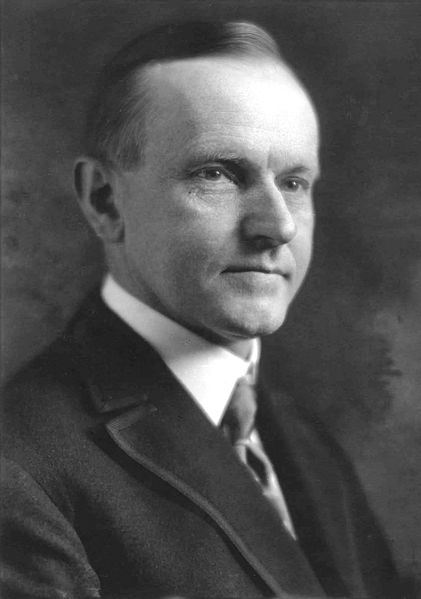
“All growth depends upon activity. There is no development physically or intellectually without effort, and effort means work.” – Calvin Coolidge

Calvin-Coolidge
Calvin Coolidge was the 30th president of the United States.  Read about him and get your learn on.

As with many of my blogs, this topic developed out of a conversation. I was speaking with a semi pro player I have come to know over the past year. We were discussing our opinions on what a “paintball coach” really is or should be. I, personally, believe it is the role of the coach to create an environment where the players can be just that… a player. The coach needs to remove all external factors to make sure the player’s focus is on getting better and performing well. In other words, create an environment where they can be their best. If I keep bringing issues to the players, if I bring drama, I am putting roadblocks in their progress. Why? Because I am distracting from the number one goal of being a coach… helping and guiding the players so they perform at their peak. The coach needs to recognize the strengths and weaknesses of each player, and leverage them against the layout. Then, during a match, leverage those same strengths and weaknesses against the opponent within the parameters of the layout.

If you can recognize how a player responds or rather how they learn, then you can “coach” them more effectively. One size fits all works with some teams but most teams are pretty diverse. You have to know how to approach each player individually and know what motivates them. So let’s focus on DEVELOPING a player.

In my experience, there are three things that cause teams to fall short or adversely affect their performance:

1. Not clearly communicating expectations
2. Ineffective/infrequent/inappropriate feedback
3. Lack of accountability

So if the above is bad it makes sense that the following would be better:

1. Clearly established expectations
2. Continually coaching (environment of always learning)
3. Creating accountability

Bruce-Lee-
You better know who this man is.

“Ever since I was a child I have had this instinctive urge for expansion and growth. To me, the function and duty of a quality human being is the sincere and honest development of one’s potential.” – Bruce Lee

These are the 3 most important steps in developing a player, as well. From this base line, all goodness will spring… which means you need to establish a good base line. Without a good base line, all badness will spring and now you’re in a pickle.

EXPECTATIONS

How do we effectively manage expectations? I believe when you establish an expectation and/or a goal with a player (and the team for that matter) there needs to be the understanding that they currently have the capability of achieving it but that it is challenging enough to push them.
As a coach, you and the player or team, should understand that these expectations should have a “cadence”, and recognize which are priorities. Develop a consensus on that and you should be off to the races.
I have found that teams perform better and learn quicker when the players are responsible for both individual AND team goals. In other words, the focus of the individual player should be to improve something about themselves that leads to the overall strength of the team. If the betterment of the individual doesn’t increase team capability, we’re wasting time.

COACHING

Another 3 pack for you to consider. Coaching should have a minimum of 3 components. And this shouldn’t just apply to paintball but all aspects of life. The three “F’s”:

1. Frequency
2. Focus
3. Fairness

IMG_20160320_182132
Everyone should get something out of it…

Always engage. Always look for ways to improve. Now this doesn’t mean rag a player over and over every point and every drill. You have to find the balance. When you see an opportunity to create an improvement, say something. If they ASK you, respond. You should WANT the engagement. Most players WANT to get better. And this doesn’t have to just be the coach. Players can make players better. Steel sharpens steel.

No matter how frequently you engage, if there isn’t a purpose behind the engagement, if there isn’t a focus on what is or was the issue, then you are simply creating static. This can lead to a nagging relationship or a stressed player who is afraid to be engaged.  They will usually shut down. Make sure there is a point.

Finally, be fair with criticism and praise. If you compliment a player on an accomplishment make sure others are receiving similar positive reinforcement. Same with criticism. If someone’s doing something wrong, call it out but not just when THAT person does it. When ANYONE does it.

lao-tzu
Lao Tzu was a Chinese philosopher and the created Taoism

“The key to growth is the introduction of higher dimensions of consciousness into our awareness.” – Lao Tzu

ACCOUNTABILITY

This one is easy. Recognize success, celebrate it, but do NOT ever ignore failure. Identify it and embrace it with the understanding it must be fixed or improved. Or over strengthen a strength. If you create a positive environment, the players will usually hold THEMSELVES accountable recognizing things they need to work on. THAT is a great thing unless that’s all they are doing and they become Eeyore from Winnie the Pooh (okay, some of you just went… “What??”. Google him.)

Be careful though. Measuring performance can be subjective, especially in paintball players. Set individual goals, develop some metrics, and observe. Base it on the data you have and can read/see.

100_1250
One on one time is important in development

All three of those components can be summed up in the following analogy – The report card!

Remember when you used to bring your report card home to your parents? (Do they still do that or does the new generation not get held accountable? Perhaps grades are a micro-aggression… I don’t know these days…I digress) Let’s say you bring home 3 A’s, 2 B’s, and a C. Where does the conversation with your parents start? Usually around that C, yes? If not, maybe it starts with the A’s and then the C? Either way, they both should be discussed.

I will leave you with this. Ask yourself these three (there’s that number again) questions in conjunction with everything stated above:

1. What’s the goal?
2. What does success in reaching that goal look like?
3. Always align a player’s goals with those of the team’s needs.

Count-Dracula-3-Sesame-Street
This blog post was brought to you by the number 3 ah, ah, ah….

Remember, you can create your own truth when you don’t hear the truth…

Be water my friends

I Spy

Happy New Year!  The season is soon to begin and in some instances, has already begun.  Coaches, captains, and players alike are all getting in on the “grind”, preparing for what could be their most challenging season yet.  Preparation, as we have discussed several times in the past, is multi faceted.  There are several elements that go into preparing, training, creating, in order to roster a winning team.  Just like in other sports, it is critical to have the right mix of talent on your paintball team.  I thought, since it is the beginning of the year, we should look at a specific aspect of team building.

A team/coach needs to understand not just the fundamental level of talent but how that talent is spread out and in what areas.  In other words, what is the depth of your roster?  This is the topic of this months blog – roster depth and recognizing talent.

49522503_2301682633385368_9149162092970901504_n
Try outs are a great way to scout and recognize or select talent

In all team sports, every serious team looks at their “depth chart”.  This is usually a list identifying the starter in each position.  So, a starting player would be listed first or at the top of said list, while back up or second string is listed after or lower on the list.  The list is developed and based off capabilities or who is better at what when.

Now, before I go any further I want to explain my stance on paintball players and their positions.  I’ve had this conversation several times lately but I feel it bears mentioning due to our topic.

Yes, I believe in developing a paintball player versus a snake player or a dorito player.  If you identify as a snake player, dorito player, or as a cat, you have already limited your abilities on the field and my ability to utilize you in a game setting.  I prefer to use the terms 1’s, 2’s, and 3’s.  In its most simple form, it would go like this; if you are a “snake player” – you’re usually fast and a good gun fighter (hopefully).  These basic precepts apply to dorito players too (I would hope).  So if I have a fast gun fighter, why shouldn’t he train for both environments?  Playing from your feet, knees, stomach, should all have the same basic principles, yes?  Take into account the field layout and how a player does based off its shown opportunities…well…

I believe that it’s solid for players to cross train anyway, to try different positions on field, especially given layout changes.  This is in hopes to better understand what the opponent can and cannot see.  It also gives the player a better perspective and understanding of how their opponent may act in certain circumstances.  I also am a firm believer that layouts will dictate player’s capabilities by highlighting strengths and exposing weaknesses.

Couple this with the fact 2’s (mid players) should be able to play both front and back and that 3’s have to be able to take the 2’s spot and clean games up, that means they should be familiar with the 1’s and 2’s capabilities/knowledge set too.  Translation?  Everyone needs to know how to play everywhere.  Does that mean you don’t have “specialists”?  Not at all.  Can you have specialists?  Certainly.  Especially at higher levels.  So it’s not an outright disregard or disposal of the thought process.  Simply a different look or approach to training and improving ones skill.

when-everything-seems-to-be-going-against-you-remember-that-the-airplane-takes-off-against-the-wind-not-with-it
This.


Okay… moving on.

When we look at roster depth, at least in paintball, we should be looking at several factors.

  • Experience – How have they learned/grown from their experience? Are they knowledgeable. Can they articulate it?  Just because someone has played a long time doesn’t instantly make them “experienced” by the way.
  • Physicality – Are they physically fit?  Are they durable, have good cardio, think clearly when tired? Injury prone?  Are they fast, slow?
  • Skill set(s) – What are the players strengths over all from a fundamental perspective?  Good laner, snap shooter, gunfighter, communicator, head for the game?
  • Character – Are they coachable, do they listen, are the respectful, are they loyal, are they a team player, do they get along, fit in the culture?

How do you measure these things and how do you develop your own depth chart?  This all begins by understanding the difference between “recognizing talent” and “picking talent”.

Now, most paintball teams happen organically.  What I mean by this is most teams are a group of friends or acquaintances who attend the same field or know each other in some common manner.  It isn’t so much about the “draft” so to speak but working with what you got.  Honesty is a big part here.  But that doesn’t mean you can’t utilize what you have, take a serious look at your roster depth, and plan accordingly.

img_20190106_114332
Watching.

Where was I?  Oh yes…

Picking talent is easy.  “That guy is a good player.  I just watched him get two consecutive 3 packs and no one has stopped him.  And he seems like a cool guy.  We should pick him up.”  Easy.

Recognizing talent is a little more nuanced.   I would go as far as to say an “art”.  This is the evaluation of how good a player can be based off their existing capabilities.  In other words, you are predicting whether or not a player will grow in the future based off their current physical, technical, and psychological qualities shown.

The major difference between the two is that one will probably get you better results starting day one.  The other will more than likely (if done correctly) build you an elite player for the future of the program/team and get you results down the road.

Several teams I have encountered over the years have the “win at all cost” mentality.  This is usually what leads teams to actively searching out better existing players (picking talent).  Not many have the patience, desire, or even capability to farm talent.  And that is understandable.  When you focus on building a team based off picking existing talent throughout the area (or even more so, outside your area), you are basically picking team members to start the winning process right away.  This, of course, includes  cutting those team members/try outs who do not help with the winning process. This will certainly lead to short-term successes.

1393190_10151975922663010_1900971888_n
I spy talent…

However, teams that do this have a tendency to be short-lived or see sporadic success.  They didn’t invest in the culture, they didn’t invest within the team name, all topics we have discussed in past blogs.

Now teams that choose to identify talent and farm it have a tendency towards a little more longevity.  They certainly have a healthier culture (in my opinion) and are usually the greater “team”.  Paintball is, in fact, a team sport so I don’t see why that wouldn’t be an advantage.  Is this always the case?  No.  Same with the paragraph above.  From my experience, it is true more than not.

I will say that I believe this is where solid coaching comes into play.  Not just in recognizing talent but ensuring the creation of an environment in which players can thrive and learn.  The coach must be able to know what that player needs to work on, how they need to work on it, how they learn, and recognizing what motivates them (and not necessarily in that order).  A coach must target the physical, psychological, and technical components of a player then identify if a player does indeed have what it takes to become a great or elite player.

Talent recognition is obviously a long-term approach to player selection and development since it mainly emphasizes training players instead of cutting all but the best ones and finding better players to fill the gaps. Of course, identifying a player who you think has what it takes , investing the time, and then learning you were wrong can be a bummer.  It happens.  But that almost always lies with a misidentification of that players attitude and willingness to learn or the culture that exists around them (environment).

26168502_2027954253886934_2137868186803752161_n
Not a bad guy to have on your squad.  But he is old and ornery…


Some teams have farm teams, usually lower divisional teams, that they try to build.  Of course, some programs use these teams to fund the higher level team (I can’t stand this  if it isn’t mutually beneficial.)  One advantage of having farm teams that is often overlooked is, you can transfer players up and down (barring APPA rankings).  A player doesn’t have to be cut if they are just learning at a slower pace.  Its like having  majors and minors in baseball.  We’re not cutting you, we are putting you on this roster until we get you up to the speed we need you to be.  Of course, you have to be careful as sometimes other teams will scoop them up.  You also have the issue of your top players, if the culture isn’t sound, feeling they are not growing, or you surround them with sub par players, you run the risk of them leaving for another team.

The key is balance.  If you help the less skilled ones catch up technically to the proficient ones, you are in a win/win environment.  Your talent book just doubled in size as did your roster depth.

We need better coaches in our sport too.  But that is a blog for another day.  Better and more educated coaches in our sport will lead a better understanding of the difference between picking and growing talent.  Hopefully more decide to teach and encourage players to develop rather than try to win at all costs.  Again, not that there is anything necessarily wrong with the latter…

Be Water My Friends…

Who’s with me?!

Let me set up a scenario for you.  Tell me if you’ve heard this one…  You’re just returned from a tournament and the team didn’t perform well.  You thought for sure this was your event.  Sure, you struggled the first 3 events of the series but this time was supposed to be different.  Unfortunately, it wasn’t.  What now?  What next?  What do we do?

Who has been there, done that?  Probably 80-90% of the tournament teams out there actually.

“Mindset is what separates the best from the rest.”

Staying motivated after spending time and money to compete and not seeing results can be one of the most difficult issues to overcome for a paintball team (well, for just about anything really).  Motivation is ultimately what leads people to try harder, and more effort usually leads to gains/production for people.  But more importantly, it will lead to eventual wins.  Winning leads to all sorts of good things, which leads to growth in a team’s capability.  On and on the cycle goes… most of the time.

IMG_20180913_183145
Who dreams of the Sunday club?

Unfortunately, there isn’t a magic bullet or drill or strategy that will make all this happen.  Motivation, for the most part, comes in a multitude of ways.  I’m willing to bet that almost every member of your team is motivated by something completely different from one another.  Everyone has unique values and ideas… which leads to a conundrum sometimes.  What motivates one may not motivate the rest.  If you are going to be successful in motivating your team to stay the course, then you have to create that motivational environment (we’ve talked about the culture before yes?).  Nothing will beat hard work, especially when all the hard workers want the same thing.  If you don’t have that luxury of having a team that all rows in the same direction for all the same reasons, then It will take multiple concepts.  Here are a few I have found out over the years that have seen success.  Some you have read about her in the past but it never hurts to have a refresher course:

Set an example

If you are the captain or the coach or the manager, be a leader.  Set the pace, be the example, set the bar!  If you are pointing and telling instead of showing and going, players will not respond well.  You set the tone of the practice, you set the tone of the team, you set the environment.  It can be one of positive growth and affirmative accountability or it can be one of negativity and laziness.  Which do you think a solid good player is going to actively search out and respond to?  Your work ethic and the values you hold dear to your team will determine its longevity.  By setting the right example from the get go and maintaining that example, you will have a meaningful impact on the team’s willingness to follow.  YOU will be the motivation.  For instance, if you drill hard and stay optimistic about everything, even in the face of defeat, or at the bare minimum take an intellectual approach to problems and issues as opposed to just identifying failure, your team will likely do the same. If you set the example with positivity and understanding, your team will mimic you, and the entire culture of the team will become one of motivation.  That’s an environment that IMPROVEMENT will thrive in.

“Don’t Talk. Act.  Don’t Tell. Show. Don’t promise. Prove.”

IMG_20180901_110732
One will.  One goal.  Everyone rowing in the same direction.

Honest Communication is Paramount 

This goes hand in hand with setting the example.  Everyone needs to feel comfortable giving input.  It is the leader’s job to focus input but everyone should feel comfortable enough to comment on matters of the team.  If a player is afraid to ask a question, it stifles growth and promotes an environment of frustration.  Frustration leads to anger which leads to the dark side.  But here is the biggest impact open honest communication will lead to; it leads to trust.  When people understand that leadership isn’t hiding anything, when they understand what is driving the decisions, when they understand the motivation, they are much more likely to trust in the process and the deliverer of the message.  If you openly communicate, you should gain respect.  But that communication has to be both ways.  Open communication and trust lead to clarity of vision and that is really important with a paintball team both on and off the field.  Players who feel appreciated for their input will create opportunities to identify potential problems before they even blossom.  Earlier we said everyone is unique.  They can also be unpredictable.  Know that, no matter how flawless you implement your motivational concepts, not everyone will get it.  But also recognize that one out of 8-9 players doesn’t mark failure.

Individual attention

While teamwork is important, it is hard to beat some good ol’ fashioned individual attention, especially when it comes to motivation.  In a paintball team environment, it is easy to get “lost in the shuffle”.  Taking time out to speak to a player alone and on a personal level can change a player’s attitude almost instantaneously.  It doesn’t have to be about paintball even.  “Hey man, how’s the family?  Good?”  Then do something that is even more important than asking about them… listen.  In order to motivate someone, knowing them, really knowing them will give you tremendous insight in how to do so.  What ails them, what scares them, what they like, don’t like.  Know it, learn it, and then use it to help make them a better player and person for that matter.

When a player does something well, comment on it openly.  It will not only make them feel appreciated but it will also let the other team members know that, if they do well too, it will be recognized.  The domino effect if you will.  It can be contagious.  But probably the most important aspect of this motivational technique is for when someone is struggling.  They are beating themselves up or they haven’t had a couple of good practices, or what have you.  Letting them know you see it, and you want to be an asset to help, can be just the right motivator.  It also demonstrates from a leadership role that you have best interests in mind.  Even if it means cutting them.

received_2287610521268801
Motivation comes in many forms. (Thanks Mr. Mohr! Really, I’m not angry)

Opportunity/Creativity

We all do it.  We get into a routine and soon that routine becomes just another motion and the benefits of the routine become lost.  They become… well… boring.

Throwing in some things to break up monotony of practices or setting specific goals for the team (or even each individual player) can be a big win on the motivation search.  I have found “No position is safe” is a great motivator; then couple it with cross training.  Have my 1’s play the 3, a guy who usually specializes on the snake play the d side.  Have fun with it, create a little bizarre world and see what unfolds.  Who knows, you never know, you might discover something about a player or players you didn’t know before.

Besides, you all know I believe in making paintball players… not a snake player, or a back player… etc. (although having a specialty player isn’t necessarily bad, I would just prefer everyone know how to play everywhere).  This is a great motivator too if you have a feeder team or players who hang out looking for an opportunity.  Give them the shot.

“It’s a slow process but quitting won’t speed it up…”

IMG_20180902_215155
Put in the time and the time will pay off

Take a break

HOW you create the environment is just as important as it will determine WHAT the environment ends up as.  Like we stated at the beginning of this blog post, how you go about creating the environment will affect the overall “vibe” of the team.   Be advised, again, there is no right or wrong way… that will all depend on your team’s make up of players.  It’s going to be different for every team.  I have always preached that the teams getting after it will always surpass the teams who don’t.  But that doesn’t mean that you can’t do other things than paintball together.  Eat dinner together, go play putt-putt or something stupid together.  I personally like to take guys to the shooting.  Something that will build comradery and teamwork while having fun outside of the normal reason you get together as a team (practice or events).  Trust me, this one is worth it.  And who knows, maybe you and the team will learn something…

Trying to separate your paintball team from your social circle just doesn’t make a lot of sense.  Sure, it can work, but I think a lot of successful teams break bread together among other things.  I’m not saying everyone on the team should be best friends.  But that doesn’t mean you can’t associate outside of the field.  Being at least friendly and cordial is important especially on the trust front.  I like cook outs.  Brew and meat.  That’s awesome.

…Here’s the thing and I will leave you with this.  The key to ALL of this, whether you are a coach or a captain or what have you, is simply focus.  That’s right, motivation is ultimately finding a way to focus on a goal.  If I can focus you as a player or a team on a specific goal and arrange it to where you are all moving in that same direction with the same intensity, you will see results.  Simple right?  No, but it becomes easier if we follow the topics we discussed above.

Okay…I will shut up for this month.  Thoughts on the topic?  Agree/Disagree? Let me know in the comments.

Be water my friends.

I Feel the Need…

… the need for speed!

When Tom Cruise and Anthony Edwards’ characters delivered this line in 1986’s Top Gun, it was quotable gold to my 14 year-old mind.  Go fast, go hard, or go home.  It serves our hero well early on in the film.  But as we all know (Okay…Spoiler alert!) and much to everyone’s chagrin, that strategy eventually gets the lovable character “Goose” killed… and our hero learns the value of teamwork and controlled precision.

top gun
Classic.  And a total paintball analogy…

Now, you may be thinking to yourself, what in the world is Zen talking about?  More than half of you reading this probably haven’t seen Top Gun and probably weren’t born when it came out.  But then, you would seriously be missing out.  Why?  Well, it should be painfully obvious had you seen it.  Top Gun is a perfect analogy for competition paintball teams.

Speed kills.

“Luck is a matter of preparation meeting opportunity.” – Lucius Seneca

Let’s start with lower divisional teams.  But before we do, I want to get something off my chest.  Everyone started somewhere.  If you are one of those people who judge a player by their APPA ranking; stop.  You want to know how to improve the “speed” in which someone gets better?  Try helping them.

Okay… moving on.

Fast, aggressive lower divisional teams, in my opinion, almost always have the advantage over their competition.  I am not talking about every member of the team running a 4.4 Forty (although, that would certainly help).  No, I mean aggressive, get up the field, imposing pressure, in the other team’s face, risk versus reward, speed.  Early on in paintball careers, most beginning ballers aren’t thinking three dimensionally.  They usually have tunnel vision, engaging only the guy in front of them or only those they see.  They aren’t “zoning up” and they haven’t learned how, as a team, to plug the holes.  It’s probably worth mentioning that most teams haven’t learned to recognize the holes yet either.  They usually guess or force it.  How many D5 or D4 teams have you seen when a player takes a big bite and makes it clean and the opposing team does what?  They panic.

“50 snake! 50 snake! I said 50 snake! OMG 50 snake! Oh dear lord! 50 snake! Is no one listening?! Dear lord, we’re all going to die! 50 snake!”

thWJZFSZBM
An underrated 90’s film that is another great analogy for lower divisional teams…don’t step off the gas!

And then what usually happens? All the guns turn to the snake.  I mean, EVERY gun.  What should (and occasionally) happens then?  The D side players of the opposing team take ground.  Obviously this is a broad brush but I think you understand my concept.  Speed and aggression kills the bad guys at lower divisions.  Speed and aggression win paintball games.

“Success depends upon previous preparation, and without such preparation there is sure to be failure.” – Confucius

As players and teams progress up the divisional ladder, things begin to change.  I think the general concept of speed kills essentially still holds in D3 but now we start to see other variables coming into play.  For instance, the layout starts to play more of role and has a more definitive impact.  A slow layout may be the nemesis of a fast team.  D3 camping teams do well on slow layouts, and D3 aggressive teams do well on aggressive layouts.

D2 and up you need to start seeing a shift.

Higher division games, speed still kills, but usually when a team only has one speed, fast.  And it usually means your demise.  Having one speed and not understanding how to shift gears, well… that will get you killed fast.

maxresdefault
Don’t forget the clutch when shifting! (See what I did there?)

This is when you really start to see teams who understand the game.  This would be the perfect segue into “controlling the pace of the game” but we are going to save that for another blog.  How many times have you heard me or someone say, “Make them play your game”, yeah that. (maybe the next one).

Anyway, so how can teams improve their ability to shift gears from fast to slow to fast to whatever?

Here are just a two suggestions.

Two Scouts

The fastest way between two points is a straight line, yes?  Efficiency is key.  So we need to be prepared.  You need quality eyes.  What I mean by this and it may seem difficult for some teams to accomplish, is having two types of scouts.  Most teams, when able to scout a team, have someone tracking where their opponent is going off the break each and every point.  That’s a given.  But what do they do with the data?  We should be looking for two things here; patterns and statistics.  The pattern aspect will show you a rhythm to their plays.  The statistics will show you where they like to push from and where they are winning from.  As Bruce Lee use to say, “In order to hurt me, you must move to me, which offers me an opportunity to intercept you”.  Same concept here.

The second set of eyes are tracking where their guns are on the break.  If we can identify where they are zoning on the break, where they are putting their assets, we can then identify/recognize the “holes”.  We can develop our plays to counter.  We can speed up our progress down the field with risk vs reward maneuvers.

i-wkXFsk6-L
See????   Too fast….

Situational Drills

How many times have we talked about processing speed?  How many times have we talked about field walking?  How many times have we talked about identifying specific bunkers having specific roles?  How many times have we talked about clear, concise communication?

If you identify key bunkers for key jobs, utilize solid communication to get there as well as understand who is where (threat vs asset), recognize what to do when you get there, the speed of which you make things happen will leave the opponent a step behind.  I say this all the time when coaching little league baseball.  “Know what you are going to do with the ball when and if you get it.”  Same thing applies in paintball.

The fastest way to improve those abilities is situational drills.  After running several points on a layout, you will start to recognize patterns.  When you see them, recreate them in a situational drill and figure out what has to happen in order to improve your chances of success.  The most common one teams run into is “breaking the cross”.  This is when your opponent has two players in key bunkers who can defend each other.  You have to cross lines of fire/kill zones to dig them out.  Done enough, you start to recognize exactly what needs to happen when you run into it at the event.  You have just improved your processing speed.  Well done!

“The more complicated and powerful the job, the more rudimentary the preparation for it.” – William F. Buckley, Jr.

Watch the pros at the upcoming NXL Dallas event if you have the opportunity.  I’m sure you will be able to recognize the difference in “processing speed” between particular teams.  It’s not that the teams who are losing are bad teams.  It’s simply their processing of situations is not as good as the others (among other things).  Some teams have worked and played together for so long that their “game speed” is easily recognizable.  They know how to downshift and when to shift into high gear.  It is truly awesome to watch.

i-Hd726Gp-L
Finding the path

That’s it for this month.  Don’t forget to comment or reach out with questions.  Would love to hear from you.  In the meantime,


Be water my friends