Be B.E.T.T.E.R.

“Good, better, best. Never let it rest. ‘Til your good is better and your better is best.” – St. Jerome

How many of you wake up every day with a positive attitude? How many of you get out of bed and think to yourself, “Today, I am going to be better than I was the day before.”?

I recognize that not everyone does this. But I am a firm believer that if more of us did, the world, especially the paintball world, would be a much better place. Positive thinking will always lead you to improvement much quicker than negative thinking. I am not ignorant enough to think that negativity won’t rear its ugly head in the most positive of people. Of course it will. But improvement has to start by recognizing you CAN do better and you have to recognize that it has to START somewhere. For instance, if you think you can improve your paintball playing, you’re probably right. If you think you suck and will never improve, well, chances are you’re right about that too.

So is this blog post going to be about the power of positive thinking? Maybe. Maybe not. I’m making this up as I go really but inspiration always strikes somewhere, yeah? I had the distinct priviledge of being asked to commentate this past weekend for a paintball webcast alongside a good friend of mine. I remember thinking, just do your best, try not to be repetitive (I was), silly (I was), or sound dumb (I did a few times). Besides having to speak about the action on the field while interacting with my friend/cohost (both trying to be somewhat interesting), we also had people in the press box talking and yelling as well as had an earpiece in where we could hear the director (shout out to my new friend John from Almost Famous Media) and occasionally a 30 second delay of our own voices. It was tough so hats off to the guys who do this on the reg. When the weekend was over and the last hand was shook, I realized a few things on the drive back home. One, I had a blast and want to do it again. Two, being johnny on the spot while trying to speak effectively and keep it interesting is not very easy. And three, If given another chance, I want to do better… and that got me thinking. What would that mean and what could that mean for others, especially paintball players/teams? So I came up with this:

aaronbianca

BBelief

EEnthusiasm

TTraining

TTeamwork

EEvaluation

RRecognize

I have been around some successful people in life. And they all seem to have something in common. These successful people are predominantly optimistic. They all took what life threw at them and turned it into something that was good. They chose to learn from adversity as oppose to being a victim. They each took action; they set a goal and went for it. They realized that success is achieved through a few simple behaviors that they repeated daily. But most importantly, they believed in themselves. So as a player or as a team, you have to believe you have what it takes. I heard recently that you can maintain the status quo or you can take a risk. You can be courageous or safe but you can’t have both. So believe in yourself, your team, as it is this belief that will start it all off.

1796696_10152209508648010_70681832_n

“Well done is better than well said.” – Benjamin Franklin

I can’t remember if it was my mother or my father who told me that, if I didn’t expect great things to happen in my life, I would never recognize them when they did. It is easy to get bogged down. The pursuit of improvement can be tiring. You need to maintain that enthusiasm and realize your greatest moments as a player or as a team are ahead of you. If you’re going to play paintball, play paintball to have fun, play to win…

Any action is often better than no action. You have to actively get up, drive to the field, and play. If you wish to improve, it you wish to do better in the true sense, you have to practice. In other words, you have to train to get better. If you don’t feel you are improving, are you really putting in the work? Are you focusing on the right aspects of your or your teams’ game? When you make a mistake in practice or someone offers constructive criticism, do you learn something? If you do, guess what? It’s no longer a mistake.  It was a step in the right direction, a step towards being better.

561753_10151248704513010_1878103550_n

“Ever tried. Ever failed. No matter. Try Again. Fail again. Fail better.” – Samuel Beckett

It doesn’t happen overnight. You have to take baby steps. But you have to trust in the process, you have to trust in each other, you have to be a team. Be humble as you execute but visionary and gigantic in terms of your aspirations. In paintball, it doesn’t have to be about VAST improvement. It needs to simply be improvement each time we step out. 0.01% gain is still a gain and it adds up. How many times have we talked about the 0.01% gain? An improvement is an improvement. Any step in the right direction is positive.  Being a team is about TRUST.  Trusting each other and being on the same page.  It isn’t easy but when you find the right crew, the right mix, and everyone is rowing in the right direction, good things almost always happen.

Every once in a while you need to stop and recognize where you were, where you are, and where you are going. Take the time to evaluate everyone’s progress. Who is struggling, who is excelling, and why. Don’t be harsh but be real. Don’t sugarcoat, be honest, but truly understand strengths and weaknesses.

73886_469749378009_2348301_n

Then recognize it all for what it is. Speak truth to power. Have no fear. Do what is necessary but do it with integrity.

What are some words you would use for the acronym?

Post up in the comments and let me know.

Be water my friends,

Zen


Gun Fu #7

I am always looking for ways to improve. Not just myself, no, I am genuinely interested in finding a way that can translate into improving others. The pursuit of developing processes to improve an individual or team capability is important to me (why else would I do this blog?) Trust me, when you see that lightbulb go off in a players head, when he/she “gets it”, it’s a great feeling. And you can learn a lot from watching and listening to others, as well.  I also appreciate a good success story, mostly because I enjoy learning about someone else’s path, the struggles and the successes. This is one of the reasons I am more interested in Divisional player’s accomplishments and journeys. I think they bring a great perspective and insight to the process. Which brings me to this month’s Gun Fu article.

I met this player in 2016 at a WCPPL event.  We were teammates.  We were both guesting on a team and hit it off.  I learned back then that this guy was motivated and I appreciated what he brought to the pit as well as the field. We would meet again that same year, except this time across from each other in the Semi-finals of World Cup.  Afterwards, we shook each other’s hands and promised to keep in touch. And so we have.

1454658_10202368517596293_1906378198_n
Mr. Stephen Mazurek

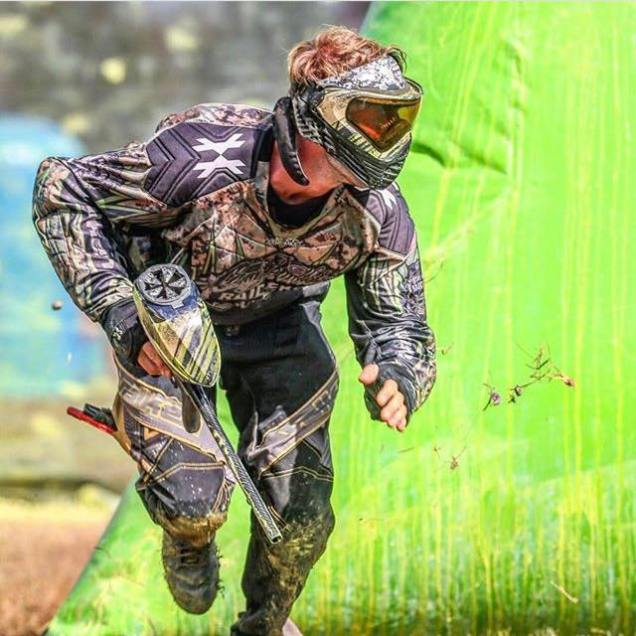
Stephen Mazurek is 27, lives in San Diego, CA, but is originally from Commerce, MI. He first stepped on a paintball field at age 13 with his church group. He already had a passion for toy guns and nerf so, it was a natural fit. This happened at Atomix Paintball, an indoor field, close to his house.

“The first game I played I did some work in the snake and decided it was my calling.”

1391534_10202207708776173_1043587684_n
Snake work

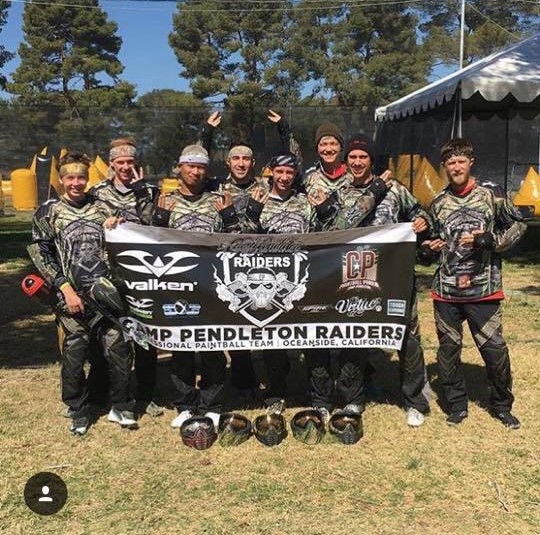
Stephen plays with the Camp Pendleton Raiders these days. The program has had some big names on its roster: Ryan Martin and Toke Hamil played with the Raiders (Ironmen), along with Andrew Johnson (TMG Outlaws), Ryan Collette (Ironmen), Rich Avila and Joel Buffington (XSV), and Rodney Squires (Dynasty).  They are currently ranked 2nd in the NXL series less than 2 points out of first place.

“They started in 2012, as Camp Pendleton’s home team, which is I think when NPPL was reborn again. They had their first professional win at the New England Open in 2013.”

The road to the Raiders roster was a long one but not lacking of adventure or experience. It even involves a solid name in paintball that has been mentioned here before regarding our last Gun Fu interview:

“Prior to the Camp Pendleton Raiders, I played with quite a bit of other teams from Michigan. My friend and I started our first 3-man team, Detroit Vengeance and took 3rd at our first young guns. From there I went onto Detroit Action, then Grind, a couple guest appearances with the Farside Kids NPPL team, a few events with CRU LT as well, but then spent a majority of my blood, sweat, and tears with 810 Thug Life! Gotta throw a quick shout out to Raw Material as well!”

14718796_10210776352666915_5151345262316912501_n (2)
The Camp Pendleton Raiders

So how did he end up with the Raiders? After all, they are based out of Camp Pendleton (its right there in the name) out near San Diego:

“…I was in somewhat of a repetitive cycle back home in Michigan. For Christmas my family took a vacation to California. My sister, brother, and I each got to pick one activity to go do while we were there and of course mine was to go to the infamous Paintball Park at Camp Pendleton. I got dropped off at this awesome venue, with 4 turfed fields, complete with pits, air stations, gun racks…and no one to play because of the holiday weekend (the recreation side and tournament side are almost two different worlds). Luckily two now good friends, Fran and Nikki showed up, along with a couple walk-ons and we got to play a few 3 on 3’s. By noon everyone was done and as I was getting ready to call my dad. Nate Schroeder (former Ironmen, currently Infamous) showed up and Nikki introduced me. We had a good drill session and after he invited me to experience San Diego down in Pacific Beach; let’s just say I had too much fun followed by another awesome day at the Paintball Park! About a week later there was a post for a Combine at the Paintball Park. That was my sign. I talked with my parents and they were very supportive. So I drove out with all my savings and nothing but a dream. It was a 3 weekend long combine and by week 2 the Camp Pendleton Raiders claimed me as one of their own!”

1526715_10152911303951164_2316592779623196103_n
Stephen and Nate

Think about that? When this guy decides to commit, he commits! That is truly believing in yourself and your dreams. So I decided to test him, to really see what he was about. Without fail, he showed a maturity and straight forward thinking I find rare these days. I pressed him about the Raiders’ record in the NXL’s semi pro division. They struggled in that division but saw some success in D2 in 2016 with two Sunday appearances.

However, they went back to Semi Pro in 2017 and struggled again. This year, Stephen and the Raiders have been competing in NXL’s Division 2 and started the season off right winning the first event of the year in Las Vegas followed by two Sunday showings in Texas and Atlantic City. So I asked him about that decision process.

“It unfortunately was an easy decision to make. Our team seems to do a small rebuild every year, which is why we are always on the bubble of Division 2 and Semi-Pro. I’ve learned the hard way multiple times to take it slow. Baby steps. Forcing ourselves to compete at a level we are not ready for, can hurt a lot more than it will help. Although, I am always one to push for us to play at the highest level possible but, if it is not productive, it will not be beneficial. The gaps between divisions can be a great one. Not always for an individual but, for a team it can be and you have to do what is best for the team.”

10317836_10203680508915256_1475064814295090082_o (2)

So what’s the big plan? What are the aspirations for himself and the Raiders?

“Of course my aspiration for myself and the Raiders is to compete on a professional level one day but, besides that, it’s really to just continue a forward, positive progression to being the best we can be, whether it is on or off the field. I think that is the most important thing.”

I love that answer… forward progression and being the best we can be on and off the field.

18953080_10213196043237667_543361560009331343_n
Epic photo

Now that we have a baseline, let’s get into the nitty gritty. Let’s find out what makes Stephen tick. What does he love about the game? What does he hate about the game? Again, he approaches the questions with a well thought out and mature answer.

“Wow, tough question. What I love and hate is the same thing and that is how amplified every detail in paintball can be, yet you only have control over so much. The fact that I can work to have the best snapshot, but my paint can still bounce. You can have perfect game plans but, if you’re team doesn’t work together, they will fail. Win an event, but not know exactly how it happened. On the opposite end you can have had a bad shot but, the paint will break when it counts. Bad game plans but, if the team puts in the effort they can be executed to success. Or lose an event and know every detail why. It’s a constant battle from event to event, weekend to weekend, even day to day, to achieve perfection without knowing all the answers. Once you do achieve that win, it’s impossible to replicate even though it just happened and you can replay it all exactly how it happened in your head. Long story short, the path is always changing. I love it and I hate it, but that’s why I stay on it.”

1939784_10203334483304832_507946629_n

Excellent. So how does Stephen “stay on it”? How does he train? What does he as a player focus on? What are his strengths/weaknesses?

“I really focus on game plans which turns into both my strength and weakness (funny how that works). I have a good ability to understand the whole plan and what the next step should be to complete it. That brings on the stress of worrying about a lot more things than myself. So I have a constant battle of staying focused in my own mind, while still thinking about the team. Although it’s not a bad thing, there is already a lot one has to do to play at 100%. Adding on extra thoughts just makes it that much more difficult, but when the team needs answers, it’s nice to be able to give valuable input with the overall team in mind and not just what I can do better to win.”

So, what are some of his favorite drills to run? Why? How do the Raiders prepare for an event?

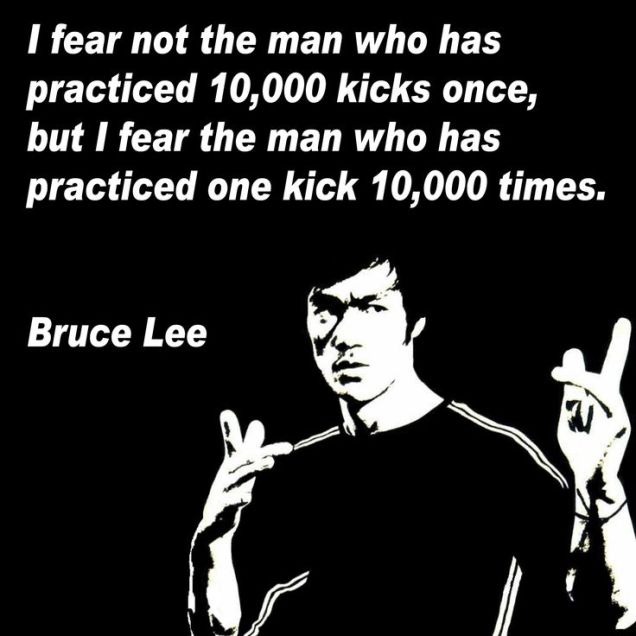
“I do these drills I call “advanced tactics” because it sounds cool but, it’s really just one, two, or three shot drills. Unlike normal one or two shot drills, you do them with the full intensity of a game. Accuracy and speed are both important. I create each “advanced tactic” based on what I think I need to work on. Because no two points in paintball are the same, why should the drills be? For example, the Atlantic City layout I played back center, mostly shooting snake side. So I set up two targets. One for the second dorito on the snake side and one for the corner. I would call the 5 seconds just like the point but only have two shots to hit the targets. Come off the gate full speed and try to hit them in the right time with two shots. If I can do that, imagine what I can do at the full 10.5 bps! I create these for running and shooting to a bunker where I know a player is usually posted, or an odd snap shot (like completely wrapping a corner to put one ball at the back center) on a layout that would be really beneficial to have in my arsenal”

This is somewhat reminiscent of a Bruce Lee thought…

feb628afc09cf882b23d46dcdbc32437

Stephen isn’t shy about who he admires or wishes to emulate.

“Ryan Greenspan. Even though most people know me for playing the snake side, I really pride myself in my ability to be a utility player and I think Ryan is the best utility player out there. He can play all the spots with great precision and can go from the snake side to dorito side and back in the same match without hesitation.”

If there was is one piece of advice you could give to up and coming players, what would it be?

“Be the best YOU can be for the TEAM. I don’t mean be selfish. What I mean is that everyone’s perspective or reality of 100% time, contribution, and, dedication to paintball is NOT the same. As long as you are giving 100% that is all that matters and you will get to where you want to go. I show up early to drill because I have the time, I spend less money on paint because I don’t have extra to spend, I fill extra pods for my teammates, but will play every point at practice if they let me. Do everything you can to be the best individual, always.”

Wise words my friend.  Very wise indeed.

Thanks to Stephen for the back and forth and best of luck to him and the Camp Pendleton Raiders as they prepare for Chicago and World Cup!

Be water my friends….

Preparation H

I have been talking with a few captains and heads of programs recently about preparation. Discussions have ranged from preparation for an event to preparation for a season. Both are important and not mutually exclusive.

So let’s break this down for a season. What should we be looking at? What are some of the factors we should address up front. Understand that, if you have read my blog before, you know each of these steps should ultimately have a goal, a set of factors that must be met. This will ultimately determine what your vision of success should look like. Here are the 5 factors to consider:

  • Personnel
  • Practice
  • Coaching
  • Sponsorship
  • Budget

Let’s just go down the list, shall we?

“Success depends upon previous preparation, and without such preparation there is sure to be failure.” – Confucius

59729_582627101766966_9257670_n

Personnel – One thing I always tried to do was lead by example. I never asked my guys to do something I wasn’t doing. I believe leaders must promote and exude integrity as well as be trusted by the team they are leading. You do this by setting the example and WHEN you do this, you are setting the standard. I was the first guy to that field and a lot of times the last to leave. I took initiative and promoted it among the guys. Something every team needs is a list of expectations for the players that need to be recognized before donning the jersey. Write them out and hand them out at try-outs if need be. If a player can’t meet the requirements, thank you for coming, the door is that way. If it is discovered they can’t meet the expectations later and live up to the understandings set forth from the beginning? One word – cut. This will ensure you have the right band of merry warriors who are down with the cause. Does this always work? Excellent question. You can’t force loyalty but you can identify like-minded people and that’s something.

Remember, you are not paying the players (maybe you are… send me a PM and let’s talk). They are willingly giving of their time so the environment has to be one of mutual respect and drive. You all should want the same thing; to succeed; to win; to promote the team brand. If the team isn’t on the same page about this one simple thing, chances are you will not meet your overall goal much less have any longevity. What does your team stand for? What does it represent? Does the entire team agree?

We’ve talked about it before. Do you have talented players? Be advised, talented individuals do not make a team. Are they coachable, do they get along? Ask yourself these questions:

  • Do I really believe he/she is a talented player? Why?
  • What are his/her strengths and weaknesses and how do they fall within the parameters of the team?
  • Is he/she loyal to the cause/team/teammates? How?
  • Is he/she respectful of others? Does he/she show up on time?
  • Does he/she have their equipment and is it working? Is he/she always borrowing stuff?
  • Is he/she financially capable of carrying his/her own weight?
  • Has he/she shown potential for improvement?

“Luck is a matter of preparation meeting opportunity.” – Lucius Annaeus Seneca

IMG_1702

What are some other factors we should look for? What about honesty or accountability? How do they take constructive criticism?

There has to be a motivation or incentive to make your team want to be there and work hard. This is imperative if you are serious about winning.

Practice – This is a no brainer. I genuinely believe that a team’s practice regimen dictates their capability as well as identifies their drive to win. Now, we can discuss quality versus quantity when it comes to practice by why would you not strive for both? Yes, it is hard with everyone’s schedules to do this sort of thing. That’s why you look for this ability in Personnel…

Practice needs to be more than just the layout practices too. The team needs to get together a minimum of one other time a month to continue the gelling process and work on fundamental aspects of the game. Practices should never be just about the layout.

I am a huge proponent of videoing practices. I believe there needs to be a “film day” or “night class”. If possible, watch the footage as a team and leave the egos at the door. At the bare minimum, if you can’t watch in the same room together, start a private thread on social media or in email. Everyone needs to have input and everyone SHOULD be giving input.

Also, schedule a good team to scrimmage. If possible, schedule against a higher division team. If you must scrimmage a lower division team, ensure they are a serious competitor in their division or handicap yourself in some way.

“You hit home runs not by chance but by preparation.” -Roger Maris

1234567890

Coaching – Having a coach is so much more than having a guy who “tells us what to do”. There are coaches, there are captains, there are even managers. They all have certain responsibilities and those responsibilities need to be crystal clear. “Coach” is such a generic term in paintball. Is this the guy who runs practices? Chances are he is a coach then. Is this the guys who calls lines, plays? Probably a coach… Is this the guy who scouts opponents and brings actionable intel to the team and how to beat them? Maybe an assistant coach. The guy who handles logistics for the team, books the hotels, manages where everyone is and the schedule, makes sure small details are addressed… perhaps a team owner or manager, yes? What I am getting at is get past the semantics of it and recognize who has what responsibility. Make sure stuff gets done. Anytime you have good organization of a team, you have a serious advantage. More time can be focused on getting better. But make sure it is well thought out and delegated. Don’t expect one guy to do it all. That is folly. I am a firm proponent of a coach, an assistant coach, and a manager. Having all three sure makes things easier. Obviously not every team can have this but if you have the capability… you should make it happen. Efficiency is key here and overwhelming someone can be bad. Look at the successful pro teams right now. Each doesn’t have one dedicated coach but a secondary who assists. Bart and Dave, Alex and Ryan, Rusty and Fraige, the Russians… you get the picture. Not to mention all the other important support staff. Maybe this should go under personnel but have a good pit crew too. Pod runner, paint people, you get the picture.

Oh, and while we are on the topic, field preparation, to me, is a lot more than just playing the lay out for two weekends and telling players what they did wrong when they don’t play well. I love breaking a field down to basic components and then building it back up based off a team’s strengths and weaknesses.  I also really enjoy the challenge of finding bunkers everyone thinks can’t be used effectively and turning them into assets.  Coming up with breakouts and plays that push the envelope.  Which leads to the next portion…

You’ve heard me talk about “processing speed”. The top pros are top pros because they have incredibly fast processing speed or rather they recognize what needs to happen when. They have this processing speed because of experience and practice. So how do you make up for that? Good coaches figure out how the player learns. It’s like our education system today. If a player can’t learn the way we teach, perhaps we should teach the way the player learns. Coaches can’t be hammers all the time. Sometimes it needs to be a scalpel or a needle. Coaches need to know their players and they need to generate a cohesive and trusting atmosphere.

Sponsorship – This is an odd one and here’s why…paintball companies and usually any other entity that is going to supply you with goods and services already have a brand image. And chances are, they are getting everything they need out of you at very little investment. But it is worth the conversation. What is it about the company you are sponsored by that drew you to them? Did they have the best deal, do you just like their stuff, or both? What drew them to you? Were you just a sale? As a “sponsored” team, do you feel appreciated? What kind of relationship do you have with them… is it with the sales rep or someone higher? Is it completely transactional/business? Is there a friendship/trust there?

There are two things to look at basically. What you do for them and what they do for you. Is it mutually beneficial or does it favor one or the other? If the answer to this is that it is mutually beneficial, then you are golden. If it favors them, which is the case 90% of the time, it may need to be addressed if you feel you are giving a whole lot more than you appear to be getting (be careful and don’t flatter yourself). If it favors you, you are a winning team and have longevity in their eyes with a sizable social media impact on sales… that, or something is terribly wrong.

“Preparation is a mentality… With wrestling being my background, I’ve always learned to overwork, overwork. Work, work, work, work. It’s not always the talented that wins, but it’s the one who puts in the most preparation and thought into things.” – Dominick Cruz

Day_Imported on Monday, October 21, 2013_9892

What I am getting at here is, what is your image and why? What does the sponsorship you have say about you and your team and your worth to the sponsor? Sponsorships should help your guys compete. The goal of them is to shift some of the financial burden to a company that believes in your brand. And you should rep them hard. The programs offered by the paint companies are impressive these days. It’s fascinating in the fact that the industry has come a LONG way.

Budget – This ultimately guides your sustainability. And that’s something most paintball teams don’t even take into consideration… sustainability. How long can we keep this up? And How? My rough estimate of running an unsponsored team for a season in the NXL would include entry fees, lodging, and paint. So let’s take a high level look at Semi Pro. Newflash – it ain’t cheap. Obviously, it will be a little cheaper at the lower divisions due to entry fees being less, paint consumption, etc. Just the same, I would imagine a season for D1/Semi Pro would be around $30-40K annually. Or essentially $6-8K per event. This is based off the following:

  • $2800 entry fee per event ($14k for season)
  • ($1200) $100 room average per night for 3 rooms over 4 nights ($6k for season)
  • Figure 40-60 cases of paint per event per preliminaries, figure 12-15 additional cases per match for Sunday (4 matches so another 48 to 60). Let’s use the average of 50 cases for just prelims. That’s 250 cases of paint annually at events ($10k)

Here’s the kicker. I’m not including practice paint, flights, gas, and food.

The question is what assets do you have in place to meet these financial responsibilities? A paint sponsorship can certainly go a long way in helping alleviate some of the costs. What other aspects do you have? How much does each player contribute? What are some other methods of finance?

Okay, so based off this quick high level simplistic guide to preparing for a season, do you think you have what it takes to put together a sustainable winning team?

Be water my friends.

Why ask why?

After a couple of clinics I did recently as well as watching/participating in a few practices prior to this past weekend’s Dallas NXL, I became inspired. I’ve had four different topics mulling around in my head lately and was trying to figure out which one I wanted to tackle first when my youngest son made the decision for me.

It started out simple enough. “Why Dad?” Because of this son. “Why that Dad?” Well, because of this son. “But why is that, Dad?” On and on it went until he was satisfied he understood. See, my son, as do most children, play a type of “Language game” when learning. It helps them discover cause and effect…. It was this interaction that helped me realize what we would discuss this month. The question “Why?” obviously sticks with us into adulthood. We always want to understand why. In order to know the answer to why we have to start with the cause and ultimately the effect of the question. Ah, see where we are going here? Figured you might…

IMG_20180224_090346
The kid who started this whole thing. Why aren’t we pirates Dad?


Now, this month’s topic may not be one for players who have been in the game for some time. However, it never hurts to have a refresher. One of the most difficult things to do as a coach, captain, or even blogger is to communicate on levels that everyone can understand. So let’s see if we can do that.

Field walking/game planning is probably one of, if not the most, common inquiry I get. How should we approach this layout? Well, that depends on your assets, your strengths, your weaknesses… lots to unfold there. Perhaps the easiest way to unpack this is simply asking the question why and then looking at cause and effect during practice/implementation.

“If everything isn’t black and white, I say, ‘Why the hell not?’”- John Wayne

Causality (or Causation, whichever you prefer) is a simple way to approach your field walk, your break out, and your game planning. Causality is simply that which connects one process (cause) with another (effect) where the first portion is understood to be responsible for the second portion of the equation.

This is the basis for all problem solving, yes? Okay, so let’s apply it in simple terms regarding walking a field. As we walk the field, we identify bunkers on a number of levels. What can we see from this bunker and in return, what can see us? Based off the visual acuity or lack thereof, what can we accomplish from this bunker? Who can we eliminate from this position, who can we protect from our team from here, can we stop our opponent’s progress from here, do we have a blind shot somewhere, or perhaps a bounce shot? In other words, why would we want to be here?

IMG_1021-L
Why aren’t they conceding the point?


These initial questions lead us to develop a broad “roadmap” of opportunities/possibilities. But it doesn’t stop there. To really understand the “big picture”, now we take it to the next level.

“Some people see things that are and ask, Why? Some people dream of things that never were and ask, Why not? Some people have to go to work and don’t have time for all that.” – George Carlin

If we don’t ask why at this point, we are robbing ourselves of additional (and valuable) information. Anytime we have an opportunity to examine why a certain thing is, it paints a clearer path. Especially in paintball. How many times have you heard the comparison between paintball and other sports? (No, I’m not jumping the shark here. Bear with me). Whereas there are certainly some comparisons and analogies that make sense, there is one thing we need to remember (besides the fact, in those sports, there is only one ball…) and that is, in the majority of sports, you can see your opponent 99.9% of the time. Football, Basketball, soccer, baseball… not the case in paintball. So how does this change the way we play? I can tell you it certainly changes the way we plan.

So let’s jump back to understanding what is possible from each bunker and why. Let’s use an example of what it might look and sound like. Let’s say we know the snake corner can stop progress down the snake as well as wrap on key bunkers that my opponents will use to feed the snake. It is also protected from the D side opponents on cross field shots until they make it onto our side of the field. This position should also allow me to protect my snake player. So the question becomes, in the context of the breakout, the play/goal of the point, etc. Why do I want to be here? Now go back to the examples I gave above. Obviously I can contain from this bunker, I can defend from the bunker, I can protect from this bunker, maybe even attack from this bunker, and survive in this bunker.

PSP2014DallasSat_1023
Why does it always rain in Dallas?  Why is my lid open?


Do I need to be here on the break? Why?

See how this works?

So let’s put it into a very basic outline form:

  1. What are the “zones of progress” (quickest and easiest ways to get down the field)
    1. Why are they the quickest?
      1. Why do we want to control these zones?
  2. What are some of the key bunkers to start from (bread and butter)?
    1. Why?
      1. Why do we want to be here?
  3. What are the lanes on the break?
    1. Why would this be the best lane?
  4. What are the shots from the D side?
    1. Why is this the first shot we would take or the second?
  5. What are the shots from the snake side?
    1. Why are these the shots we should study?
  6. What are the shots from the center?
    1. Why?
  7. What are key bunkers to win from?
    1. Why?
      1. Close out? Why?
  8. What is our goal of each point?
    1. Why?
      1. Where is our push coming from?
        1. Why?
  9. Is the clock our friend or enemy?
    1. Why?
  10. What are our opponent’s strengths/weaknesses?
    1. Why?
IMG_0479-L
Why do we stretch?  You better already know the answer to that one…


You get the picture. The next question after the last outline question would be, “How do we exploit them?”

Effective questioning, causality, whatever you want to call it, it isn’t rocket science but it does take three dimensional thinking to understand. Some of heard me mention this numerous times. It simply means the ability to track a scenario from its past to its future. We process the data we have on the field and based off our “why” questions, we can quickly access the answer (processing speed).

Is any of this making sense? Let me know.


Be water my friends.

I Feel the Need…

… the need for speed!

When Tom Cruise and Anthony Edwards’ characters delivered this line in 1986’s Top Gun, it was quotable gold to my 14 year-old mind.  Go fast, go hard, or go home.  It serves our hero well early on in the film.  But as we all know (Okay…Spoiler alert!) and much to everyone’s chagrin, that strategy eventually gets the lovable character “Goose” killed… and our hero learns the value of teamwork and controlled precision.

top gun
Classic.  And a total paintball analogy…

Now, you may be thinking to yourself, what in the world is Zen talking about?  More than half of you reading this probably haven’t seen Top Gun and probably weren’t born when it came out.  But then, you would seriously be missing out.  Why?  Well, it should be painfully obvious had you seen it.  Top Gun is a perfect analogy for competition paintball teams.

Speed kills.

“Luck is a matter of preparation meeting opportunity.” – Lucius Seneca

Let’s start with lower divisional teams.  But before we do, I want to get something off my chest.  Everyone started somewhere.  If you are one of those people who judge a player by their APPA ranking; stop.  You want to know how to improve the “speed” in which someone gets better?  Try helping them.

Okay… moving on.

Fast, aggressive lower divisional teams, in my opinion, almost always have the advantage over their competition.  I am not talking about every member of the team running a 4.4 Forty (although, that would certainly help).  No, I mean aggressive, get up the field, imposing pressure, in the other team’s face, risk versus reward, speed.  Early on in paintball careers, most beginning ballers aren’t thinking three dimensionally.  They usually have tunnel vision, engaging only the guy in front of them or only those they see.  They aren’t “zoning up” and they haven’t learned how, as a team, to plug the holes.  It’s probably worth mentioning that most teams haven’t learned to recognize the holes yet either.  They usually guess or force it.  How many D5 or D4 teams have you seen when a player takes a big bite and makes it clean and the opposing team does what?  They panic.

“50 snake! 50 snake! I said 50 snake! OMG 50 snake! Oh dear lord! 50 snake! Is no one listening?! Dear lord, we’re all going to die! 50 snake!”

thWJZFSZBM
An underrated 90’s film that is another great analogy for lower divisional teams…don’t step off the gas!

And then what usually happens? All the guns turn to the snake.  I mean, EVERY gun.  What should (and occasionally) happens then?  The D side players of the opposing team take ground.  Obviously this is a broad brush but I think you understand my concept.  Speed and aggression kills the bad guys at lower divisions.  Speed and aggression win paintball games.

“Success depends upon previous preparation, and without such preparation there is sure to be failure.” – Confucius

As players and teams progress up the divisional ladder, things begin to change.  I think the general concept of speed kills essentially still holds in D3 but now we start to see other variables coming into play.  For instance, the layout starts to play more of role and has a more definitive impact.  A slow layout may be the nemesis of a fast team.  D3 camping teams do well on slow layouts, and D3 aggressive teams do well on aggressive layouts.

D2 and up you need to start seeing a shift.

Higher division games, speed still kills, but usually when a team only has one speed, fast.  And it usually means your demise.  Having one speed and not understanding how to shift gears, well… that will get you killed fast.

maxresdefault
Don’t forget the clutch when shifting! (See what I did there?)

This is when you really start to see teams who understand the game.  This would be the perfect segue into “controlling the pace of the game” but we are going to save that for another blog.  How many times have you heard me or someone say, “Make them play your game”, yeah that. (maybe the next one).

Anyway, so how can teams improve their ability to shift gears from fast to slow to fast to whatever?

Here are just a two suggestions.

Two Scouts

The fastest way between two points is a straight line, yes?  Efficiency is key.  So we need to be prepared.  You need quality eyes.  What I mean by this and it may seem difficult for some teams to accomplish, is having two types of scouts.  Most teams, when able to scout a team, have someone tracking where their opponent is going off the break each and every point.  That’s a given.  But what do they do with the data?  We should be looking for two things here; patterns and statistics.  The pattern aspect will show you a rhythm to their plays.  The statistics will show you where they like to push from and where they are winning from.  As Bruce Lee use to say, “In order to hurt me, you must move to me, which offers me an opportunity to intercept you”.  Same concept here.

The second set of eyes are tracking where their guns are on the break.  If we can identify where they are zoning on the break, where they are putting their assets, we can then identify/recognize the “holes”.  We can develop our plays to counter.  We can speed up our progress down the field with risk vs reward maneuvers.

i-wkXFsk6-L
See????   Too fast….

Situational Drills

How many times have we talked about processing speed?  How many times have we talked about field walking?  How many times have we talked about identifying specific bunkers having specific roles?  How many times have we talked about clear, concise communication?

If you identify key bunkers for key jobs, utilize solid communication to get there as well as understand who is where (threat vs asset), recognize what to do when you get there, the speed of which you make things happen will leave the opponent a step behind.  I say this all the time when coaching little league baseball.  “Know what you are going to do with the ball when and if you get it.”  Same thing applies in paintball.

The fastest way to improve those abilities is situational drills.  After running several points on a layout, you will start to recognize patterns.  When you see them, recreate them in a situational drill and figure out what has to happen in order to improve your chances of success.  The most common one teams run into is “breaking the cross”.  This is when your opponent has two players in key bunkers who can defend each other.  You have to cross lines of fire/kill zones to dig them out.  Done enough, you start to recognize exactly what needs to happen when you run into it at the event.  You have just improved your processing speed.  Well done!

“The more complicated and powerful the job, the more rudimentary the preparation for it.” – William F. Buckley, Jr.

Watch the pros at the upcoming NXL Dallas event if you have the opportunity.  I’m sure you will be able to recognize the difference in “processing speed” between particular teams.  It’s not that the teams who are losing are bad teams.  It’s simply their processing of situations is not as good as the others (among other things).  Some teams have worked and played together for so long that their “game speed” is easily recognizable.  They know how to downshift and when to shift into high gear.  It is truly awesome to watch.

i-Hd726Gp-L
Finding the path

That’s it for this month.  Don’t forget to comment or reach out with questions.  Would love to hear from you.  In the meantime,


Be water my friends

Gun Fu #6

Aristotle used to say that good habits formed at youth make all the difference.  And he couldn’t be more accurate.  This is especially true when referring to this episodes’ subject of Gun Fu.

I first met this player in Dallas TX at the 2015 PSP Dallas Open.  We didn’t talk much as we were too busy trying to take each other’s head off on the main field for 1st place in Division 1/Semi Pro paintball.  It was a mud fest.  However, Seattle Uprising had gone completely undefeated that very first event of the season and they weren’t going to be denied.  They tied it up with 7 seconds on the clock, took us into overtime and won the point.  They would go on to the first NXL finals match in D1/Semi pro at the Great Lakes Open undefeated as well but lose a hotly contested match to Distortion 2-1.  That was their only hick up as they took first at Virginia Beach (losing only one match to AC Dallas) as well as World Cup (undefeated).  Quite a year to play Division 1 paintball and only lose two matches the entire season!

14938184_10211094809268895_4032876749867742083_n - Copy
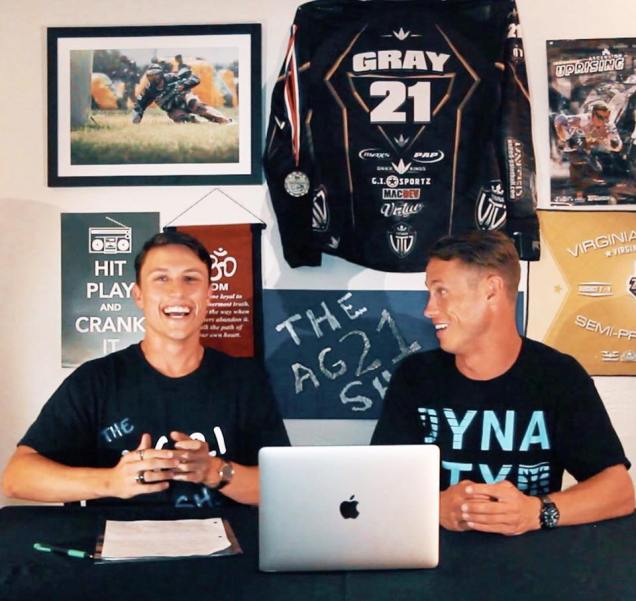
Ladies and Gentlemen, Mr. Alex Gray of Seattle Uprising

The next time I would meet Alex Gray of Seattle Uprising, was at a WCPPL event held in Las Vegas in 2016, except this time, we would be teammates.  My friend Shane Pestana had invited me out to play with a team he was helping out that season.  Alex was asked to help too.  You come to realize that Alex is quite the competitor and what was surprising to me was how similar we thought about attacking the field.  Alex has that youthful energy but there is wisdom in his search for knowledge.  I dig that.

His history is quite fascinating actually.  You may not know this, but the young man is a New Yorker.  His interest in paintball started after seeing paintball on ESPN.

“I think it was 2006?  I saw an NPPL tournament on ESPN and then I started watching the indoor Smart Parts League on ESPN.  Once I realized this was an actual sport, I wanted to know more about it.  My uncle and I started looking for paintball places in Long Island.  We landed at Cousins Paintball in New York and the rest is history.”

Oh, not so fast young man.  Much more history to discuss.  Like many of us in Paintball, we didn’t start there but came from many other sports.

18403085_10212924292444831_5435469830994835121_n
Making the read

“Sports are a big part of my life.  I played football and lacrosse.  I was a receiver on offense and corner back on defense.  In lacrosse I was a midfielder.”

And also like many of us, there were many different aspects that drew him to our sport.

“The actual sport aspect of the game – scoreboards, jerseys, intensity, and people having a good time.  That really caught my attention.  Playing indoor, it was new and exciting… shooting paint at each other.  I stayed with this sport for many reasons, the people being the main one.”

But it was that first tournament experience that made all the difference.  And listening to Alex tell the tale, you know it was the catalyst that fuel injected that drive of his.

17191281_280444539051995_4724353413493326919_n - Copy

“My first tournament was a 3 man young guns.  Me and two dudes who I thought could play ended up playing as walk-ons.  We only won one game that day. I was hiding most of the day and not engaging.  But that one game we won…we won because I consciously made a decision to move and bunkered a guy at the 50 and I will never forget it.  It opened my mind.  You have to launch if you want something to happen.  That moment changed everything for me.”

The spark had now been lit.  Alex would continue to grind with different teams from around the New York area never really doing better than 2-2 at events.  He wanted to go pro.  So, in 2014, he was a senior in high school and made the decision to go for it.  He was flying out to Oceanside California and trying out/practicing with the Los Angeles Ironmen.  That’s where the opportunity arose that would take him in a slightly different geographical journey.

“When I would fly out to play, I would stay with Nate Schroeder (a Seattle Washington Native and former Ironman) and I became closer with him. There was talk about how some of the Ironmen were going to go play the upcoming CXBL (Canadian Xball league).  The first event was June 28th and I graduated the day before the tournament.  I skipped my graduation party to be there.  Now that I think about it, I missed a lot of social events to pursue what was, in my mind, a big deal.  So, I get to the tournament thinking Marcello and Alex Goldman and those guys would all be there.  But they weren’t, though some were.  Brandon Cornell, Toke Hamill, Danny Ibarra… and then there is this redheaded guy, Graham Arnold.  And I’m like, who is this redhead guy talking to me?  He didn’t really stand out but afterwards he asked me if I would want to join Uprising in D1. I had just been cut from Avalanche D1 team because I wasn’t able to make a lot of the practices because of high school lacrosse practice.  I had always looked past them (Uprising) but decided to play the West Coast Open with them.  That’s when I realized how awesome Graham was.  I mean, he really is one of the best players in the pro division. We did well, went 4-0 prelims… This was a first for me because in divisional paintball, my teams always went 2-2 (saw better success with Wolfpack).  But I just remember, man, Uprising had calculated game plans, we were shooting people on break… we got 5th that event and then 2nd at World Cup.  That’s when I realized that paintball was going to be a profession for me.  If we had beat TMG (we got a major), we might have been pro in 2015.   Our first tournament win came against Birmingham Prime in D1 finals at Dallas.  (Yeah, I know… thanks a lot.  While you’re at it, why don’t you give me a paper cut and pour lemon juice on it lol)”

19748459_10213523292259452_845320240949680087_n

One thing I love about Alex is his sincerity.  He really loves this sport and he counts himself blessed by the relationships he has in it.  When you talk to him, you know he genuinely wishes to share.  He is a great ambassador.  When he and I discussed his playing style, he gets to the point.  I asked if he felt he was a specialist, for instance on the snake side.  He said he hates playing snake.  I followed up and asked him what he felt his strength was on the field to which he went right back to that fateful day of that first tournament.

“Getting down the field.  I prefer getting to the 50 and it doesn’t matter which 50 it is.”

So what helps you make those reads?

“Those other sports I played.  Being a cornerback and slot receiver helped me recognize how to use speed and quickness to get something done.  Being able to combine that with the mental aspect of paintball… reading the field… seeing the move.”

17157740_280444125718703_8669609598660180777_o - Copy

But with every strength a player has, there is always something they wish they could shore up.  And Alex is brutally honest about it.

“The mental aspect of the game is a work in progress for me; knowing what to do in low body situations, not piecing it together fast enough, not just being the front player.  The chess match…”

I responded by saying, “Processing speed right?  The flow of the game and recognizing where it is headed and what best to do based off the given data.”

“Right.”

That, to me, is what will continue to make Alex an even better player than he is today.  He recognizes that, even if you are playing at the highest level, you can never settle.  You can always improve.  A young man after my old heart.

So what advice would he give an up and comer?  What advice would he share if he could only give one piece of it?23167969_10155411711401634_7166771274875806776_n

“I remember talking with Matty Marshall… he told me that the only chance you have is to be so good at what you do that people are forced to notice.  Once you start to live life on that spectrum, it doesn’t matter what people think.  It’s an all in approach. You have to put in the work.  You have to put everything into it and you will notice it around you, you will start to see the changes, whether in yourself or those around you taking notice.

Good stuff right there.

But being the sharing type, Alex doesn’t stop there.

“Play against people who are better than you every opportunity you get.  There is no quick or better way to get better.  When you get the @#^* kicked out of you, you either have to quit or get on their level.  I lost that fear little by little.  Getting bunkered 10 times in a row at age 12, once you become accustomed, you lose fear.  Fear holds so many people back.  The psychological effect of fear stops most people because we ponder the outcome.  When you star reacting without fear, that’s when the magic happens.  That’s when you see those game breaking moves.  It’s a long time coming though.  Your experiences in practice lead to this.”

So, as with every Gun Fu article, I asked Alex’s favorite drill.  Without hesitation, as in I almost didn’t finish the question, he said, “One on ones!”

And he shared his reasoning too:

“You are forced to think the most.  Everything gets worked, your snap shot is tried, your athleticism is tried, your brain, the fear of being exposed, people watching you play is faced…it’s just an all-around work out.”

21768467_10214258938530149_6446106452473814476_n
Alex interviews Ryan Greenspan of San Diego Dynasty for his podcast

I like the way this guy thinks.  And you should too.  If you would like to hear more from Alex, you can!  He has his very own podcast that you can check our regularly.  Its called the AG21 Show.  Don’t wait for a Zen article with him, listen to him directly (but keep reading Zen).  Check it out here


I have enjoyed getting to know Alex the last two years and I expect great things from him and the rest of Uprising.  I want to be the first to congratulate him on his upcoming graduation in May from San Diego St.  And I want to thank him for his time.

Be water my friends!

Zen

Cerebral Zeal

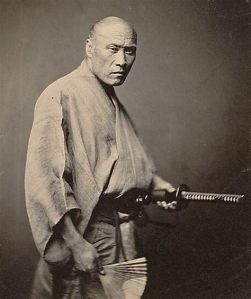
“Nothing is impossible in this world. Firm determination, it is said, can move heaven and earth. Things appear far beyond one’s power, because one cannot set his heart on any arduous project due to want of strong will.” – Yamamoto Tsunetomo

Yamamoto

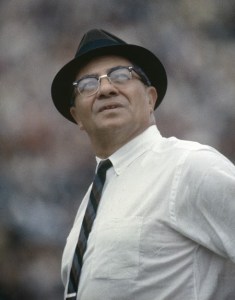
“The difference between men is in energy, in the strong will, in the settled purpose and in the invincible determination.” – Vince Lombardi

quotewit.blogspot.com

Imagine if Lombardi had a team full of samurai minds in the bodies of his players… whoa….Green Bay Packers would have had a whole new meaning… like, Green Bay Death Squad.

The next season of competitive paintball is almost upon us.  Every paintball player is out there preparing themselves for the “grind” and teams are hastily polishing their game.  Because of this, I thought we would visit the topic of “preparation” in this month’s blog post.  I wrote on this topic a while ago about the “mental aspect” of the game itself.  But it is so much more than that.

I am an avid protagonist of being prepared especially when it involves competition.  And I’m not just talking about physically.  Sure, we drill, we scrimmage, we train… but are we truly prepared in both mind, body, and spirit?

I don’t think most paintballers are fully aware of what a good preparation is made up of.  There are many levels of preparation and they must ALL be built upon.  Confidence is built when we know we are physically fit, that we are healthy, and that we know we have put in the time to develop the skill sets required to be effective.   But what all does that entail?  Besides the obvious of being in shape for the season, getting good sleep, eating right, putting in the work… what are some things we may miss?  Besides the immediate short term goals, what about the long term ones?

20130315_PSPDallasFriC8_3814-L
Focus.

Players and coaches will always be more effective when they are more efficient.  Anytime you can remove unnecessary stresses you are more apt to create efficiencies.  Translation – better use of time leads to greater gain.  For instance, I like to have all the logistics locked down well in advance of an event.  I like to know every aspect of logistics prior to the first practice.  When is everyone arriving, how they are arriving, where are we staying, how far is it from the venue, is their local grocery stores nearby, what are our routes to and from the venue, do we have the vehicles necessary, what is everyone’s cost, etc.  If the coach and the team have these SIMPLE things addressed well in advance, it is one less thing you need to worry/concern/think about in your preparation.  That time can now be spent on what matters.    Distractions suck and will hinder your mental preparation which is every bit as important as your physical preparations.  Mental preparation is simply preparing the mind to achieve success or rather, it is training the mind for a successful performance. So why place barriers in our own way?  Waiting until the last moment to book a hotel, a flight, rent a car, wondering where people are, etc. is foolish.  These are things that are easily in your control.  To procrastinate is to place an undue stress.  And that isn’t very smart.  I would argue you need to reassess your leadership criteria.

How about when we are injured, hurt, upset about our playing, the team’s overall performance, etc.?  How can we prepare ourselves for that?  How can we be mentally tough when it matters most?  How can we create drive and dedication in ourselves as well as our teammates?  We do this by teaching ourselves how to maximize the abilities we possess and meeting each goal we set, one after the other.

59729_582627101766966_9257670_n
Replaying the game in the mind

The mental demands of competition can be enormous, especially in the world of paintball.  We aren’t getting paid to do this (not most of us anyway) and we probably have other issues in the background/foreground such as job, family, significant other, etc.  So, the mental aspect has to be part of your training.  I don’t think the basketball coach of the Chicago Bulls Phil Jackson realized how significant his words would translate to paintballers when he said, “Wisdom is always an overmatch for strength.” All the markers are the same yes?  And the field is mirrored, yes?  There are a lot of equals out on that field actually.  Ask any champion of any sport or business and they will more than likely tell you that proper mental preparation is the key to any performance.

See, those same people who regularly train their minds will almost always be more consistent.  And consistency leads to victory.  And you want to know what else?  Victory leads to enjoyment.  Who doesn’t like winning?  Once you taste it, you want it again.  I seriously doubt you will ever meet a champion, a true champion, who is complacent.

Let’s break it down a bit.  Normally, as people progress in their chosen sport and you reach the higher levels (professional?), the physical aspect has a tendency to “equal out”.  It’s the consistency, the mental aspect, the decision making (remember talking about our paintball processors?) that differentiates the players/teams.  I think having a superior mindset is the key advantage here.

Day_2013_10_17_PSP_World_Cup_4695
Observation is key

Ask yourself if you and your team have these traits:

  • Focus on the goal – what needs to happen to win
  • Intestinal fortitude – drawing on reserves of strength when things are tough while maintain positivity
  • Confidence – belief in yourself and your abilities and those of your teammates
  • Motivation – the drive to improve, to be better than your last; no ego

If you can check each and every one of those off, you are good to go.  But you also have to be honest with yourself.  Don’t rationalize.  It’s okay to recognize the fact you and your team may not have all of these traits.  When you are honest and recognize it, now you know what needs to CHANGE.

In order to fine tune ones game, you must approach this from a mental and even an emotional aspect.  You have to manage your expectations and realize change doesn’t happen overnight.  You must recognize from the genesis that it will be hard work and a long haul.  There will be ups and downs.  It is what we do with the ups AND the downs that will define our success.  Manage those expectations appropriately and you will see levels of success.

The way you mentally prepare for paintball, whether it is practice or an event, will either hold you back or launch you forward.  Master your approach… don’t let it master you.  If you cannot accomplish this, then you have already lost.  It may not be shown on the scoreboard or immediately, but it is coming. (That was my best impersonation of samurai writing…)

dc77c11e4522061ccae5b2283cdcec73
How I perceive myself in my mind’s eye sometimes… I recognize it as untrue…I’m not that tall.

Just like playing an X-ball match, you have to have a game plan, whether it is logistics for an event, how to practice, what to practice, or even where will the team go to eat, know what needs to happen!  Learn from your wins as well as your losses.  What did we do right, what did we do wrong, what did THEY do right and wrong? Learn from them too!  Be mentally prepared for the next time you meet them on the field!

All of this was to say, “Be efficient, be smart, be prepared, and know yourself”.  Don’t create problems by not addressing the little things.  It’s okay to over plan but don’t become a slave to it either.  Are you prepared?  Are you ready?  Are you mentally focused?  Good.  Do it some more…

Be water my friends.
What’s in a name?

“How great are the dangers I face to win a good name in Athens.”

Alexander the Great

gvmon8d
Alexander III of Macedon identified as “Great”.  Probably because he was undefeated in battle and by age 30 had smoked most of the known world


Happy New Year!  I hope you all had a great 2017 and here’s to you having an even better 2018.  Remember, “Be at war with your vices, at peace with your neighbors, and let every new year find you a better man”.  Ol’ Ben Franklin said that.

I wanted to start this year off with the topic of identity or more specifically, your team’s identity.  I am not necessarily talking about how others outside of your team think of your team, although, that can certainly be affected.  No, I am talking about it from a psychological perspective of your own team.

Why this topic you may ask? It’s quite simple really, you might even say literal. Successful teams usually have a good or positive team identity.  In other words, identity, in relation to that of a team, is when individual teammates have a positive perspective of their team. They essentially put the needs of the team before their own.  For instance, I would imagine that members of Edmonton Impact walk around feeling proud of their accomplishments, which in turn, creates a shared bond of sorts between them.  The team identity is one of success, winning, and brotherhood.

This sort of attitude among teammates is critical as it can and will ultimately lead to all sorts of measurable success.  It should breed good performances which in turn should create a competitive edge over others.  How you might ask?  If you have confidence in your teammate that he will do his job, you can relax and focus better on your own.  How many times have you heard Zen say, “If you don’t trust the guy in front of you, behind you, beside you, your team will lose”?  If you appreciate your teammate for what he brings to the table, this more than likely, will elicit positive emotions towards them.  That will then lead to other behaviors and have a positive cultural impact among the team.  Trust and cooperation amongst teammates will become the norm and this should bring results.

11054356_10206225597064167_570992716500375430_n
External factors don’t affect a team that has the right identity

If a team feels a sense of “family” (a term thrown around way too much, almost to the point of belittling the importance of the word so let’s change that), if they have a sense of “oneness” as a team, that environment will create more positive energy… and that can be addictive… like winning.  When identity is prevalent, you will find team members putting the needs of the team ahead of their own.   Vice Versa, if a team doesn’t have much of an identity, what you will probably encounter are a lot of individuals running around like a bunch of circus clowns.

When a team has a shared and proud identity, members will more effectively coordinate their efforts to achieve team goals.  The whole “we” argument vs the “I” argument.  It’s a powerful motivator, to know you are all on the same page, have the same goals.  A feeling of team unity motivates individuals to commit more time and energy to achieve the team’s goals.

Now, it would be obtuse of me to not mention the counter to all of this.  When team identity is weak or lacking, you will find a team where the members are more focused on what’s in it for them.  I don’t think I have to tell what affect this will have.  Let’s just say that orchestrating a successful integration of team member skills will become significantly more difficult and compromise the team’s performance.

So how do you create team identify or rather a positive one?  What are some things as a coach or owner or captain that we can do or “identify”?  It breaks down to three things we have discussed in the past; Purpose, Emotion and Behavior.

10428138_10153235894938010_8649623519859287992_n
We identified as a 1970’s rock album cover here.

Purpose is simply a shared goal.  How many times have we talked about goals?  Everyone needs to recognize the purpose of the team and the path to reach said purpose.  This can be multi-faceted or layered but I would imagine the end result is to be successful at winning.  Now, there can be several sub goals/purposes but they should all lead to the main purpose/goal of winning.  Everyone’s perception needs to be the same regarding what success is and everyone’s value to the end game must be clear.  The purpose will have a domino effect – e.g. you must practice, the purpose of practice is to get better, the purpose of getting better is to win, so on and so forth.

Creating this purpose and value really goes back to where we talked about the team’s culture.  That culture will influence the sustainability of the team identity—this includes the effectiveness of leaders’ activities at reinforcing a team’s identity.  So you must create an environment that promotes this thinking.  Of course, it helps to be a smart recruiter.  That’s why I always look for the hard workers and coachable players as opposed to the super star.  If I can find both in the same player, well, you found gold.  Which leads to the next factor…

The emotional aspect each team member brings to the table is a critical component to team identity. When everyone is aligned emotionally, their playing needs are considered when deciding how to coordinate and direct performance efforts. Being aware of each member’s feelings on specific team oriented topics is basic communication and you will need this to be effective in your pursuit.  Now, what does that mean really?  It means when you’re hot, you’re hot.  If you are bringing it at practice and playing well, you will start/play.  And if you aren’t, you know it, recognize it, and are happy for your teammate.  That makes sense yeah?  I’m laughing to myself because there may be a few of you out there rationalizing or arguing this aspect.  Remember the whole purpose thing we just talked about?

Behavior associated with team identity consists of the “coordinated” action.  You know, when everyone recognizes the purpose/goals of the team and does what they need to accomplish it?  See, if everyone puts what is best for the team first and all of the time, that’s like stepping on the gas to reach effective results.   An example might be that you got to practice early so you start doing what you can to make sure when the rest of your teammates arrive, the little things are already done.  You gridded the field, you blew up bunkers, you did what you knew needed to be done without being asked.  This leads to more time practicing for the team as a whole as opposed to using some of the limited time the team has on menial tasks of preparing to practice.


10460723_10153224877968010_6206148412786426845_n
Your purpose, your emotion, your behaviors… they will get you here

Not only should team identity positively impact tangible, short-term outcomes by leading to effective accomplishment of team goals, it should also positively impacts less tangible and longer-term outcomes by solidifying effective team processes and increasing satisfaction and commitment of team members.  That means the team becomes more efficient and happy.  And a team that is efficient, happy, likes one another… well, they are more than likely to improve quicker.  And what does that usually mean?  One word:  Winning.

So what will your team identity be?

Now, I want to take this topic on a slightly different route before I close.  Let’s mix a little resolution and a little identity together shall we?  This one is for the NXL actually…

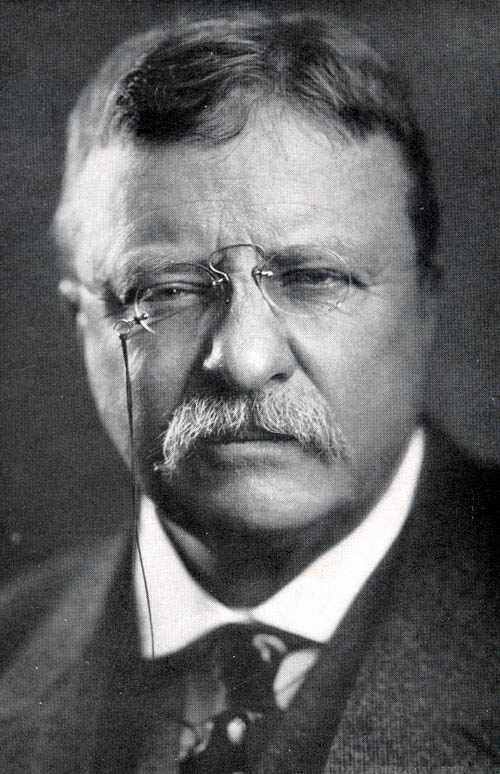
“Never throughout history has a man who lived a life of ease left a name worth remembering.”

Theodore Roosevelt

TeddyRoosevelt
Identity? “Bull moose”.  Read a book.

Something that has really irked me over the past year is the webcast commentary.  Make no mistakes; I appreciate Matty and the crew for what they are trying to do.  However, something they have done CONSTANTLY since the webcast began, bothers me and quite frankly, there really isn’t any excuse for it.  It is an easily solved issue but one that continues to plague the webcast event after event.

Know the professional players’ name.  ALL OF THEM.  How difficult is that?  It isn’t!  How difficult is it to have a roster in front of you with the player’s name and number?  How many of you, when watching the webcast, have heard commentary like this?

“Keith Brown takes the snake but gets picked up by the Katana player at the wall.”

“Ryan Greenspan is in a gun battle with the Outlaws player who, I think may have slipped a ball in on him.”

“The Boom player just made a great shot cross field on Thomas Taylor.”

These players worked hard to get where they are.  They should be shown the respect they deserve, to be recognized, to have an identity.  So they aren’t household names in the world of paintball… but you could help change that.  It would certainly sound more professional if you put a name with the screen shot.  It isn’t a lot to ask but could go a very long way on several levels.  Have each team hand you their rosters with names and numbers and if they don’t match up, hey, that’s on the team. A little work can go a long way.

matty-marshall-1024x683
You don’t owe me anything.  But you do some other guys I know.


Someone once said that you are your brand.  You can’t build your brand if those who have the power to do so in the box don’t recognize (or care) who you are.  Come on NXL… you can do better.

Okay, that’s it for this month.  Here’s to everyone chasing your goals and the 2018 season.  May it be awesome.

Be water my friends

Who’s Line Is It Anyway?

We have covered several topics here at Zen over the last year; from sports psychology and coaching to individual motivation and skill set training, we have always tried to speak on topics that commonly occur in the paintball community. Some have been advanced and others pretty basic.  Usually the topics are derived from a conversation I may have had recently, from an email I received from a player or coach, or from a question I received at a clinic I recently taught.  Either way, it usually strikes when it strikes (hence a topic only once a month).

My wife says I need to write down some of my “Biancanisms”, phrases I have come to use often over the course of my paintball career. “The guy who keeps his head in a gunfight usually keeps his head” or “What makes the grass grow?  Blood! Blood! Blood!”.  Silly stuff that, when said in the moment may sound profound or motivational but is really just common sense (except for the blood part…maybe).  At one point, she wanted me to make T-shirts.  Come to think of it, that might have been fun.

benjamin-franklin-4a

I am also fond of quoting great men and women. For instance, Benjamin Franklin has one of my favorites, “Well done is better than well said.”

Anyway, I thought I might put together a list of some of my favorite quotes. Perhaps some you will be familiar with, perhaps not.  But it should be a fun little jaunt.  Who knows, maybe you will find a gem among these that will help you? I know I did.

So let’s begin with my man, Bruce Lee.  Next to my own father, grandfather and brothers, this man (and one other who we will get to at the end of this post) has had a tremendous impact on me.  I could probably write a book on him but in the interest of expediency, we are going to try and keep this post to a reasonable length. Enjoy!


  • “I fear not the man who has practiced 10000 kicks once but the man who practiced one kick 10000 times.” – Bruce Lee
  • “Mistakes are always forgivable, if one has the courage to admit them.” – Bruce Lee
  • “Knowing is not enough, we must apply what we know. Willing is not enough, we must act!” – Bruce Lee
  • “If you always put a limit on everything you do, physical or anything else, it will spread into your work and into your life. There are no limits. There are only plateaus and you must not stay there. You must go beyond them.” – Bruce Lee

bruce-lee-headshot

Let’s move on to a man who was very much about family. Considered one of the most influential figures throughout history, if you read just a little of Confucius’ work, you realize he was very much about The Golden Rule or “Do unto others as you would have them do unto you”.  He was also very much about personal responsibility which I dig.

  • “The man who moves a mountain begins by carrying stones.” – Confucius
  • “Real knowledge is to know the extent of one’s ignorance” – Confucius
  • “Never impose on others what you would not choose for yourself” – Confucius
  • “We learn wisdom by 3 methods. The noblest is by reflection, the easiest by imitation, and by experience which is the bitterest.” – Confucius
  • “I hear and I forget, I see and I remember, I do and I understand” – Confucius

confuciusID_400x400

One of my favorite books of all time and one I have given as a gift to good friends is The Five Rings by Miyamoto Musashi. He was a Japanese swordsman and philosopher.  Google him.  I promise you will be impressed and probably learn something too.

  • “Study strategy over the years and achieve the spirit of the warrior. Today is victory over yourself of yesterday; tomorrow is your victory over lesser men.” – Miyamoto Musashi
  • “You win battles by knowing the enemy’s timing, and using a timing which the enemy does not expect.” – Miyamoto Musashi
  • “Do nothing which is of no use.” – Miyamoto Musashi


The-Book-of-Five-Rings-Mushashi-Miyamoto-9784770028013

While The Five Rings is a book I have given as a gift of late, when we talk about influential books, I would be quite remiss not to mention the author of The Art of War. Sun Tzu was a Chinese general, military strategist, and philosopher from China. The Art of War is probably one of the most influential books in the world next to the Bible.

  • “The opportunity to secure ourselves against defeat lies in our own hands, but the opportunity of defeating the enemy is provided by the enemy himself.” – Sun Tzu
  • “Victorious warriors win first and then go to war, while defeated warriors go to war first and then seek to win.” -Sun Tzu
  • “Be extremely subtle, even to the point of formlessness. Be extremely mysterious, even to the point of soundlessness. Thereby you can be the director of the opponent’s fate.” – Sun Tzu
  • “The quality of decision is like the well-timed swoop of a falcon which enables it to strike and destroy its victim.” – Sun Tzu

Sun-Tzu-quotes

Okay, let’s leave the Eastern Philosophies as they are chalk full of great quotes and could very well be written about until we ran out of bandwidth. Let’s give a little love to some American warriors.  You don’t become the great nation we have become without having a few badass men among us.  Probably one of the most prominent would be a man from California, who competed in the 1912 Summer Olympics, graduated the Virginia Military Academy and West Point.  Of course, I am referring to none other than George S Patton!  And if you pay attention, you will notice some similarities between him and his eastern warrior brethren.

  • “A good plan violently executed now is better than a perfect plan executed next week.” – George S. Patton
  • “Wars may be fought with weapons, but they are won by men. It is the spirit of men who follow and of the man who leads that gains the victory.” – George S. Patton
  • “Watch what people are cynical about, and one can often discover what they lack.” – George S. Patton
  • “Take calculated risks. That is quite different from being rash.” – George S. Patton
  • “Prepare for the unknown by studying how others in the past have coped with the unforeseeable and the unpredictable.” – George S. Patton
  • “There is a time to take counsel of your fears, and there is a time to never listen to any fear.” – George S. Patton
  • “Untutored courage is useless in the face of educated bullets.” – George S. Patton

George-S-Patton

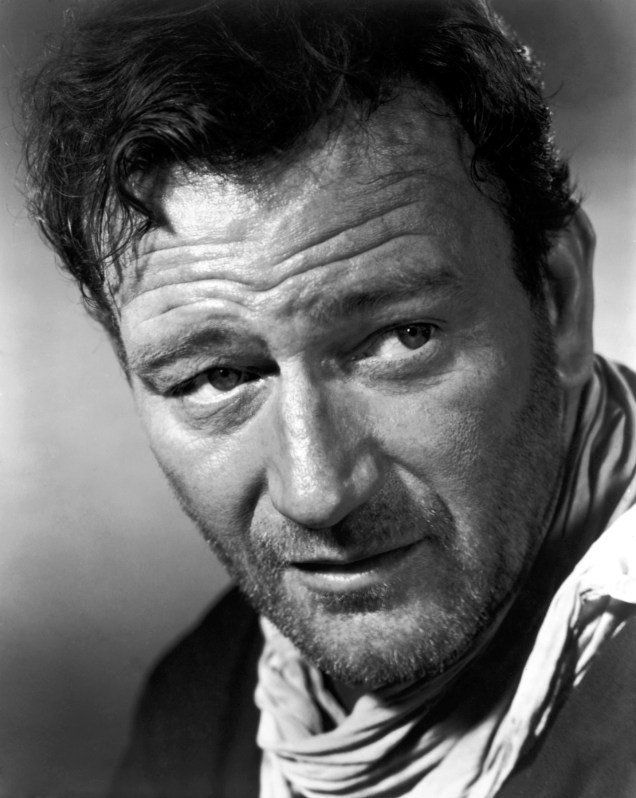
Alright, this next person doesn’t need an introduction.  Though not a true warrior in the sense of the word, he played one on TV.  Born Marion Mitchell Morrison, but who is commonly referred to as The Duke, John Wayne influenced an entire generation of men, especially those in my household.  This blog post on this topic would not be complete without a few from the man.

  • “Tomorrow hopes we have learned something from yesterday.” – John Wayne
  • “Life is tough, but it’s tougher if you’re stupid.” – John Wayne
  • “Courage is being scared to death and saddling up anyway.” – John Wayne
  • “Don’t pick a fight, but if you do, make damn sure you win.” – John Wayne
  • “I’m only responsible for what I say, not what you understand.” – John Wayne
  • “Sure I wave the American Flag! Do you know a better flag to wave? Sure I love my country with all her faults. I’m not ashamed of that, never have been, ever will be.” – John Wayne

John_Wayne - the searchers

Here are a few honorable mentions:

  • “You have power over your mind – not outside events. Realize this, and you will find strength.” – Marcus Aurelius
  • “Never let the future disturb you. You will meet it, if you have to, with the same weapons of reason which today arm you against the present.” – Marcus Aurelius
  • “When your time comes to die, be not like those whose hearts are filled with fear of death, so that when their time comes they weep and pray for a little more time to live their lives over again in a different way. Sing your death song, and die like a hero going home.” – Tecumseh
  • “Let us form one body, one heart, and defend to the last warrior our country, our homes, our liberty, and the graves of our fathers.” – Tecumseh
  • “You fool! You fell victim to one of the classic blunders! The most famous is never to get involved in a land war in Asia. And only slightly less well known is this: never go in against a Sicilian when death is on the line!” – Vizzini

every-time-i-hear-the-word-inconceivable-i-think-of-this-guy-58043

That should wrap it up. Until next year, be water my friends.

Bianca

Toxic Avenger

Another season is in the bag.  World Cup has come and gone and Zen would like to congratulate all the teams that took a podium.  Well done!

Two recent events inspired the topic of this month’s blog post.  One, the intensity and excitement that is the World Cup environment can create an emotional reaction in coaches and players alike.  I have seen it countless times.  Walk through pit row on Sunday morning… you will hear it.  And two, a few recent phone conversations with several young men I know who compete nationally.  Whereas, each had a different issue, they all stemmed essentially from the same thing.

toxic aven

How many of you reading this know a person who rationalizes everything?  There is always a reason, an excuse, extenuating circumstances…  Perhaps there is a person you respect but you can’t help but notice they can come across as divisive?  There is no positivity, no spark in their comments?  Maybe you suspect a teammate of subterfuge or you are dealing with a drama queen?  In any instance, they defy logic and, in many cases, are absolutely clueless to the impact of their behavior.  Or maybe they are aware and enjoy the chaos they create?  They can be extreme or not so much but no matter which it is, it creates tension… and not the good kind (yes, there is such a thing as good tension).

Most teams can figure out how to address most  issues.  A lack of field resources, improper fundamental training, bad planning/logistics, finances, etc.   But a “toxic” teammate/coach can destroy a team from the inside out. Most won’t even recognize the problem until it spreads… Distrust will eventually spread to others until BAM!  You have a full blown breakdown on your hands.
Bad attitudes aren’t always immediately recognizable or obvious.  The loudmouths are easy to spot.  This allows the team or coach to recognize and deal with them effectively.  But the quiet dissent, the disengaged so to speak — those who don’t care about the team, the ones who question process for no valid reason, show up late or not at all, don’t help pitch in for the grunt work, these are the ones that are deceptively an issue… and what if it’s the coach?  Whoa… that’s another whole level of suck.  “Because I said so” is not productive or conducive to running a good team much less creating a trusting environment.

i-DjqtzZV-L

Sure, you can ignore it and keep doing your job to the best of your ability.  Their poor work ethic or attitude towards things doesn’t affect you… but then, it does.  Don’t be fooled.

First, let’s ask ourselves something; are you the only one who has a problem with the person?  Has anyone else mentioned frustration with a teammate or coach? If not, regrettably the toxic person very well may be YOU!  If that is the case, I strongly suggest you find a different environment or start making your case in a positive manner.  But if you know you’re not the only one who feels that way, you can’t be afraid to stand. Look, I get it.  You don’t want to rock the boat, upset the status quo.  But if you really care about the team/organization and its success, you need to say something if only to get it out in the air and have it addressed.  It very well may not work out in your favor… but then you at least know where you stand.   Trust me, that discomfort you feel about taking a stand?  It will be worth it if it succeeds.
One thing I have noticed about a number of the successful teams  and, in some instances my own, dealing with toxicity does not have to be difficult or even stressful.  If you can deal with it effectively and efficiently, the level of discord can be minimized. The key is realizing that you, the coach, or the team has more power than you realize.

First things first when dealing with someone like this (and this is something I personally really need to focus on); don’t play the game.  When someone on the team is being difficult or irrational, don’t engage emotionally.  Sounds simple enough but we all know this is not always an easy feat.  As much as we would hope we could deal only in facts and logic, that doesn’t always happen.  But it should.  Facts and logic will do one of two things.  It will either cause the toxic one to invest more emotional energy or it will make them pause and eventually make them calm down for a bit and think.  So what happens in the case of the first scenario and they grow increasingly emotional and difficult?  If this happens, simply disengage.  “Look chief, you’re obviously dealing with something here that has a lot more to do with than paintball.  Let’s revisit when we have all had a chance to calm down a bit and think about it.”
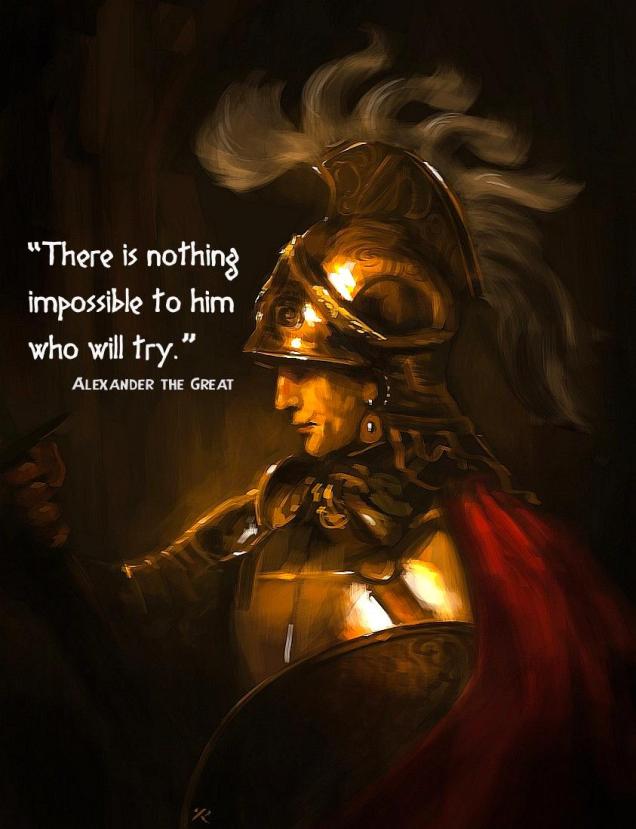
i-VzQKCDQ-L

Here are a couple of suggestions on how to handle it if you find you and your team facing a scenario where you know somethings wrong…

Go ahead and set parametersIn other words, set and recognize limits.  Listening and being an ear is great… but if it is one giant woe is me party, don’t get sucked in.   One way to establish a limit is to ask the complainer how they intend to fix the problem.   Right, once you’ve heard all the bitchin’ ask them, “Ok… what will you do to change this?”  This will give you a good look into what the real problem is.  They will either quiet down or redirect the conversation in a productive direction.  That’s a win/win.  Now, they could blow a gasket too… if that is the case, you’re not dealing with a rational person at that point and should once again, disengage.

Next, whatever you do, don’t die on that hill. Most people, when engaged aggressively by another, will dig in.  This will cause “casualties” on both sides of the argument.  You may say something you regret or bring up something that has nothing to do with the issue at hand.  Smart warriors recognize when to peel off and live to fight another day.   If you can read your own emotions and respond to /with them appropriately, you have a distinct advantage.  Only stand your ground when the time is right/necessary.  Emotional blunt force trauma doesn’t always win the day and rarely solves anything.

Finally, be self-awareThis is a tough one but you can’t stop someone from pushing your buttons if you don’t recognize when it’s happening. Sometimes you’ll find yourself in situations where you’ll need to regroup and choose the best way forward. Sometimes it’s best to just smile and nod. If you’re going to have to straighten them out, it’s better to give yourself some time to plan the best way to do it.  When you focus on actions to better yourself and your circumstances, you create a sense of personal efficacy.  When it comes to toxic people, fixating on how crazy and difficult they are gives them power over you. Quit thinking about how troubling your difficult person is, and focus instead on how you’re going to go about handling them. This makes you more effective by putting you in control, and it will reduce the amount of stress you experience when interacting with them.

sunday-3.jpg
No Toxicity here.  Joking with A from I-75 yo

Now, if none of this proves to be working, you need to take it to another level or what I like to call, changing the field of battle.  Get those of you who are in agreement.  Meet somewhere and discuss it to make sure you are all on the same page.  If you all agree that engaging the toxic avenger is the best thing for the team, the greater success you will have addressing it.  Like an intervention, if you all go in determined to help the problem child, the team, and to better understand/improve the situation, you have a much greater chance for success.

Keep in mind, it’s a good idea you should all have an understanding of ways to keep things from going sideways.  Hopefully the problem child will understand they are the problem and work to fix change things.

Ultimately, however, if player/coach or whoever has the issue is so unbearable, leaving the team might be your only option.  Let’s hope it never comes to that, especially if you have a good thing going.

friday-154

That’s enough for now.  Everyone enjoy the off season.  But remember… there is no off season. So enjoy the not off season.

Be water my friends.