I am by no means an expert on ANYTHING. I don’t pretend to be and I don’t play one on TV. “Expert” denotes an “authoritative knowledge”, or an uncanny ability or “mastery” of something most don’t possess. Besides being an expert at driving my wife bat stuff crazy, I can’t think of a single thing I am “authoritatively knowledgeable” about. Do I believe there are experts in this world? Absolutely. Do I feel they are rare? More than likely, yes, I think they are rarer than most probably do.
I do try to keep things in perspective though, as well as try to apply logic and reasoning to anything I engage in. For example, someone might send me a video of a political figure saying something that could be construed a particular way. Whether I like or dislike the politician or agree with what was said or not, I always try to apply logic and reasoning to what is being stated. Perhaps choosing politics is a terrible example because of the incredible amount of polarization in today’s world, especially here in the United States. But I pride myself on understanding context. I am by no means an expert but I am pretty well informed. This is because I actively search to understand a point as oppose to just attacking it because it doesn’t line up with my own personal ideology.
“Suppose you were an idiot, and suppose you were a member of Congress; but I repeat myself.” – Mark Twain
The heart of the matter lies in understanding, discernment, comprehension, and good judgement. The majority of misunderstanding, inaccurate discernment/comprehension, and bad judgement can be avoided through effective communication. Effective communication is way more than exchanging information. It’s about understanding the context behind the information. It is about being able to clearly convey a message.
Does it mean what I think it means?
Take, for example, when you search “Infamous Paintball”. Now, I’m pretty sure I know what they are trying to convey with this tag line. We are Infamous Paintball and if you use our gear, you can beat anyone (the “good teams”). But the tag line on its face doesn’t leave the most flattering message or impression for a product. Again, context. As a paintballer, I see it. As a regular consumer, I’m thinking this is a joke, right?
*This is not a slight on Infamous. Love what they do. They just happen to have an example of where I am heading…
Of course, being able to clearly convey a message is important – that is – if there is one. And no communication can say plenty as well.
As of this writing, the “Latest News” tab on the NXL website is from March 18th titled “2020 NXL Texas Open, April 30 – May3 : CANCELLED”. Here is a link to the page: https://www.nxlpaintball.com/us-latest-news
Obviously, there is no update on the page. Not even a mention of how they have since cancelled Virginia (and it would appear, Chicago).
I couldn’t help but notice on what many consider the crème de la crème for paintball communication, http://www.PBNation.com, doesn’t have any information regarding the rest of the season either. John runs a tight ship over there and is almost always on top of this stuff. I just checked http://www.Gosports.com and didn’t find anything there. I don’t have Twitter so maybe I missed something there… Maybe… we’ll get to that.
Since then, communication has been scarce and limited. The only communications that have taken place since mid-March were a live stream by, oddly enough, Infamous Paintball, featuring NXL President Tom Cole on April 17th, a post on the NXL Facebook page announcing the Virginia Event’s cancellation on May 5th, and another Q&A live stream featuring Tom Cole the next day on May 6th.
He doesn’t have an easy job. And every keyboard warrior can do it better…
As someone who works in the corporate world, I certainly understand how difficult it can be to get everyone “rowing in the same direction”, especially when running a business. It is hard enough without the unprecedented impact of Covid-19 and the restrictions implemented on travel and gatherings here and in Europe. Let me make something perfectly clear; this is not a “Bash the NXL!” blog. On the contrary actually. I want to help by consolidating what info is out there for my readers to help the NXL get the word out (keep reading or scroll down). Lord knows hindsight is 20/20 and it is easy to commentate outside looking in. Although, I do want to say and the NXL would do well to remember that, no news is still news.
Leverage the mediums you have at your disposal (PBNation, NXL website, FB, Instagram, Twitter, GoSports, Email blasts, etc.) and let people know, even if you don’t have an answer, that you are actively pursuing one. I am almost positive they have a Director of Communications, yes? Let the players know what you know. If you don’t know anything yet, then say so. But say SOMETHING. And say it regularly. Communicate and use the tools at your disposal to get the coverage you need for that message to get out.
All that being said, here is what we know as of today based off Tom’s last live stream (As more information comes in, I will try and update this in the comments or here on the page):
The Richmond, VA event scheduled for June 25th-28th and the Chicago, IL event scheduled for September 10th-13th are CANCELLED. They will be replaced by 3 smaller REGIONAL events. Here’s what we know about those:
The Pros will be split into 3 Divisions that will correlate with Regional events. They are:
6 pro teams in the West Coast division/regional event
6 pro teams in the Texas division/regional event
8 Pro teams in the Mid Atlantic division/regional event
Divisional play beneath Pro will be done similarly. There will be 3 events just as the ones above at the same locations. The difference is, if capable/possible, Division 1 (semi-pro) and below (D2, D3, D4, etc.) can attend more than one event. However, only ONE event score (presumably your best showing) will go towards your series points. The preference, according to Tom Cole during his last live Q&A, is for you to play one regional event and then World Cup (still scheduled for November 11th – 15th). All formats will be provided at the regional events (X-Ball, 5-man, etc.) just on a smaller scale. Back to normal with World Cup.
For example – a team, based out of Louisiana, played the Las Vegas event. They will more than likely play the Texas Regional event. Your score from the Vegas event will determine your seeding for those teams attending the Texas event. That team’s combined scores from Vegas and Texas should then determine their seeding headed into Cup… it will be interesting how they address when/if teams have the same score headed into Cup.
World Cup is currently still planned and will be hosted as originally scheduled in Kissimmee FL at the Gaylord Palms resort. It will be one giant event as usual, not a divisional/regional deal.
World Cup will still be held across from the Gaylord Palms Resort in Kissimmee FL
Dates are forthcoming. Estimate is that the events will START around the last week of August. They will run every two weeks until September starting with Texas, followed by California, and then Mid Atlantic. Obviously this will all be contingent on how states address their own “reopening”. APPA entry fee is targeted to launch mid-July but again, dependent on State regulation.
No early layout release for these 3 regional events. They will be a “blind” layout meaning you will see it when you get there. There is discussion of releasing the World Cup layout well in advance as opposed to the standard 2 week release prior to the event.
The locations for these events are still to be announced. They are taking suggestions but the field must have the capability to fit at least 3 regulation X-ball fields (plus have significant parking I would imagine). The NXL is going to help the fields selected with infrastructure to ensure the best event possible at these local/regional fields. As it stands today, the following fields are in contention but not official:
California/West Coast Division event:
Capital Edge Paintball (Sacramento, CA)
Texas Division event
Paintball Fit (Waxahachie, TX)
XFactor Paintball (San Antonio, TX)
Mid Atlantic Division event
Topgun Paintball (Cream Ridge, NJ)
OXCC (Chesapeake City, MD)
LVL Up Paintball (Grove City, OH)
There may/may not be a relegation this year due to the possibility of a team not being “allowed” to travel and they are still wanting to bring a semi pro team up. They are working through all of that.
And that’s what we know. If you know more, please feel free to share and I will do what I can to get the information out as long as that information can be corroborated. A lot of this is still fluid so, keep your eyes and ears open for more updates.
“All we have to decide is what to do with the time that is given us.”
― J.R.R. Tolkien, from his book, “The Fellowship of the Ring”
First off, I hope this finds all of you safe and well. This is an unprecedented time we are facing and it can be rather alarming. I am no expert on the matter but I do know that we live in the greatest country ever known and we will survive this and, God willing, be better for it. For those of you struggling, you are in my thoughts and prayers.
With “social distancing” being the latest fad (so much cooler than “quarantining”… so yesterday), and keeping us away from paintball fields the world over and from the sport we all love, I thought it might be a good time to consider ways to improve our game from home. Well, what if you don’t have paint? What if you don’t have air? The whole physical workout routine has been done and shown countless times (and from the looks of it, several of you will be in excellent shape when this is all said and done – some will not – I see you…lol). No, I wanted to think of a way to improve your game in a different way. We are always talking about the mental aspect of the game here at Zen and you have heard me reference “watching tape” several times as well. Eventually, you can only watch so much. So let’s DO something. Let’s DO something that works the most important tool in our arsenal when it comes to our sport. Let’s work our brain.
I miss the field…
If you have been around me even a short amount of time or read this blog just a few times, you have no doubt heard me discuss processing speed. When I talk about this, I am talking about the ability to see data, recognize/understand what that data means, and then do something. In other words, the speed it takes a person to process information and act on it. Here are some “official” definitions for those of you who like to take it to that level – “the speed at which an individual identifies, manipulates, and responds to information” or more specifically “Processing speed is the ability to identify, discriminate, integrate, make a decision about information, and to respond to visual and auditory information”.
Now, I want to make something clear here. If you struggle with processing speed on the paintball field e.g. making a read or understanding what is happening or needs to happen during a match, this does not mean you are of low intelligence. Every scientist in the world will tell you that processing speed is NOT related to intelligence. All it means is that, depending on what is happening, a determined task or response is more difficult for some. Again, all processing speed is in the context in which we are talking (paintball) is the ability to automatically process information, which means processing information quickly and without doing it consciously. The higher the processing speed the more efficient you are able to act. So, for a paintball player, at least how I have tried to use it, processing speed is the time between you hearing/seeing something to the time you understand it and respond to it.
“Energy and persistence conquer ALL things.” – Benjamin Franklin
I hope I haven’t beaten that horse too badly… okay…. Moving on.
Processing speed is best improved through experience. Getting out there and playing the game over and over again, “road mileage” as I like to call it. BUT – perhaps there is a way to work on it at home during our current environment? Perhaps…I don’t know. It’s just a theory. Or is it?
Ah – the days when you could get on the field and ball…
I read a lot of psychology journals and articles, mostly sports related these days, but I read other types as well. Now, my wife and I homeschool our children and my wife is quite learned (much more than I). She sends me psych articles from time to time, especially those that involve cognitive development. Obviously we want our children to have as much of an advantage as possible. So, I really stepped up my reading on cognitive psych. Cognitive Psychology is the scientific study of mental processes. Those processes would be things like memory, language, attention, problem solving, creativity, (those last two are awesome talents to have in paintball), etc.
Obviously there are methods to improving a growing, developing, young mind. It makes sense there are methods to improve our adult brains. Heck, we do it all the time! Just like an adult who decides to learn a new language, we can “train our brain” to think or process things differently when necessary. We are all capable of learning no matter how young or old. Perhaps we can learn to improve our processing speed on the paintball field while sitting at home? But how?
Video games, board games, and card games of course!
“Great works are performed not by strength but by perseverance.” – Samuel Johnson
As with any cognitive training, we need consistent practice to improve and maintain the skill. So, when we can’t be on the field, perhaps we could use other means to practice and improve our processing speed. Research has suggested that playing a game that challenges a child’s cognitive recognition (this is the ability to recover stored information and compare it to information immediately in front of us) can result in functional and structural brain changes if played several times over a period of time. Their brains actually grow.
Block stacking… to a timer?
According to that same research, games that focus on rapid visual detection and rapid motor response can improve processing speed in children. Said another way, games that require a player to look and respond quickly while maintaining concentration can impact/improve the speed at which we process things. There are several studies out now that prove developing physical dexterity is linked to language and speech in children too.
A specific study of children 7-10 years old over a period of 8 weeks (led by Dr. Allyson Mackey, University of Penn) demonstrated a 30% improvement in processing-speed scores. They used board games as well as video games. The board games and video games used, if your interested were:
Board GamesVideo Games
Pictureka Mario Kart
Blink Super Monkey Ball
Perfection Feeding Frenzy
So who is to say that these games can’t help us? They can’t hurt, can they? Why won’t Call of Duty or similar video games work to improve processing for an older generation?
But what if your power goes out! Or you’re just old school like me and enjoy these sorts of things like board games. For instance, puzzles…
How could I forget CHESS!!!???
A puzzle would obviously make us work on our visual processing don’t you think? Especially if we timed ourselves! Puzzles can be very useful for developing and understanding the interrelationship among shapes and visual images. Or if you have to stick with the video game approach, puzzle games such as Tetris, Candy Crush… okay I don’t know any others but you get the idea. Any game that can teach “sequential thinking skills” and/or cause and effect could be useful in our theory for developing better/ faster processing speed.
Think about it, how many hours of video games do you play a week? With the current situation in the U.S. and abroad, perhaps some board games with family? Research says that you should try to play at least four different games and shoot for 3 to 4 hours a week over 8 weeks. In order to maintain any gain or improvement to processing after the initial 8 weeks, try for 1 to 2 hours per week. Yes, you can change games as long as the game is challenging and requires the criteria mentioned earlier.
We can even take it a step further! What if we try to target a specific processing speed weakness? Whereas the research that Mackey and her team did suggested that board and card games could improve processing speed skills in kids who had average processing speed skills, they saw the greatest improvement in children with specifically defined cognitive weaknesses. So whether that is our speed of input, our speed of interpreting visual and/or verbal data, if we target a specific aspect that we may be weak on, we may see a faster improvement… does that make sense?
“We could never learn to be brave and patient, if there were only joy in the world.” – Helen Keller
Challenge yourself with some of these “child” games. Make it a competition. Time yourself, set goals (how many times have we talked about that here?), try to beat your last or best time.
What was this one called? Rock star?
What other games can you think of that might help us hone processing speed? Board games, card games, video games… The key is to ensure they require one to utilize skills that demand fast processing. Something that makes you interpret or respond quickly to some form of visual or verbal que or “sensory response.”
Here is a list of specific skill sets taken directly from the Dr’s article to help you identify some games that might help:
Games that require:
Rapid visual detection
Rapid motor responses
Automatic and fluent performance of cognitive tasks
Performance under pressure to maintain focus
Performance under pressure to maintain attention and concentration
Speed of input and interpretation of visual information
Speed of input and interpretation of auditory information
Speed and efficiency of spoken language and communication
Speed and efficiency of writing or physically completing a task
Or games that do the following:
Become increasingly more challenging during the game
Use competition to increase the level of challenge
Use a timer to increase awareness of speed of information processing
Use competition to increase awareness of speed of information processing
Tax and adaptively challenge the speed of processing
So far, all of this is in regards to a child’s brain. How about an adult brain? Can these games help us? I don’t know… but I do know some tips to ensure that, if so, our attempts are done with the most opportunity for success:
Get plenty of physical exercise, eat right, and get plenty of rest – I know, I know but there is a reason you ALWAYS hear health professionals talking about this. Hear me out. Cardio exercise and the right nutrition are musts for us to improve our brain and ultimately our processing speed. As a human with a brain – thinking (or in this instance processing speed) is really just electrical signals traveling across nerve cells. Your brain is made up of all of this “wiring” which is fed by the blood vessels in your brain. Well, where there is blood, there is a need for oxygen! Translation? Staying fit and getting plenty of exercise will sustain the brain and, potentially, improve your processing speed! Couple that with foods that promote and sustain brain health, this sets you up for success, yes? I’m not a nutritionist or expert on this matter! So be sure to consult who you feel necessary to do so but I have read that avocado, blueberries, and fish are a great start. And the whole sleep thing? Duh.
“ A regular cardio routine has also been linked to an increase in the birth of new neurons in the hippocampus, which is a part of the brain important to learning and processing.”
Read a book – put yourself in a state to WANT to learn or, if anything, open your mind. I like to try and learn at least one new word a week and work into my vocabulary (this week’s word was “fortuity”). The brain is a muscle that needs to be worked out. So get to flexin’!
Maintain social distancing – especially from Pestana – Cootie magnet
Alright – that’s going to do it for now. Again, I’m not expert but why not give it a try. It can’t hurt!
And remember during these trying times…
Be Water my friends!
P.S. For those of you wondering about the title – It’s Latin – “quadraginta” means “forty”. It is also where the English word “quarantine” came from. Christians are currently celebrating LENT which is the 40 days before Easter. Interesting no? It was first used in Italy in 1377 to keep ships from plague-stricken countries waiting off its port for 40 days to assure that no latent cases were aboard. And now you know!
ZEN and Taoist practitioners attempt to reach this state, as well as trained martial artists.
Nolan and I in 2015
First, I would like to thank Mike for allowing me to guest-write this month’s blog. Second, I would like to briefly introduce myself. My name is Nolan Osvath. I am a senior at Auburn University majoring in Building Science. My paintball tournament experience includes: one season in Division 5 CFOA, 4 years in Division 2/1 with Birmingham Prime, and recently the occasional AXBL, while taking a break to focus on graduating from college.
Nolan doing work – he played everywhere
**NOTE FROM ZEN: Nolan is an incredibly humble young man. Had he stayed in the sport, most who know him would agree, he could have gone pro. Having played with and coached Nolan, I have thoroughly enjoyed his positivity, his drive, his sincerity, but most of all his friendship and insight. His ability to lift those around him up is awe inspiring. This is one of the myriad reasons I chose him to help write this month’s blog.
One of the common mistakes paintball players make is looking to the fundamentals as the answer to success. This is a one-dimensional view of the game. Though they are important, they can only take you so far. If we wish to truly elevate our performance in anything in life, we must first master the fundamentals and then APPLY them EFFICIENTLY & EFFECTIVELY. This is also true in paintball. The mental aspect of the game is often overlooked and/or under trained. In my humble opinion, this is the major difference between Divisional jumps.
** NOTE FROM ZEN: Nolan brings up an excellent thought process here. One we have touched at Zen on more than a few occasions. Fundamentals are the base on which we build upon; the physical aspect of the game. However, our game is just as much mental as it is physical. Physicality will only get you so far as a player and as a team. Check out these previous Zen articles regarding this specific topic (mental aspect of the game):
**ZEN NOTE: If you have been to one of my clinics or been on a team I played on or coached, you have no doubt heard me speak about 3 dimensional thinking. This is what Nolan is eluding to here with the graphic above.
A good analogy for how we should train the mind is the progression of automobiles. Their initial design was based around the ability of a driver to manually change the gears of the vehicle depending on the situation that the vehicle is in. Over time, they were “upgraded” to automatics. (I do not say that to bash manuals… I drive a six speed 07 Wrangler and love it!) This progression allowed drivers to more easily operate the vehicle without having to think about changing gears. Like the progression of cars, we should be striving to train the mind to a state of ZEN or “no mind”.
So how do we train the mind? We purposefully put ourselves in situations that have a high probability of occurring during a tournament. (THE MORE STRESSFUL THE BETTER) I am a firm believer in the saying “we will not rise to the occasion, but merely fall to our level of training.” An example of this is:
4 vs 2 Drill with players starting in random bunkers unknown to the opposing side with a short time limit to the drill such as 1-2 minutes. The mental objectives of this drill is for the team of 4 to beat the team of 2 aggressively by effectively communicating and playing as a team to ultimately: contain, dissect, trap, then pinch out the team of 2 hunkered down. All while the team of 2 is working on communication, understanding gap holding, survivability, and mental toughness. (PLACE A PUNISHMENT FOR TEAM OF 4 IF THEY LOSE OR DO NOT DEFEAT TEAM OF 2 IN TIME LIMIT. LIKE A LAP AROUND THE FIELD OR 15 PUSHUPS)
Training your mind in such ways allows us to make the correct decisions more efficiently. That goal is for these decisions to become “mindless” or “automatic”. Placing purpose and cognitive thinking behind everything you do is important. Understanding the why behind each decision, success, and failure allows us to recognize familiar situations faster. The fundamentals are merely there to allow you a greater probability of success during a move, gunfight, point, and match. Each second is filled with a rush of adrenaline and decisions to be made, so make the right one and train your mind to the state of Mushin.
**NOTE FROM ZEN: Once again, Nolan nails it. We must train with purpose. Each time we step on the practice field, we must set a goal. The ultimate goal is MUSHIN. Perhaps start here with these previous Zen blogs too:
In the end, paintball is about one simple rule; shooting the opponent before they shoot you. The fundamentals and mental training merely allow you to be more effective at controlling the chaos.
Zen here – I would like to personally thank my friend Nolan for stepping up to the plate and writing this month’s blog. No doubt he is busy as a senior in college and work study so, I am even more grateful for his time. Look for more blogs coming from guests soon!
Ah February – what a cool month (except this year – been pretty warm here in Bama). It’s black history month, you have Groundhog Day, Valentine’s Day, President’s Day, Chinese New Year, Ronald Reagan and Abraham Lincoln’s birthdays, can’t forget Shakira, Jerry Springer, and Gary Coleman! Oh, and yours truly was born this month too.
An inquisitive and smart reader made a comment a few weeks back on the Zen FB page looking for some insight regarding the snake. We connected via DM’s and discussed my particular approach to coaching snake players. This was originally going to be this months’ topic (the REAL purpose of the snake player). But then, a few hours later another reader sent a DM asking about back center priorities. And then finally, a day later during a recent conversation with a close PB friend, we were discussing the importance of communication (specifically codes) as a means of offense and defense… So I was going back and forth on what to cover this month.
Just a few afternoons ago as I was helping my two youngest children prepare for a quick camping excursion during which, it hit me. What do all of these things have in common? What is a way to bring all of it together? Or better yet, what is one word, one topic that may carry all of it?
Those responsible for my “flux capacitor” moment…
Control: They are all about control. Whether that control is understanding those first shots as you enter the snake, winning the snake war, containing the forward momentum of an opponent’s press, or “joysticking” your teammates to mount your own defensive or offensive push, it all results in some form of control on both sides of the marker.
“We don’t talk about next year. We talk about today, and we talk about the next game. And that’s all we can really control. The rest of it will take care of itself.” – Bill Belichick
Tournament paintball has a tremendous amount of dynamics to it. In-game circumstances are in constant flux and preparing for that type of dynamic can be… well… dynamic. Because our opponents and, in some instances, our very own teammates can be rather unpredictable (there are elements which are predictable but that is another topic altogether), we need to understand from a mental and physical preparation point how to be as best prepared for these variables. So, as with any sport, we want to focus on the things we CAN control and put those controls in place immediately and with great zeal. Besides controlling what you can, it would make sense too if we could minimize the negative effects of those things we can’t, yes? Of course! Don’t be daft.
If you have played sports for any length of time, chances are you have come across the concept of “let’s control what we can.” In other words, put your time and energy into the things you have complete autonomy of (nothing affects it but you) and not the things you have absolutely no sway over whatsoever. It’s efficiency at its most basic essence. And it can be applied to everything you do, from taking care of your gear, to practice, drilling, and preparation for an event, to the event itself. Heck, your diet, exercise, sleep, and hydration. These are all things we can control, wouldn’t you agree? And why wouldn’t you be factoring these things in? If you’re not, you aren’t serious about winning. Why? Because a well-rested, well fed/nourished body that trains appropriately is going to have a well-rested, well fed/nourished mind that will be its most effective when necessary and needed. We create optimum performance by controlling the factors that lead to optimum performance. If we follow an effective process for all things within our control, we can almost guarantee a better performance when it counts. No one can ENSURE success in paintball (a bounce here; a bad call there)…. But we increase our chances or rather put the odds in our favor so to speak.
So – where to begin? Maybe not everyone on the team buys into this. Divisional players are a flighty bunch. One minute they are down for the cause, the next their grandma has died for the 3rd time and they can’t make practice. Control what you can control… you. That’s where it starts. It starts with you being the example. Remember, winning is a habit so we need to get into the habit of addressing all those good habits that lead to better odds of success.
But let’s take it a step further. Instead of trying to ensure everyone is doing everything like you… perhaps you ensure everyone is focusing on the right aspect of their game? The appropriate habit they need to focus on specifically? The whole “strengths and weaknesses” concept is paramount as we have discussed on here several times.
“What a man’s mind can create, man’s character can control.” – Thomas A. Edison
Don’t get caught up so much on whether or not you are controlling every aspect of the teams “habits” (although keeping track of these things helps). Rather, try to identify and nail down the aspects that are under your control prior to an event. And I guess that is my point… that I just tried making… after 7 paragraphs leading up to…
Appropriate control of preparation is important and ensuring everyone on the team is aware and on the same page is just as important.
That whole “being on the same page” thing? Yeah, that is certainly controllable. If that isn’t happening, you have bigger issues.
One thing I have really taken into account, especially since I am older than your average bear, is my physicality. I used to be “wiry” and quick. I got the wiry back but now I have to build the gas tank. I am much older, but that is no excuse. It just means my body recovers differently and takes more coaxing. As long as I do it safe, recognize my limitations, and control my sleep, my water intake, my diet, and my work outs in a safe manner, I should be good. I’ll be sure to let you guys know how it goes in a later blog.
Okay, so let’s see… where are we? We can’t control things like referees, the playing surface, the weather, our opponents. However, we can control how we address those things. We can most certainly control our strategy for the opponent, our preparation for the event, our bodies, out attitudes, etc.
Let’s say you are at an event and the playing surface is muddy and its drizzling rain… how many of you are focused on those two things? “Man, that mud is going to be an issue and this rain… when will it stop?” Now – do you think this is a good frame of mind before the match? Or perhaps something along the lines of focusing on what you can control? “I need to make sure I stretch well so I can get a good jump in this mud. Good thing I brought my visor since we knew there was a chance for rain.” See the difference? Don’t let the stuff you can’t control, in fact, control you.
“If you learn a martial art, you learn to be dangerous, but simultaneously, you learn to control it.” – Jordan Peterson
We all have to understand that we can’t control things outside of ourselves. But we can almost always have an impact on these things in some form or fashion.
But don’t get confused. Let’s understand the difference between controlling the things we can control and influencing those things outside of our control. And why wouldn’t we want to have some form of impact on those factors outside of our total control? You bet we do! Again, we want to put things in our favor. I would argue it comes down to timing; when and where to control and when and where to attempt to impact something beyond our complete control.
When at an event, players and coaches should ask themselves what can we control right NOW, what can we do, to make sure we perform at our highest level. Is that even making sense? It does in my brain… but let me know if I’m not explaining this appropriately.
Control the “controllables” and do your best to affect those UN-controllables in a positive controllable way. We want to build an environment that is conducive to winning! But we need to recognize that there is a time and place for each. Standing in the pit with 2 minutes on the clock before the match starts is not the best time to be thinking about anything not in your control. It should be all about what you most certainly can control. Does that explain it better? TIMING OUR FOCUS. There it is! That’s what I’m trying to say! Know when to focus on what you can control and when to focus on affecting those things you can’t. Strategic focus! I like that better. Force multiplier. Yeah…
So the off season is over (did it ever truly begin?). We are smack dab in the middle of prep for the upcoming competitive paintball season. Teams are taking stock in what they achieved last year, where they succeeded, where they fell short, what they have, and what they will need for the grind ahead. Or perhaps you’re a new team looking to make your mark this season and taking a shot at the title. Either way, lots to do. This month’s blog may seem a little remedial but then who doesn’t need a refresher course? Plus, this blog isn’t for just one group of players; it’s for all players and coaches alike. Also, for a quick refresh on some other thoughts concerning this process, check out these previous blog posts:
How many of you watch the off season moves in the professional division? You track the big move here, a surprise move there. It’s always fun to discuss and speculate on these things, what players and coaches at that level were thinking and why. There are a myriad of things that need to be looked at, assessed, and decided/acted upon. But divisional teams don’t necessarily have the capabilities or infrastructure to address all of them like the professional programs do. Running an efficient, organized, tight ship is not an easy task… especially when talking about paintball players (Paintballus absurdus)
One of the commonly misunderstood and poorly executed processes for teams can be try-outs. The common theme is, we will have try-outs, people will come, we will pick up some talent, and then we take the paintball world by storm! Oh, if it were only that easy.
Besides the plethora of variables that must be addressed before you even plan your try out, you need to have a goal – what’s the plan and why? What do we need in the effect of a pick-up(s)? What’s our existing depth, our existing strengths, where are we weak? What EXACTLY do we need? And once you determine what you need, what does your potential pool look like? Is there appropriate level talent in the area to choose from? Do we want someone that can hit the ground running at our level or are we looking to develop someone? Do we want someone local/regional? What parameters do you need to set?
Once you understand the parameters, then you can start planning:
When do you hold a try out?
Where do you hold it?
Is it a one day or two day?
Is it multiple weekends?
How much paint should they expect to shoot?
What layout will you use?
Is the layout conducive to what we are looking for?
And of course, what will we have them do in order to determine if they have what we are looking for.
First I think we need to determine a baseline of requirements. What are skillsets that most paintballers should possess? Gun fighting, laning, communication, survivability, field awareness, aggressiveness, speed, coachability… These are the things I look for and I use a point system usually to determine where they fall in each of these categories. Once all the points are tallied, it tells me where they fall regarding a division scale. Now… just because they may only mark a D4 rating on the scale, if their coachability among other things is high… perhaps there is an opportunity to develop them into a higher caliber player?
Ah – I see. You are waiting for me to post my point system. No, not this time, but I will help you with a few suggestions for your try out.
Food is always good after a try out to see how people interact
Gun fighting – you hear this term a lot in paintball, “he’s one of the best gunfighters in the division.” Okay – what does that mean? It usually means they are not only a good snap shooter but that they know how to use their bunker and have good timing and anticipation skills to boot. Any good ideas on what would be a good measure of this for a player at a try-out? You guessed it, snap shooting drills. Either king of the hill, what I call the “quadrant drill” or even just using a stationary target but know what to look for. Their base, gun placement, elbow, speed, accuracy, what “leads” (head, barrel, hopper, or are they all one piece when they snap?). You get the idea.
Laning – This is where we see what they can do on the break. Can they shoot an accurate lane with their first 5-7 paintballs? They can do this from the start box and/or the “pocket”? How consistent are they? Let’s go ahead and throw run and gunning in here too. Can he shoot a gap on the run accurately while moving quick and with purpose? This one is a no brainer. Set up a stationary target, make them snap off the box and put their first 5-7 at the target. How many times do they hit it?
You’re getting the picture, I’m sure.
So, after checking and identifying fundamental and individual skillsets, now you need to see what they can do in a team environment. This can be accomplished by running scenario drills or points.
I personally, like to “build” if I have the time. First, I’ll run some 2 v 2’s one side of the field only. This tests a microcosm of coms and teamwork – since a lot of times we are working in pairs on the field (perhaps a future topic? Let me know as I will gladly explain). After a few points seeing how they communicate, move, make reads, etc. we then graduate to 3v3 full field. This will now take into account field awareness, communication with more than one…
And finally, with time and personnel permitting, 5 v 5’s for the whole picture.
A basic run and gun drill is a good way to understand a players gun handling and footwork
Now – do we make a decision after one or two days of watching a player? The answer is – “It depends.”
How familiar are you and the team already with this player? Do you know their financial stability? Will they be able to commit to your season and your requirements? Do they appear to fit in with your culture and other personalities on the team? Perhaps a call back is better suited then a yes or no answer? This is when you tell the player something along the lines of, “We like what we saw. We would like to see more…” Of course, don’t string the player along! Eventually, they either fit what you need or they don’t. So be sure to be professional and courteous about the whole process. Honesty is the best policy. If they aren’t what you are looking for, tell them. Let them know what you liked, give them positive feedback but explain why they aren’t what you are looking for. They will appreciate that much more than any other approach, I promise.
Prepping my 4 year old for his try-outs… I just like the picture
Okay – that’s enough for now. Feel free to direct message me on my FB page if you have any questions or thoughts on this one.
Besides paintball, as some of you are probably aware, I like to train with real firearms (uh-oh… hope no one was “triggered” by my use of the term firearms). Muscle memory is paramount in shooting. Whether we are practicing the draw from concealment, indexing on our target (sorry – natural point of aim for you in the back), follow through on the trigger, consistent sight picture, our reloads, using a single point or dual point sling, or any other countless mechanical aspects of shooting, it all boils down to muscle memory and constant practice. In order to excel in live fire shooting, whether in a sport environment or, God help us if we ever find ourselves in a defensive shooting scenario, these things must become second nature; our dominant action and tendency.
So then why the topic of live fire shooting? Well, the idea for this month’s blog came to me recently when I was shooting with 4 different friends in a span of a week. I spent a day at the range with 2 friends I have been shooting with for some time now working both rifles and pistols, then another friend 3 days later working rifles, and finally a fourth friend a couple days after that working pistols. Usually when I am with my friends shooting, our conversations run the gamut. The topic came up with the latter two shooters about creating good habits, how to go about doing so, and how that foundation would not only improve performance but possibly save a life.
And then it got me thinking… I’m all about biomechanics in paintball as well as creating efficiencies. How can we apply this or have we already been doing this to an extent?
There was an older psychology article I read a few months back where it talked about how it takes around 3 weeks to develop a bad habit and approximately 2-3 months to break it. I would argue that it would certainly depend on the habit… but let’s not get bogged down on that specific aspect. Instead, it’s the habit of the habits that I want to discuss this month.
Body mechanics and muscle memory in a pistol reload
If we have a bad habit in paintball, it had to have come from somewhere. Whether it was self-taught or not, doesn’t matter. It has been my experience that in paintball, more often than not, a bad habit began at the “foundation level”. In other words, when a player first began, they developed a bad habit/motor skill. The repetition of that bad habit sunk in and over time, makes eliminating them and ultimately replacing it, even more difficult.
Obviously, the key to forming good habits is to learn them in the first place. Yeah, duh, you’re welcome. I don’t think anyone would argue that lower divisional players who practice proven technique from the get go will no doubt out perform those who did not (I’m sure there are exceptions).
I’ve always looked at it through my interpretations of Bruce Lee’s Tao of Jeet Kune Do. What is the objective and how can we achieve it in its most basic and simple form? The technique needs to come with validation of course as well as an explanation of why it is a benefit. Then, through repetition (with attention to detail!) we eventually learn to commit the action subconsciously. It becomes automatic.
When Bruce faces O’Hara in Enter the Dragon – GREAT SCENE!
“And when there is an opportunity, I do not hit, ‘it’ hits all by itself.”
‘It’ is when you act with unconscious awareness, you just act. When you throw a punch at me, I intercept it and hit you back, but without thought. ‘It’ just happens. – Bruce Lee
Now, I try to use this concept/philosophy when I coach. The full quote is “When the opponent expands, I contract. When he contracts, I expand…” then the rest of the quote. Especially on layout weekends… that’s another topic entirely. But you get the idea I’m sure.
“We’re going to expand on this one because their lanes suck”
I’m getting a little ahead of myself here and may be merging topics. My bad. But bear with me as we are about to go off down a rabbit hole…
So – how do we unlearn what we have learned? How do we quickly replace a bad habit in our snap shot, our laning, our run and gun and do it quickly? Unseating a bad habit and replacing it with a good one can be challenging but it doesn’t have to be this long drawn out process. With a little effort and basic understanding, it can be done a lot faster than most think.
Habits are formed in a lot of ways, the most common being the repetition of an act over and over again. You did it this way and continued to do it that way because no one told or taught you different. However, if you learn why you should do it different… in other words you know the purpose and the benefit of the way you should be doing something… that should speed up the process of learning better execution (and ultimately the goal of “It”.
The first step to improved habit formation is to first identify what needs to change and then prioritizing that change. If we understand how they became a habit in the first place, as well as understanding why they need to change then we can develop the best way to enact the change. I suggest keeping it simple. Work on each issue one at a time breaking the technique down into its basic form and working that form (isolation drills – where we work one aspect of a technique). Spend a day on the snap and the next on laning. Do this until you get the desired results. Knowing what works, how it works, and why it works will always make learning something much easier and will always lead to better results in the long run.
Lots of GOOD habits required to hit a target at 1000 plus yards
Now, I am a huge proponent of video. I use video to drive points home when coaching. It’s right there on the screen, we are all watching it, I saw what you did, can’t deny it, there’s my proof. This can also be used as an additional tool and will most certainly increase speed of learning. Video your snap, you’re run and gun, etc. from different angles several times and look for the good and bad. You can then compare it to a high level player who does these things well. See, visualization of a desired performance almost always aids your brain. It trains the brain on what to look for and reinforces the desired proficiency.
(Now for that rabbit hole I mentioned earlier)
Which leads me to my next point; the physical will come but only when the mental aspect of each physical step is understood. Break each motion/action down not just physically but why we do it. In paintball as in many sports, we are looking for “economy of motion”. This will lead to efficiency which lends itself to speed. Speed can be life in paintball.
Speed is important in physical action sports like paintball. Good comparisons would be fencing or tennis or even baseball. Sports like football or basketball are played in seconds whereas the other sports I mentioned are played in milliseconds. One could argue paintball has both aspects actually. But to the point; returning a tennis serve happens in roughly half a second. Think about that from the time the person serving the ball to the time the person receiving has to recognize the serve and respond on a physical level… a baseball pitch or a fencer’s lunge… these all happen in fractions of a second. These athletes have to rely exclusively on their hardwiring to react quickly enough. Muscle memory plain and simple.
Muscle Memory in a dive, run n gun – Thank you Michael Mohr
I was reading about Benjamin Libet, a physiology professor out in Cali, he said that, “the professional tennis serve is a special test at the boundary of pre-conscious human skill. It is designed for periods longer than the fastest visual reaction but shorter than the minimum conscious reaction time. The serve forces the returner to act within a set period, before the ball goes by, but it favors those who can wait the longest during this period. And it does all of this so fast that conscious thought is impossible. It is a paradoxical act in that on one hand it is a largely unconscious act, it has to be — on the other hand, it involves a range of sophisticated and creative responses.”
Mind boggling
The guy did experiments where he discovered something REALLY cool: a consistent half-second delay between a person’s unconscious reaction to stimulus and their conscious awareness of the stimulus. He found that we don’t become aware of a reaction – even our own reactions – for half a second.
This unconsciousness of our reaction seems to fit perfectly with the idea of “‘It’ hits all by itself.”
The goal would be “Pre-attentive processing”. I just started reading about this in detail. We’re basically talking about reflex but to a whole new level. The brain will skip consciousness altogether and rely strictly on reflexes or automatic behavior. This is a type of decision-making and movement initiation that occurs without any consultation with your conscious brain. Crazy cool!
Reload! Muscle memory
Think about it – does the baseball player wait for the ball to get to him or a boxer wait to be hit? No, they anticipate. A boxer, well, a good one anyway, will consciously scan his opponent’s footwork and head movements, and look for the set up – his opponent dropped his right shoulder and set his hip… This type of information will allow the good boxer’s “it” to kick in to a well-rehearsed response (muscle memory motor skill – the counter!).
So the question really becomes, is it possible to create good habits out of bad and take them to a level of development of pre-conscious capability. And if so, how can we apply it to our sport. I think it IS possible. We’ve already seen in it several athletes and right here in our own sport of paintball. If we can put in the time dedicate ourselves to purposeful training and not just on layout weekends, you bet it can happen.
I’m kind of all over the map on this one. Feel free to reach out to me if you have any questions and maybe I can clarify what I am getting at. In the meantime –
The 2019 paintball season is a wrap. The NXL World Cup has come and gone and the carnage left in its wake is magnificent. Now it’s time to return to the “other life” or what most rational people call the “real world”. No doubt the off season silliness will begin soon enough. I, myself, plan on taking a hiatus to spend time with family and friends and refocus on some things that fell to the wayside during this wild season. Like my snap shot…
I don’t think many would argue that competition is almost always a good thing. Those who would argue, probably believe that socialism works and will no doubt vote democrat in the next election. Competition IS good. It forces us to do our best. A monopoly in anything is usually bad and renders people complacent only to become satisfied with mediocrity (see socialism). I personally enjoy competition. I find that I enjoy challenges in the spirit of competition. And that is how this whole adventure with CEP began.
When I was first asked to coach CEP prior to Chicago 2018, I asked my wife if she thought I should do it. I was skeptical because it would mean time away from the family again. I don’t half ass anything. She looked me square in the eye and said, “You’re the one always preaching about how if teams would just follow the process, they would do better. What better team to see if it really works than with that one? I think you should do it.”
She had me there…
So I agreed to come and coach for Chicago.
What kind of leap would the team see in just one event and a couple of practices? You had come off a 2017 season where you had won 1 match out of 16 matches played. The 2018 season wasn’t going that much better. After 3 events you had still only won 1 match out of 12 matches played.
So we had a challenge facing us; how could we become a competitive team in the NXL’s division 2? We started with the very foundation. We tore everything down and rebuilt it from scratch… not the personnel mind you, but the culture and the mindset. The approach the team had learned from others was detonated and blown to smithereens. No longer would it be allowed near you because it was toxic to success and counter intuitive. Once we established what the environment would be – one of accountability, work ethic, and order – then we got to work on the implementation. It was a trial by fire for sure. Not an easy task… there was kicking and biting and gnashing of teeth, but we would get there. We would restructure practice, we would drill till you were sick, we would discuss do’s and don’ts, we would talk about the WHY, the HOW, and the WHEN. Then we would do it all over again.
It’s been said that the best competition occurs when average people win by putting in above average effort. And that’s what I saw with each of you. You each brought a specific strength to the game along with some…well…not strengths (and that’s okay). The goal was to leverage those strengths based off our roster depth, how each of those strengths could be applied to the layout, and finally, how each of those strengths could be used in conjunction with each other to achieve a goal on the field. We would “Absorb what is useful, discard what is not, and add what was uniquely our own”. (You better know who said that!)
We also implemented a theme in Chicago – “Win the point”. Too many teams look past the moment or cling to a past moment; especially you guys! No, we would be IN the moment – that one point – that’s all that would exist until it was over and we heard “Point approved”. Not the previous point or a future point. The existing point, that’s where we would work. And it paid off. You made your first Sunday in Chicago going 3-1 in the prelims. We would then be faced with another diabolical challenge: you had afternoon bracket games for the prelims and now you had to be up early to play at 8am Sunday morning! This was new territory for the team. You had never been in the top 12 before. You lost a close game in the Ochos taking 9th at the event. But now you had tasted it…and motivation grew again.
I thought my job was complete but you had other plans. So we decided to team up again and prepare for World Cup. We would need a new theme and I had just the one.
“Believe.”
Besides changing the culture and our approach to practice and events, we had to change the mentality of the team. Why are we here? What are we doing this for? What’s the goal? There were certainly times I felt I was banging my head against a brick wall with this part of the process and I am positive there were times you thought I was difficult, overly critical, cranky, and maybe even harsh. But I think deep down you understood.
We went to World Cup in 2018 and on day one you came out swinging by mercying the first two teams 5-0 each. The next day we would tie our next match and win our last. Our second Sunday had arrived but this time it would be different. We would mercy the team we played in the ochos 6-1 then win another hard fought match in the quarters. We would face a solid team who moved on to Semi pro the next season and take them into overtime only to lose a long hard fought 2 and a half minute point on a layout that was averaging half that. And then it happened… you quit on me. Realizing you weren’t playing for 1st but now for pride and a 3rd place finish… you quit on me. You didn’t care anymore; it was all or nothing with you. You wanted too much too fast. Only two or three of you even wanted to play the next match. The team we tied in the Prelims would turn around and mercy us! To say I was disappointed would be the understatement of the year. I couldn’t fathom a team that wouldn’t give 150% every match, especially one coming off such lackluster performances in earlier seasons/events.
So, when I received the call to coach you for the entire next season, I was not interested. My wife would once again play an integral role. I wasn’t going to do it and I told her I didn’t think I could coach guys who quit when it counted. That’s when she said, “Sounds like you are being called to toughen them up.”
Sometimes this woman…
So I accepted the job again under a few strict conditions and we were off to the grind once again.
The season would prove to be a rollercoaster of a ride. And I must admit, I am happy I agreed to coach you for the season. Each of you I have grown to appreciate and call friend. I think we have each taught each other several lessons over this season. You would go on to make another 5 consecutive Sundays and now you are the 2019 NXL Division Two Series Champions for a reason. Because you faced Las Vegas “Together”, you had “Trust” in one another while in Dallas, you kept your “Focus” when we were in Philly, you showed “Discipline” in Chicago, and “Strength” at World Cup (maybe we should have switched the last two? Lol). And you did this even though the team was spread out over 4 states and could only get together on layout weekends! Imagine what this team could have accomplished if we were able to get together on off weekends as well!!?
Gentlemen – I prayed for the words every practice and every event while I led you this year. Sometimes the words I had worked and sometimes they didn’t. But I promise you, they always came from the same sincere and honest place. Words can be a powerful force. We can choose to use them constructively or destructively. I always chose the constructive approach because I genuinely want the best for you, not just in the paintball arena but in the “real world” too. We can use our words to help, to heal, or hurt, or humiliate. Use them to better yourself and those around you. Have your teammates back and stand your ground for what you believe.
Enjoy your series title but never forget what it took to get you there. The work ethic, the mentality, and the culture you experienced with one another is all vital to success. It’s ingrained in history now and no one can take that away from you. The question is, what will you do next? Because let me tell you…Semi Pro will require twice the energy and effort you put in this year. So, should you choose to continue, you better be willing to get after it twice as hard because that is what it will take to be competitive and win.
Michael Jordan said, “Talent wins games, but teamwork and intelligence win championships.” That was CEP this year. If you can build a little more consistency, you guys will be solid. You all did what was necessary most of the time ;). If you all continue to focus on what you can control and do the small things well- together you can win.
To the World Cup team -Christian Cifuentes, Aaron Barnes, Ryan Gibbons, Keaton Rhodes, Justin Bailey, Daniel “Ronny” Tiner, Collin Cherry, and Wes Ward – Well done!
And to members of the team from 2018 to prior to world cup – Jacob Bright, Sean Gronning, Chris Kent, Matt Wilson, and especially Casey DeRossett for all the behind scenes work– Thank you!
God Bless and be water my friends
Coach
PS – I would be remiss if I didn’t mention the incredible service and partnership we received from #Pro-Shar paintballs and #Carbon Paintball.
I mean, it was outstanding! And we can’t forget all the amazing photographers – Michael Mohr, Dane Hawkins, Sean Snell, Soulless Photography, and Fava
“All fixed set patterns are incapable of adaptability or pliability. The truth is outside of all fixed patterns.” -Bruce Lee
Adaptability is the capacity to modify something for a new use or purpose. In other words, it is the ability to adjust to new conditions. That is, by its very definition, one of, if not the most valuable trait of a paintball team (players and coaches as well for that matter).
The need for adaptability on the paintball field has never been greater than it is has been with the advent of the X-ball format. With some of the crazy field layouts the NXL and other leagues have been putting out as of late. Don’t get me wrong, the 10 man days when you had to walk 10 fields certainly pushed a team’s adaptability among other things but let’s not digress.
Anyway, the ability for players and teams to adapt for each layout, to stay competitive, and circumvent any aspect of diminishing returns (not improving but getting worse) is, in my opinion, a defining characteristic and necessity for teams who wish to be competitive. And not just competitive, its crucial to see any form of success in paintball. Not just throughout the season, or at each event, but for each match, each point… There are many levels of adaptation that we can discuss. We will dig into a broader sense of it this month with World Cup right around the corner. I am writing this while waiting for the World Cup layout to drop actually.
“Intelligence is the ability to adapt to change.” – Stephen Hawking
To see success as a paintball team, you need to think and act in an adaptive manner. As a team, you need the right people in the right spots /positions based off their strengths and the environment in which you find yourselves. But what drives that decision making? How do you perform that process to become adaptive? And then, the real question, are you really willing to commit to that process. Can we as a player shift gears so readily? Can the coach recognize his players’ ability to adapt to the point where he is comfortable in game making the appropriate adjustments that are required? The scenarios are endless, hence the importance of being able to adapt. It obviously is more than we will cover here but this should at least start the conversation and get us down that path.
We’ve all seen it. We’ve all been a part of it. People don’t like change. Why fix it if it isn’t broke? Keep running it until they stop it! So on and so forth. This is prevalent in life. But it doesn’t have to be in paintball.
Okay, what will you do when they do stop it? What do you do when the next team you play scouted you and stopped it off the bad (another discussion of course?)
“Enjoying success requires the ability to adapt. Only by being open to change will you have a true opportunity to get the most from your talent.” – Nolan Ryan
The unwillingness to try something new at a practice can be an issue for teams looking to up the adaptability factor. This usually stems from a complete misunderstanding of what is necessary. A lot of teams/coaches/players lack situational awareness, have an ego that gets in the way, or have a lack of accountability, or maybe all of it (yee-gads that would suck!). I was talking with a friend of mine (a solid paintball player) and we were discussing how certain teams have “identities” or rather a specific style of play. You have your “campers” and your “aggressors” and your “holy hell what was thatters”… It’s the teams that you can’t peg that are the anomalies. Sure, there are teams that lean towards their strengths… as they should! But sometimes a layout can prove to be difficult with a certain style. This is where adaptability and a willingness to “push the envelope” come into play.
So what do you do increase adaptability or, in essence, adapt the team? I read an interesting article not too long ago that was talking about how to evolve in business or work life. It really seemed to translate well so let’s see if we can’t do that.
First, we should experiment. We don’t know so we need to know. To adapt we have be open to change, which means you must willing to face the unknown, to face uncertainty, and crush it into little bits no fear style.
One thing I have always tried to do as a coach, especially on layout weekends, is look for (and hopefully find) opportunities where others won’t look. Adaptation is growing, changing… and in order to do that, you have to recognize there is more than one way to skin a cat. You can’t be stagnant. This is a struggle because we are essentially trying to change “habits” that have defined previous success.
“Adapt yourself to the things among which your lot has been cast and love sincerely the fellow creatures with whom destiny has ordained that you shall live.” – Marcus Aurelius
Creativity usually rules the day in paintball yes? So get creative. Be resourceful. Instead of getting stuck on one solution to solve a problem, develop a contingency plan or even several plans just in your first plan hits the skids.
Let’s throw in one that is near and dear to my heart. Quit bellyaching! Adapt and move on. Or don’t. But if you choose the latter, go do it on another team.
Don’t throw the baby out with the bath water. Just because you are trying something or learning something new, doesn’t mean you don’t retain the old. It is still useful. Don’t forget it. You have to keep those roots. We are simply building on top of them. Bruce Lee use to teach that one should discard what may be useless…but don’t forget it. Just because you probably wouldn’t kick to the head in a street fight doesn’t mean you shouldn’t be able to kick to the head… you never know.
It’s been said gabillionzillion times. Imitation is the greatest form of flattery. But it is also a great form for learning! There is no adaptability without the initial interest or the original curiosity that drove the decision in the first place. Adaptable teams learn and then they keep learning. It doesn’t stop. So watch other teams, watch paintball videos, watch the pros. Grayson Goff and I had a great conversation many moons ago about how you can learn from watching ALL levels of paintball from D5 to pro. I tend to agree with him.
You have to be open to new ideas. If you or your coach or your team isn’t willing to listen to others’ points of view then you have already limited your learning capacity which ultimately leads to limiting your adaptability. The more you listen and observe, the more opportunities you will have to find something that may work.
Finally, you have to believe in what you are doing. The choice to change or adapt or try something new or whatever we are going to call it, it isn’t easy. However, neither is losing.
Prior to writing this, a friend asked me what topic I would tackle in this month’s blog. After I explained what I thought it would essentially be about, he somewhat laughed. He asked, “So what brought you to this topic?” I said I was recently watching a tournament where over 70 flags were thrown in one day on one field where most were deserved. This, of course, elicited a chuckle as the gentleman knew exactly what I was talking about because he had sat next to me that whole event. He then asked, “What will the lesson be?” My wife, listening in, answered for me; “It won’t be a lesson, it will be rant.” Now, I love my wife but yes, there will be a lesson… at the end of the rant.
Did we just see over 140 flags thrown in a weekend of paintball? Why, yes, we did.
Who knows what a practice all-star is? Meh, silly question as I am sure you all do. Chances are you have either encountered several over your paintball career, you know one or five personally, or, quite possibly, you are one. They are a lot like a toxic avenger but at the same time a little different. (https://zenandtheartofpaintball.com/2017/11/27/toxic-avenger/)
Let’s see if we can define it –
A practice all-star is a paintball player who never feels a hit, never realizes paint broke on them, effectively never gets shot or bounced and always shot you first and just has mad skills….
But only at practice.
See, their all-star powers are limited to practices and practices only. They have their element, that environment where they shine. It’s usually a paintball field with no refs or when others aren’t watching. That is very important distinction as their powers are quite heightened during this time. However, when they get to an event, those marvelous skills seem to magically disappear. That incredible run through that they did 4 times at practice, or maybe making the snake every point and never taking any heat while the other peasants can’t make it, those amazing down body points they broke open with an awesome move, the awesome gun fights they always win…well… they never seem to materialize at the actual event. But why? Why does this happen!!!????
Because they actually suck.
They really did get shot at practice… a lot. They weren’t honest with themselves (or you) before, during, or after practice. And because they weren’t honest with themselves or you, their prowess of paintball thuggery is miraculously gone! Just like that they are reduced to their true capabilities which amounts to the fiery intensity of a urinary tract infection (you can’t see it but you certainly know it’s there…burning on the inside). The irony is, when their awesomeness doesn’t materialize, they are often (and this is funny) pointing a finger saying the other guy or team is cheating! They blow up like a man with a defective metal detector in a live mine field. They are the vampires of paintball and not just the sucking part. They are sucking the fun out of practice but when they are under scrutiny and when it counts they hiss and reduce to ash sucking away a win with penalties or overall suckiness.
Like a homeless man under house arrest, their teammates are confused and don’t understand! Why are they losing? Why all the penalties? Ah the life of a paintball practice all-star must be exhilarating, just not exonerating. Why do this to yourself or the team?
Totally and utterly missed me
As a coach, it is my job to get the players and the team to their next consistent capable level and then, beyond.
Dishonest behavior might be understandable, if not justifiable, when large sums of money and high-profile reputations are at stake (pros). But what about the weekend warriors in our sport, our Practice All Stars? What drives them to their descent into dishonesty on the field?
There was a study done at the University of Pennsylvania that is cited in the book Friend and Foe: When to Cooperate, When to Compete, and How to Succeed at Both, that states it is a combination of personality traits combined with external pressures that lead to the creation of our Practice All-Star.
Now, before we go too far down this path, understand this is not meant to condone or excuse any particular behavior but to possibly explain it. I simply want to understand it (and you should too) so we can combat it as a coach/mentor/teammate in an effort to ensure players are performing at their best. Yes, I believe in honor. And when I started looking into the psychology behind all of this, I thought I already knew the answer: weakness. Turns out, there is more (but weakness is part of it). Most is obvious but let’s take a look:
Cheating is usually justified based on the situation. The director of the Ohio Center for Sports Psychology, one Jack Lesyk, Ph.D, says, “One person might not feel bad about fibbing on their taxes, but would never consider taking a shortcut in a race. Others might be law-abiding, but view recreational sports as silly games where cheating would have little impact. This mindset is about how much they can justify. If a runner has been training for 10 years to make a Boston Marathon qualifying time, and knows they’re going to be just over the cutoff unless they take a barely noticeable shortcut, they’re facing a lot of temptation. They could make the choice seem “right” in their head.”
Translation – you failed on your goal and rather than fail with dignity and honor, you were weak and compromised your principles by cheating.
It’s rub
“In athletics there’s always been a willingness to cheat if it looks like you’re not cheating. I think that’s just a quirk of human nature.” -Kareem Abdul-Jabbar
Admittedly, I haven’t met a paintballer to date who wasn’t super competitive. But let’s say I did. This person would be less likely to cheat or take the risks that come with cheating. But most paintball players, at least that I have met, (most…not all) are incredibly competitive and have that “winning is everything” mentality. If that is part of your “identity”, if you expect to win, then I would wager that winning is way more important to you than average Joe schmoe. In other words, if you believe you’re a better player or team than your opponent, but the game isn’t going your way, chances are you are more likely to cheat to maintain your reputation or your “identity”. Maurice Schweitzer, one of the authors of the study done at the U of PA that I mentioned earlier puts it pretty bluntly, “If people perceive a sport as a game or as a challenge to outsmart, rather than as a true measure of ability, they’ll look to cheating as the smart, winning tactic.”
Translation – I can’t do it on skill alone so I will rationalize myself into believing its part of the game and therefore I am superior, not inferior, for doing it.
Also a translation – now you’re a tool and weak. And no one wants or likes a weak tool.
Here’s where it gets interesting from a sports psychology perspective. See if this makes sense: a Practice All Star who cheats is quick to justify their cheating as a matter of fairness. Here’s the logic: subconsciously or maybe consciously, they believe they have some disadvantage, and therefore, by cheating, they’re “leveling the playing field”. How many of you have been at a practice and you KNOW the other team is cheating? And how many of you reacted by figuring, well, if they are cheating, we will too! Yeah… you’ve done it. It’s the ol’ “everybody else is doing it” herd mentality. This can lend itself to and create a culture of, well, quite frankly, dishonesty. Like socialism or communism, you eventually devolve into chaos. Just know that both are stupid ways to govern and the people who believe in those systems are destined to fail. They are also imbecilic. Life is hard especially if you’re stupid. Now, hopefully, none of you reading this are that weak willed. Got a little off topic there… where were we?
Translation – You can’t win so you will sacrifice your dignity and honor to do so.
Also translation – you’re a weak tool without the skills to hang.
Caveat – you’re trying to harm my family or friends or remove my 2nd amendment rights, I will not be fair, I will cheat, and you will die.
Here’s the thing about a Practice All Stars – they aren’t usually concerned with the long-term consequences of their actions. They don’t weigh the consequences because if they did, they might be deterred by the embarrassment of being caught and labeled. See, they are more interested in the short term benefit. But we see you. We know who you are. That’s right, most practice all-stars are known to be exactly that. And most have no idea they have been pegged. But you have been. And we all secretly laugh at you.
#laughatthesuckbag
Some will even admit to their transgression after the fact and wear it like a badge of honor. But it isn’t. Once you have that rep… Some people will take one step, realize they didn’t get caught and it wasn’t that bad, and then another, and then another, and then BAM! They’ve dug themselves into a reputational hole they can’t climb out of.
Translation – you suck and everyone knows it, they just aren’t telling you. But thank you for the laugh.
“Get out!” I totally shot that guy…
Then there are the Practice All Stars who occasionally show up like a snickers bar commercial. Its not necessarily the norm… They get physically exhausted and inhibition goes out the window. As their mental capacity deteriorates, and frustration and exhaustion set it, they begin to battle what they want to do and what they ought to do. “If I could just win without effort”
Translation – yep, you’re still weak. Have a snickers and move on.
“I would prefer even to fail with honor than win by cheating.” – Sophocles
Okay, so end of rant. Here’s my point. Don’t be a practice all-star. Stunning… I know. Try this instead.
At practice, when you get hit, come out. If you are preparing for an actual event whether local, regional, or national, and you take a bounce? Come out.
If you do NOT come out (perhaps you were shot on the break but want to see how the point goes), TELL someone afterwards. But don’t make this a habit. If you are having to go to the other team and say, “Yo you shot me when I was here.” Or “You bounced me when I bumped to here” and you are doing this after every point, you are abusing the opportunity. Just start coming out.
Why, you may ask, should you come out on bounces at practice? You are probably saying to yourself, “I wouldn’t come out on a bounce at an event?!” Yeah, I know but follow me here.
If you take a solid hit in practice, someone put a good shot on you, yes? Okay, trust your teammates and see what they can do without you. It’s practice after all and your team will find itself in these situations sooner or later anyway.
There was this time in Budapest. I met a guy who didn’t know what synapses meant
Or maybe you are shooting cheapo practice paint that are marbles but shoot straight. Okay, do you think tournament paint will be that hard and bounce too? Probably not. Come out and see what your team can do without you. Oh, and take note of what got you shot. This is how we improve… by recognizing when, where, and why we were BAD. Recognition of when we don’t perform as well as the other guy leads to improvement.
See, you should always do something because you really want to do it. If you’re doing it just for the goal (winning?) and don’t enjoy the path (practice, prep, hanging with your boys, learning), then I think you’re cheating yourself. In other words, how will you ever know how really good (or bad) you are?
Let’s break this down into the most rudimentary and uncomplicated way I can for you. It all boils down to this. Ready? Here it is.
All good is hard.
All bad is easy.
Whether it’s dying, losing, cheating, or just plain ol’ mediocrity… it’s all easy.
Stay away from easy.
Maybe you do, maybe you don’t. I just felt like it needed to be said. I promise you WILL improve once you know WHERE you stand. If you’re a Practice All Star, you will never know where you really stand. And chances are, you won’t get very far anyway. And people are laughing at you. Thanks for the laughs by the way.
Here’s a truth bomb for you; to get better, you need to be honest and you have to recognize what it will take to make improvements. In other words, be honest with yourself, be honest with your teammates, be honest with your coach and then put in the work. In being honest, by operating in an environment of accountability and where truth and fact are the main drivers for improvement, you have created the ultimate atmosphere for growth. But you have to follow that up with action! You have to put in the work but not just any work. You have to be willing to work harder and harder each time you practice. You have to want it more than the other guy.
“You said you wanted the truth. Now what are you willing to do with it?” – Zen
Sometimes the truth is obvious but then there are those times it is a tough pill to swallow. As a player, as a coach, the first step to improvement is recognizing the weakness in order to defeat it. That isn’t always easy. Egos and pride can get in the way. There are those who flourish in this type of environment and then there are those who wilt like Kentucky bluegrass in southern Alabama. You have to be willing to have these conversations.
I have played and coached for, with, and against all manner of player and coach. There are two personalities that jump to the forefront and who I thought ideal for this edition of Gun FU. I know this because I have played for them, with them, and against them. Our relationship goes back to 2008 where we were all three part of the Red NRG program.
Kevin Fillers and Adam Smith have been around. They rose through the ranks and earned their spots on several prominent rosters in the mid-2000s. Knowing that their work ethic is similar to mine as well as their dauntless approach to drilling, I decided to ask them about their successes, their attitudes, and their drive.
But first, a little context. Kevin and Adam’s paintball careers began back in Maryville, TN at a place called Foothills Paintball in the late 90’s. This is where Kevin and Adam met and joined their first team together. Kevin explains, “As our friends started to lose interest during high school, Adam and I decided that it was our dream to go pro and we made a pact to stick together as teammates for the entire journey.”
They learned how to win under the tutelage of Shawn Terry in 2001. Shawn was the captain of the Saints at the time. The Saints were comprised of mostly former motocross racers.
“They understood a lot about preparation and infrastructure so that was the first time we had access to a private practice field and really started basing our practices on drills rather than scrimmages. The team broke up in mid-2003 (real life caught up with the older guys) and Adam and I went to Precision in 2004 (a team out of the Chattanooga area they had known for years).”
During that Precision season, they met Todd Adamson of Aftershock. Through Todd, Kevin and Adam got a tryout for the ’05 Ironmen.
“We made it through the tryouts and got brought out for a few more practices leading up to the 05 LA Open, but we didn’t make the final roster. Todd and Billy (Ceranski) were planning on playing 7 man with Bad Company, but the Ironmen weren’t having it. So Todd invited us down to a Bad Company practice at his field leading up to the HB 05’ event and Tom Cole signed us. We played 7 man with BC and guested with random X-ball teams throughout ‘05”
They loved playing with BC but they wanted to play X-Ball. So they ended up leaving Bad Company and joined Team Ultimate for the 2006 season. Both Kevin and Adam, along with their good friend and former protege Zack Wake, left Ultimate after the Chicago event in 06. All three ended up on the Naughty Dogs professional team. In 2008, Kevin and Adam left the Naughty Dogs and returned to BC. Zack Wake would stay with the Dogs for a few more events before leaving for San Diego Aftermath.
And here’s where our paths would meet (we actually met on the playing field in 04 when they were with Precision and again on the practice field in 2006 when they were with Ultimate but this is really where we met and started our friendship). They played with Red NRG’s D1 team and coached the other Red NRG divisional team (I was on that roster). And here is another Kevin Bacon moment…
“After balancing our coaching time between CEP and Red NRG in 2008, we received what would turn out to be a ‘too good to be true’ offer to switch to coaching Red NRG full-time and build a Birmingham Alabama based pro team. After the funding fell through on that team Craig Williams from CEP made us an offer to coach all of the CEP squads and play on the D1 team in 2009. We had a very successful year as a program in 2009.”
Kevin would hang up the cleats and move to coaching while Adam would continue to play. They both went to San Diego Aftermath in 2010. This would be the first time since 99’ they weren’t on the field together. They dabbled about a little after that (including a stint playing with Birmingham Prime and coaching PC Katana). They now play in the mechanical movement that is gaining, or rather regaining, popularity.
I have worked hard at Zen to create formula’s for continuous improvement. I have based these formulas off talks and practices with several different pro players and coaches over the years but mostly off my own experiences. Kevin and Adam did the same:
“It wasn’t unusual for the two of us to spend an entire Saturday with a scuba tank and 1 case of paint just grinding it out on an uneven patch of grass by Adam’s house. That’s where we developed so many of our ‘low-paint’ drills. We’d run the length of the field doing 1-ball running and shooting drills until we couldn’t pick our legs up. We’d practice reloading and shooting 10 balls at a time, then refill the pod out of our hopper paint and do it again. Sliding drills, snake crawling drills, anything that we considered a critical movement in paintball.”
Kevin Fillers with Bad Company
This sort of drilling really prepared them for X-Ball. X-ball required more athleticism, more emphasis on fundamental skills, just more of everything really. Their approach appeared, for the most part, specifically geared for that new type of skill set. They had a notebook full of drills, some of which are in my notebook. It was this mindset that helped them prepare others since they had lived it.
So if you ask them what they think a young player needs today, they are quick to respond.
“There are three big things a player has to have in order to advance quickly in paintball. Those three things are athleticism, mental toughness, and resources.” Adam says. Kevin just smiles and shakes his head in agreement.
As a coach, you have to be able to recognize the strengths and shortcomings of your players. That equation isn’t easy. But there are certain factors you can find in players that make it easier. I asked Kevin and Adam what they thought are the skill sets a successful paintball coach should possess.
“An acquaintance merely enjoys your company, a fair-weather companion flatters when all is well, a true friend has your best interests at heart and the pluck to tell you what you need to hear.”
Adam in the NXL 2v2
Kevin leads off, “I think a successful paintball coach needs 2 traits beyond anything else. One, an in depth understanding of the game and two, the ability to articulate the information to wide range of personalities. Paintball is such a strange game in the fact that there aren’t clear measurables for what makes a ‘great’ paintball player like there are in traditional sports. If you are a football coach, the best running back is probably the fastest, the best lineman is probably the strongest. In paintball, it’s a blend between paintball IQ and athleticism.” Adam quickly adds, “Sometimes a slower guy that is a great communicator and survivor is a better fit situationally than putting the 5 fastest guys on the field. I think being able to figure out how to push the right buttons on each player to get the most out of them was a big part of our success as coaches. Some players need to hear ‘Get me that kill on the break or plan on riding the bench for the rest of the event’ while others need to hear ‘Shake that point off, you’re my guy and I want you on the field.’
“I know some of the people we coached are probably thinking, I don’t recall ever getting the gentle version from Kevin & Adam in practice, and in a lot of ways, that is true.” Kevin says with a grin. “No one got the carrot at practice; we preferred the stick. And that was by design. With the mental toughness required to be competitive at high level paintball, we always wanted practices to be a pressure cooker. I’d much rather have someone melt down at practice so we could create a teaching point than make practice all rainbows and butterflies then have our weaknesses come to the surface at a tournament. It was always our intention to push people to that edge because the great players shift into 6th gear and the weak players blame the coach and quit. And if anyone doesn’t believe that, let me know when someone new starts winning pro because last time I checked, it’s primarily the same ice in the veins, take no prisoner, ruthless play that has been on top since the mid-2000s.”
I’m inclined to agree with that last assessment. I am often quoted as saying “I will take the team that shot 100 cases at practice over the team that shot 20” or “The other team is grinding still, why are you thinking about leaving this field?” It requires time, determination, and a bank account. But besides that, what else do they think are skill sets most players these days are overlooking?
“Communication is a bit of a cliché response, but it couldn’t be more true,” says Adam.
“Going a step further though, I think it is being a complete student of the game. It still blows my mind to watch pro players make decisions with seemingly no regard to the score, body count, and time remaining in the match. If you are in an X-ball match, and you don’t look at the clock and score before every point you play, you are a moron. Just taking that moment to understand all of the related variables, you can cut your decision making down to a fraction of choices,” adds Kevin.
Authors note**Now THAT I can get behind since that is part of my equation in the pit as well. Glad these guys are bringing their A game to this talk…
But that is only a finite part of the calculation. And they know this so I asked what they thought an individual player’s biggest hurdle in competitive paintball was. They cut to the quick on this one.
“For youngsters, it has to be resources. Lets be real, paintball is an expensive sport like racing, and if you don’t have the financial support to be out there most weekends, it will be very difficult to climb the ranks young. Same reason why most NASCAR drivers come from money. It’s a lot easier to get your 10,000 hours if you can start early and someone else is footing the bill. Despite the economic hurdles that will always create an uneven playing field in luxury sports, there has never been an easier path to advancing through the divisional ranks than today. When we were coming up, there weren’t BKi, Youtube channels, and GoSports streams of the events (or Zen bloggers for that matter). We had to piece it all together in a time when the sport was rapidly evolving. Now, since paintball strategy and format has somewhat plateaued, any player has access to relatively the same amount of knowledge. It’s just up to the player to put in the sweat equity and hold themselves personally accountable for improving their game.”
Adam showing how drills for run and gunning pay off
Recently, I had asked Kevin and Adam to come say “hi” at a recent CEP off weekend practice. I thought it would be a good idea to just bang on a non-layout weekend in a fun environment, do some team building, eat some good food and remember why we do what we do. The Kevin and Adam part of the cocktail was to make sure they were grounded in reality! And it didn’t disappoint. I asked them to say a few words to the current iteration of CEP and they did great. So, for this Gun Fu article I thought I would ask them what they believe is the one thing most divisional teams are missing today. There was no hesitation in the answer from Kevin.
“Personal accountability – we hate to be the guys piling on this generation about being ‘soft millennials’, but we just don’t see the same level of intensity and accountability when we’re around lower divisional teams. We don’t think it is possible to advance in this sport without being able to accept harsh criticism. So my advice to any up-and-comers is the next time you receive criticism in practice, don’t make an excuse or try to explain away what happened just say ‘That’s on me’ and don’t make the same mistake again. Own your mistake, learn from it, and evolve as a player.”
This! This times 1000!
Kevin in the ole CEP days
Okay – I went into a quick lighting round but if you have ever been around Kevin and Adam for any amount of time, drinking a beer and shooting the stuff – that can turn into an all-day affair. So here we go!
Tell us more about the Mechanical league you guys are competing in now? How did all that come about?
Kevin – “Oh man, we love some mechanical paintball. We definitely prefer mounds over hyperball and woods, but I’ve found the format as a whole to be extremely refreshing. When Tim Montressor re-packaged this classic format in 2017 with the Iron City Classic, we didn’t have any idea it would create this amount of momentum, but I decided to play it with Bad Company just as an excuse to get a break from the 2v2 training and visit with my old teammates. Needless to say, I could have done without tearing my hamstring in the finals, but I still really enjoyed the weekend as a whole. We’ve played all 3 ICC’s with Bad Company and we competed in the inaugural ICPL with the Saints (a reboot of Shawn Terry’s old early 2000s squad).”
“We are curious to see how this goes over the next few years though because this classic movement is like watching the evolution of paintball happen again at 10x the speed. At the 2017 ICC, every team was a throw together team and everyone was playing with either electros at 5.5 or antique auto-cockers. By 2018, you were already seeing the teams traveling to practice on the field, playing with their own private-label modern mechanical guns, and by 2019 I don’t think you can deny that it is considerably harder to field a competitive throw together squad. What I hope is that the level of play doesn’t increase to a point where it starts to scare away the weekend warriors.”
As players who played prior to and during the advent of X-ball and now playing mechanical, what is something that has remained consistent?
Adam – “For me personally, it’s the love of just putting it on someone. I don’t care if it is on the NXL center court or at a local scenario game, I just don’t think I can ever get tired of unloading on someone and watching them have a meltdown. The bigger the meltdown, the better!”
Adam playing mechanical ball recently
What is something you think paintball helps teach? In other words, what’s something a player/individual can learn from the sport?
Kevin – “One of my biggest takeaways from paintball was just learning team dynamics. Little things like understanding what the good vibe feels like when you have the right team built and conversely understanding what toxic attitudes look like and how they can be cancerous to a team. When I got into business consulting was when I really realized how much my paintball coaching was going to apply to “adult life”. It’s funny that the same *^$%y attitudes that got people cut from teams are the same attitudes that get people fired. It makes me think of those memes you see ‘un-coachable kids become unemployable adults.’ 100% true.”
What were your thoughts on the whole Damian Ryan/NXL feud? He is returning to the NXL and the Ironmen for Chicago.
“Man that’s a tough one. As a player, I consider Damian to be one of the most talented and dynamic people to ever play up the middle in the Xball era so I hated to see him step away from the field, but I think he made one hell of a miscalculation with how he voiced his displeasure with the current state of the industry. There are only a few ‘power players’ left in the industry and throwing a digital middle finger up to their joint venture (the NXL) pretty much ended how I thought it would.
Believe me, as two people who committed a lot of years to this sport, we would have loved nothing more than to have seen it end up as an X-Games sport with the financing power to make a lot of people full-time athletes, but that just wasn’t the hand we were dealt. Between some bad financial choices by the big companies pre-2008, a global recession, the end of paintball gun innovation years, the creation of airsoft, and a hard to watch sport for the casual spectator, the industry was destined for a significant setback after that many years of exponential growth. Personally, I would have preferred this happening a few years later (not at the peak of my playing career), but it was coming none the less.
I’m sure a lot of people will consider me a ‘homer’ since I played with Bad Company, but I think Tom Cole is doing a lot of things right for the current state of the industry. Would I like to see $50,000 first prizes for pro again? 100% yes. Tournaments held on Huntington Beach, 1000% yes, but that was just a different era and unfortunately, I don’t think we will see those days again. For people that don’t know Tom, they need to understand that you will not find someone who has invested more years into the growth and improvement of paintball. I think that’s what rubbed me the wrong way about the internet kids going after Tom/NXL. People want to complain about cities and venues, the NXL is in Vegas and back in Kissimmee. People want to complain about prizes, the NXL offered $50,000 for a 2-man event and hardly anyone had the balls to play it.
My suggestion for anyone who wants to create change in the industry is to start a dialogue not a flame thread. Compile a list of questions and lobby Matty to do another interview with Tom. Tom has never been afraid to stand at the podium and face the hard questions and I’m sure he’d be willing to do it again.”
Kevin making moves
What was the best piece of advice you received related to paintball and who gave it to you?
“It’s funny because probably the most influential words of wisdom that stuck with me were given to a teammate after he got bunkered at the Memphis Indoor in 2001 or 2002. Someone from OBR or Farside had just dropped the hammer on him and gave him a few extra right in the back of the head. He of course was pissed off and wanted to fight the guy when he was told ‘You know why I shot you so many times?, so you’d be thinking about wanting to fight me rather than spinning on me and arguing to stay in the game’. My friend shut up and walked off the field. I never forgot that and called it a good policy.”
What is your favorite drill(s)? Why?
“Run-Dive-Slides: Start on the baseline of a field, run 3 steps, dive like you are diving into the snake, crawl about 10 ft, jump up as fast as you can, repeat for the length of the field. At the end, you stand up. You never lay on the field.
Without a doubt the worst drill to end practice on and that’s how we ended every practice. It did 2 things. 1 – it was a message to all of our teammates that we don’t consider practice over until the tank is on empty 2 – it was a reminder to ourselves that we want it more.”
And there you have it people. Take it from guys who have been there and made it happen. Have the right attitude, have the right drive, put in the work, and make it happen.
Thanks to Kevin and Adam… who knows, maybe I’ll get out there with the Ole Auto-Whopper and play some mechanical with them…



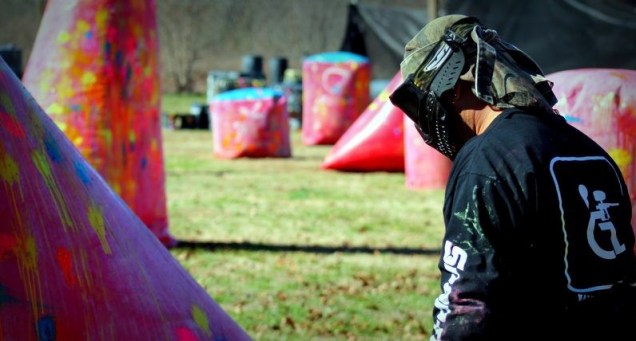


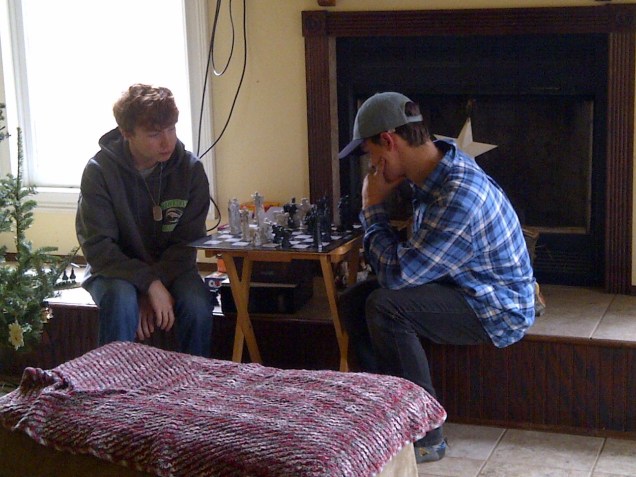
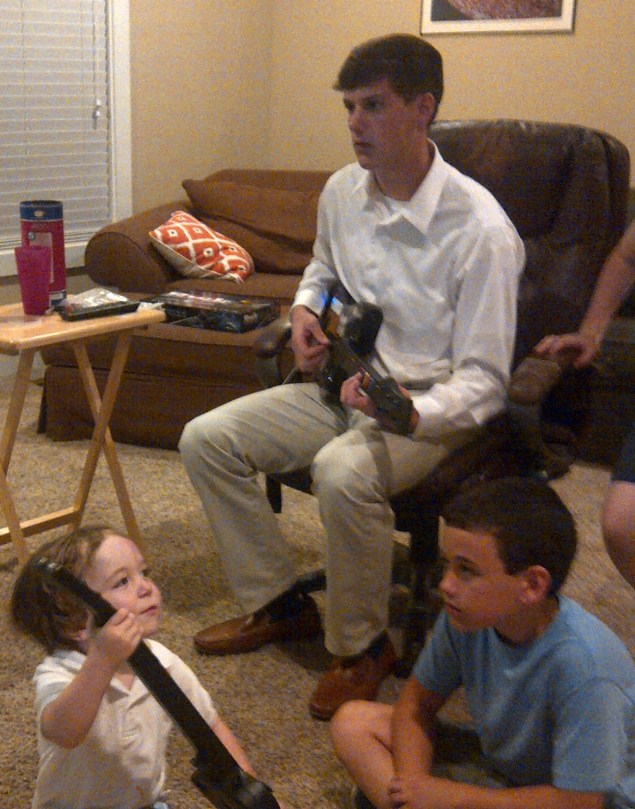

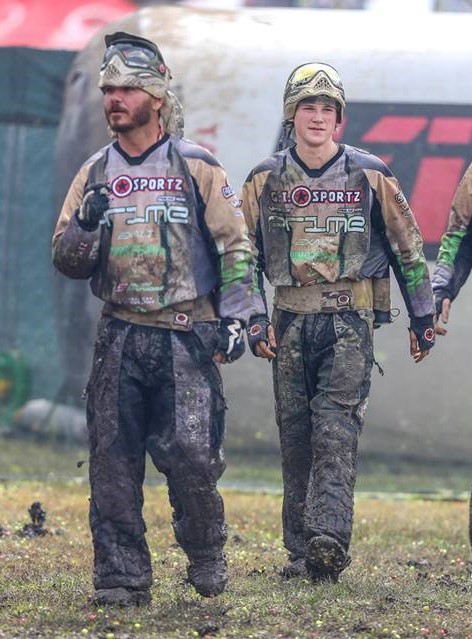

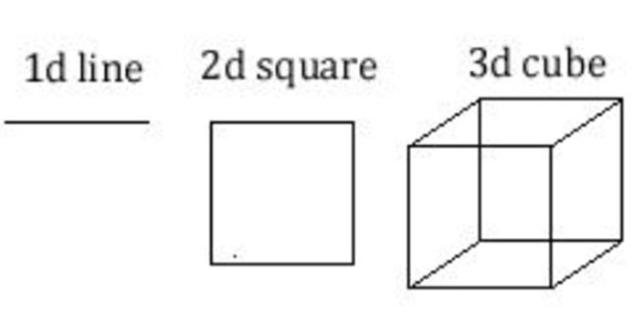
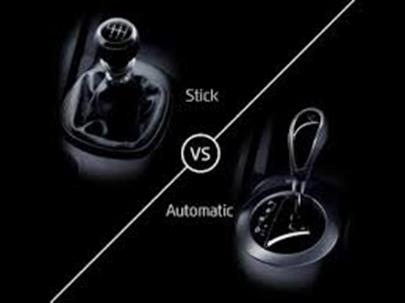
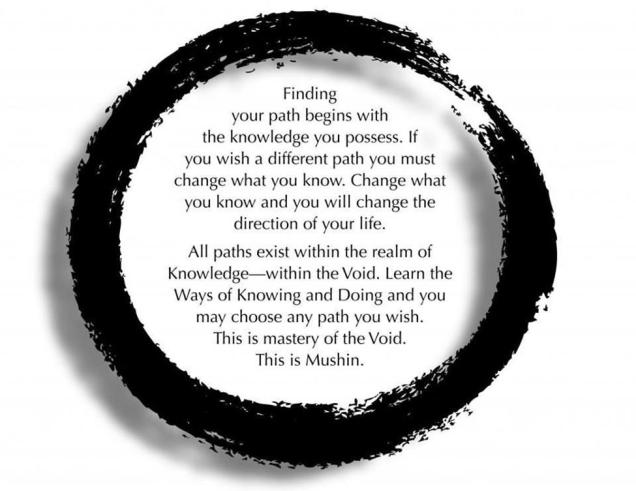
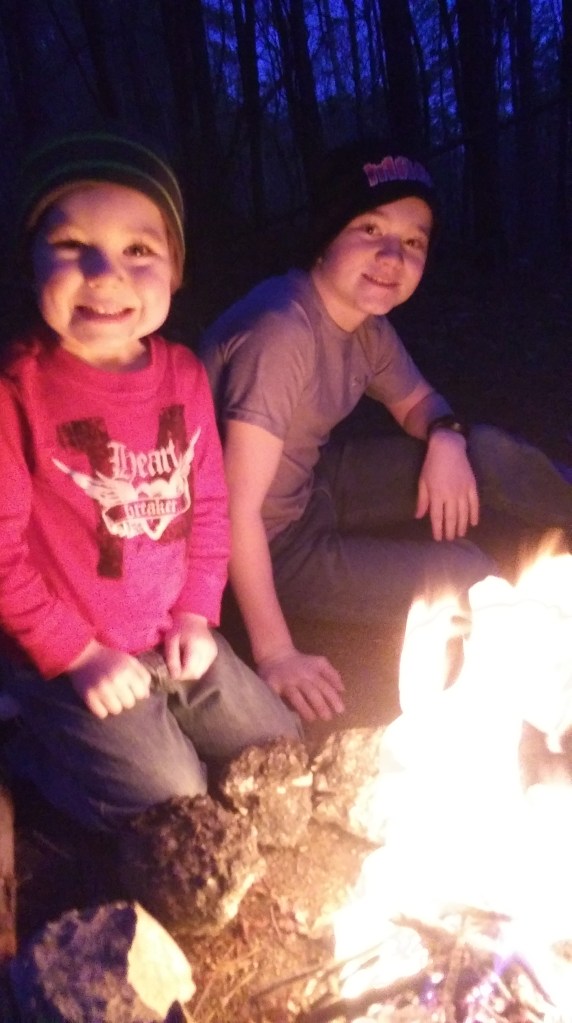




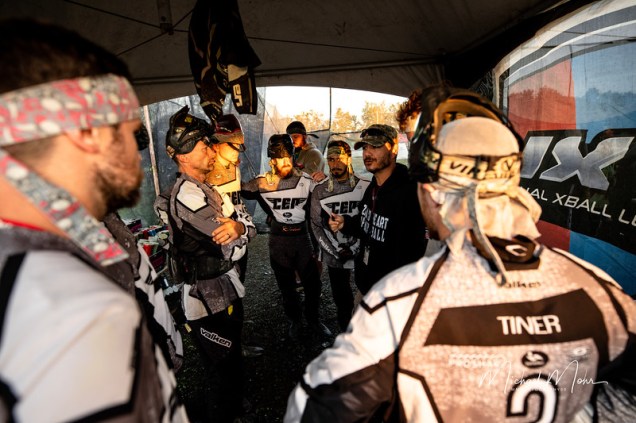

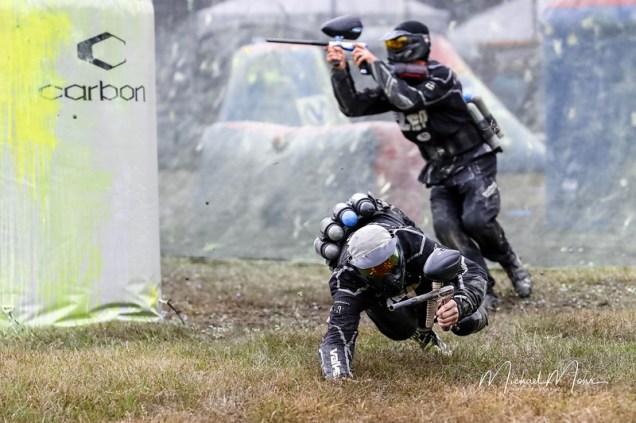
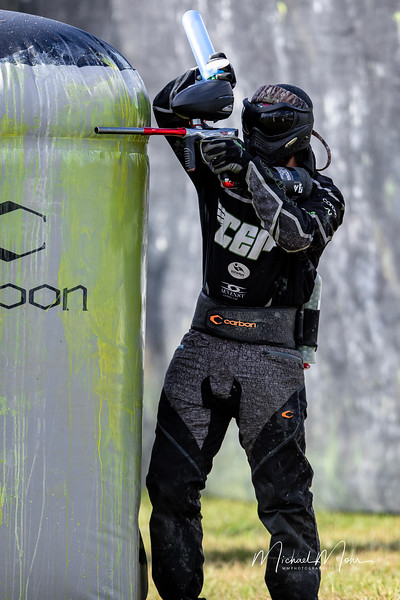
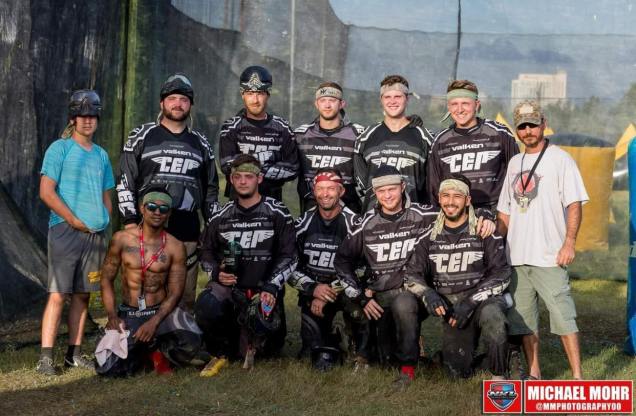
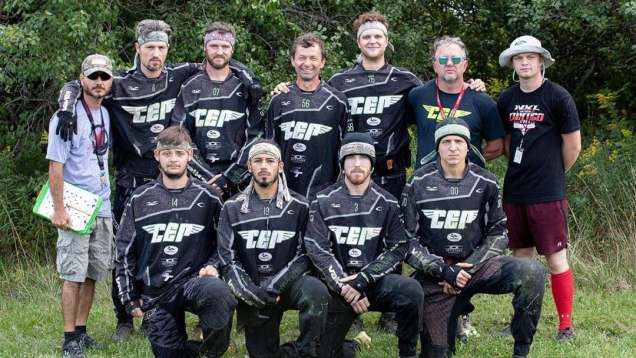
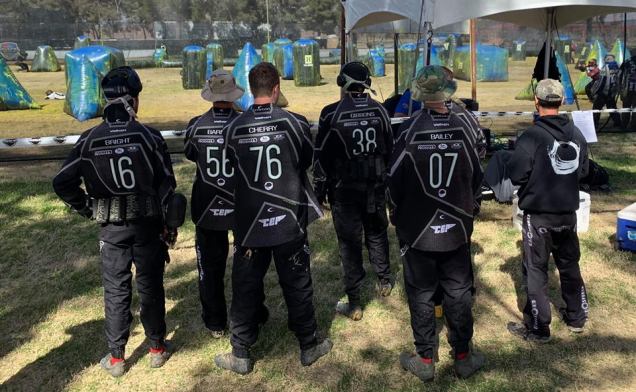


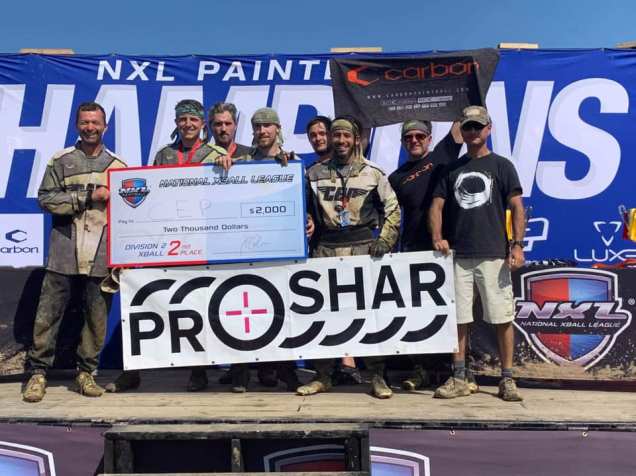




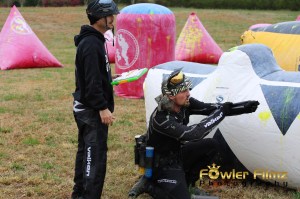



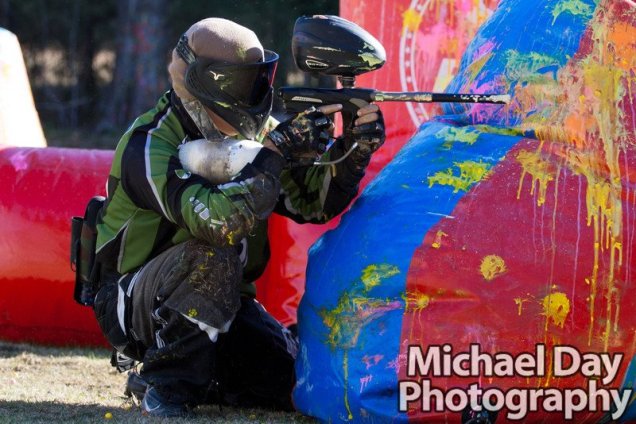
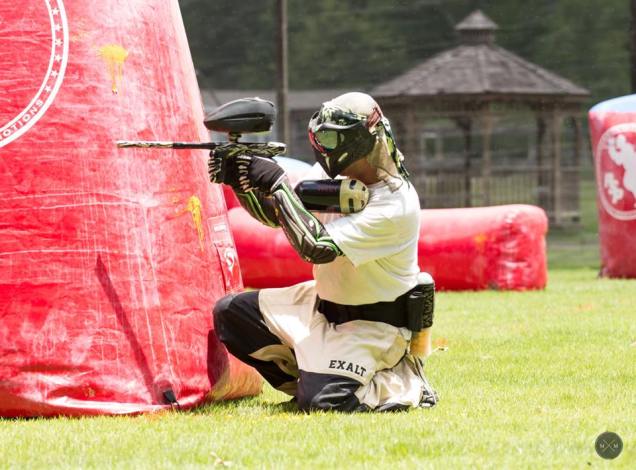





 Zen and the Art of Paintball